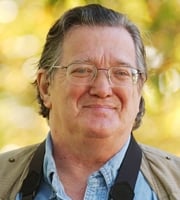
A player who found his thrill on the Telecaster, Levine is a fine instrumentalist in his own right, who has honed his chops with a number of major artists – not least Otis Rush
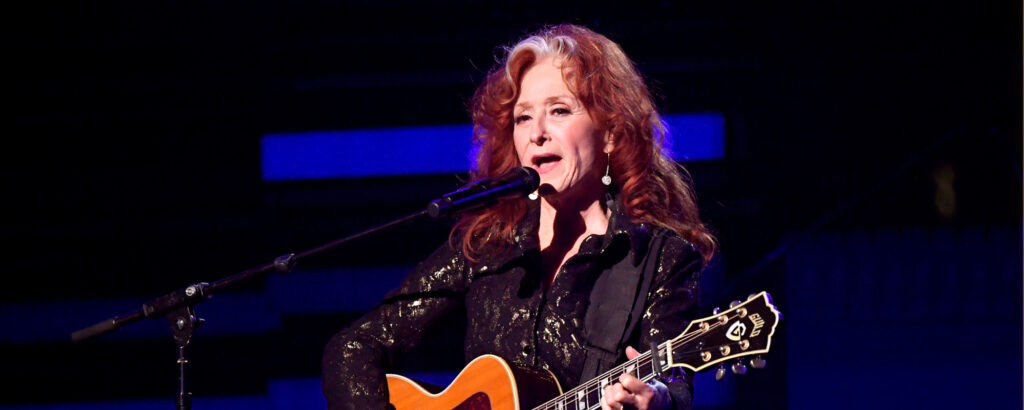
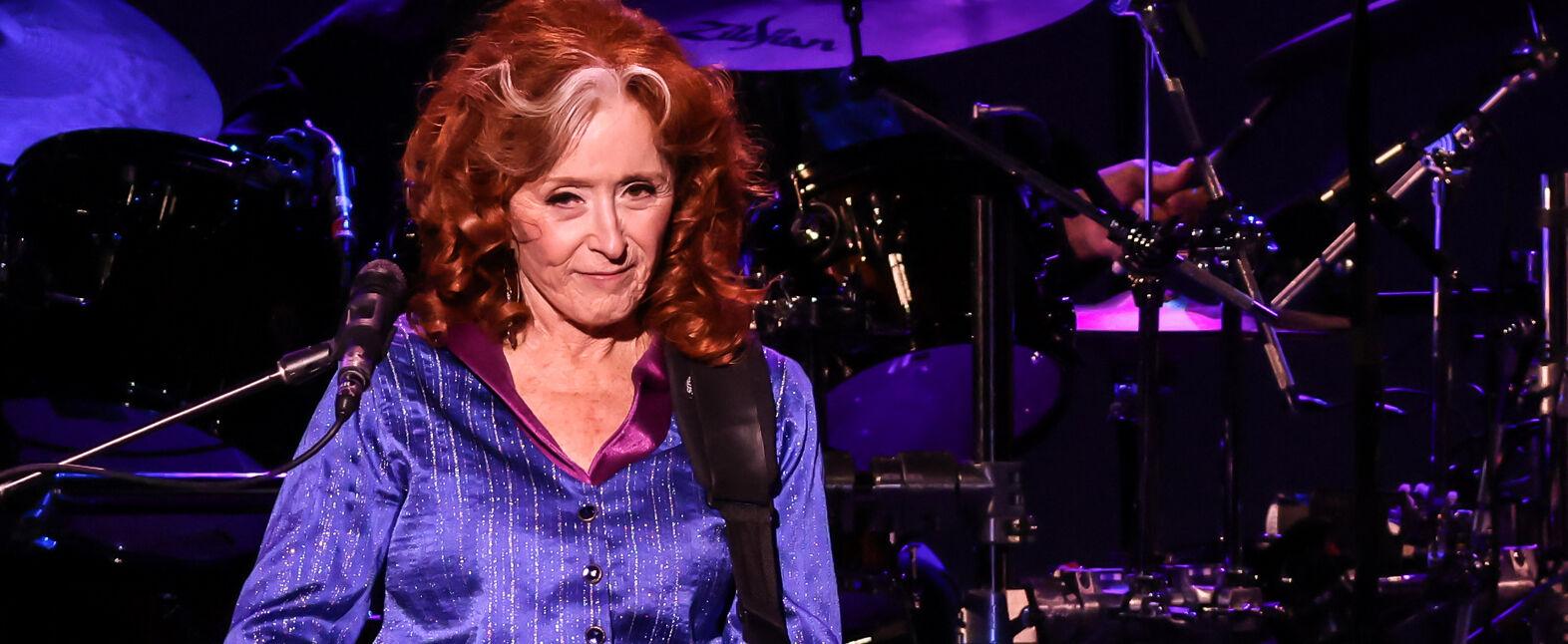
Bonnie Raitt has been a constant presence on the international music scene for over 50 years, collaborating with many – from Sippie Wallace to Mavis Staples, John Lee Hooker to John Prine – and boasts a long list of best-selling albums, with 13 Grammy Awards from 30 nominations to her name, as well as the honour of receiving the Lifetime Achievement Grammy in 2022. Not bad for someone who was discounted earlier this year as “an unknown blues singer” by a certain UK tabloid…
Her own core band has been by her side for over 30 years, including guitarist and sometimes co-writer George Marinelli, Ricky Fataar on drums and James ‘Hutch’ Hutchinson on bass, while keyboard player Glenn Patscha joined the band a few years back in 2018. When George Marinelli decided to take a break from touring, Boston-based guitarist Duke Levine stepped up seamlessly into the role.
Getting His Groove
Having grown up in a house full of musical siblings during the ’60s, Duke’s history with the guitar is a long one. “I have three older brothers and a sister, so I benefited from their record collections,” he tells us over the phone from a tour in Hawaii, “and a lot of it was good stuff: The Beatles, Stones, The Band, Paul Butterfield – but also Merle Haggard and Doc Watson.
“[My older brothers] all played guitars, so they showed my sister and I some chords to get us going – and at the same time my brother Rick had a country rock band that rehearsed at our house most every day, so that was pretty cool to experience.”
{{svg_quality_icon}}
{{quality-options}}
1
http://i3.ytimg.com/vi/krcp0uEBnsU/hqdefault.jpg
As time progressed, Duke extended his musical tastes, listening to the Grateful Dead, The Allman Brothers, Little Feat, Ry Cooder and, ironically, Bonnie Raitt. He also expanded his interest in jazz music.
By the time he was 14, Duke had taken on a part-time job in a local guitar store near his home in Worcester, Massachusetts, and he also took the opportunity to study with a guitar teacher, the brilliant jazz guitarist Rich Falco who instilled a love for jazz standards that would stand Duke in good stead for his future ambitions and virtuosity.
Duke went on to study at the world-renowned New England Conservatory Of Music in Boston, and following graduation took a dive into the deep end by hooking up with blues legend Otis Rush for a European tour.
“I always feel I had no business playing alongside Otis Rush at that age,” Duke admits. “I just wish I’d known as much about him then as I do now. Otis was super-gracious, really cool and had a great rhythm section. It was one of those things whereby the piano player put the touring band together, and we did the European circuit of festivals like Montreux, North Sea and all that. It was the most amazing experience for me.”
{{svg_quality_icon}}
{{quality-options}}
1
http://i3.ytimg.com/vi/Ea51Vu3Rps0/hqdefault.jpg
Tours followed with Leon Thomas, ‘the John Coltrane of jazz vocalists’, and jazz drummer Bob Moses in the band Mozamba before Duke joined Boston rockers The Del Fuegos on tour and began to explore the city’s session scene during the early ’90s.
“There were so many singers and songwriters around Boston in those days,” says Duke. “People were moving in from outside the area to be in Cambridge [Massachusetts] because it was such a cool scene. Producers needed musicians to make records, so it was a great time to be right there and involved.
“I also met my friend Mason Daring, who’s a film composer, and started working with him on a bunch of movie sets he was scoring [including John Sayles’ Lone Star, Passion Fish, Sunshine State and Limbo]. This was a really important time for me because he ended up putting out my first three records on his label – Nobody’s Home [1992], Country Soul Guitar [1994] and Lava [1997]. About this same time, there was still a little bit of jingle and advertisement business, too, so it was a busy time to be working around there.”
{{svg_quality_icon}}
{{quality-options}}
1
http://i3.ytimg.com/vi/w5IWxTKG3VM/hqdefault.jpg
Duke continued his band and touring work during this time, playing with major label folk-rock duo The Story, which also connected him with five-time Grammy-winning singer-songwriter Mary Chapin Carpenter, with whom he played until the early 2000s. He then joined The J Geils Band’s Peter Wolf in the studio and on stage until he got the call from Bonnie Raitt.
There’s a ton of personality in George’s playing, and we’re pretty different as players, but I love learning what he did
Raitt Hand Man
“It’s been a trip,” says Duke, who started rehearsals back in January 2022. “Everyone has been so appreciative and supportive, welcoming the way someone new plays. It was a little daunting to come in after George [Marinelli] who has been with Bonnie for 30 years, but it’s such a great band with Ricky [Fataar, drummer] and Hutch [bassist James Hutchinson] who have been there even longer. I’ve learned a lot and I love playing alongside these guys.
“Bonnie allows you to play what you feel and solo the way you like – it’s never been a case of the artist wanting you to play the exact same thing every night – so there’s room for that, and it’s really refreshing. There’s a ton of personality in George’s playing, and we’re pretty different as players, but I love learning what he did.
“All that being said, Bonnie was very welcoming and realised that we’re not the same players with the same sound. For about half of the 2022 tour dates, it was the two of us in the band together, and it was great because I love playing alongside George. It was brilliant to see first hand the stuff that I’d be taking over on some of the songs. It was a real privilege to be on stage together – and I’ve made a great new friend.”
{{svg_quality_icon}}
{{quality-options}}
1
http://i3.ytimg.com/vi/ll6ur3cSYcU/hqdefault.jpg
When it comes to tools of the trade, Duke is devoted to his Telecasters. “My main guitar is a ’63 Tele and I use a ’53 relic as well on stage, as I’ve left my real ’53 at home,” he laughs. “My Telecaster is the guitar I can play [pretty much] anything on – and I feel I’ve developed a sound of my own to some degree with that guitar. All the other stuff is great, and I’ve got some nice Les Pauls, an Epiphone Casino and some Gretsches, too.
“It’s cool on a session to have a bunch of different guitars. But, more and more, I just feel it’s a distraction to have more than a couple of guitars on a gig. I do enjoy lap steel, too, for textural sounds when required – a friend got me into a cool tuning, so I’m working on that to figure out some cool licks.
“On the current tour, I have this Supro Dual-Tone that I love and I’ve had it for a long time,” he continues. “It’s kept in open tuning with heavy strings for a couple of tunes. I have a Strat, too, for a couple of things. But, really, the Tele is the guitar, and I can get whatever I need out of it. I also play mandolin and mandola on a couple of Bonnie’s songs.”
{{svg_quality_icon}}
{{quality-options}}
1
http://i3.ytimg.com/vi/60oZmU9X-hY/hqdefault.jpg
For his backline, it’s a British influence with a twist as Duke’s favourite guitar amp is a Blockhead – a copy of the early Marshall JTM45. But on this tour he’s opted for the real thing with a late-’70s Marshall JMP 50-watt master volume head, which fits in and suits the sound of the band, he says: “I’m just playing it through a 1×12 cab, which is isolated because we use in-ear monitors, and although my cab is on stage, it’s baffled so I don’t get it too much.”
As for pedals, Duke’s ’board includes a Mad Professor Royal Blue Overdrive, the Jam Rattler overdrive and Jam Harmonious Monk harmonic tremolo pedal, plus a T.Rex Replica and Source Audio delay pedal. There’s also the Ethos TWE-1 from Vermont-based Custom Tones, who created a pedal based on Ken Fischer’s famed Trainwreck amplifier.
Instrumental Moves
When he finds time between his busy touring commitments, Duke performs instrumental arrangements with his band, the Super Sweet Sounds Of The 70s, alongside longtime friend and Berklee College assistant professor Kevin Barry, who has recorded with Paula Cole, Mary Chapin Carpenter and Susan Tedeschi, and played with Ray LaMontagne and Rosanne Cash.
I always wanted to have tunes that were just more melody based – instrumental guitar music without having all the licks
Finally, there’s Duke’s solo instrumental work, on which you’ll hear the hi-fidelity sounds and tones he created for albums such as 2016’s The Fade Out. “I loved Hank Marvin on those Shadows records, so there could well be an unconscious influence for my instrumental recordings. But my early records had a lot of picking on them and country stuff as I was eager to show off what I could do as a younger person.
“I think at a certain point, even then, I always wanted to have tunes that were just more melody based – instrumental guitar music without having all the licks – so on my last couple of records, I think we’re more in that direction.”
Bonnie Raitt is one of the most respected musicians of her generation.
Fans were in uproar in 2023, when she was described as an “unknown blues singer” by some publications, after winning a Grammy Award for Song of the Year, beating the likes of Beyoncé, Taylor Swift and Lizzo.
The American blues singer and guitarist released her self-titled debut album in 1971, and has since brought out several critically acclaimed albums across various genres including blues, rock, folk, and country.
In 1989, after several years of relatively small commercial success, she finally had a major hit with her 10th studio album Nick of Time, including the song of the same name. The album reached number one in America, and won the Grammy Award for Album of the Year.
{{svg_quality_icon}}
{{quality-options}}
1
http://i3.ytimg.com/vi/nW9Cu6GYqxo/hqdefault.jpg
Her next two albums, Luck of the Draw (1991) and Longing in Their Hearts (1994), were also big successes, and featured several hit singles, including ‘Something to Talk About’, ‘Love Sneakin’ Up On You’, and the ballad ‘I Can’t Make You Love Me’, which was later covered by George Michael.
In 2000, Bonnie was inducted into the Rock and Roll Hall of Fame, and she also received the Icon Award from the Billboard Women in Music Awards.
Aged 8 to 15, Bonnie and her brothers attended a summer camp in the Adirondack Mountains called Camp Regis.
Here, Bonnie discovered her musical talents, when camp managers would ask her to play in front of the campers.
As a teenager, she was self-conscious about her weight and her freckles, and used music as an escape from reality: “That was my saving grace. I just sat in my room and played my guitar.”
During her second year of college, she left school for a semester and moved to Philadelphia with other local musicians. She said it was an “opportunity that changed everything.”
In summer 1970, she played with her brother David with Mississippi Fred McDowell at the Philadelphia Folk Festival, and opened for John Hammond at the Gaslight Cafe in New York.
Here, she was spotted by a reporter from Newsweek, who raved about her performance. Major record companies were soon attending her shows to watch her perform.
She accepted an offer from Warner Bros, and soon released her debut album, Bonnie Raitt, in 1971.
Is Bonnie Raitt married and does she have children?
Today, Bonnie Raitt is a music industry veteran, but once upon a time, she was just another 8-year-old kid with a Stella guitar that she got as a Christmas present from her family, according to Raitt’s website. The daughter of two musical Quakers with a history on Broadway, Raitt was born in Burbank and grew up in California, per Britannica.
Her sense of adventure later led her across the country to attend school in Cambridge, Massachusetts, where she studied social relations and African studies, but Raitt dropped out of Radcliffe College in 1969 to pursue music. Through some combination of the connections she’d forged hanging around Cambridge’s music scene and sheer luck, she soon found herself opening for famous blues acts, including Son House and John Lee Hooker.
In her own words (via her website), “I’m certain that it was an incredible gift for me to not only be friends with some of the greatest blues people who’ve ever lived, but to learn how they played, how they sang, how they lived their lives, ran their marriages, and talked to their kids.”
After she dropped out of Radcliffe, a restless Bonnie Raitt immersed herself in the music industry, specifically the blues scene. She soon enlisted the services of the well-known blues manager Dick Waterman, according to Allmusic. With Waterman’s help, she began sharing a stage with blues dynamos like Fred McDowell, Sippie Wallace, and Howlin’ Wolf.
Even as Raitt was working hard to get started playing music professionally, Raitt was also becoming politically active. She dedicated her time to antiwar and civil rights scenes in Cambridge, per her website, and she continued to be an outspoken liberal activist after she left Radcliffe to tour the country with the elder statesmen of blues. Eventually, as word of mouth on the blues circuit cemented Raitt’s status as a promising up-and-comer, Warner Bros. signed the young red-haired musician to its music label. According to Raitt’s website, her first album was soon to follow that lucky break.
Once she signed with Warner Bros., Raitt was ready to release her first album. Her self-titled debut effort came out soon thereafter, in 1971, per her website, and it was influenced by blues greats like Robert Johnson and Sippie Wallace. To record the album, she traveled to Minnesota, where she spent her weekdays singing blues alongside the band Willie and the Bumblebees. When she wasn’t occupied recording, she could be found by the pool, playing sports, and hanging out with friends, according to The Current.
The end result mixed covers and originals and spanned 11 tracks. While the album later came to be considered artistically successful and influential to future generations of female blues singers, according to Viva Scene, it was a commercial flop. But Raitt was just getting started, and she had a long road ahead of her which would come to include multiple hit singles, at least one top-of-the-charts album, and 10 Grammys.
She stays politically active, just like her parents
Like her parents, Raitt became politically active as an adult. And as she found her musical voice, she also began incorporating her political activism into her musical life. For example, she co-founded Musicians United for Safe Energy, an industry group opposed to the expansion of nuclear energy use, and headlined a benefit concert for the group in 1979, per Britannica.
An outspoken feminist, Raitt also advocated for Black blues musicians whom she felt were underpaid, according to Viva Scene. She reportedly took personal responsibility for correcting that dynamic, paying fairly and providing benefits for the musicians she worked with, but she also became active in the R & B Foundation, which worked to fix royalty policies, recognize blues pioneers, and give out hefty grants to artists. The other causes Raitt has supported over the years include ending wars in Central America, ending apartheid in South Africa, passing environmental protections into law; and securing the legal rights of Native Americans, per Raitt’s website.
Despite her involvement in causes she believed in and her strong musical support network, as the years wore on, Bonnie Raitt the road warrior began to show signs of wear. Her drinking caused her to pack on some pounds, as she told The Washington Post in 1989, and it was beginning to affect her music. Her label, Warner, dumped her abruptly around 1983, per Allmusic. All the while, she was struggling to complete records, her collaboration with Prince collapsed, and by the time she forced out the album “Nine Lives” in 1986, some of her fans were bailing, too: The album had the worst sales of any of her records since her self-titled premiere.
“Of course I like to party — that’s why I do this for a living, so I can hang out with cute guys, have a good time and stay up late — but I never did anything that would jeopardize my singing or playing,” Raitt told The Post in 1989. All the same, some of the bluesmen in Raitt’s circles were dropping like flies from too much partying: Lowell George, one former collaborator, died of a heroin overdose. Around the same time, Richard Manuel, Roy Buchanan, Jesse Ed Davis, Paul Butterfield, and John Cippolina died as well. Raitt liked to play “River of Tears” in their honor, but the message their deaths sent was not lost on her.
The turning point for Bonnie Raitt came when the partnership with Prince broke down, according to The Washington Post. First, Raitt hurt her hand in a skiing accident and had to spend two months recuperating. Then, Prince wound up prolonging his European tour, even though he had requested Raitt back out of her own summer tour, with the result that the two of them only worked together for three days total.
“The skiing accident was just debilitating enough with my thumb in a cast so I couldn’t play guitar for a couple of months,” Raitt told The Post. “So here it was: I didn’t have an excuse anymore. A situation was created for me; I asked and it was responded to. People reach a point where they look in the mirror and say I’ve had enough. And let’s face it, I was a latecomer in my circle to cleaning up.”
Raitt began seeing a therapist, and she finally joined Alcoholics Anonymous. Getting sober would ultimately restore her musical focus and put her career back on track, but it was a long journey from there to her first hit record, “Nick of Time,” which came out in 1989.
Bonnie Raitt wins four Grammy Awards
After all her struggles and hard work, 1989 proved a lucky year for Bonnie Raitt and she began to turn things around. That year, in addition to seeing “Nick of Time” become a commercial hit, she took home four Grammy Awards. The first was a Grammy for Album of the Year, which she won with “Nick of Time.” The second was for Best Rock Performance, Female. The third was for Best Pop Vocal Performance, Female, for the title track on her new album. Finally, her duet with John Lee Hooker, “I’m in the Mood,” won a Grammy for Best Traditional Blues Recording.
As of the start of 2023, Raitt was the most frequent female Grammy Awards performer — but she also had more Grammy Awards ahead of her. By 2022, Raitt has racked up a total of 10 Grammy Awards for her various performances over the years.
By the early 1990s, Bonnie Raitt was back in fine form and, in fact, better than ever. She released a retrospective, two-disc live album and two studio albums between 1990 and 1995, according to Britannica. Her two studio albums, “Luck of the Draw” and “Longing in Their Hearts,” both went on to win Grammy Awards.
These successful albums were also being released under a new label. Raitt signed with Capitol Records in 1989, according to her website, allowing her to put out new records with the help of somewhat more reliable partners. It was a satisfying time for Raitt, who had churned out records in her early years but without much recognition or success. Now, by contrast, her albums were going double platinum and receiving the music industry’s highest honor. Raitt was also increasingly working performances by her friends, some of them big names in music, into her albums, creating a series of fruitful collaborations.
She is inducted into the Rock and Roll Hall of Fame
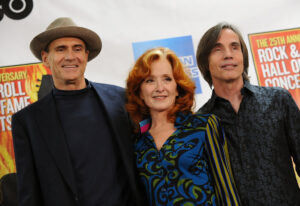
If the Grammys are the music industry’s most vaunted prize, then induction into the Rock and Roll Hall of Fame is perhaps the top accolade for rockers specifically. In 2000, Bonnie Raitt also received that honor.
Joining other legendary performers of her era and generations past, Raitt took the stage after being introduced by Melissa Etheridge, per the Rock & Roll Hall of Fame. She proceeded to deliver a firecracker of a speech, peppered with pointedly feminist notes and nods to the direction she wanted to see the Rock and Roll Hall of Fame take with its future choices.
“I’m flabbergasted,” Raitt said upon her induction. “I know I never expected to make a living at this, let alone take a place next to all these legends I’ve watched walk up these stairs. I’d like to thank you so much for holding me in such high esteem … I’m especially proud to be here tonight because of what it says about what you think is important. I’m proud because it’s partly because I don’t just put on an electric guitar, but because I know how to write it. Let’s hope this marks the beginning of lots more women getting out of the kitchen and into the kick-a** fire.”
In 2005, Bonnie Raitt scored another win with her first self-produced album, “Souls Alike.” The album drew positive reviews and ascended into the top 20 on Billboard’s chart. It also moved Raitt to get back on the tour bus and start touring again, according to her website.
Critics applauded Raitt’s “bluesy rock” and willingness to venture into new musical territory. “Throughout, Raitt holds her ground without digging a rut,” Rolling Stone declared. “An adventurous change of pace that stretches Raitt beyond her previous recordings,” raved Billboard (via Metacritic).
Those 11 tracks further extended Raitt’s partnership with Capitol Records, with which she had a happier business relationship than her tenure with Warner. In fact, in September 2022, Raitt’s full Capitol music video catalog was remastered and re-released on her official YouTube channel, per PR Newswire. The 13 music videos were reissued as Raitt’s “Nick of Time” became one of 25 audio recordings included in the 2022 National Recording Registry by the Library of Congress.
In the aughts, Bonnie Raitt dove back into a host of liberal causes, from John Kerry’s presidential run to giving Democrats control of the Senate in the 2008 election to environmental and anti-nuclear crusades. According to Raitt’s website, she put on a bunch of benefit concerts intended to engage voters and encourage them to vote for Democrats.
Some of the organizations helped by other concerts around that time were the Nevada Nuclear Waste Task Force, the Native Community Action Council, the Everglades Foundation, Musicians United for Safe Energy, Clean Water Action, the Center for Media and Democracy, and more, per Center in the Square. Raitt, who has said she puts citizenship before even music, is also involved with the Guacamole Fund, a nonprofit that links entertainers with left-leaning causes that aim to bring about environmental and social change through benefit concerts and other events held in tandem with media campaigns.
Following some time away from recording and performing music, Bonnie Raitt returned in 2012 with “Slipstream,” an intense production put out under the Redwing Records label, according to her website. The 12 tracks meld blues, funk, and rock and feature some of Raitt’s acclaimed slide-guitar playing.
“Slipstream captures the kind of barnstorming fervor that can turn in the space of a song into a slow boil, [a] roiling storm of emotions,” NPR marveled upon the record’s release. “She has the guile and shrewdness of a long-time pro, but it’s the purity of this beautiful mongrel music that gives it its great life.”
“Slipstream,” which Raitt co-produced with Joe Henry, swiftly sold over a quarter of a million copies, becoming one of the year’s top-grossing indie albums. It also won Raitt another Grammy Award for Best Americana Album. Raitt began touring again following the album’s release, traveling North America, Europe, Singapore, Australia, and New Zealand before returning home to play the Kennedy Center Honors.
When COVID-19 hit, Bonnie Raitt lost some close friends and collaborators, including John Prine, with whom she had spent a significant chunk of the previous year working, according to her website. The country-folk artist, who died at age 73 due to complications from COVID-19, was one of the many musicians we lost in 2020. Raitt recorded a video message mourning her friend the following day, per People.
“I’m having more time to just lay around and read and cook and do all those things I always wished I could do if I had more time,” Raitt said in her opening remarks. “Of course, the reason we’re doing this is heartbreaking, and I’m hoping that we’re going to be coming out of this with lessons learned and appreciating what we have.”
The fact that Raitt was doing things she’d always said she would if she just had more time while her friend had run out of time seemed to be weighing heavily on Raitt, who spoke with sadness in her voice on the video. But she went on to sing the Karla Bonoff song “Home” in Prine’s honor.
In 2022, Bonnie Raitt released the 18th studio album of her career, “Just Like That.” She had spent the pandemic sending her money to and performing for Democratic causes, she told Variety in April 2022, but when she finally got the chance to go out on the road again to support the new album, she felt liberated. Live music, she said, was the medicine people needed after hunkering down in fear for two years and seeing friends and loved ones die.
Raitt’s latest effort mixes old-fashioned blues with 21st-century political consciousness, a fusion of different worlds that evokes Raitt’s own identity. She comes at it from a place of wisdom — not only about her music, but also about life, having been sober for more than three decades.
“I think it’s been really important to have set my compass and set my sail for some higher purpose, and that I try to allow myself some slack and cheat days and all that and forgive myself when I mess up,” Raitt told Variety. “And what’s important is perspective, allowing yourself enough time to have fun and be out in nature and appreciate life and not be so career- or goal-oriented. You don’t care what people think about you as much.”
Jennifer has worked for several weekly community newspapers in Chicago. She has reported on local politics and events for the Niles Bugle, and written feature stories for Forest & Bluff Magazine and North Shore Weekend. As a writer for the Daily Herald, she covered a broad range of local news stories in the Chicago suburbs, as well as community features. She also reported for 22nd Century Media, which owned small local newspapers in towns outside Chicago, before it folded during the pandemic.
Jennifer attended Scripps College in Claremont, California, where she served as a reporter and associate editor on the student newspaper. Among many learning experiences there, including a dispute between the student newspaper and a college dean over a story she broke, she learned the importance of dissecting pop culture with a critical eye.
Bandana Blues is and will always be a labor of love. Please help Spinner deal with the costs of hosting & bandwidth. Visit www.bandanablues.com and hit the tipjar. Any amount is much appreciated, no matter how small. Thank you.
Broken Hearts & Dirty Windows: Songs of John Prine, Vol. 2, the anticipated new John Prine tribute record from Oh Boy Records, is out today. Stream/purchase HERE.
Created as a celebration of Prine’s life and career, the album features new renditions of some of Prine’s most beloved songs performed by Brandi Carlile (“I Remember Everything”), Tyler Childers (“Yes I Guess They Oughta Name A Drink After You”), Iris DeMent (“One Red Rose”), Emmylou Harris (“Hello In There”), Jason Isbell (“Souvenirs”), Valerie June (“Summer’s End”), Margo Price (“Sweet Revenge”), Bonnie Raitt (“Angel From Montgomery”), Nathaniel Rateliff & The Night Sweats (“Pretty Good”), Amanda Shires (“Saddle in the Rain”), Sturgill Simpson(“Paradise”) and John Paul White (“Sam Stone”). Proceeds from the album will benefit twelve different non-profit organizations, one selected by each of the featured artists.
{{svg_quality_icon}}
{{quality-options}}
1
http://i3.ytimg.com/vi/Z71L4JdrVBY/hqdefault.jpg
Bonnie Raitt - Write Me a Few of Your Lines/Kokomo Blues
60 years anniversary celebration of Arhoolie
December 10, 2020
Arhoolie Foundation celebrates it's 60th anniversary (1960-2020) with an online broadcast.
{{svg_quality_icon}}
{{quality-options}}
1
Bonnie Raitt - Shadow of Doubt
Hardly Strictly Bluegrass Festival
October 3, 2020
Hardly Strictly Bluegrass celebrates it's 20th anniversary with an online broadcast titled “Let The Music Play On”.
{{svg_quality_icon}}
{{quality-options}}
1
http://i3.ytimg.com/vi/hCJa0505jZk/hqdefault.jpg
Bonnie Raitt & Boz Scaggs - You Don't Know Like I Know
Farm Aid 2020 On the Road
Sam & Dave classic written by Isaac Hayes and David Porter.
{{svg_quality_icon}}
{{quality-options}}
1
http://i3.ytimg.com/vi/jXG6ULcK-qs/hqdefault.jpg
Sheryl Crow & Bonnie Raitt - Everything Is Broken
[Eric Clapton’s Crossroads 2019]
Eric Clapton, one of the world’s pre-eminent blues/rock guitarists, once again summoned an all-star team of six-string heroes for his fifth Crossroads Guitar Festival in 2019. Held at the American Airlines Center in Dallas, Texas, the two-day concert event raised funds for the Crossroads Centre in Antigua, the chemical dependency treatment and education facility that Clapton founded in 1998.
{{svg_quality_icon}}
{{quality-options}}
1
http://i3.ytimg.com/vi/yHeBLEo4TOM/hqdefault.jpg
'A Tribute To Mose Allison'
Celebrates The Music Of An Exciting Jazz Master
Raitt contributed to a new album, If You're Going To The City: A Tribute To Mose Allison, which celebrates the late singer and pianist, who famously blended the rough-edged blues of the Mississippi Delta with the 1950s jazz of New York City.
NPR's Lulu Garcia-Navarro talks to Bonnie Raitt about her friendship with the Mose Allison. They're also joined by Amy Allison — his daughter, who executive produced the album — about selecting an unexpected list of artists to contribute songs to the album.
Recorded on tour June 3, 2017 - Centennial Hall, London - Ontario Canada





 Visitors Today : 40
 Who's Online : 0