
LP

Bonnie Raitt – Nick of Time

on January 16, 2022 No comments
by Emma Carmichael

Each Sunday, Pitchfork takes an in-depth look at a significant album from the past, and any record not in our archives is eligible. Today, we revisit Bonnie Raitt’s 1989 blockbuster comeback, a genre-fluid album about love, disappointment, and aging.
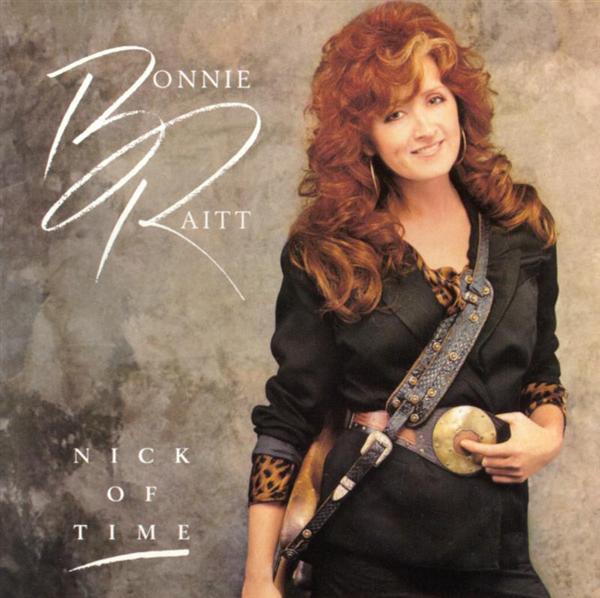
CAPITOL • 1989

In 1983, Bonnie Raitt’s career was at a crossroads. The day after she’d finished mastering her ninth album, Tongue & Groove, the fire-haired Radcliffe dropout and beloved country-blues singer received a letter informing her she’d been dropped from her label. Warner Bros. had signed Raitt in 1971, when she was just 21, and put out eight of her records. But none had been much of a commercial success, and it was time to cut the budget.

Raitt was contractually entangled with Warner for three more years, after which they forced her to put out Tongue & Groove anyway; it was released and largely ignored as was Nine Lives in 1986. She was in her late 30s, recovering from the painful end of a four-year relationship, and suddenly tasked with rehabilitating a music career that should have been in its prime. Years of life on the road had taken its toll, too. As an 18-year-old college student, Raitt met the Boston promoter Dick Waterman, and she got to know the ’70s blues circuit in part by dispensing booze backstage for the likes of Fred McDowell and Son House. When she started recording and touring herself, she earned a reputation as a late-night party girl. “I wanted to be the female version of Muddy Waters or [McDowell],” she said in 1990. “There was a romance about drinking and doing blues.” By 1975 she’d moved to L.A. and started practicing what might qualify as that decade’s version of “Cali sober”—cutting out bourbon to merely drink tequila and wine—and described her drug use as “nothing much: a toot ’n’ a toke.”

But as she neared 40—and considered the possibility of appearing in music videos alongside Prince, with whom she’d recorded a few songs—Raitt decided she’d probably drank enough boys under the table to last her career. She’d grown to hate the feeling of waking up and not being able to remember what she’d talked about with people the night before. She had also put on some weight and was increasingly self-conscious about her appearance. “I remember being so proud thinking I was the last girl singer still drinking,” she told Playboy soon after. “Then I looked in the mirror.” At a show in Louisiana around that time, a fan in the front row passed her what has to be one of the most audacious notes in the history of live shows: “What happened? You got fat. Maybe you should work out or something.”

By 1987, Raitt had quit drinking. She began exercising regularly and attending Alcoholics Anonymous meetings. She was working on getting her life back on track, but it was a slow reboot. Over the course of the next year, 14 labels passed on signing her; in 1988, Capitol finally offered a $150,000 deal, a package typically reserved for newer artists. “There was nobody interested in signing Bonnie Raitt,” Tim Devine, her A&R at Capitol, told Billboard in 2019. “When I went to sign her, my boss at the time said, ‘Over my dead body.’”

Nick of Time—Raitt’s tenth studio album and first with Capitol—is understandably considered her triumphant comeback. But Raitt herself has often pointed out that there was nothing for her to even come back from: She’d never had a hit record before. For almost 20 years, Raitt had made her career on the road, where she could show off her under-recorded, formidable slide guitar skills and easily compensate for lagging record sales at the box office. “I never pretended to be a great artist or a great originator,” she once said. “I’m just an interpreter of good music.”

The closest she’d come to mainstream success was a 1977 cover of Del Shannon’s “Runaway,” which has her snarling and sliding around a Norton Buffalo harmonica break. It was a big leap from “Mighty Tight Woman” and “Women Be Wise,” the sweet but almost painfully innocent sounding Sippie Wallace covers on Raitt’s 1971 self-titled album. Raitt hit her stride as an interpreter and recording artist when her voice earned some attitude and grit in addition to its innate emotional clarity, and when she began to transform songs written by men (“Runaway,” “Too Long at the Fair,” and “Angel From Montgomery,” to name a few) with her simple shift in perspective. But she still wasn’t really on the radio.

Who would’ve guessed Nick of Time—a genre-fluid album about love, disappointment, and aging—would be Raitt’s turning point? Certainly not the people who made it. Raitt, 39, was emerging from what she called “a complete emotional, physical and spiritual breakdown,” and producer Don Was (of Was (Not Was)), was at “rock bottom” in his production career. He’d only crossed paths with Raitt by chance, at an L.A. studio in 1986, because he’d lost his client’s tapes in the back of a taxi on his way out to California and had to push their session by a day. Soon after, Raitt teamed up with Was to record “Baby Mine,” a song from the animated 1941 Dumbo movie for an album of reimagined Disney songs, and they knew they wanted to continue working together. It wasn’t an easy sell. “If it comes down to it and a record company comes along and insists that she have a real producer,” Raitt’s managers told Was over lunch one day, “we’re going to throw you under the bus.”

But Capitol’s low investment in the project also came with the hands-off blessing of low expectations, and in 1988, Raitt and Was took some stripped-down demos into a week-long session at Hollywood’s Ocean Way Recording. For once, Raitt felt no pressure to emerge with radio-ready hits; she and Was just wanted to make songs they would be proud of. For his part, Was knew the key to production would be staying out of the way: “It was just about hearing her unadorned voice,” he told Billboard. “Everything else would augment that.” They cut about two tracks a day, using as few instruments as they could and aiming for a sound that felt, in Raitt’s words, “as live and uncorrected as possible.”

Raitt’s slide guitar appears on about half of Nick of Time, a unifying thread in an album that jumps from country to pop and R&B. For much of the ’80s, Raitt had been touring with a limited budget, playing full sets with only a bass player to accompany her guitar. As her playing, and reputation for it, had improved, she’d realized it was what set her apart as an artist. “It was time to showcase the things about me that were different,” she told the Boston Globe in 1989. “There are a lot of female hormones in that slide playing.” (John Jorgenson, who played guitar on “Too Soon to Tell,” credits Raitt’s playing on Nick of Time with a general slide revival in country music in the ’90s.)

Raitt, never known for her songwriting, bookended the album with an unusual ode to aging, “Nick of Time,” and a closing manifesto, “The Road’s My Middle Name.” She personally begged the Bay Area singer-songwriter Bonnie Hayes to give her both the torch song “Love Letter” and the heartbreaker “Have a Heart.” According to Hayes, the latter was written as a reggae track for Huey Lewis, and it is difficult to imagine him delivering the iconic opening line—“Hey… shut up!”—with the same playful bite that Raitt gave it. The song peaked at No. 3 on the adult contemporary chart, Nick of Time’s biggest hit.

Raitt’s career might have been adrift, but she had plenty of loyal friends to call on. “Cry on My Shoulder,” doused in ’90s schmaltz, casually features backup vocals by David Crosby and Graham Nash, and Herbie Hancock accompanies Raitt on the aching ballad “I Ain’t Gonna Let You Break My Heart Again.” Among others, “Too Soon to Tell”—which Raitt has called the only true country song she ever made—has Was (Not Was)’s Sweet Pea Atkinson and Sir Harry Bowens chipping in on backup vocals. (Mike Reid, who co-wrote the track, would go on to co-write “I Can’t Make You Love Me,” one of the biggest songs of Raitt’s career.) The lead single was a cover of Jon Hiatt’s “Thing Called Love,” and with a shrewd eye toward VH1 airtime, Raitt cast her friend Dennis Quaid as a flirty himbo in the accompanying music video.

{{svg_quality_icon}}
{{quality-options}}

Nick of Time was released on March 21, 1989; it hit the label’s sales goal in a week and then, to everyone’s surprise, continued to sell steadily. The real boost came after the 1990 Grammys, when Raitt—unsigned and bottomed-out just a few years prior—won all four awards she’d been nominated for, including Album of the Year. “I’d just like to thank Bonnie Raitt,” Was said onstage, next to his disbelieving partner, “for setting an example here. If you maintain your integrity, never underestimate your audience, and just try to make a good record, people will respond to you.” A few weeks later, Nick of Time was the No. 1 album in America.

Raitt has likened this post-Grammy rise to a “hyperspace”—it was the moment everything changed for her. But why the hell did it take this long to happen? Nick of Time coheres around a clear and earnest philosophy that no doubt registered with the second-wave feminist boomers who went out and bought it in droves: These are songs performed by a woman who’d reached a personal and professional nadir and pulled herself out. And she did it all, as the New York Times review put it, at a “certain age.” Thirty-plus years after its release, the album’s point of view—a woman who feels liberated by her age and life experience rather than limited by it—is still refreshingly out of the ordinary. It’s the story of Raitt attempting to come to terms with her adult self. “I can handle the things about myself that I didn’t like before,” Raitt told the Globe at the time, just a few months shy of turning 40. “I don’t feel that anything is leading me around anymore—love, or the road, or my career. I feel like I’m in control of my life. I have a real spirit of purpose.”

Nick of Time exceeded everyone’s expectations; it didn’t only sell over 5 million copies, it wholly revitalized Raitt’s career. Her subsequent release, 1991’s Luck of the Draw, surpassed it in sales and cemented her as a ’90s powerhouse with hits like “Something to Talk About” and “I Can’t Make You Love Me.” Still, for an artist so defined by interpretations, it’s Raitt’s own “Nick of Time” that stands out from the pack now. Raitt wrote it when she was playing around with a Drumatix synth with built-in sounds, looking for something that had a Philly Soul vibe. After she played the demo in the studio, Was layered in an old synth, and drummer Ricky Fataar got creative: “He put a sandbag on his belly and mic’d it,” Raitt told USA Today in 2014. “Then he played that signature heartbeat sound [on it] that made it intimate.” In the first verse, Raitt sings of a friend who “sees babies everywhere she goes” and “wants one of her own” but has an indecisive partner; in the second, she speaks to the strange sadness that accompanies parents and children seeing one another age. Her voice is unusually gentle and plaintive: “When did the choices get so hard, with so much more at stake?” she wonders on the bridge: “Life gets mighty precious when there’s less of it to waste.”

The ’90s were a less forgiving time, but the existential angst of a woman in their mid- to late-30s remains. In an industry that perennially favors the young, that was and remains racked with ageism and sexism, Nick of Time feels startling simply for existing as it was made, a contentedly unresolved document about a grown woman losing and then reestablishing herself at a life stage when her story could have easily joined so many others in the ether.

It’s bittersweet to know that “Nick of Time” played a part in pushing Raitt’s friend’s partner to make a decision: Not long after the album came out, the couple got married and had a kid. (According to Raitt, they nearly named him “Nick.”) Still, it’s nice to know that the song itself ends on what is more or less a white-knight fiction. In the final verse, Raitt sings of redemptive love, someone who “opened up my heart again” and gave her “love in the nick of time.” Raitt was newly signed, sober, and recentered, but she was still single and recovering from heartbreak. She had a lot more life to live.


About The Author


Source: © Copyright Pitchfork

But wait, there's more!

Any Day Woman: 50 Years of Bonnie Raitt
With her eponymous 1971 debut, the California-born guitar legend was disrupting the template the others were establishing from the very start

on December 12, 2021 No comments
Christopher Treacy

Bonnie Raitt is as organic as rubbing two sticks together. And while both can produce a spark, the album catches fire with much greater ease.

Released 50 years ago this season and brimming with unstoppable style, the album is a testament to the less-is-more approach and a snapshot of a time in contemporary music that’s almost unimaginable now.

Critics tend to favor the follow-up, 1972’s Give It Up, which has a clearer sound mix and, arguably, more discernable access to Raitt’s strengths as a player. While there’s some truth to this assertion, it’s the warts-and-all honesty of its predecessor that’s the more precious commodity. It’s exactly what Raitt and her chosen producer, Willie Murphy, had set out to capture: a spontaneous, raw recording with no overdubs. Their plan worked marvelously.    

My first Bonnie Raitt album was 1982’s Green Light, a comparatively tightly-produced affair that flirted with reggae and some of the underground new wave runoff infiltrating the mainstream. At the time, my guitar teacher, Harry, encouraged me to check out 1974’s Streetlights for her cover of Joni Mitchell’s “That Song About The Midway,” which I’d been learning to play. Side by side, Joni’s version seems rigid. But that’s not so much a reflection of her style as it is Raitt’s uncanny ability to unhinge the rhythmic locks in a song and replace them with heaps of nuance. 

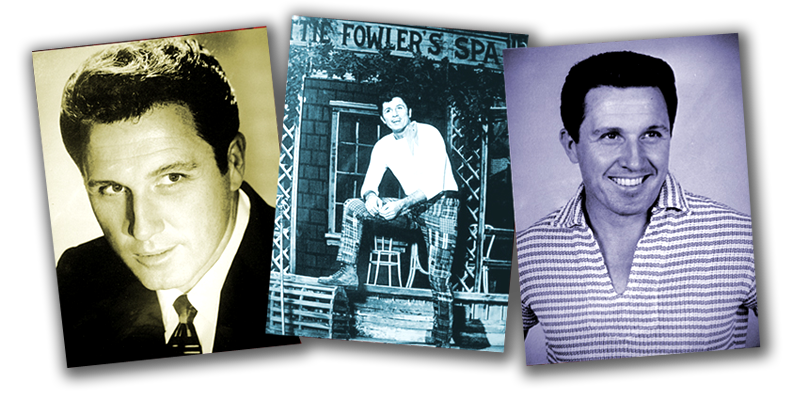
Raitt’s dad had been a big hit on Broadway (Carousel, Pajama Game). Typical of that style, John Raitt sang on the beat and played it straight; he was celebrated for it. Perhaps as a byproduct of this, his daughter learned how to vocally toy with the beat, dodging and weaving around it, resulting in something that sounds simultaneously assured and laid back, even when the tempo is more aggressive.

{{svg_quality_icon}}
{{quality-options}}

AUDIO: Joni Mitchell “That Song About The Midway”

Harry favored Raitt’s version of ‘Midway’ because of this and wanted me to understand the difference between the two approaches. I was vaguely aware that there was something grittier happening on her first few albums, but as an adolescent, listening to the blues had about as much appeal as eating cooked spinach–something adults seemed to enjoy that I just couldn’t derive pleasure from. I failed to understand how it was the root of so much that I worshipped in music until much later.

During my sophomore year of college, Raitt’s Nick of Time came into the school radio station. I began including it in my show and read somewhere that she’d gotten sober. At just 19, I’d developed an uncomfortable awareness that my own drinking might be problematic, and I became curious what her early records sounded like in contrast with Nick of Time. I started playing “You’ve Been in Love Too Long,” from 1973’s Taking My Time on my radio show and delved into Give It Up. I didn’t give Bonnie Raitt a listen until I was 22, a year older than she was when she recorded it.

I’d inadvertently saved the best for last.

Granted, I tend to wince at the idea of describing an artist’s debut as their best record, especially with a 50-year-plus career. It implies a disappointing flame-out and detracts from everything that came after. I remember asking Harry about how Streetlights stood up as an album while I learned the Joni Mitchell song, contemplating a purchase on my tight teen budget. He said, “It’s about as good as any of her mid-70s records, which is pretty damn good.” I always remembered this distinction and the careful implication that there was something special about what came before the middle of the decade.

Raitt had enrolled at Harvard’s Radcliffe College as an African Studies major in 1967 and wasn’t even thinking about performing professionally or releasing records. But within two years, she was playing clubs and coffeehouses for extra money. Blues promoter Dick Waterman took her under his wing, landing her some key opening slots and access to folks like Son House and Fred McDowell, with whom she became friends. Eventually, she had her way with the execs at Warner Brothers, who gave in to her demand for total artistic control in the process of signing her. This meant she called all the shots in the development of Bonnie Raitt (as well as the eight albums that followed), including the recording location and the players involved.

In August of 1971, Raitt rented an old fishing camp on Enchanted Island, along Lake Minnetonka in Minnesota, to get the album done. She has since said she favored the Minneapolis area because she believed that the music scene there had less of a color divide. The camp itself reminded her of adolescent summers in the Adirondacks where she’d discovered her talent and learned to mimic records from the folk revival.  

Since those early days echoing folk acts like The Kingston Trio at summer camp with her brothers, Raitt had developed a fascination with blues music. Inspired by John Hammond’s performances on Blues at Newport, 1963, she soaked the label off of a glass pill bottle and began playing bottleneck slide guitar—an atypical skill for a middle-class white gal. Though seemingly unintentional, she was toying with conventional notions of race and gender from the get-go.

As the story goes, there were upwards of forty people coming and going from the camp, creating a festive, communal feel. Half of them appear in a grainy photo on the back cover. Junior Wells (harp) and AC Reed (sax) drove from Chicago and took advantage of the lake fishing. A couple weeks in, recording finally began. The studio was a two-story garage converted into a barn with the engineers (Dave and Sylvia Ray) recording on the upper level and the players down below. Repeated listens reveal the space in the room, particularly when woodwind and brass instruments are played.

Bonnie Raitt Bonnie Raitt, Warner Bros. 1971

From the moment opener “Bluebird” comes honking and squealing into view, it’s clear that something unusual is afoot. It’s said a good singer knows how to sell a song. Raitt not only sells it, but she also infuses it with so much personality, it bowls you over. Opening the record with a well-known Stephen Stills song—the one song on the entire record that most listeners would likely be familiar with—it’s as if she’s taunting us with her ability to inhabit someone else’s story. With the aid of the Twin Cities band Willie and the Bumblebees (featuring producer Murphy on piano) plus her regulars, Freebo (bass) and second guitarist Peter Bell, the group creates a joyous racket, making the song really swing. It’s nothing short of a revelation. By stripping away the suite-like psychedelia of the Buffalo Springfield version and filling the space with bent notes and plenty of New Orleans sass, Raitt creates something entirely new. A baritone voice anchors the wordless chorus midway, keeping the groove alive as the instruments cut out… save for a cowbell. It might even seem silly if the results weren’t so damn sweet.

From there, the saloon-like feel of “Mighty Tight Woman” saunters in, the first of two Sippie Wallace tunes and the introduction to the tender/tough persona that recurs throughout Raitt’s career. The album’s two originals, “Thank You” and “Finest Lovin’ Man” also feed into this, portraying a woman that is gracious and loyal while also maintaining an upper hand. She takes pride in treating her man well and criticizes other women for not knowing how to behave. Chinks in the armor appear with Lenny Welch’s torchy “Since I Fell For You” and John Koerner’s “I Ain’t Blue,” but the assertive character returns for the final track, Wallace’s “Women Be Wise.”

The material chosen for the record amounts to an eclectic mix of blues and folk with the Stills tune and a rollicking version of The Marvelettes’ “Danger Heartbreak Dead Ahead” thrown in for good measure, thus beginning a tradition of Raitt juxtaposing seemingly disparate writers (and genres) on her albums that continues today.

The instrumentation on Bonnie Raitt is just barely the stuff of a rock album and includes some unusual punctuation from hambone-style knee slaps, a tuba, a stick tapping a plastic pitcher… even a badminton shuttlecock in a cup. Raitt would go on to prefer electric guitars, but her debut is largely (not completely) an acoustic affair—gentler, perhaps, but certainly not timid. Her arrangements of Tommy Johnson’s “Big Road” and Robert Johnson’s “Walking Blues” are proof positive that the album is much more adventurous than just another entry in the growing canon of docile folkie fare.

Bonnie Raitt isn’t much of a singer-songwriter record, either. And really, Raitt is more of an interpreter, contributing only a couple originals to each album. But in the fall of 1971, singer-songwriters were the closest she came to having industry peers.

It was a banner year for the emerging genre: Carole King’s Tapestry, Joni Mitchell’s Blue, and Mud Slide Slim and the Blue Horizon by James Taylor had all been released in the months prior. And yet, even as an outlier, she was disrupting the template the others were establishing from the very start. Tougher than Joni Mitchell, less urban than Laura Nyro, more exotic than Carole King, and punchier than James Taylor, Bonnie Raitt was steeped in a coffeehouse-blues hybrid that none of them could believably deliver. Raitt made it all sound easy and natural. The dim-lit intimacy that frames the album is reflected in the barroom-orange tint of the cover photo.

Raitt says she was preoccupied with authenticity through the first 15 years of her career, which is also the length of her tenure with Warner Brothers and the contract that gave her 100% creative control. She now admits that it also fed her alcoholism; living hard, she felt, gave her the license to properly deliver the material. When she got sober toward the end of the 80s, signing with Capitol and releasing the Don Was-produced Nick of Time, it drastically shifted the trajectory of her career. She became a superstar. Simultaneously, the blurred lines in her music became a bit sharper—more focused and direct.

There’s plenty to be said about her accomplishments since, but the warmth permeating Bonnie Raitt isn’t something that can be replicated. It remains singular, 50 years on.

{{svg_quality_icon}}
{{quality-options}}

VIDEO: Bonnie Raitt Live on PBS Soundstage 1971

About The Author


Source: © Copyright Rock & Roll Globe

But wait, there's more!

Blues legend Bonnie Raitt’s Minnesota-made debut album turns 50

on November 16, 2021 No comments
by Cecilia Johnson

Here’s something to talk about: Before becoming one of the best blues guitarists in the biz, winning 10 Grammys, and entering the Rock and Roll of Fame, Bonnie Raitt began her recording career right here in Minnesota.

In 1971, Raitt was a rookie artist with a Warner Bros. contract, and she flew to Minnesota to record her self-titled debut album. Backed by members of West Bank band Willie and the Bumblebees, Raitt and a few other friends spent a lazy August swimming, playing volleyball, and recording a free-spirited, self-titled debut. (An episode of The Current Rewind podcast provides an oral history of those days, featuring interviews with Raitt and her collaborators.)

Here’s a track-by-track look at the enduring power of Bonnie Raitt around its 50th anniversary.

Bluebird

“I fell in love with R&B and rock and roll at the same time as a little kid,” Bonnie Raitt told Ann Powers in 2012. As a 21-year-old, Raitt mashed up both genres in this bluesy Buffalo Springfield cover, which boosts the original’s energy with a piano glissando, a gang vocal breakdown, and saxophone hoots.

Mighty Tight Woman

Raitt covered two Sippie Wallace songs on this album: “Mighty Tight Woman” and “Women Be Wise.” Wallace was a blues singer and pianist known as “The Texas Nightingale.” Most active in secular music in the 1920s, Wallace earned Raitt’s admiration and several invitations to perform with her on stage. In “Mighty Tight Woman,” Raitt uses her clear-as-a-bird voice to sing sultry lyrics, staying true to her own style while paying homage to a fantastic singer and songwriter.

Thank You

This song is Bonnie Raitt’s most popular nowadays; its 16 million Spotify plays dwarf the rest of the album’s play counts, which hover around 1 million per song. “Thank You” is one of the few tunes that Bonnie herself wrote for the album, and it’s a gentle love song featuring flute and gorgeous vocals.

Finest Lovin’ Man

“Finest Lovin’ Man” reeks of blues stank, thanks to a wailing harmonica and piano twirls. Raitt and producer Willie Murphy let the band simmer this one out — it’s the album’s longest song at nearly five minutes.

Any Day Woman

Willie Murphy takes the microphone in this sweet song, backing Raitt up with quiet harmonies. Drum brushes wisp behind the duo, and piano is the trellis for their intertwining vocals.

Big Road

It’s not every day you hear tuba belching out the blues, but Daniel “Freebo” Friedberg went for it on “Big Road” and ended up performing on Raitt’s next six albums. “Big Road” is a busy cover of a composition by Tommy Johnson, the Delta bluesman who inspired the character of the same name in O Brother, Where Art Thou?.

Walking Blues

Raitt’s guitar playing stands out on “Walking Blues,” a version of the old song by Delta blues icon Robert Johnson. It’s a quick tune — just two minutes and 40 seconds — and resets the mood after the antics of “Big Road.”

Danger Heartbreak Ahead

Bonnie Raitt was remastered in 2008, but “Danger Heartbreak Ahead” still betrays the album’s poor recording quality. When you record live to a four-track in a quasi-shed, things are bound to happen. And on this song, Bonnie’s vocals on the verse are quiet, nearly drowned out by the drums. Luckily, she and the other singers amp it up on the boisterous chorus.

Since I Fell For You

Raitt’s vocals are much more intelligible on this track — they’re lovely and clear, set against a mellow piano-and-saxophone backdrop. Raitt isn’t the only one to have sung this standard; Ella Johnson popularized “Since I Fell For You” after her brother Buddy Johnson wrote it in the 1940s, and Lenny Welch, Al Jarreau, Laura Lee, and others have sung it since.

I Ain’t Blue

Bonnie Raitt’s producer Willie Murphy and engineer Dave Ray both collaborated with Spider John Koerner, a Dylan contemporary who still kicks it on the West Bank. Although he didn’t join the crew out on Lake Minnetonka, Koerner did contribute to the album, in a sense, by having co-written “I Ain’t Blue” with Murphy. The duo released the song on their 1969 album Running, Jumping, Standing Still. In Raitt’s version, percussion equals soft handclaps and the sound of a badminton shuttlecock being run against a beer cup.

Women Be Wise

Bonnie Raitt closes with another sultry Sippie Wallace number, which saunters up and down the scale.

About The Author


Source: © Copyright The Current

But wait, there's more!