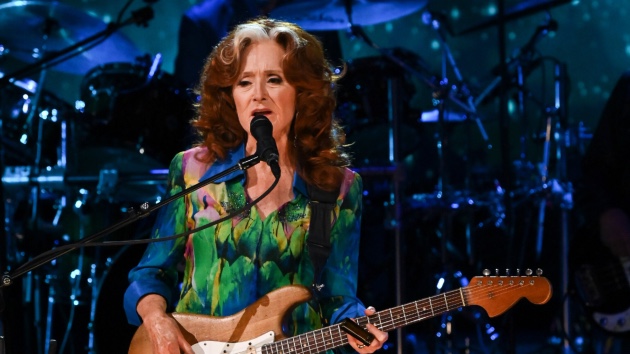
B.B. King, a man who knew a thing or two about blues guitar playing, once said that – in his view – Bonnie Raitt was the “best damn slide player working today.”
It’s an opinion few argued with at the time, and fewer still would take umbrage with today.
Raitt and King performed together on a number of occasions, one of which was the 2004 International Achievement Summit, which featured an evening concert at Chicago’s House of Blues headlined – in celebration of his induction into the Academy of Achievement (opens in new tab) – by King.
Raitt performed first on her own, before teaming up with King for a spirited rendition of When Love Comes to Town, a song U2 recorded with King for their 1988 album, Rattle and Hum.
Prior to starting the song, Raitt hits King – much to his delight – with some absolutely searing unaccompanied slide licks. “She loves to mistreat me like that,” King jokes with the crowd in response. “She knows I’m crazy about it!”
You can see the video of the performance – which begins with Raitt performing her song, Love Sneakin’ Up on You on her own – below.
{{svg_quality_icon}}
{{quality-options}}
1
http://i3.ytimg.com/vi/zUOziR7yO3M/hqdefault.jpg
Armed with one of her signature Stratocasters, Raitt doesn’t stop with just the unaccompanied intro. Indeed, King – playing “Lucille,” his legendary Gibson ES-355 with no f-holes – seems more interested in listening to Raitt slide around the fretboard than in playing himself.
Though the cameras never get up close with Raitt, you can still get a great sense of her slide technique and how she – by wearing the guitar slide on her middle finger – switches seamlessly between rhythm and slide playing.
At various points, Raitt’s slide work causes King to egg the crowd into cheering her on mid-solo, and even – at one amusing point – get up out of his chair and dance.
“I taught myself to play, so my hand positions aren’t 100 percent correct – and I put the bottleneck on the wrong finger,” Raitt told Guitar World of her unique slide technique in a 2022 interview.
Bonnie Raitt: “I didn’t see anybody play slide, so I just figured it out in my room – and I put the bottleneck on the wrong finger!”
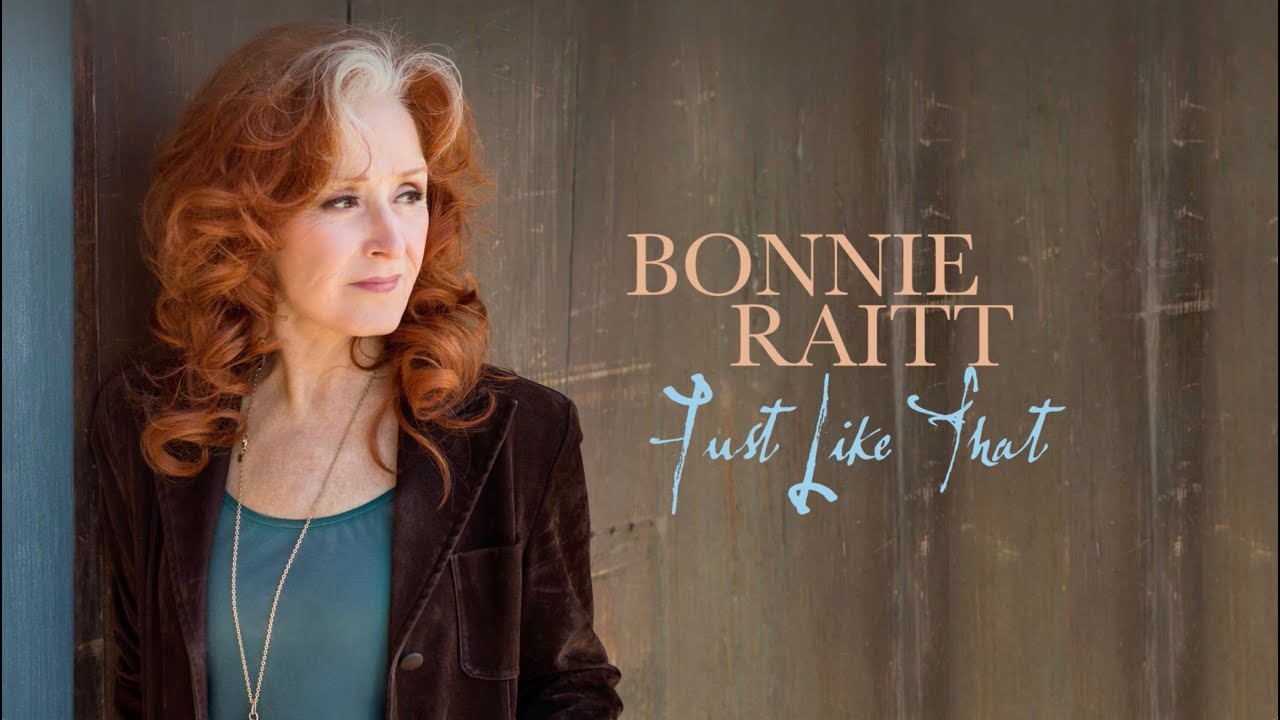
The blues-rock master takes us inside her bold new album, Just Like That…, and charts her never-ending journey through the world of slide guitar Rock and Roll Hall of Famer Bonnie Raitt returns to some of her beloved musical and lyrical themes on Just Like That…, her first new album in more than six years.
“You can play more if you have it on your ring finger. Fred McDowell used his little finger, but by then I was already down the road with it on my middle finger. I heard Robert Johnson and just tried to make myself sound exactly like whatever he was doing.”
Joe Bonamassa has also sung Raitt’s praises, naming her lead break on Thing Called Love (from Raitt’s 1989 album, Nick of Time) as one of the 10 greatest blues-rock guitar solos of all time.
{{svg_quality_icon}}
{{quality-options}}
1
http://i3.ytimg.com/vi/krF6LpUXODc/hqdefault.jpg
“She plays slide, and you know it’s Bonnie Raitt and you just go, ‘How do you do that with a Stratocaster and a glass slide?’” Bonamassa told Guitar World in 2019.
“It’s because she just has a way of phrasing and it’s in the DNA and it’s intrinsic.”
“You hear what she does with this song, a John Hiatt song, and you go, ‘Wow, it’s just super-original.’ It’s very restrained, but super-effective.
“Then you put that voice on top of it and it’s just like, ‘Yes! That’s it!’ To me, Bonnie Raitt is one of the most underrated guitar players of all time.”
Jackson is an Associate Editor at GuitarWorld.com. He’s been writing and editing stories about new gear, technique and guitar-driven music both old and new since 2014, and has also written extensively on the same topics for Guitar Player. Elsewhere, his album reviews and essays have appeared in Louder and Unrecorded. Though open to music of all kinds, his greatest love has always been indie, and everything that falls under its massive umbrella. To that end, you can find him on Twitter crowing about whatever great new guitar band you need to drop everything to hear right now.
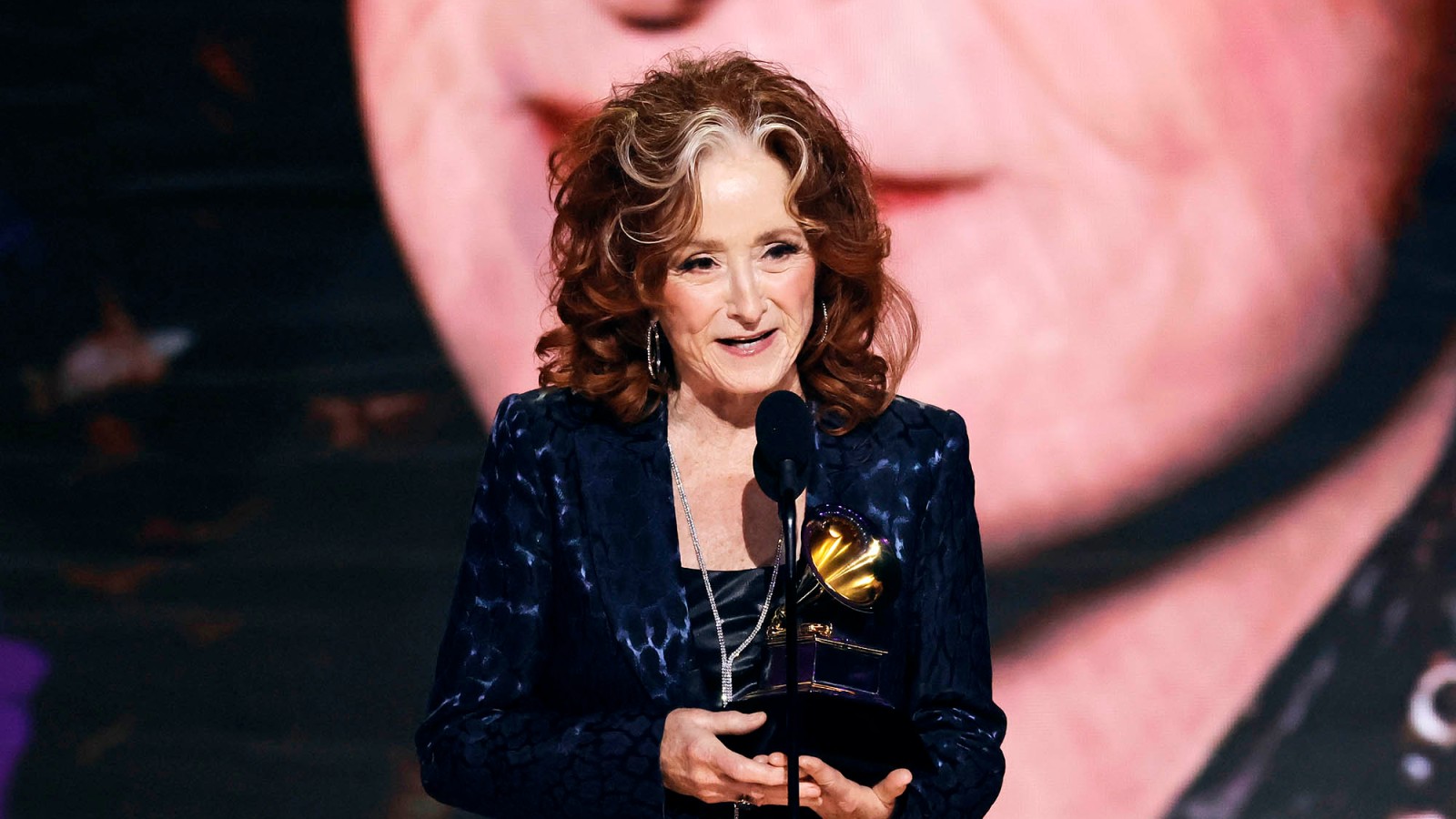
Bonnie Raitt sat up straight with her mouth agape in surprise when she heard her name announced as winner of the Song of the Year Award at the 65th Annual Grammy Awards in Los Angeles.
She looked as if the honor came totally unexpected, even though her song “Just Like That” has elicited an emotional response from many who’ve heard it — and “Just Like That,” Raitt struck a blow for the solo songwriter.
I think Raitt’s surprise came not because she lacked confidence in the quality of her song, but more likely because of the slate of her fellow nominees in the Grammy’s Song of the Year category. It included nominated songs from artists such as Taylor Swift, Beyoncé, Adele, Kendrick LaMar and Lizzo.
Also nominated in the category were Harry Styles, Gayle, Steve Lacy and the combo of DJ Khaled Featuring Rick Ross, Lil Wayne, Jay-Z, John Legend and the rapper Friday.
If Raitt seemed surprised, her win proved a popular choice, at least from those in attendance at the Grammy Awards last Sunday, judging from the two standing ovations they gave her — the first as she made her way onstage to accept the award and the second after she addressed the audience with a brief acceptance speech.
“I’m so surprised; I don’t know what to say,” Raitt said as the camera cut to a smiling Taylor Swift. Lizzo too proved to be a good sport, flashing a good-natured smile as Raitt accepted the award.
“This is just an unreal moment,” Raitt said. “Thank you for honoring me, the only academy that surrounds me with so much support and appreciates the art of songwriting as I do.”
She told how she felt inspired to write the song as a tribute to the works of the late John Prine.
“People have been responding to the song partly because of how much I love, and we all love, John Prine and that was the inspiration for the music of this song and telling the story from the inside,” Raitt said.
She also gave a nod to other songwriters.
“I would not be here tonight if it wasn’t for the hardworking people” who put their ideas and stories to music, Raitt said.
Although Raitt is a renowned electric blues guitarist and bottleneck player, on “Just Like That” she fingerpicks an acoustic guitar, much like Prine did on many of his songs. That’s a remarkable change from the over-the-top production on recordings by nominees in some of the other categories.
“Just Like That” is a story song, about an older woman who sees a car circle her block until it stops in front of her house and a young man steps out of it and approaches her front door. The first time I heard “Just Like That,” I thought I had the storyline figured out about halfway through the song — then the lyrics took an unexpected turn I hadn’t seen coming.
I won’t insert a spoiler here for those who many not have heard the song, but it’s definitely well-worth searching out for a listen. Suffice to say, it’s not easily forgotten.
Raitt picked up two more Grammys for a total of three during the awards ceremony. They included another win for “Just Like That” for Best Americana Roots Song and she also won the Best Americana Performance Award for her song “Made Up Mind.”
The Song of the Year Grammy Award is to honor songwriters.
Out of the 10 songs nominated for Song of the Year, Raitt’s was the only one written by a solo writer. One of the nominated songs credits 10 different people as writers of the song.
After Raitt won the Song of the Year Award, some — not the other nominees — took to social media and criticized the National Academy of Recording Arts and Sciences for awarding the Song of the Year Grammy Award to such a “little-known artist.”
What?
Raitt is hardly a stranger to the Grammy Awards. She’s now won 13 Grammys, in categories with competitive nominations, along with her Lifetime Achievement Award in 2022.
She picked up her first Grammy Awards in 1990 for her now-classic album “Nick of Time.” The album brought her three awards, including Album of the Year and Best Female Rock Vocal Performance.
She and bluesman John Lee Hooker even won a 1990 Grammy for Best Traditional Blues Recording for their duet “I’m in the Mood” from Hooker’s album, “The Healer.”
More Grammy Awards followed in 1991, when Raitt released her album “Luck of the Draw.” She won two more Grammys in 1994 when she released her album “Longing in Their Hearts.” Other honors have come her way as well.
Raitt is the first female guitarist to have her own Fender Signature Artists guitar line. It’s a Fender Stratocaster with a body made of light ash, with a maple neck and rosewood fretboard, with a special narrow C neck, in production from 1995-2001.
Even those first Grammy Awards came after Raitt had been pursuing her professional career for a couple of decades. She recorded her first album, simply titled “Bonnie Raitt” in 1971 at the age of 21 — and she soon came to be considered one of the best bottleneck blues guitarists around. She didn’t score her first single hit record until 1977 with a track from her album “Sweet Forgiveness” — when she did a bluesy remake of Del Shannon’s “Runaway.”
Raitt has always been a generous performer — both onstage and off. Onstage, she’s collaborated or performed alongside a number of fellow artists during her career. She even joined fellow singers Jennifer Warnes and k.d. lang to serve as a trio of background female vocalists for the great Roy Orbison when he recorded his special “Roy Orbison and Friends: A Black and White Night.”
Offstage, Raitt’s been involved in a variety of causes, including honoring her mentors and those whose music inspired her along the way — even if she never met them in-person.
Working with the Mount Zion Memorial Fund, she helped fund a memorial headstone for “Mississippi Fred McDowell” — probably best-known for writing the blues-based standard “You’ve Got to Move,” covered by a myriad of artists, including the Rolling Stones.
Raitt’s Grammy Award for Song of the Year last Sunday night did more than spotlight a great song.
It also proved once again that some of the best songs can still be written by an artist working alone to share a piece of his or her soul — and not by a committee banding their resources together to try and write a hit, often by including elements and buzzwords that worked for the hit that preceded it.
Sure, lots of great rock songwriters have written as teams: Lennon and McCartney, Jagger and Richards, etc. — but having 10 people credited as a songwriter? I’m sure they deserved it if they all contributed, but it does seem more like writing by committee than by inspiration.
With “Just Like That” Raitt proved the solitary writer can still be a force when it comes to the art of songwriting.
Even before Bonnie Raitt took home the Grammy for Song of the Year on Feb. 5, she was a decades-long hitmaker. And before that, she was an in-demand session musician, collaborating with other artists on their own hits.
Raitt had her hand in many projects across throughout her career, from Little Feat and James Taylor to Willie Nelson and Jackson Brown. Here we will dive into 10 legendary albums you didn’t know featured the “Something to Talk About” singer.
Raitt lends her voice to Little Feat’s 1973 album, Dixie Chicken. Her husky wail can also be heard on several of the rock band’s other releases like Feats Don’t Fail Me Now, Down on the Farm, Let It Roll, and many more.
{{svg_quality_icon}}
{{quality-options}}
1
http://i3.ytimg.com/vi/yaHEfJApEVM/hqdefault.jpg
2.The Missing Years – John Prine
A long-time John Prine collaborator, Raitt is featured on his tenth studio release, The Missing Years. She was featured on the track, “Unlonely,” and provided backing vocals throughout.
{{svg_quality_icon}}
{{quality-options}}
1
http://i3.ytimg.com/vi/hrmFjnBWblw/hqdefault.jpg
3.That’s a Plenty – The Pointer Sisters
Raitt’s voice is not her only talent in demand. She assisted The Pointer Sisters on their 1974 album, That’s a Plenty, playing slide guitar on the tune “Grinning in Your Face.”
{{svg_quality_icon}}
{{quality-options}}
1
http://i3.ytimg.com/vi/Gd96rUoZ-Eg/hqdefault.jpg
4.Warren Zevon – Warren Zevon
Raitt provided harmonies to the Warren Zevon song “Join Me in L.A.” for his self-titled sophomore release. Raitt is in good company on the album, sharing credits with the likes of Stevie Nicks, Lindsey Buckingham, Don Henley, Glenn Frey, Jackson Browne, and so many more hitmakers.
{{svg_quality_icon}}
{{quality-options}}
1
http://i3.ytimg.com/vi/t0aCkoZ9_Uc/hqdefault.jpg
5.In the Pocket – James Taylor
Raitt appears on another star-studded album, James Taylor’s 1976 LP In the Pocket. She provided backing vocals to the song “Family Man” as other tracks were harmonized by Stevie Wonder, David Crosby, Linda Ronstadt, and several other musical colleagues.
{{svg_quality_icon}}
{{quality-options}}
1
http://i3.ytimg.com/vi/uG7NMUM-NsU/hqdefault.jpg
6.Bluebird – Emmylou Harris
Emmylou Harris’ 1989 album, Bluebird, saw Raitt’s vocal stylings and her slide guitar skills, especially when it comes to the track “Icy Blue Heart.”
{{svg_quality_icon}}
{{quality-options}}
1
http://i3.ytimg.com/vi/eD0LwKevJQQ/hqdefault.jpg
7.The Distance – Bob Seger & The Silver Bullet Band
Raitt’s backing vocals elevate Bob Seger’s 1982 album, The Distance. She can be heard on the tune, “Makin’ Thunderbirds.” Glenn Frey also offers vocal assistance to the record.
{{svg_quality_icon}}
{{quality-options}}
1
http://i3.ytimg.com/vi/B4HMJDGfuEw/hqdefault.jpg
8.Across the Borderline – Willie Nelson
Raitt duets with Willie Nelson on the song “Getting Over You” from his album Across the Borderline. On harmonies and slide guitar, she’s a force alongside other famed backups featured on the album, like Paul Simon, Bob Dylan, Kris Kristofferson, and even Sinéad O’Connor.
{{svg_quality_icon}}
{{quality-options}}
1
http://i3.ytimg.com/vi/bWM5TIgoC1g/hqdefault.jpg
9.Taking the Long Way – The Chicks
Another album in which she’s in good company, The Chick’s Taking the Long Way features Raitt on background vocals, as well as sees assistance from John Mayer and Benmont Tench.
{{svg_quality_icon}}
{{quality-options}}
1
http://i3.ytimg.com/vi/B1qgazBdKj8/hqdefault.jpg
10.For Everyman – Jackson Browne
Raitt lends her voice to Jackson Brown’s 1973 release, For Everyman. She can be heard on the track, “The Times You’ve Come.” Other guests on the album include David Crosby, Glenn Frey, Elton John, Don Henley, and Joni Mitchell.
First and foremost, Alli Patton is a chicken wing connoisseur. She is a writer, second. The Birmingham, Alabama-native is a lover of music and the written word and finds great joy in combining the two. She is a journalist with eight years of experience working for various publications around the world. Prior to her journalism career, she worked in the music industry as a Digital Media Specialist, a role that has informed her work as a writer today. A Dolly Parton junkie and lover of all things with a twang, Patton can be found spinning old records and trying to teach her dog, Zeppelin, how to two step. You can find her scribblings on country, rock, and everything in between at American Songwriter, Holler, and The Independent.
Bandana Blues is and will always be a labor of love. Please help Spinner deal with the costs of hosting & bandwidth. Visit www.bandanablues.com and hit the tipjar. Any amount is much appreciated, no matter how small. Thank you.
Bonnie Raitt is nothing if not loyal. And when she caught wind of the fact that Mike Reid and I were writing and recording together, she was quick to volunteer to sing on our song “The Bridge.” It’s one of my favorite songs Mike and I have written. And I can no longer imagine it without her heroic spirit present. ~ Joe Henry
Released on: 2025-09-05 Producer: Joe Henry Music Publisher: Rivers and Roads Music (ASCAP - admin by Endurance Music Group) Music Publisher: Mule Rider (ASCAP) Music Publisher: Blue Raincoat Music (ASCAP) ℗ 2025 Work Song Inc. marketed and distributed by Thirty Tigers
{{svg_quality_icon}}
{{quality-options}}
1
http://i3.ytimg.com/vi/VWNoTHkp6_k/hqdefault.jpg
Prison Bound Blues · Bonnie Raitt
Bonnie has contributed a new recording of "Prison Bound Blues" written by Leroy Carr to a project called Better Than Jail, an extraordinary new album benefiting Free Hearts and Equal Justice USA. Better Than Jail is available everywhere today and features covers of iconic prison songs from Steve Earle, Taj Mahal,Margo Price, The War and Treaty and many more. The album seeks to raise awareness and support for the urgent need to reduce the harm of the criminal justice system. https://found.ee/BetterThanJail.
I'm so proud to have joined in with so many illustrious artists in creating this very special album in support of rural prison reform. Overlooked for far too long, this issue cuts across all cultural and political divides and deserves all our focused attention to finally bring about some swift and meaningful action. Better Than Jail is one of the most inspired and heartfelt albums I've been blessed to be a part of and I hope it sets a fire in hearts far and wide to join in our efforts." ~ Bonnie Raitt
Released on: 2024-10-04 Executive Producer: Brian Hunt Producer: Kenny Greenberg Producer: Wally Wilson Producer: Bonnie Raitt Recording Engineer: Jason Lehning at Sound Emporium Mastering Engineer: Alex McCollough at True East Mastering Production Assistant: Shannon Finnegan Mixer: Justin Niebank at Hounds Ear Music Publisher: Universal Music Corp. Composer, Lyricist: Leroy Carr ℗ Believe Entertainment Group and Wyatt Road Records
{{svg_quality_icon}}
{{quality-options}}
1
http://i3.ytimg.com/vi/xC2BJuQbO8w/hqdefault.jpg
The Fabulous Thunderbirds - Nothing in Rambling Ft. Bonnie Raitt, Taj Mahal, Keb' Mo' & Mick Fleetwood
In celebration of the band’s 50th Anniversary, The Fabulous Thunderbirds have just released Struck Down, their first studio album in eight years on Stony Plain Records. The ten-track album includes a wonderful cover of Memphis Minnie’s “Nothing in Rambling,” featuring longtime friends, T-Birds founding member Kim Wilson, along with Bonnie, Keb’ Mo’, Taj Mahal and Mick Fleetwood. — BRHQ
{{svg_quality_icon}}
{{quality-options}}
1
http://i3.ytimg.com/vi/YmW-bgcbvQI/hqdefault.jpg
Little Feat - Long Distance Call
“I’ve always loved Little Feat and this new incarnation of the band is bringing some serious heat, cred and new blood to their enduring legacy. Every Feat fan loves us some Sam. I’m so glad he’s now gotten a chance to step out front and center and put his spin on these wonderful blues songs. I loved singing "Long Distance Call" with him, always one of my favorites, and Scott slayed on slide. Know you’ll enjoy hanging out with us at Sam’s Place!" -- Bonnie Raitt
“Long Distance Call” was written by blues legend, Muddy Waters. It has Sam Clayton and Bonnie Raitt on vocals, Scott Sharrard on Dobro, Fred Tackett on acoustic guitar, Tony Leone on drums, and Michael “The Bull” LoBue on harmonica. The album also features Bill Payne on piano and Kenny Gradney on bass.
Little Feat have composed an album that’s their love letter to the blues entitled, ‘Sam’s Place.’ “Long Distance Call” plus many other blues classics are on this album. You can stream and order ‘Sam’s Place’ here: https://orcd.co/samsplace
Broken Hearts & Dirty Windows: Songs of John Prine, Vol. 2, the anticipated new John Prine tribute record from Oh Boy Records, is out today. Stream/purchase HERE.
Created as a celebration of Prine’s life and career, the album features new renditions of some of Prine’s most beloved songs performed by Brandi Carlile (“I Remember Everything”), Tyler Childers (“Yes I Guess They Oughta Name A Drink After You”), Iris DeMent (“One Red Rose”), Emmylou Harris (“Hello In There”), Jason Isbell (“Souvenirs”), Valerie June (“Summer’s End”), Margo Price (“Sweet Revenge”), Bonnie Raitt (“Angel From Montgomery”), Nathaniel Rateliff & The Night Sweats (“Pretty Good”), Amanda Shires (“Saddle in the Rain”), Sturgill Simpson(“Paradise”) and John Paul White (“Sam Stone”). Proceeds from the album will benefit twelve different non-profit organizations, one selected by each of the featured artists.
{{svg_quality_icon}}
{{quality-options}}
1
http://i3.ytimg.com/vi/Z71L4JdrVBY/hqdefault.jpg
Bonnie Raitt - Write Me a Few of Your Lines/Kokomo Blues
60 years anniversary celebration of Arhoolie
December 10, 2020
{{svg_quality_icon}}
{{quality-options}}
1
Arhoolie Foundation celebrates it's 60th anniversary (1960-2020) with an online broadcast.
Bonnie Raitt - Shadow of Doubt
Hardly Strictly Bluegrass Festival
October 3, 2020
Hardly Strictly Bluegrass celebrates it's 20th anniversary with an online broadcast titled “Let The Music Play On”.
{{svg_quality_icon}}
{{quality-options}}
1
http://i3.ytimg.com/vi/hCJa0505jZk/hqdefault.jpg
Bonnie Raitt & Boz Scaggs - You Don't Know Like I Know
Farm Aid 2020 On the Road
Sam & Dave classic written by Isaac Hayes and David Porter.
{{svg_quality_icon}}
{{quality-options}}
1
http://i3.ytimg.com/vi/jXG6ULcK-qs/hqdefault.jpg
Sheryl Crow & Bonnie Raitt - Everything Is Broken
[Eric Clapton’s Crossroads 2019]
Eric Clapton, one of the world’s pre-eminent blues/rock guitarists, once again summoned an all-star team of six-string heroes for his fifth Crossroads Guitar Festival in 2019. Held at the American Airlines Center in Dallas, Texas, the two-day concert event raised funds for the Crossroads Centre in Antigua, the chemical dependency treatment and education facility that Clapton founded in 1998.
{{svg_quality_icon}}
{{quality-options}}
1
http://i3.ytimg.com/vi/yHeBLEo4TOM/hqdefault.jpg
'A Tribute To Mose Allison'
Celebrates The Music Of An Exciting Jazz Master
Raitt contributed to a new album, If You're Going To The City: A Tribute To Mose Allison, which celebrates the late singer and pianist, who famously blended the rough-edged blues of the Mississippi Delta with the 1950s jazz of New York City.
NPR's Lulu Garcia-Navarro talks to Bonnie Raitt about her friendship with the Mose Allison. They're also joined by Amy Allison — his daughter, who executive produced the album — about selecting an unexpected list of artists to contribute songs to the album.
Recorded on tour June 3, 2017 - Centennial Hall, London - Ontario Canada







 Users Today : 45