Reviews

Why Bonnie Raitt Deserved Song of the Year at the Grammys

on February 6, 2023 No comments
by Andrew R. Chow

When Bonnie Raitt’s name was called by presenter Jill Biden for Song of the Year at the Grammys on Sunday night, many on social media responded with confusion and even disgust. “Stop giving random people awards challenge,” wrote one user.

Raitt’s victory—which came at the expense of pop titans like Beyoncé, Adele, Taylor Swift and Harry Styles—was one of the more notable upsets in recent Grammys history; even Raitt herself was stunned. “Just Like That’ wasn’t remotely in the zeitgeist this year. It has one-sixtieth the number of Spotify streams as the second-least streamed song in the category, DJ Khaled’s “GOD DID.” To many, its victory was a perfect example of the Grammys being out of touch.

That critique is partly true: the song absolutely benefited from older Grammy voters who look upon music industry changes with contempt and long for the good old days. But it also happens that “Just Like That” is a terrific, poignant song, written from a perspective that is all too often boxed out of the cultural spotlight.

A vote for a more personal approach to music

There are many systemic reasons why a path was cleared for Raitt to take home her unlikely trophy. First of all, Raitt is a music legend, deeply respected by her peers of all generations. She is a mean blues guitarist and a devastating writer of songs about breakups and hard times. Her influence is deeply felt through two of her younger Grammy winners: Brandy Carlile, who once said she tells herself to “be Bonnie” in tough situations; and Adele, who called Raitt’s song “I Can’t Make You Love Me” “perfect in every single way,” and said it was an outsized influence in the creation of her monumental album 21.

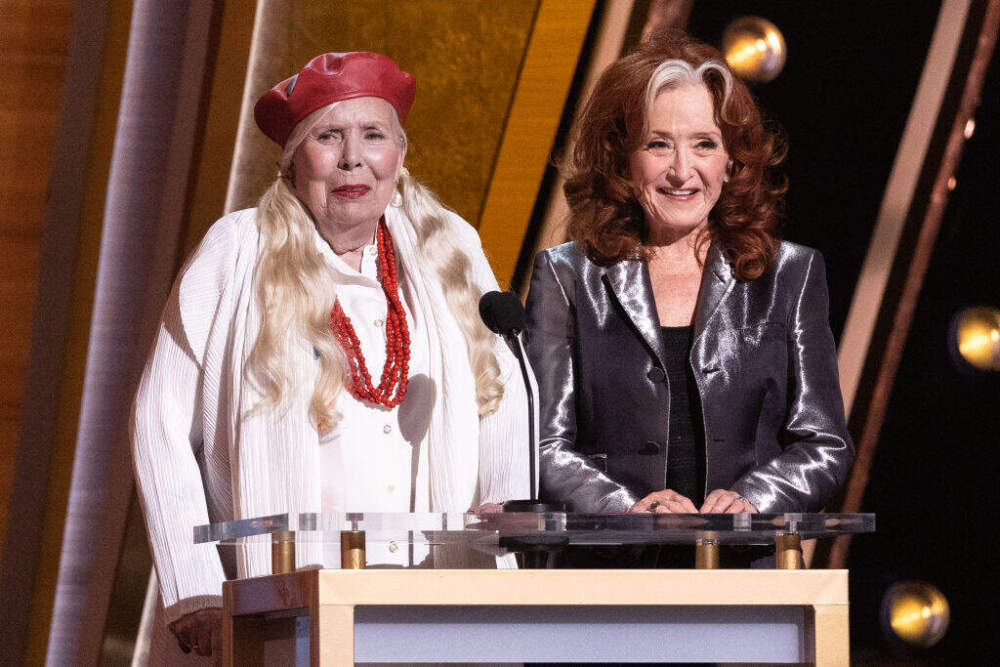
Raitt was also likely aided by the fact that her connection with the Grammys is long and deep. She nabbed her first of 13 trophies in 1990—taking home Album of the Year for the Americana classic Nick of Time—and has remained a frequent onstage presence ever since. In recent years she’s gamely performed in an array of situations, whether duetting with Alicia Keys on an Etta James classic or helping Joni Mitchell read the teleprompter last year. She serves as a bridge both to an older generation and a younger one.
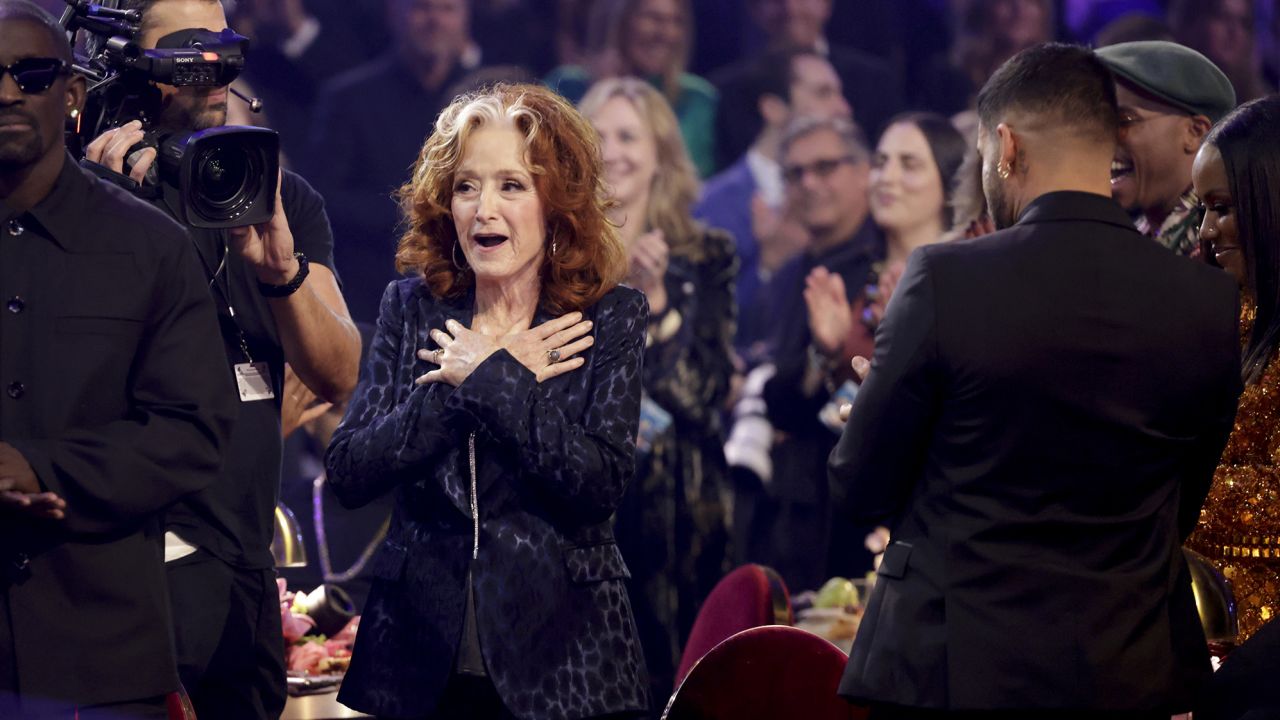
Why Bonnie Raitt Deserved Song of the Year at the Grammys

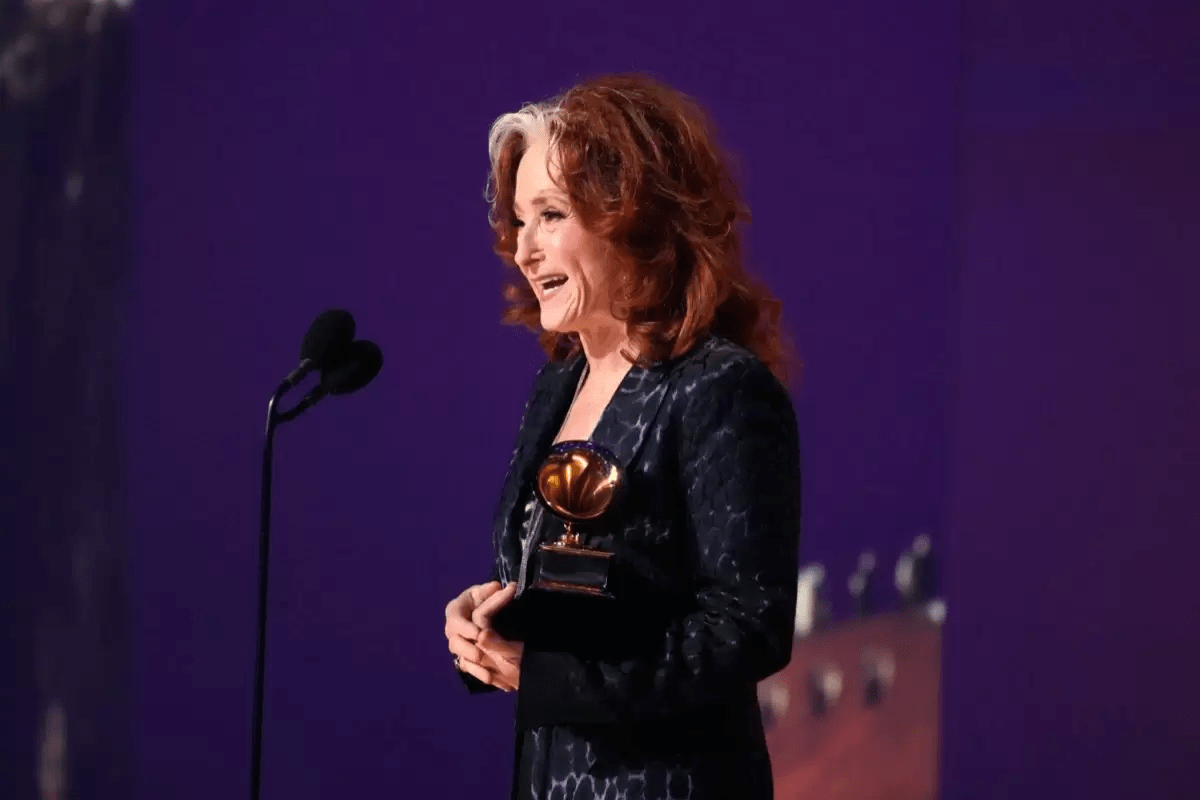
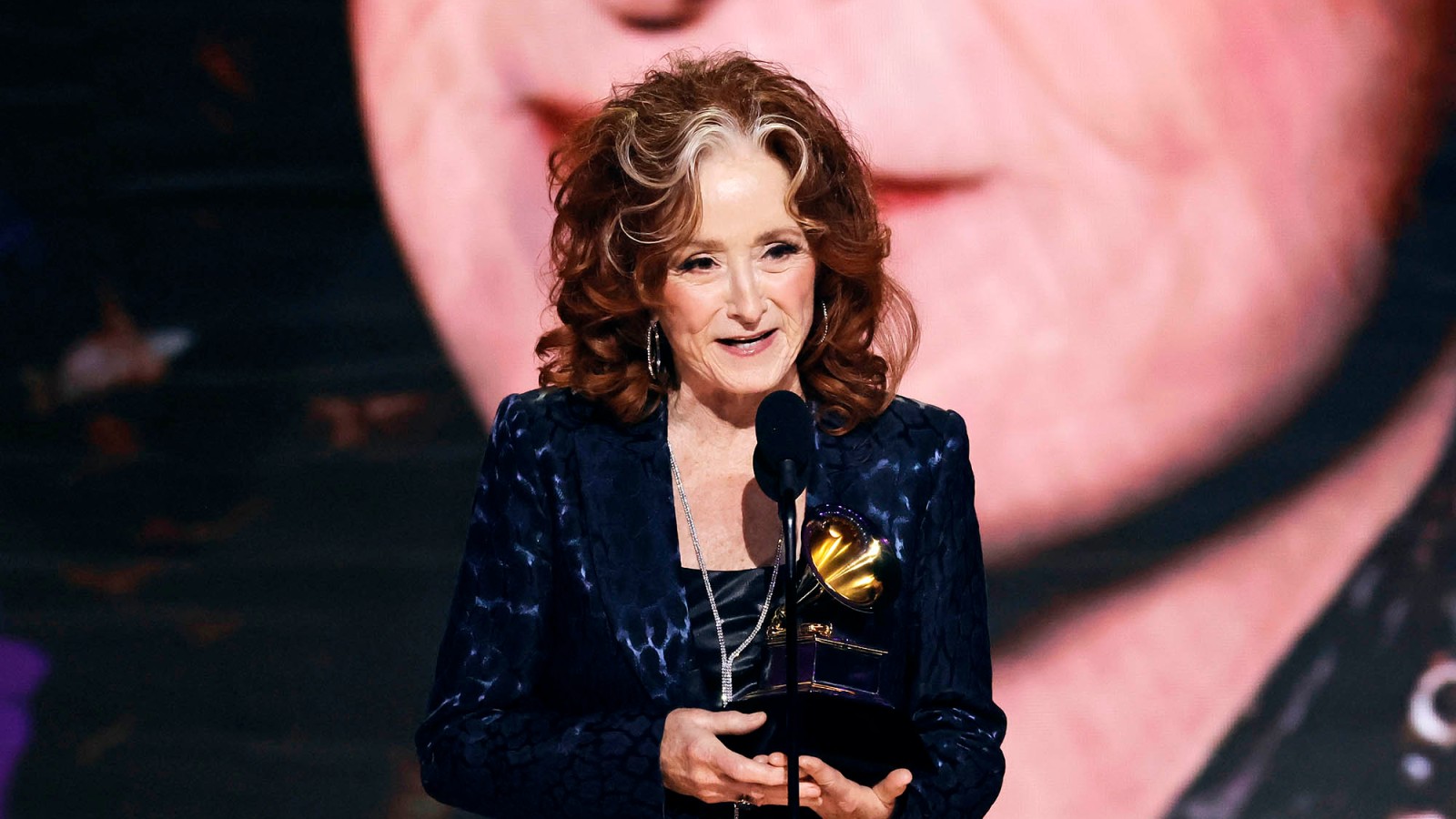
Bonnie Raitt looked stunned when her win for “Just Like That” was announced at the 65th annual Grammy Awards ceremony in Los Angeles on Sunday, February 5.

© Francis Specker /CBS/Getty Images

Raitt has succeeded at the Grammys not just for her overflowing musical talent, but because she’s the kind of artist that the Grammys want to honor, especially in the face of rapidly changing musical trends. Grammy voters tend to be old and white; they like it when artists play their own instruments, write their own songs, and uphold long-held traditions. Several anonymous voters admitted as much in a recent Variety article, with one complaining about the lack of “real musicians” on the ballot and how “the pendulum is swinging… way into ‘We must appease the TikTok generation.’”

A vote for Raitt, then, was a vote not just for the song, but for a generation, as well as a non-digital, highly personal approach to music. Song of the Year is supposed to be a songwriters award, and “Just Like That” was the only song on the ballot to only list one songwriter. It’s entirely possible that many older voters saw her solo name and picked as a rejoinder to a new era of pop songs written by committee. It’s also possible that many picked the song as a continued legacy vote for an artist who was already awarded with a Grammy Lifetime Achievement Award last year.

A unique story from an oft-ignored perspective

{{svg_quality_icon}}
{{quality-options}}

But all of this analysis ignores the quality of the song itself. “Just Like That” is a story song, an increasingly rare breed these days. Over a finger-picked guitar, Raitt sings through the lens of the fictional Olivia Zand, a grief-stricken mother who receives a stranger at her door. While the hardened, solitary Zand at first wants to turn him away, she lets him in and soon learns that he was the recipient of her dead son’s heart transplant. He has come to thank her for effectively saving his life. “And just like that, your life can change, look what the angels send/ I lay my head upon his chest and I was with my boy again,” Raitt sings.

It’s a story of how heartbreak can spring into hope, filled with suspense and haunting turns of phrase. Raitt delivers a lovely, understated vocal performance as a woman who has long buried her sadness before letting it unleash.

The song is reminiscent of another one of Raitt’s foremost hits, the John Prine-penned “Angel From Montgomery,” partially because both are written from a perspective rarely taken seriously in pop music, or pop culture at large, these days. Last week, TIME film critic Stephanie Zacharek wrote a piece pegged to the new film 80 For Brady about how the stories of older women have long mattered little to wider culture.

“As we age, nearly all women notice that they become somewhat invisible in the world, but in the golden era of the women’s film, older women really were expected to fade quietly into the wallpaper,” she wrote. “Just Like That” shows Raitt refusing to fade away; it shows that stories that are supposed to have been long-finished can be rejuvenated.

If you went on social media last night, you would quickly absorb the opinion that Raitt’s voice has no consequence, particularly in relation to her blockbuster peers; that because the Grammys didn’t center youth or statistical streaming proof, they got it wrong. But “Just Like That” matters because it tells a unique story from an oft-ignored perspective—and because it’s a flat-out beautiful song that Adele, Taylor Swift, or Beyoncé would be proud to have written. And hopefully, when they all reach age 73 just like Raitt has, they’ll find that their stories still matter as much as the empowerment anthems of their youths, even if the users of the app that has replaced the app that has replaced TikTok don’t agree.

Contact us at letters@time.com.

About The Author


Source: © Copyright TIME

But wait, there's more!

“Just Like That”: The Powerful Meaning Behind Bonnie Raitt’s Surprise Grammy Winner

on February 6, 2023 No comments
By Rachel Ulatowski

When the Grammy Awards aired on Sunday night, there were more than a few surprises. One of the biggest surprise wins was for Song of the Year, a prestigious Grammy often considered one of the Big Four awards along with Record of the Year, Album of the Year, and Best New Artist. As a result, the category featured a very impressive group of nominees for the 2023 award: Adele, Lizzo, Harry Styles, Taylor Swift, Steve Lacey, DJ Khaled, Kendrick Lamar, and Bonnie Raitt.

Given that Lamar and Adele were among the artists with the most nominations at the 65th Grammys, and that Lizzo and Styles won awards in the Big Four, those four seemed like the strongest candidates for Song of the Year. Meanwhile, 12-time Grammy-winner Swift was also a strong contender with her unique 10-minute song, “All Too Well (Taylor’s Version).” However, the award ultimately went to Raitt for her song “Just Like That.” While most fans were preoccupied with singers like Styles and Lizzo, both of whom received the most hype, Raitt was a stronger contender than some might have thought. The iconic blues singer also received the Lifetime Grammy Achievement Award during this year’s ceremony, bringing her career total to 13 Grammy awards.

Viewers’ surprise at her win was still warranted, considering that even Raitt did not seem to expect to win Song of the Year. When the news was announced, she looked shocked as she made her way to the stage. However, the award was definitely well-deserved, as listeners of the gut-wrenching and powerful song will recognize.

The meaning behind Bonnie Raitt’s “Just Like That”

{{svg_quality_icon}}
{{quality-options}}

“Just Like That” appears on Raitt’s album of the same name, which was released on August 22, 2022. The song is a folksy ballad with a soft, slow tune that tells a very heartbreaking tale. It begins with the story of a woman named Olivia Zand who receives an unexpected visitor. She finds herself oddly trusting of the mysterious stranger, and lets him in her home after he says he has something Zand would “want to know.” The lyrics, from Zand’s point of view, read, “It’s not like me to trust so quick / Caught me by surprise / But somethin’ about him gave me ease / Right there in his eyes.”

The song then changes direction as Zand looks back at how life can change “just like that.” She reveals that her son would’ve been 25 today if he hadn’t died when she “looked away.” Zand goes on to detail the regret she feels about her son’s death: “They say Jesus brings you peace and grace / Well he ain’t found me yet.” The song circles back to the man, who reveals he has spent years looking for Zand to let her know that he was the recipient of her son’s heart when he died. He says, “It was your son’s heart that saved me / And a life you gave us both.”

That’s when the woman finds her life changing again, “just like that,” as she lays her head on the man’s chest and feels herself coming out of the “darkness” as she listens to the sound of her son’s heart beating once more.

Is “Just Like That” based on a true story?

Since the release of her album, Raitt has opened up about the meaning behind “Just Like That.” In an interview, she explained that the inspiration for the song came in 2018, as she watched a news segment about a mother who donated her child’s organs and was preparing to meet the man who received her son’s heart. The segment had a profound impact on Raitt who said, “I just lost it. It was the most moving and surprising thing. I wasn’t expecting it. I vowed right then that I wanted to write a song about what that would take.”

With “Just Like That,” Raitt didn’t just want to retell the story she heard; she wanted it to convey the incredible love and compassion it takes for a family to choose to donate the organs of a loved one, especially a child. She also wanted to explore the perspective of a recipient and what it means for them to receive the product of a family’s compassion amid unimaginable loss.

During Raitt’s acceptance speech, she revealed that the late John Prine also inspired her song. Prine sadly passed away in 2020 due to complications from COVID-19. The legendary singer-songwriter also once wrote a powerful song on organ donation called “Please Don’t Bury Me.” Not only is Raitt’s song infused with the memory of Prine, but it is also a beautiful and heart-wrenching tribute to organ donors and their families.

About The Author


Source: © Copyright The Mary Sue

But wait, there's more!

Homeward Bound: A Grammy Salute to the Songs of Paul Simon
Bonnie Raitt, Garth Brooks & Trisha Yearwood, Stevie Wonder, Sting and many more performed Simon's songs.

on December 22, 2022 No comments

By Paul Grein

Paul Simon performs onstage during Homeward Bound: A GRAMMY Salute To The Songs Of Paul Simon at Hollywood Pantages Theatre on April 6, 2022 in Hollywood, California.
© Kevin Mazur /Getty Images for The Recording Academy

It’s not a surprise that Homeward Bound: A Grammy Salute to the Songs of Paul Simon, which aired (recorded April 6, 2022) on CBS on Wednesday Dec. 21, was so satisfying.

Paul Simon has long been regarded as one of our top songwriters. He won the 1970 Grammy for song of the year for “Bridge Over Troubled Water” and was nominated in that category for “Mrs. Robinson” and “Graceland.” He was inducted into the Songwriters Hall of Fame in 1982 and received that organization’s highest honor, the Johnny Mercer Award, in 1998. In 2007, he became the inaugural recipient of the Gershwin Prize for Popular Song.

Many of the participants on the two-hour special spoke warmly about Simon’s songs. Elton John Elton John called him “one of the greatest songwriters of all time” and recalled early days when he and Bernie Taupin would sit “on the floor with our headphones listening to [Simon & Garfunkel’s] Bookends just in complete awe of the songs – the way you wrote the songs and the sounds. As a songwriter, you are the bees’ knees.”

Remembering his childhood home, Garth Brooks said “When your stuff was playing, our house was a sweet place to be in.” Herbie Hancock said, “Paul Simon is a truly global citizen of this musical world – a daring and visionary artist who is open to our entire musical universe.” Dustin Hoffman said, “Quite simply, The Graduate would not be The Graduate” without Simon’s songs. Sting, Oprah Winfrey, Sofia Carson and actor Woody Harrelson also paid tribute to the master songwriter.

The special included performances of 10 of Simon’s 14 top 10 hits on the Billboard Hot 100 (combining Simon & Garfunkel and solo releases). At the end of the evening, Simon said “It’s been a night of extraordinary and many unexpected pleasures. I’d really like to thank all of these artists. It’s really amazing if you’re a writer to hear another artist perform your song well. It really makes a songwriter feel good. It makes you feel like you wrote a good song.”

Simon’s first major hit, “The Sound of Silence,” includes a lyric, “People writing songs that voices never shared/And no one dared/Disturb the sound of silence.” As a songwriter, Simon has never known that feeling and never will.

Ken Ehrlich, who was the producer or executive producer of the annual Grammy telecast for four decades from 1980-2020, executive produced this special (and co-wrote it with David Wild). Ehrlich’s talent, taste and connections are a big reason the show was so compelling.

Here are nine of the most memorable performances from the special, which is available to stream on demand on Paramount+.

Billy Porter with Take 6, “Loves Me Like a Rock”

Song history: This was the second single from There Goes Rhymin’ Simon. The song, on which Simon was backed by The Dixie Hummingbirds, reached No. 2 on the Hot 100 in October 1973.

Notes: Porter sang the song with evangelical fervor. He explained that as a gay kid who was raised in the Pentecostal church, he could relate powerfully to the song’s twin images of “a consecrated boy” and “a consummated man.” Porter said to him the song is fundamentally about a mother’s love. Indeed, many of Simon’s songs explore the theme of the parent/child relationship, including “Mother and Child Reunion” (which was performed on the show by Jimmy Cliff and Shaggy) and “Slip Slidin’ Away” (performed by Little Big Town).

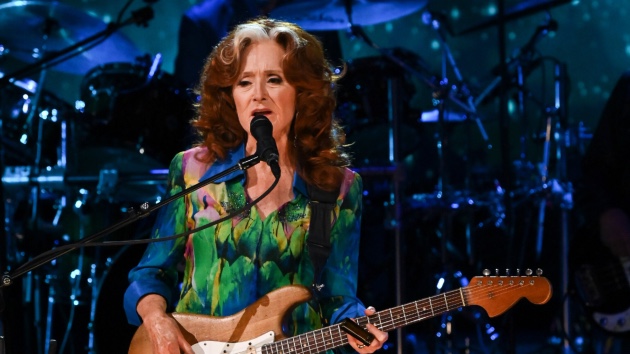
Bonnie Raitt With Brad Paisley, “Something So Right”

Bonnie Raitt collaborate with Brad Paisley for the Recording Academy GRAMMYs Tribute to Paul Simon – “Something So Right” – April 6, 2022

Song history: This was also from There Goes Rhymin’ Simon. It was never released as a single for Simon, though it showed up as the B side of his 1977 hit “Slip Slidin’ Away.” Barbra Streisand recorded it on The Way We Were, which topped the Billboard 200 for two weeks in March 1974. Other artists who have recorded the song include Phoebe Snow, Annie Lennox and Yearwood.

Notes: Paisley (who had opened the show with a solid performance of “Kodachrome”) played bluesy guitar behind Raitt as she sang an exquisite version of this song. Raitt noted that “this song wasn’t a big hit single. It was just stunning and deep and true.” The song includes one of the most eloquent lyrical passages of any song in modern times: “Some people never say the words ‘I love you’/It’s not their style to be so bold/Some people never say those words ‘I love you’/But like a child, they’re longing to be told.”

{{svg_quality_icon}}
{{quality-options}}

Rhiannon Giddens With Paul Simon, “American Tune”

Song history: This was the third single from Simon’s second solo album, There Goes Rhymin’ Simon. It failed to match the commercial success of the album’s first two singles, “Kodachrome” and “Loves Me Like a Rock,” both of which reached No. 2 on the Hot 100. “American Tune” peaked at No. 35 in January 1974.

Notes: “American Tune” is a hymn, really, and one of Simon’s finest songs. On the special, Simon noted that Giddens wasn’t even born when he wrote the song. But she related all the meaning of such lines as “And I don’t know a soul who’s not been battered/I don’t have a friend who feels at ease.” The song resonated amid the Vietnam/Watergate agonies of the early ‘70s and it resonates even more today after years of COVID and political turmoil. “It seems right to sing it today,” Simon said. 

Garth Brooks With Trisha Yearwood, “The Boxer”

Song history: This was initially a one-off single for Simon & Garfunkel. It reached No. 7 on the Hot 100 in May 1969 and was included on Bridge Over Troubled Water the following year.

Notes: Brooks took the lead on this faithful performance of the song, with Yearwood offering expert harmony vocals.

Sting, “America”

Song history: This ballad appeared on S&G’s 1968 album Bookends, but it wasn’t released as an S&G single until 1972, when the success of Simon & Garfunkel’s Greatest Hits (top five on the Billboard 200 in July of that year) reminded the industry of their potency. Prog-rock giants Yes had the biggest hit version of the song (No. 46 on the Hot 100 in September 1972).

Notes: It’s interesting that an Englishman chose to perform this song about searching for the soul of America, a song that was first released in one of the most turbulent years in American history. But Sting has a strong affinity for the song. ““God bless you, Paul for writing this great song,” he said. “I love it.”

Stevie Wonder With Ledisi, “Bridge Over Troubled Water”

Stevie Wonder performs during Homeward Bound: A GRAMMY Salute To The Songs Of Paul Simon at Hollywood Pantages Theatre on April 06, 2022 in Hollywood, California. © Christopher Polk /CBS via Getty Images

Song history: This power ballad topped the Hot 100 for six weeks from February to April 1970. It was both S&G’s biggest hit and the year’s biggest hit. It swept Grammys for record and song of the year. Aretha Franklin’s classic soul version reached No. 6 the following year – and also won a Grammy. Other artists who have charted with the song include disco star Linda Clifford in 1979 and Mary J. Blige & Andrea Bocelli in 2010.

Notes: Wonder and Ledisi built on Franklin’s classic soul cover version for this duet. Wonder introduced the song by calling it “one of the most beautiful songs ever written.” Wonder and Ledisi also performed S&G’s 1968 classic “Mrs. Robinson,” joined by the Jonas Brothers and Sheila E. Wonder and Simon have long shown mutual respect for each other. Wonder beat Simon for album of the year at the 1974 Grammy ceremony. When Simon won two years later for Still Crazy After All These Years, he famously remarked, “Most of all, I’d like to thank Stevie Wonder, who didn’t make an album this year.”

Paul Simon, “The Sound of Silence”

Song history: This tender ballad was Simon & Garfunkel’s first No. 1 hit on the Hot 100. It logged two weeks at No. 1 in January 1966. Disturbed’s crunching hard-rock version of the song reached No. 42 in 2016.

Notes: This was one of three songs that Simon performed to close the show, along with “Graceland” and “American Tune.” The song’s theme of disconnection is, sadly, timeless – “People talking without speaking/People hearing without listening.” The only thing that would have made this closing number it better is if Art Garfunkel had walked on stage to join his old partner.

Eric Church, “Homeward Bound”

Song history: This was Simon & Garfunkel’s second top five single on the Hot 100. It reached No. 5 in March 1966. Many artists have covered it, including Glen Campbell, who included it on By the Time I Get to Phoenix, which won the 1968 Grammy for album of the year (beating Bookends, as it happens). Simon performed “Homeward Bound” with George Harrison on Saturday Night Live in 1976.

Notes: Church offered a fine version of this ballad, which lends itself to a country spin (though it has never been a major country hit). He prefaced it by saying, “Paul Simon is a Mt. Rushmore songwriter and artist in my career – in my life, actually which makes this…terrifying.” The camera cut to Simon laughing at Church’s self-effacing remark.

Dave Matthews With Angélique Kidjo and Take 6, “You Can Call Me Al”

Angelique Kidjo and Dave Matthews are seen backstage during Homeward Bound: A GRAMMY Salute To The Songs Of Paul Simon at Hollywood Pantages Theatre on April 06, 2022 in Hollywood, California. © Kevin Mazur /Getty Images for The Recording Academy

Song history: This zesty song was the biggest hit from Simon’s Graceland album, which won a Grammy for album of the year and subsequently rose to No. 3 on the Billboard 200. The song reached No. 23 on the Hot 100 in May 1987 — Simon’s most recent top 40 hit.

Notes: Matthews, who as the announcer reminded us, was born in South Africa, sang the song on the special, backed by Angélique Kidjo and Take 6. The performers also delivered two other songs from Graceland, “Homeless” and “Under African Skies.”

© Chris Willman /Variety

About The Author


Source: © Copyright Billboard

But wait, there's more!