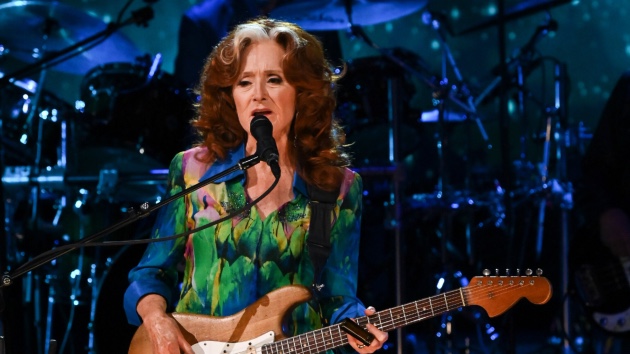
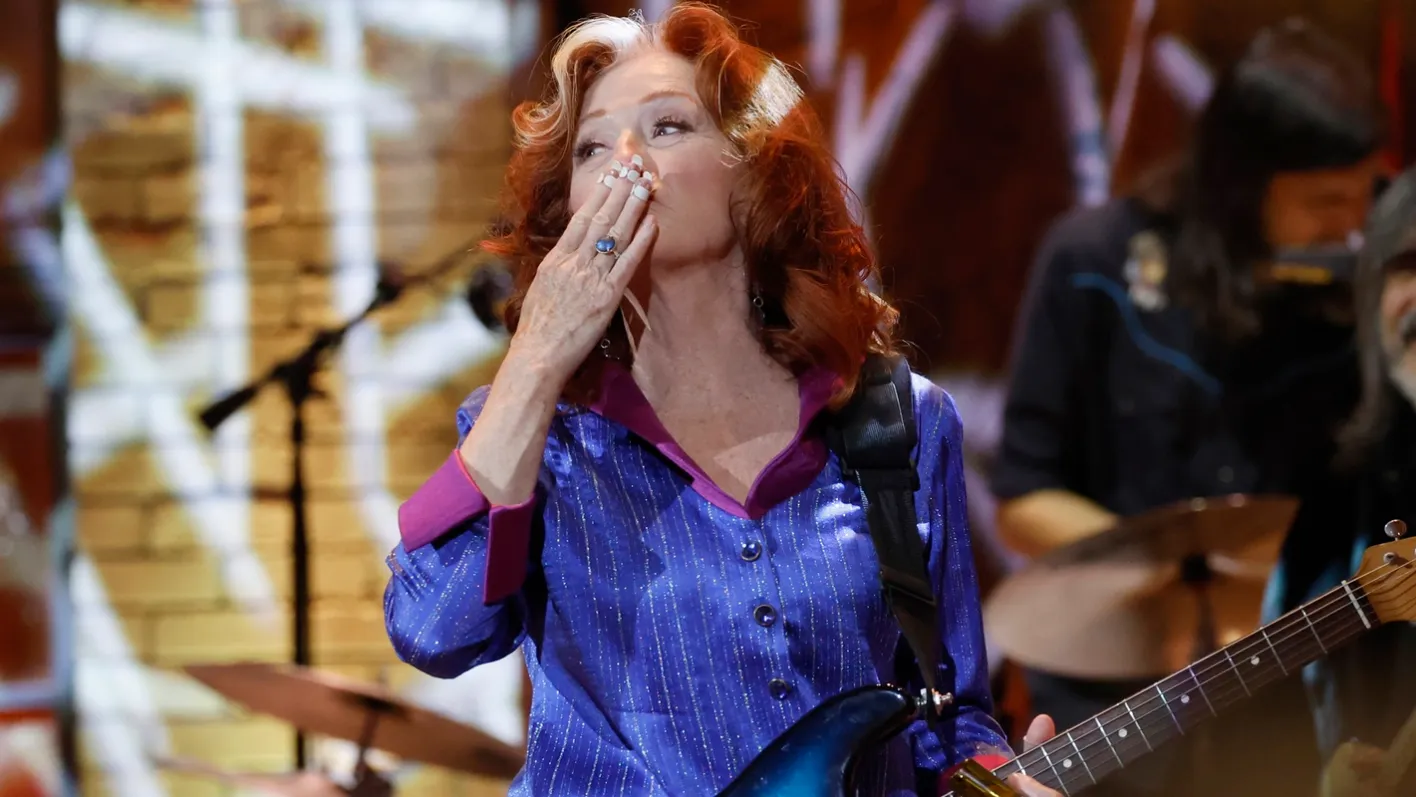
Releasing more than 20 albums during one’s career is an extraordinary feat in itself. But to do so with the spirit and virtuosity of Bonnie Raitt is another thing entirely. The beloved singer-songwriter and guitar slinger has racked up accolade upon accolade as her discography has unfolded over the past five-plus decades. She’s become one of blues and roots music’s most respected and decorated artists in the process. On her 21st LP Just Like That…, released in April — that count of 21 includes her two live albums, because they are no mere stopgaps — Raitt shows no sign of slowing down.
Just Like That… follows Raitt’s 2016 album Dig in Deep, a widely acclaimed record that, among other recognition, notched Raitt an Artist of the Year nomination at that year’s Americana Music Honors and Awards. Raitt’s 2012 album Slipstream, Dig in Deep and Just Like That… were all released via her own Redwing Records label, which she launched a decade ago.
Playing May 26 and 27 at the Ryman
Raitt recorded Just Like That… last summer in Sausalito, Calif., producing the album herself alongside recording and mixing engineer Ryan Freeland. Her studio band was a mix of longtime collaborators and new blood, including veteran bandmates James “Hutch” Hutchinson on bass and Ricky Fataar on drums. Relative newcomers Kenny Greenberg and Glenn Patscha joined the group on guitar and keys, respectively, while Raitt’s old friend George Marinelli lent guitar work to “Livin’ for the Ones.”
While most of Just Like That… is made up of covers, Raitt wrote four new songs for the outing. Highlights of Raitt’s original material include “Down the Hall,” based on a true story of a prison hospice program originally reported in The New York Times, and “Livin’ for the Ones,” which takes stock of the loved ones and collaborators Raitt has lost over the years with a mix of honest vulnerability and reverent homage. Raitt also pays tribute to those she lost in the album’s liner notes, including Toots Hibbert, John Prine and Allen Toussaint. “Down the Hall” in particular is a striking reminder that Raitt is a powerful lyricist, as the track takes the perspective of an inmate witnessing the last days of patients in the prison’s hospice ward.
Vocally, Raitt sounds as strong — if not stronger — as she did on landmarks of her catalog like “Angel From Montgomery” and “I Can’t Make You Love Me,” her naturally soulful voice bringing edge and gravitas to the album’s more serious moments. “Down the Hall,” for example, finds Raitt exploring a somber register as acoustic guitar and organ gently mingle beneath her voice. She can still rock and wail with the best of them, though, as heard on the achingly bluesy “Blame It on Me” and the arena-ready “Livin’ for the Ones.”
Raitt’s guitar chops are as fine as ever too, and on full display across the LP. Opening track “Made Up Mind,” written and first recorded by Canadian country-rock outfit The Bros. Landreth, serves up tasty slide licks atop soulful vocal harmonies and a groovy beat. “Blame It on Me” showcases Raitt’s understated rhythmic prowess, with a few bendy, bluesy flourishes for good measure. The title track allows space for Raitt’s more melodic playing, and “Waitin’ for You to Blow,” another of the LP’s Raitt originals, is a delightful mix of funky jazz chords, rapid-fire legato runs and creatively employed octaves.
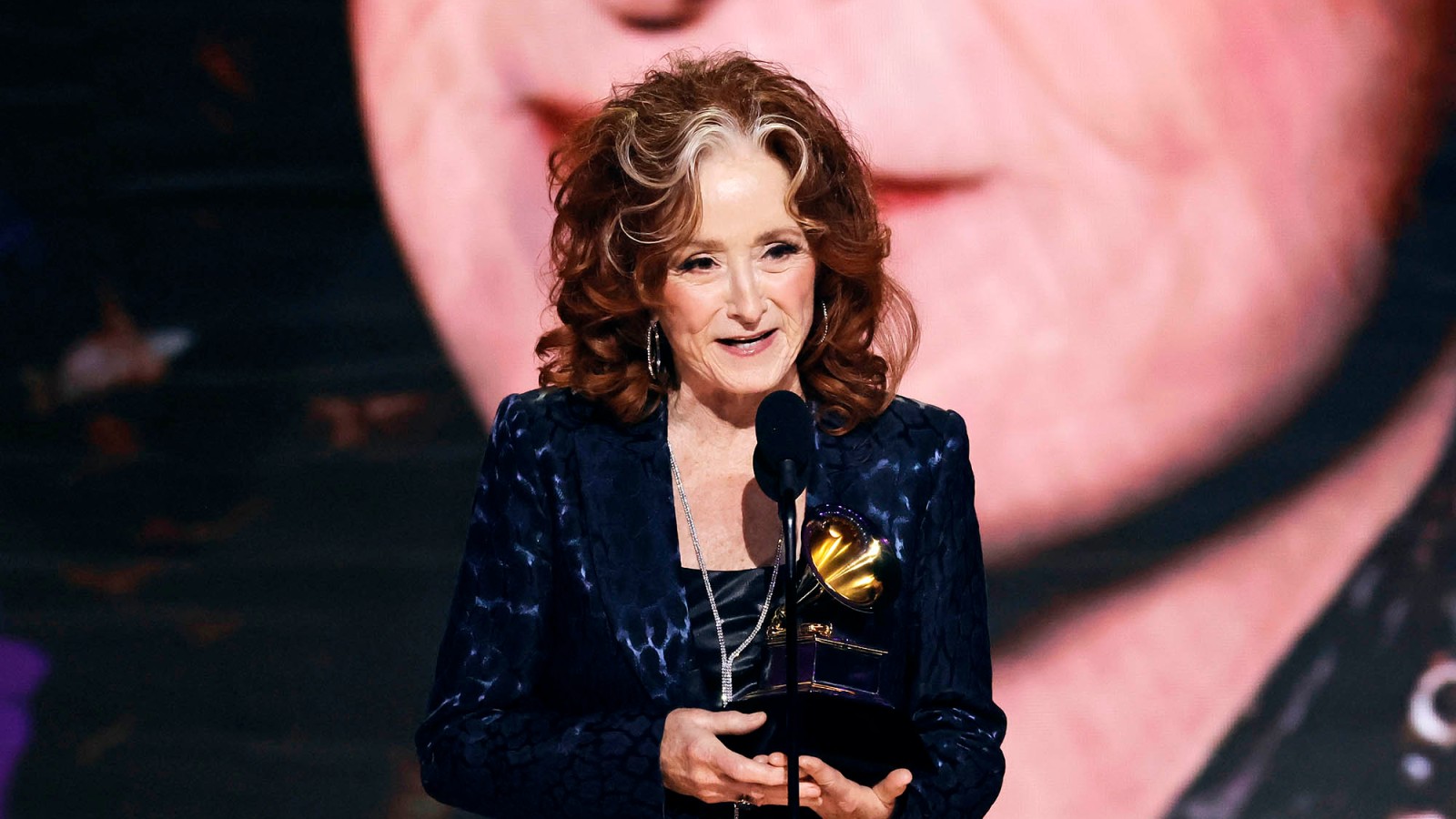
Releasing music isn’t all that Raitt’s been up to in 2022. In March, Billboard honored her as part of its annual Women in Music event, presenting her with the Icon Award. In April, Raitt received the Grammys’ Lifetime Achievement Award, the Recording Academy’s highest honor and one that has in the past gone to such artists as Tina Turner and Emmylou Harris. That same month, her 1989 album Nick of Time, which brought Raitt her first true commercial success, was added to the Library of Congress’ National Recording Registry.
Raitt is currently on a lengthy tour in support of Just Like That…, which stops for back-to-back nights at the Ryman on Thursday and Friday. The array of guests joining her on various dates include Marc Cohn and Mavis Staples, as well as NRBQ, whose “Something’s Got a Hold of My Heart” appears in grooving form on Raitt’s new album. Another icon, Lucinda Williams, will share the stage with Raitt in Nashville.
With an extensive catalog — stacked deep with both chart hits and fan favorites — to draw from, and a stellar live band to bring those songs to life, Raitt’s Ryman shows are sure to be live highlights of this year. Half a century into her dynamic career, she’s reached a status most musicians dream of but few ever reach: a living legend, still deep in her prime.
Bonnie Raitt has been a lot of things—a blues singer, a rock singer, arguably a jazz singer, occasionally a country singer, and eventually a blockbuster pop singer—and on “I Can’t Make You Love Me,” she pronounced herself the purveyor of a timeless, wrenching classic
Grunge. Wu-Tang Clan. Radiohead. “Wonderwall.” The music of the ’90s was as exciting as it was diverse. But what does it say about the era—and why does it still matter? 60 Songs That Explain the ’90s is back for 30 more episodes to try to answer those questions. Join Ringer music writer and ’90s survivor Rob Harvilla as he treks through the soundtrack of his youth, one song (and embarrassing anecdote) at a time. Follow and listen for free exclusively on Spotify. In Episode 63 of 60 Songs That Explain the ’90s—yep, you read that right—we’re breaking down Bonnie Raitt’s timeless “I Can’t Make You Love Me.”
Bonnie Raitt was born in Burbank, California, in 1949. She put out her first album, called Bonnie Raitt, in 1971, when she was 21 years old. Then she put out eight more records. Let’s call this Phase 1. But right from the very beginning of Phase 1, boy could Bonnie Raitt sing the bejesus out of the word love.
{{svg_quality_icon}}
{{quality-options}}
1
http://i3.ytimg.com/vi/91SJPzbU2E4/hqdefault.jpg
But you can’t sing the bejesus out of the word love like that if love hasn’t already kicked your ass a whole bunch of times.
That’s from her debut album. It’s an old blues ballad called “Since I Fell for You.” It rules. You know the song “Get Yourself Another Fool” by Sam Cooke? On Sam Cooke’s Night Beat record. Look into that one. Unbelievable. At 21 years old Bonnie’s already starting to operate on that level of poise and gravitas and pathos. Phase 1 of Bonnie Raitt comprises nine records in 15 years. No huge blockbuster chart-topping albums. No breakout singles. Just a steady and healthy and for quite a while a sustainable career bolstered by the fact that one day she’d write a song—it’s the last song actually on her 10th album, which will formally kick off Phase 2—called “The Road’s My Middle Name.”
Bonnie “The Road” Raitt. Put out solid records and tour your ass off. That’s Bonnie’s foundational idea. Another foundational idea: flexibility. She is a blues singer, and a rock singer, and arguably a jazz singer, and occasionally a country singer, and eventually a blockbuster pop singer. But for the first decade and a half, without any outrageous pop success, she enjoys what she’ll later call “a parallel career” to pop in a genre she once described to Stereogum like this: “There’s a format that always plays me, which they’ve called 10 different names over the years.” And then she lists some of those names: roots music. Americana. AOR: Album-oriented rock. She can be folk. She can be folk rock. She can be Southern rock. Honorary Southern rock. Yeesh. Don’t get hung up on any of this. Don’t be like me. Focus on the poise, the gravitas, the pathos, the hard-earned wisdom. Focus on her voice.
{{svg_quality_icon}}
{{quality-options}}
1
http://i3.ytimg.com/vi/nlzFMVdBE0c/hqdefault.jpg
This is a song Bonnie wrote called “Nothing Seems to Matter.” Dope “Maggie May” vibes here. It’s on her second album, Give It Up, from 1972, which starts with another song Bonnie wrote called “Give It Up or Let Me Go.” The let me go is crucial. Don’t waste my time is a central theme of Bonnie Raitt’s love songs, notably, but the slightly risque nature of the phrase Give It Up is worth noting as well, I suppose.
If Bonnie Raitt first came to your attention in the late ’80s or early ’90s—which appeared to be the case for millions of people, some of whom were Grammy voters—then it might very well be that your first impression of her was as a 40-year-old veteran rock star on, like, her 11th album. Bonnie was one of this era’s great comeback stories, though she’s joked that calling it a comeback implies that she’d ever been a huge star to begin with. But one of the real joys of doing a Bonnie Raitt deep dive now, of luxuriating in Phase 1, is you get to experience her as a younger, presumably much wilder person, as a 20-something flamethrower in the 1970s trying to drink various old blues legends under the table, and succeeding.
{{svg_quality_icon}}
{{quality-options}}
1
http://i3.ytimg.com/vi/H2b_nVbeqjc/hqdefault.jpg
This song’s called “Guilty.” From her third album, Takin’ My Time, in 1973. A melancholy horn section followed Bonnie Raitt everywhere she went for most of the ’70s, just in case she broke into song in the bathroom or something.
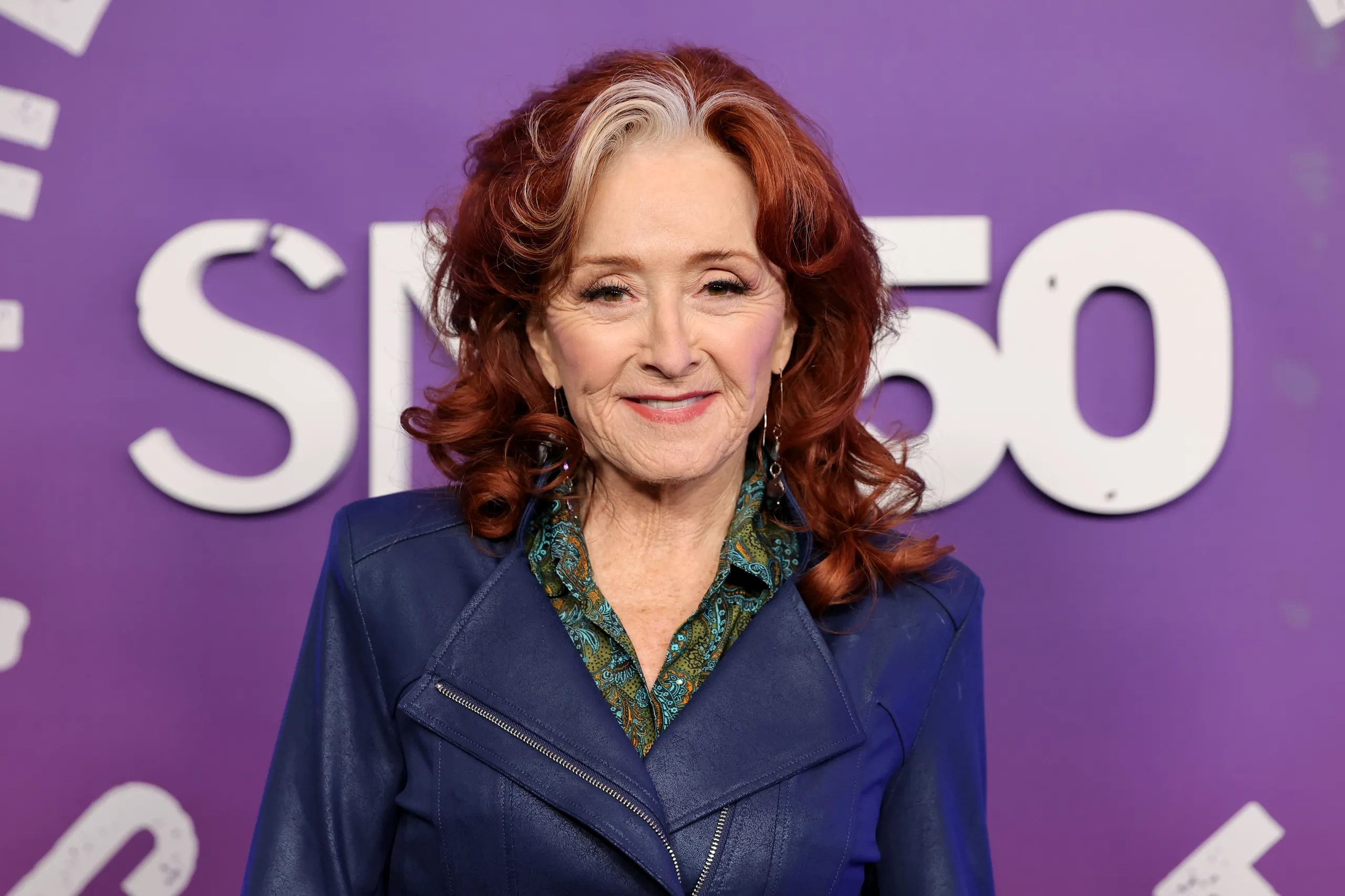
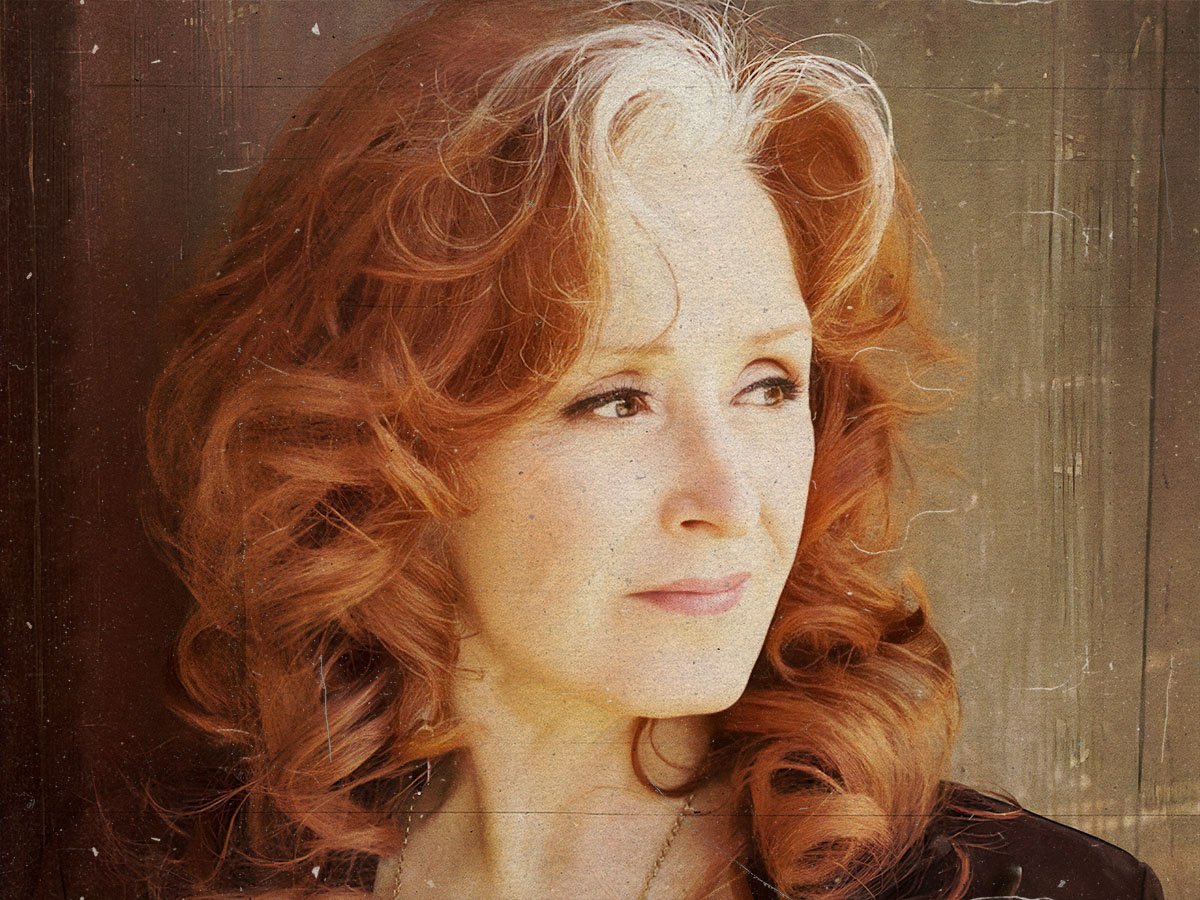
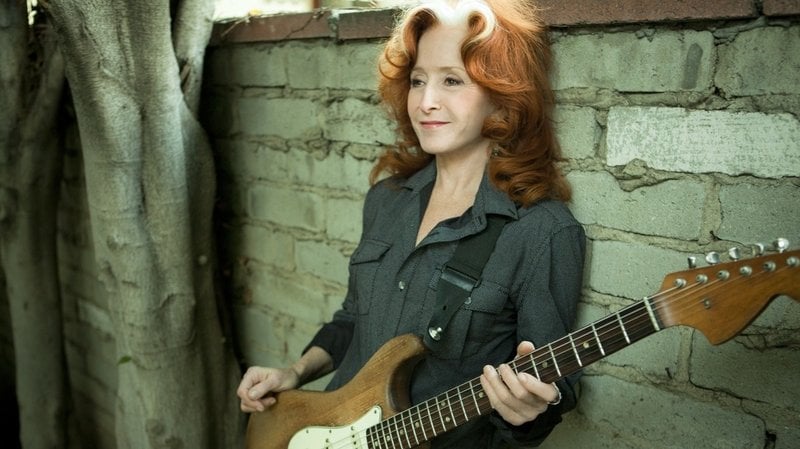
I hope she shared the cocaine with the horn section. She probably did. She seems like a super-nice lady. The silver-white streak, in Bonnie’s hair—if you’re like me, you even hear the name Bonnie Raitt and you picture her shrouded in this elegant, roaring campfire of deep red hair, with a silver-white streak in the middle, right? She says that streak started coming in naturally when she was 24, and by 1981 the streak was expanding while the red was fading, so she started dying her hair, but around the streak, to protect it, because as she told Parade magazine once, “I’ve been told it means you’ve been kissed by an angel.” That white streak is a bit on-the-nose, as metaphors go, yes? For a young instant-classic blues singer, for an old soul, for a masterful song interpreter who’d only just hit her mid-20s. It’s like she manifested that streak. Her fourth album, Streetlights, from 1974, that’s the one with her cover of John Prine’s “Angel From Montgomery.” Holy moley.
Listen, John Prine is John Prine, and I’m not gonna sit here and tell you that anybody can out–John Prine John Prine, but I do think Bonnie Raitt sings these lines with a singularly electrifying sense of exasperation.
{{svg_quality_icon}}
{{quality-options}}
1
http://i3.ytimg.com/vi/s4S1Q1vfngA/hqdefault.jpg
So apparently this time out I am disinclined to inundate you with other artists and other songs, for whimsical and discursive purposes, and I am trying to honor my impulse to not indulge my usual whimsical discursive impulses, but it might just be that I got quite entranced by Phase 1 Bonnie Raitt. We might gotta speed this up. Let me briefly direct your attention, though, to her fifth album, from 1975, called Home Plate. First of all, the Home Plate album cover does indeed feature an exuberant Bonnie Raitt sliding into home plate, and I say to you now, with affection, that her sliding form is terrible, like she’s way out in front of home plate, which by the way appears to be shaped incorrectly—the sides are much longer than regulation—and her one leg is way too high, as though she is trying to kick the catcher in the face. Terrible sliding form, great album cover. And perhaps she’s trying to spike the catcher because the catcher is the gentleman to whom she directs the piano-driven heartbroken love song “My First Night Alone Without You.”
{{svg_quality_icon}}
{{quality-options}}
1
http://i3.ytimg.com/vi/LeYp8gBwny8/hqdefault.jpg
Piano-driven heartbroken love songs being somewhat of a Bonnie Raitt specialty, at this point, if you go in for, y’know, foreshadowing. The aching in her head might also be caused by whiskey, or cocaine, or the concussion she received from poorly sliding into home plate.
It’s weird, though, to have zero digressions, isn’t it? Is this too streamlined? Are you familiar with this show? If so, do you feel like you clicked on the wrong thing? You’re right. What about just one other Bonnie Raitt–caliber American icon, with a career running parallel to hers, just for reference, just to see what that double helix looks like? Let’s try this. Another deified singer-songwriter. Another old soul steeped in the blues without getting all pompous and Blueshammer-y about it. Also from California. Born in Pomona. That’s close! Bonnie’s from Burbank. That’s like a 40-minute drive! It probably isn’t. That’s just what Google Maps says. It’s probably like four hours. (My editor chimed in here to say, “Only a madman would do this drive.” There you go. Come to me with all your questions about Los Angeles geography.) Whatever. It doesn’t matter how long the drive is. This is gonna go great.
{{svg_quality_icon}}
{{quality-options}}
1
http://i3.ytimg.com/vi/wCvZ1AUk1pg/hqdefault.jpg
You recognize that voice? No? Yeah, I don’t blame ya. OK. Look at how well this works, actually. Also born in 1949. He’s less than a month younger than Bonnie Raitt. Also started kicking around in 1971 or so. OK, we’re doing it. This guy. This guy who also appears to be dealing with a “My First Night Alone Without You”–type situation.
The first Tom Waits studio album is called Closing Time, from 1973, he’s sitting at a dimly lit piano looking world-historically pensive and poetic, very similar vibe and lighting scheme to Bonnie Raitt on the cover of her first album, except she’s smiling; if you’re willing to put a bed and a piano in the same room you can imagine that they’re actually sitting in the same room, and Bonnie’s reclined there, somewhat amused, listening to her morose pal Tom pensively plinking at a piano. But let’s not belabor this comparison. This song’s called “Martha.” It’s the single best heartbroken piano ballad of the 1970s. It’s the “I Can’t Make You Love Me” of its era.
To hear the full episode click here,and be sure to follow on Spotify and check back every Wednesday for new episodes on the most important songs of the decade. This excerpt has been lightly edited for clarity and length.
About The Author
Rob Harvilla
Senior Staff Writer
Harvilla writes about music and other pop culture. He lives in Columbus, Ohio, and was alive in the ’80s.
An in-depth look at the subtle artistic and technical elements behind her celebrated and highly emotive slide playing.
Looking back on the years I spent developing as a guitarist, I often kick myself for having taken certain musicians for granted – guitarists who always sounded so good but whose style I dismissed as “easy” to play.
While I was focused on learning solos crowded with notes, another musical world was passing me by. This is not to say that playing a lot of notes isn’t musical; it all depends on when and how you do it.
But that’s a lesson for another day.
I save one of my hardest kicks for when I think of Bonnie Raitt.
From listening to Raitt and players like her, I learned that being a good guitarist requires playing with an emphasis on musicality and tasteful note choices, along with a dedication to making a solo serve the song.
This requires a different kind of technique, one that is more subtle and surely not easy.
I’m going to try to make up for all that lost time by exploring Raitt’s unique approach to music, and more specifically, the guitar.
It’s almost as if Raitt has two voices. When listening to her songs, her smooth and soulful vocal style is immediately apparent. But when she lays down some of her signature open-tuned slide guitar licks, it becomes clear that she is a musician of great depth.
Before we dive into her guitar work, let’s talk about Raitt’s tone.
She doesn’t require anything elaborate or wildly expensive to achieve her warm, sustaining sound. Her main electric guitar, Brownie, is a Fender Strat that pairs an unpainted 1965 body with a neck from an unknown year.
It has long been her faithful onstage companion, and she hasn’t played a show without it since the late night in 1969 when she bought it for a whopping $120. The price was right, and she loved how it sounded.
Raitt strings the guitar with a custom set of GHS Boomers, in gauges .013, .017, .020w, .032, .042 and .052.
For amplification, Bonnie plugs her Strat into a Bad Cat Black Cat 30R 1×12 combo, while ultimately achieving her warm, overdriven tone with the simple addition of a ProCo Rat distortion pedal. She recently replaced her Boss CS-2 compressor with yet another classic, the MXR Dyna Comp, which provides all the sustain she needs to conjure the long-lasting notes that are a hallmark of her style.
So let’s turn our focus to how she plays, as this is what contributes most to her unique blend of rock, R&B, blues, and soul.
Chicago blues giant Muddy Waters was a major influence on Raitt, with his electrifying guitar style and ability to sustain a long career, something she was determined to achieve for herself. Other influences include a host of blues artists such as Howlin’ Wolf, Mississippi Fred McDowell and Furry Lewis, all of whom, like Waters, played fingerstyle blues guitar and incorporated slide work.
But Raitt was also drawn to the early rock and roll of Elvis Presley and Fats Domino, as well as the 1960s folk movement led by the likes of Pete Seeger and Peter, Paul & Mary. Their emphasis on activism resonated with Bonnie, and she would soon begin an earnest dedication to environmental and human rights causes that she continues today.
An important element of Raitt’s playing is her use of open tunings and capos.
She most often plays in open A tuning (low to high: E, A, E, A, C#, E), but she also uses open G, which is the same tuning scheme transposed down one whole step (low to high: D, G, D, G, B, D). (All slide guitar examples in this lesson are presented in open G.)
Raitt often employs open strings in her rhythm and slide playing, and will often use a capo based on a song’s key, most often at the 3rd or 5th frets. For example, if her guitar is tuned to open A and the song is in the key of C major, she will often place her capo at the 3rd fret.
This will cause the open strings to produce a C chord – the tonic or “home” chord – giving her the opportunity to incorporate any “open” string she likes.
When it comes to playing slide guitar, Raitt isn’t in a hurry.
For example, when playing a melodic theme or guitar solo, she’ll often include a long, slow slide to create a mix of anticipation and plaintive longing.
(Image credit: Future)
Ex. 1 illustrates this approach with a phrase in the style of “Unintended Consequence of Love,” from 2012’s Dig in Deep. (For ease of reading, all music examples that require a capo are written in the key of G major, instead of the actual sounding key. The capo-ed fret is “0” in the tab.)
Another signature slide move of Bonnie’s is to slowly slide a note down the neck.
(Image credit: Future)
Ex. 2 is reminiscent of a phrase she plays in “Thing Called Love,” from her breakthrough 1989 album, Nick of Time.
Notice how the first note is left to simply hang in the air.
Like other great guitarists, she has a sublime vibrato, but she knows when not to use it.
Raitt also employs another subtle approach when sliding into a note from above, as she sometimes uses a quick slide starting from a whole step, or two frets, higher.
(Image credit: Future)
Inspired by “Love Letter,” also from Nick of Time, Ex. 3 demonstrates how this snarky little slide move can inject some attitude into your playing.
While playing a song in a major key, Raitt will frequently (and slyly) borrow notes from its parallel minor pentatonic scale, which is built from the same root.
For example, if a song is in the key of G major, she’ll often be inclined to use notes from G minor pentatonic, which is spelled G (the root), Bb (the minor, or “flatted,” 3rd), C (the perfect 4th), D (the perfect 5th) and F (the minor, or “flatted,” 7th).
The “blue” notes here – the b3 and b7 – are her targets, as the three remaining notes are duplicated in the G major scale (G, A, B, C, D, E, F#).
(Image credit: Future)
Ex. 4 is reminiscent of Raitt’s playing in “Something to Talk About,” from her 1991 Grammy-winning album, Luck of the Draw.
We’re again in the key of G major here, and, if you look at the music notation, you’ll see how Bb (the b3) and F (the b7) are borrowed from the G minor pentatonic scale. But notice how they’re prevented from coming across too harshly by quickly moving on to diatonic notes from the G major scale right next door (A and E, respectively).
This creates a sound that is as soulful as it is bluesy.
Raitt will take advantage of this approach often, and in such a way as to make it always sound fresh.
(Image credit: Future)
Let’s take a quick detour to discuss Raitt’s rhythm guitar style, when she’ll often give her slide a rest. If you’re unfamiliar with her earlier albums, you might be surprised to hear her playing in a more traditional blues style.
Ex. 5 brings to mind “Love Me Like a Man” from her 1972 album, Give It Up.
Played without a slide, and in standard tuning, it offers up a classic fingerstyle blues, played with a triplet, or “shuffle,” feel. Be sure to use your pick-hand thumb on the third beat of bar 3, as indicated.
(Image credit: Future)
Raitt is especially masterful when interpreting ballads.
A great example is her cover of John Prine’s “Angel from Montgomery” from 1974’s Streetlights. In it, she uses both strumming and fingerpicking in the vein of Ex. 6.
The guitarist strums with the tips of her plastic fingerpicks, but if you don’t own a set, you can use the tips of your fingers in much the same way.
Note the use of drop-D tuning here, where the low E string is tuned down one whole step, to D, and a capo at the 2nd fret. Raitt will often alternate between overtly stating a song’s groove and sneakily playing her rhythm parts tucked into the band.
(Image credit: Future)
Ex. 7 is reminiscent of “Ain’t Gonna Let You Go” from her 2012 Grammy-winning album, Slipstream, where she lays down a funky blues groove, without using her slide.
In these situations, Raitt will often wear it – on her middle finger, as always – to give her the option to use it if she wants to.
Bonnie most often chooses to perform music by other songwriters and will commonly invest three to four years into sorting through songs in order to find an album’s worth of material to record.
However, she does perform her own songs as well. “Give It Up or Let Me Go,” a song she wrote for her album Give It Up, features her plucking fretted notes, then switching to slide partway through, making its entrance a welcome surprise.
(Image credit: Future)
Ex. 8 is inspired by her unaccompanied intro on this track. Raitt loves to let notes ring a tad longer than you think she might.
To accomplish this, she gently coaxes them along with a wide vibrato.
(Image credit: Future)
To give this a try, see Ex. 9, which is based on “Love Sneakin’ Up On You” from 1994’s Longing in Their Hearts.
Summon a wide vibrato by quickly wiggling, or “wagging,” your slide back and forth, covering the area between the adjacent frets on either side.
This technique, combined with the use of a compressor pedal, gives the guitarist the sustain she needs to wring everything out of each note, a hallmark of her style.
Bonnie Raitt’s phrasing and touch are what place her among a select group of soulful and expressive guitarists who make you sit up and listen even though it can be confounding to figure out just what makes them sound so good.
There’s a lot going on “behind the scenes” of Raitt’s seemingly effortless approach to music that has enabled her to achieve the Muddy Waters-like longevity she envisioned for herself over 50 years ago.
To her credit, she has consistently done it in her own self-effacing, understated way – all the while making it look “easy.”
Jeff Jacobson is a guitarist, songwriter and veteran music transcriber, with hundreds of published credits. For information on virtual guitar and songwriting lessons or custom transcriptions, reach out to Jeff on Twitter or visit jeffjacobson.net.
Bandana Blues is and will always be a labor of love. Please help Spinner deal with the costs of hosting & bandwidth. Visit www.bandanablues.com and hit the tipjar. Any amount is much appreciated, no matter how small. Thank you.
Bonnie Raitt is nothing if not loyal. And when she caught wind of the fact that Mike Reid and I were writing and recording together, she was quick to volunteer to sing on our song “The Bridge.” It’s one of my favorite songs Mike and I have written. And I can no longer imagine it without her heroic spirit present. ~ Joe Henry
Released on: 2025-09-05 Producer: Joe Henry Music Publisher: Rivers and Roads Music (ASCAP - admin by Endurance Music Group) Music Publisher: Mule Rider (ASCAP) Music Publisher: Blue Raincoat Music (ASCAP) ℗ 2025 Work Song Inc. marketed and distributed by Thirty Tigers
{{svg_quality_icon}}
{{quality-options}}
1
http://i3.ytimg.com/vi/VWNoTHkp6_k/hqdefault.jpg
Prison Bound Blues · Bonnie Raitt
Bonnie has contributed a new recording of "Prison Bound Blues" written by Leroy Carr to a project called Better Than Jail, an extraordinary new album benefiting Free Hearts and Equal Justice USA. Better Than Jail is available everywhere today and features covers of iconic prison songs from Steve Earle, Taj Mahal,Margo Price, The War and Treaty and many more. The album seeks to raise awareness and support for the urgent need to reduce the harm of the criminal justice system. https://found.ee/BetterThanJail.
I'm so proud to have joined in with so many illustrious artists in creating this very special album in support of rural prison reform. Overlooked for far too long, this issue cuts across all cultural and political divides and deserves all our focused attention to finally bring about some swift and meaningful action. Better Than Jail is one of the most inspired and heartfelt albums I've been blessed to be a part of and I hope it sets a fire in hearts far and wide to join in our efforts." ~ Bonnie Raitt
Released on: 2024-10-04 Executive Producer: Brian Hunt Producer: Kenny Greenberg Producer: Wally Wilson Producer: Bonnie Raitt Recording Engineer: Jason Lehning at Sound Emporium Mastering Engineer: Alex McCollough at True East Mastering Production Assistant: Shannon Finnegan Mixer: Justin Niebank at Hounds Ear Music Publisher: Universal Music Corp. Composer, Lyricist: Leroy Carr ℗ Believe Entertainment Group and Wyatt Road Records
{{svg_quality_icon}}
{{quality-options}}
1
http://i3.ytimg.com/vi/xC2BJuQbO8w/hqdefault.jpg
The Fabulous Thunderbirds - Nothing in Rambling Ft. Bonnie Raitt, Taj Mahal, Keb' Mo' & Mick Fleetwood
In celebration of the band’s 50th Anniversary, The Fabulous Thunderbirds have just released Struck Down, their first studio album in eight years on Stony Plain Records. The ten-track album includes a wonderful cover of Memphis Minnie’s “Nothing in Rambling,” featuring longtime friends, T-Birds founding member Kim Wilson, along with Bonnie, Keb’ Mo’, Taj Mahal and Mick Fleetwood. — BRHQ
{{svg_quality_icon}}
{{quality-options}}
1
http://i3.ytimg.com/vi/YmW-bgcbvQI/hqdefault.jpg
Little Feat - Long Distance Call
“I’ve always loved Little Feat and this new incarnation of the band is bringing some serious heat, cred and new blood to their enduring legacy. Every Feat fan loves us some Sam. I’m so glad he’s now gotten a chance to step out front and center and put his spin on these wonderful blues songs. I loved singing "Long Distance Call" with him, always one of my favorites, and Scott slayed on slide. Know you’ll enjoy hanging out with us at Sam’s Place!" -- Bonnie Raitt
“Long Distance Call” was written by blues legend, Muddy Waters. It has Sam Clayton and Bonnie Raitt on vocals, Scott Sharrard on Dobro, Fred Tackett on acoustic guitar, Tony Leone on drums, and Michael “The Bull” LoBue on harmonica. The album also features Bill Payne on piano and Kenny Gradney on bass.
Little Feat have composed an album that’s their love letter to the blues entitled, ‘Sam’s Place.’ “Long Distance Call” plus many other blues classics are on this album. You can stream and order ‘Sam’s Place’ here: https://orcd.co/samsplace
Broken Hearts & Dirty Windows: Songs of John Prine, Vol. 2, the anticipated new John Prine tribute record from Oh Boy Records, is out today. Stream/purchase HERE.
Created as a celebration of Prine’s life and career, the album features new renditions of some of Prine’s most beloved songs performed by Brandi Carlile (“I Remember Everything”), Tyler Childers (“Yes I Guess They Oughta Name A Drink After You”), Iris DeMent (“One Red Rose”), Emmylou Harris (“Hello In There”), Jason Isbell (“Souvenirs”), Valerie June (“Summer’s End”), Margo Price (“Sweet Revenge”), Bonnie Raitt (“Angel From Montgomery”), Nathaniel Rateliff & The Night Sweats (“Pretty Good”), Amanda Shires (“Saddle in the Rain”), Sturgill Simpson(“Paradise”) and John Paul White (“Sam Stone”). Proceeds from the album will benefit twelve different non-profit organizations, one selected by each of the featured artists.
{{svg_quality_icon}}
{{quality-options}}
1
http://i3.ytimg.com/vi/Z71L4JdrVBY/hqdefault.jpg
Bonnie Raitt - Write Me a Few of Your Lines/Kokomo Blues
60 years anniversary celebration of Arhoolie
December 10, 2020
{{svg_quality_icon}}
{{quality-options}}
1
Arhoolie Foundation celebrates it's 60th anniversary (1960-2020) with an online broadcast.
Bonnie Raitt - Shadow of Doubt
Hardly Strictly Bluegrass Festival
October 3, 2020
Hardly Strictly Bluegrass celebrates it's 20th anniversary with an online broadcast titled “Let The Music Play On”.
{{svg_quality_icon}}
{{quality-options}}
1
http://i3.ytimg.com/vi/hCJa0505jZk/hqdefault.jpg
Bonnie Raitt & Boz Scaggs - You Don't Know Like I Know
Farm Aid 2020 On the Road
Sam & Dave classic written by Isaac Hayes and David Porter.
{{svg_quality_icon}}
{{quality-options}}
1
http://i3.ytimg.com/vi/jXG6ULcK-qs/hqdefault.jpg
Sheryl Crow & Bonnie Raitt - Everything Is Broken
[Eric Clapton’s Crossroads 2019]
Eric Clapton, one of the world’s pre-eminent blues/rock guitarists, once again summoned an all-star team of six-string heroes for his fifth Crossroads Guitar Festival in 2019. Held at the American Airlines Center in Dallas, Texas, the two-day concert event raised funds for the Crossroads Centre in Antigua, the chemical dependency treatment and education facility that Clapton founded in 1998.
{{svg_quality_icon}}
{{quality-options}}
1
http://i3.ytimg.com/vi/yHeBLEo4TOM/hqdefault.jpg
'A Tribute To Mose Allison'
Celebrates The Music Of An Exciting Jazz Master
Raitt contributed to a new album, If You're Going To The City: A Tribute To Mose Allison, which celebrates the late singer and pianist, who famously blended the rough-edged blues of the Mississippi Delta with the 1950s jazz of New York City.
NPR's Lulu Garcia-Navarro talks to Bonnie Raitt about her friendship with the Mose Allison. They're also joined by Amy Allison — his daughter, who executive produced the album — about selecting an unexpected list of artists to contribute songs to the album.
Recorded on tour June 3, 2017 - Centennial Hall, London - Ontario Canada





 Users Today : 59