by Mary Martin Niepold Inquirer Entertainment Writer
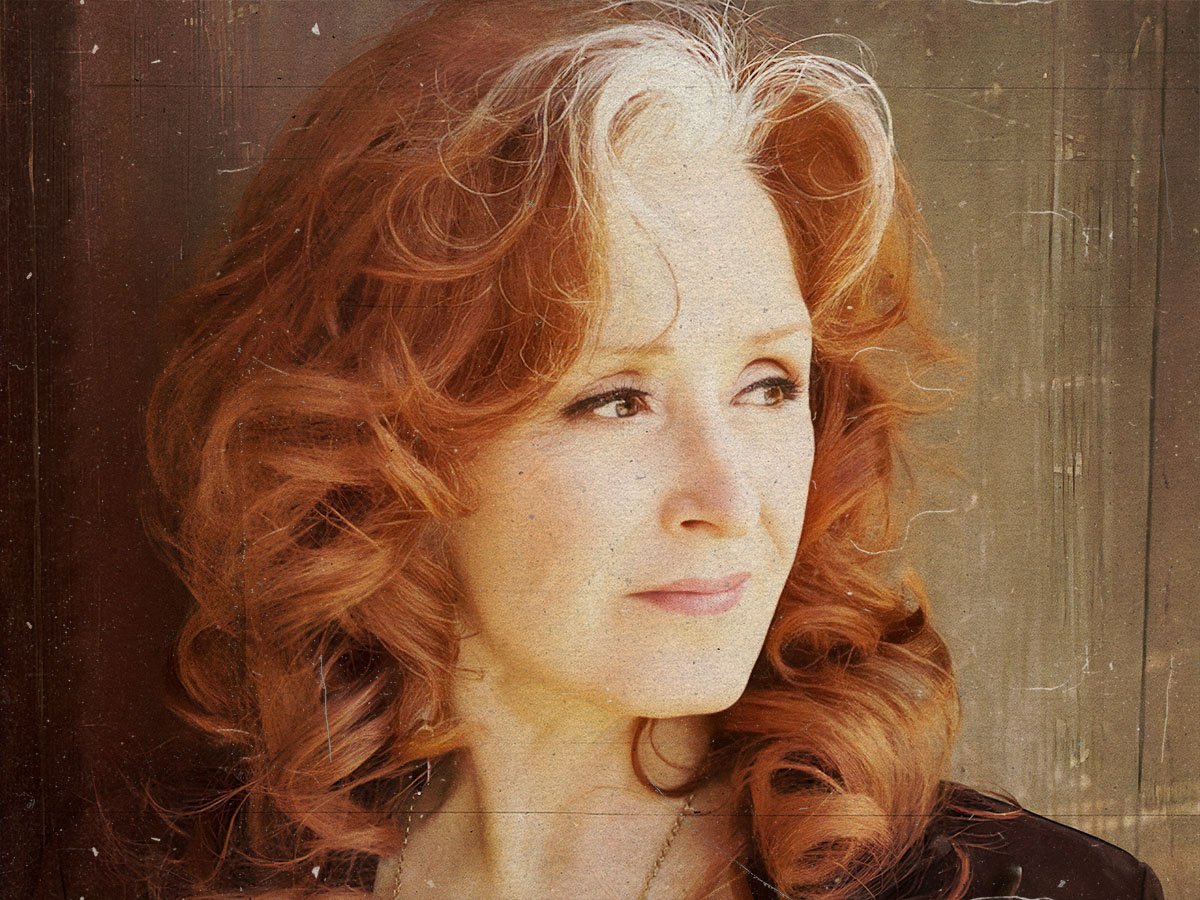
The first time I saw Bonnie Raitt she was sitting in Skip and Lorenza James’ dining room in West Philly. She was sitting on the side next to Skip’s upright piano and she was strumming the blues on an old guitar. Softly, all alone. Delta bluesman James had been buried that afternoon.
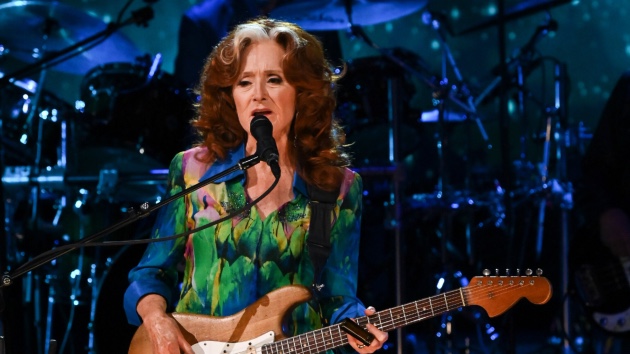
On Thursday night at Temple University Music Festival in Ambler, Bonnie Raitt was aback in town; but she wasn’t alone and she was still playing the blues she learned from bluesmen like James, the late Mississippi Fred McDowell and Sippie Wallace. She played them softly, sometimes audaciously. And on this visit to Philadelphia (in which she has performed many times in the last three years), she had nearly 4,000 people moving to every beat and earthy nuance of her music.
“She prefers an intimate atmosphere,” according to her standby bass player, Freebo (formerly with Philadelphia’s Edison Electric Band), “but you can’t just play small houses and have them lined up around the block. You have to reach the large houses.” Bonnie Raitt has no trouble reaching large houses. She’s as intimate with thousands as she is with hundreds. Talking, smiling and cracking jokes between numbers, she holds you engagingly.
Not once during the hour or so performance did Ms. Raitt loose her composure. And she did have problems. Her 20-year-old electric Gibson needed tuning between every number. She laughed about it, and perched on a black stool, said she needed “a midget to do my tuning.” The lighting was burning her out, too. “My freckles are melting.”
The biggest problem, and one the audience probably wasn’t aware of, was that Ms. Raitt had a new group Thursday night and it was giving its first performance. And with only three days rehearsal, it showed in the opening numbers particularly.
But on the whole the group came across well. The two new members, after several years with Van Morrison, were John Platania on guitar and Jeff Labes on piano. They each had their moments on stage and played them skillfully.
Freebo on bass (and harmony and kazoo) and Dennis Whitted on drums have been with Bonnie for sometime, and that threesome was as tight, as driving, as it always was.
But the real star was Ms. Raitt and blues isn’t the only thing she’s a star in. Time has only refined Ms. Raitt’s ability to go up and down emotions like scales on a piano. She can slide in and out of a ballad and make it as pure as a solo guitar. A gut-grabbing plea for love can become as painful in its remembrance as it was the first time you felt it. A rhythm and blues number rocks the chairs, one and all.
Bonnie Raitt always comes off as a woman, a little bit wistful, a little bit brazen and all the time soulful. She’s also a consummate musician.
The low down sounds of Bonnie Raitt’s blues and the sophisticated “grease” rock of Bruce Springsteen and his E St. Band, carried on till the wee hours Friday morning.
If the crowd who packed the Harvard Sq. Theater for the Cambridge Blues Queen’s second show had its way, we all would have stayed for breakfast.
At 2:40 a.m. the square wore the effects of a “Blitzkrieg” launched by two thousand weary fans, who shuffled into the morning drizzle like fatigued troops who’d just taken an enemy stronghold.
Four hours earlier a primed regiment waited at the stage entrance where the doorkeeper became the most important person in Cambridge. The pleas began.
“Hey, man, did this dude with shoulder-length hair just go in. I gotta know, man, cuz like he said it was cool for the gig, ya know? I mean like I know Clarence and Springsteen’s cool, too, man.”
And the keeper’s reply never faltered. “Look . . ., don’t keep pounding these doors, because nobody gets in till 10. Nobody!”
Bruce Springsteen, introduced as “the man from Asbury Park,” opened the marathon show with a two-hour opening set.
He began with his musical credo “The E Street Shuffle.” It’s a vivid tale of streetcorner life, complete with gangs, cruising, drinking, fighting, loving and over-all survival.
Springsteen is not a narrator of what he sings, he is a character. His lengthy, Dylanesque numbers become a philosophy of a “greaser” life-style. Their complex, often incoherent images, go way beyond the simple woes told in a “fast rocker.” It works because the orchestration is so good.
Clarence Clemons, a superb tenor sax man, helps fashion numbers like “Jenny’s Back in Town,” “Born to Run,” and “Jackie,” with a lovely jazz bent, or when the talents of Danny Federici, Garry Tallent and David Sancious, merge on “Jenny” it takes on the dimensions of a show tune.
The image fits, for the short, lean figure in the black T shirt and corduroys, white Panama hat and electric guitar looks like a plugged in Sky Masterson. He’s greased , but he’s polished. His voice is raw and gravely enough to be convincing, but his guitar and his music is zestfully imaginative.
Bonnie Raitt - Baby I Love You (Written by Ronnie Shannon)
Bonnie Raitt - I Feel The Same (Written by Chris Smither)
Bonnie Raitt - I Thought I Was A Child (Written by Jackson Browne)
Bonnie Raitt - Write Me A Few Of Your Lines / Kokomo Blues (Written by Fred McDowell)
Bonnie Raitt - Nothing Seems to Matter (Written by Bonnie Raitt)
Bonnie Raitt - Bluebird (Written by Stephen Stills)
Bonnie Raitt - Everybody's Cryin' Mercy (Written by Mose Allison)
Bonnie Raitt - Love Me Like A Man (Written by Chris Smither)
Bonnie Raitt - Don't Fight It (Written by Steve Cropper and Wilson Pickett)
Bonnie Raitt - Don't Talk Now (Written by James Taylor)
Bonnie Raitt - Women Be Wise (Written by Sippie Wallace)
Bonnie Raitt - I Gave My Love A Candle (Written by Joel Zoss)
Bonnie Raitt - Under The Falling Sky (Written by Jackson Browne)
Bonnie Raitt - Guilty (Written by Randy Newman)
Bonnie Raitt - You've Been In Love Too Long (Written by Clarence Paul, William Stevenson and Ivy Hunter)
tip: most convenient way to listen while browsing along is to use the popup button of the player.
Bonnie Raitt – guitar, vocals Freebo – bass John Hall (Orleans) – guitar John Payne – sax Bill Payne (Little Feat) – piano Dennis Whitted – drums
Taping Gear: Sony TC-55 with built in condenser mic and auto level control
JEMS 2013 transfer: SH master cassettes > Nakamichi CR-7A > Sound Devices USBPre2 > Peak 6.0 with iZotope Ozone > .wav (24/96) > resample via iZotope MBIT+ to .wav (16/44) > xACT to FLAC
Thanks yet again to Steve Hopkins for allowing JEMS to present his outstanding audience recordings in a fresh light. BK for JEMS
This recording contains every minute Steve Hopkins recorded that fateful night in Cambridge. Bonnie performed a 10 PM late show as well, but there are no known recordings of that set, because, as Hopkins notes below, he was unsuccessful getting back into the venue.
As Hopkins’ himself wrote in his original post of the show: “This is a new transfer of a recording that has been in circulation for many years. I got in early with a friend who had a press pass. It was a general admission show and the first few rows were roped off for the press, so I sat down front and center and stayed there for the entire early show. Unfortunately, they cleared the house after the early show, and as the crowd was lined up around the block for the late show, I was unable to get back in.
This is the first time Steve’s master tapes have been digitized directly. Hopkins points out a “loud electrical buzz emanating from the stage throughout the show, mostly noticeable during quieter segments.” It is worse in Bonnie’s set than Bruce’s, and you can tune it out, but it is annoying at times.
What’s also gone under appreciated is the wonderful, talkative performance Raitt turns in this night. In hindsight, the Harvard Square Theatre show feels like a major Bruce Springsteen moment, but Raitt was the headliner and her star was rising faster than Bruce’s at the time. Here’s she’s touring in support of her third album, Takin’ My Time, released the previous October. The set is laden with wonderful covers of songs penned by Randy Newman, Jackson Browne, Mississippi Fred McDowell, Chris Smither and Mose Allison to name a few.
But even Bonnie recognized something special had occured. Before her first song she says of Springsteen, “He’s got the most incredible band and he’s one of the most amazing people I’ve ever heard. I just had to say that. He’s a real hard act to follow.” Etree.org
When Bonnie Raitt came out the crowd was loose and ready to be lulled by her blues.
The lusty, bawdy redhead sat down, two cans of beer on an adjoining chair, fixed the large electric guitar across her lap and let out with “Love Me Like a Man.”
Blues is relative to the artist. It can be soulful, raucous or despairing, but it has to be felt. Bonnie Raitt can tear at your insides without leaving her seat. Her voice carries a range of personalities, from the plain rauchiness of Aretha Franklin’s “Baby, I Love You,” the quiet desperation of Eric Kaz’s “Love Has No Pride,” and a lilting tenderness of Jackson Browne’s “I Thought I Was a Child.”
When she draws back from the microphone to pick away at the guitar, her face seemed tired and worn. There’s a toughness about her when she wails out with “Give It Up or Let Me Go.” Yet when she ran her hands through her long red hair and threw it over her shoulder, there was sorrow in the face that filtered through her own song, “Nothing Seems to Matter.”
She was joined on stage by people who knew the message Bonnie Raitt was sending out. John Hall, a strong lead guitar, John Payne kicked in a searing clarinet on “You Got to Know How,” and Freebo on bass, put his foghorn vocal backing on her classic version of Stephen Stills’ “Bluebird.”
Her days in Cambridge are behind her now. She lives in Los Angeles, but the dawn-breakers let her know she was misled.
Ira Gold’s Windowpane Productions originally booked Bonnie Raitt to play Harvard Square Theatre in the spring of 1974 with no opening act. But after listening to the two albums by a young New Jersey up-and-comer, over at photographer Barry Schneier’s apartment, Ira’s plans changed. Windowpane invited Bruce Springsteen and his band onto the bill… and on May 9, 1974, Jon Landau was able to witness Rock and Roll Future. Here, Ira shares his recollections, with images of the night from Schneier’s book ‘Bruce Springsteen: Rock and Roll Future.’
Forty-six years ago, on May 9, 1974, Jon Landau saw “rock and roll future” when Bruce Springsteen & the E Street Band played Harvard Square Theatre in Cambridge, MA. Author Barry Schneier literally wrote the book on that night: ‘Bruce Springsteen: Rock and Roll Future,’ from Backstreets Publishing. To celebrate the anniversary on May 9, 2020 — since these troubled times prevent us from sending Barry back on the road for another book tour right now — we hosted an Instagram Live event with Barry, the only photographer present that night, sharing his unique photos and stories from the legendary concert. Schneier’s ‘Bruce Springsteen: Rock and Roll Future’ (hardcover) can be purchased here: Backstreets.com
Landau’s ’74 Harvard Square Review
It’s four in the morning and raining. I’m 27 today, feeling old, listening to my records, and remembering that things were different a decade ago. In 1964, I was a freshman at Brandeis University, playing guitar and banjo five hours a day, listening to records most of the rest of the time, jamming with friends during the late-night hours, working out the harmonies to Beach Boys’ and Beatles’ songs.
On the anniversary of “I Saw Rock and Roll Future” – May 9, 1974 — Barry Schneier Photography
Rolling Stone #149 – December 6, 1973 By TONY GLOVER
Early on in her career, Bonnie Raitt decided that live shows were more important to her than records. She wanted to get out and reach people directly, without having to rely on hype, promotion and hustle. In the time since, she’s done a lot of traveling, but though she still says she’d never want a hit record, the release of her third album may be the one that makes her a “star.”
In the few years that Bonnie has been performing, her style has expanded. She began as a blues player in clubs around Philadelphia and Cambridge, playing as an opening act to idols like Mississippi Fred McDowell. But in time she added songs by contemporary songwriters, and wrote a few of her own as well. She still carries the image of the funky, hard-drinking-blues-mama, but now there’s a wistfulness around the edges. Tough, sure, but with a hint of hidden tears.
In concert, Bonnie projects: She’s right there, open and real. She moves with ease from classic bottleneck blues through old rock and soul numbers to melancholy ballads. When the feel is right the love songs are just as pure and dreamy as secrets shared by candlelight; she breathes a natural intimacy and belief into all her songs. Her raps tend to be stream-of-consciousness ramblings rather than the stage patter of many guitar strummers. More like a slightly loaded friend running down what’s happened since you talked last.
Bonnie now tends toward a bit bigger set. Where she used to perform with just Freebo, the fretless bassman, now she’s added piano and drums to fill out the sound, more like the records. When she signed with Warner Bros. a couple of years ago she copped a sizable advance and cut her first album on a four-track machine in Minnesota at 12-stringer Dave Ray’s studio in the woods.
Bonnie chose to be “one of the boys” on the sessions, and as a result she wasn’t as upfront as some thought she ought to be. The tapes were later re-mixed a bit (and lost some of the original feel), but the album remains a fine one. Though it’s blues-oriented, it set the pattern for those to follow: mixed with blues standards are some Dixielandstyle numbers, a rock or soul standard or two, seasoned by ballads from some of the best contemporary songwriters.
Less than a year later Bonnie was back in the studio again, cutting Give It Up. Bonnie’s guitar was more in evidence here, and her singing surer, but taken as a whole the album seemed a bit aimless, without the cohesive threads to make all the tunes at home with each other.
Which brings us to the new one, Takin’ My Time (the title comes from old mentor Spider John Koerner’s song). There’s a lot of variety here, but it seems to hang together better, it feels more of a piece.
Bonnie always said she wanted to sound like the Temptations, and their spirit is evoked on the opening cut, “You’ve Been in Love Too Long,” an easy, rocking ballad with nice, cooking bass work. The contemporary songwriters are well-represented, too. Bonnie found existing songs which “said just exactly what I feel,” and then shaped them into personal statements.
Joel Zoss’ “I Gave My Love a Candle” neatly calls to mind old English ballads as well as the lost highway downs — Bonnie gives the “goodbye, goodbye, goodbye” chorus such a resigned intensity it stays strong in memory after the other lyrics have passed. “I Feel the Same,” by Chris Smither, opens with nice guitar/bass interplay — it’s one of the two cuts here where Bonnie is heard most on guitar. (She does only vocal on most tracks, which is a shame since she’s much more than just an accompaniment guitarist.) The opening lines are crucial: “I know you’re leaving me, but I’m leaving too.”
“Cry Like a Rainstorm” (Eric Kaz) is still another quietly apocalyptic song of loss: “Tell me how have I sinned — when you cry like a rainstorm, and howl like the wind.”
The only contemporary song that doesn’t fare more than well at Bonnie’s hands is Jackson Browne’s “I Thought I Was a Child.” She seems to feel the spirit, but it somehow escaped her, a near miss. Another near miss is a Raitt standby, the Fred McDowell medley, “Write Me a Few of Your Lines”/”Kokomo Blues.” In concert this is one of Bonnie’s strongest and funkiest numbers, but here the guitar sound is thin and weak, not up to her usual standards; she’s really one of the best slide players around.
The other mainstream blues number, Mose Allison’s “Everybody’s Crying Mercy,” comes off just right, a superfine performance, with perfect low and moody harpwork by Taj Mahal. Mose has long been a musicians’ favorite and the lyrics and lines of this song should make it generally obvious why. Bonnie gives it a fine reading, with just the right balance between weariness and disgust.
On the upside there’s the calypso/reggae-flavored “Wah She Go Do,” with some marvelously shitty slurred horn work and a roller-rink organ riff. The words have already made this another FM favorite: “… if he picks up an outside woman, show him you can pick up two outside men/And that’s the only way, a woman should get some respect today.” Also a good-timey remake of the old Sensations hit, “Let Me In,” replete with “wheeooo”s and earnest tuba work by Freebo (an alumnus of the Pennsylvania Football Band).
The final cut is Randy Newman’s incredibly introspective “Guilty” and it’s one of the downest tracks I’ve ever heard. Bonnie maintains a dual image through all her recorded and live work: On the one hand she’s the ballsy, slide guitar, fast-living mama; on the other, an often deserted wistful child. For every one of her demands (“You better love me like a man … give it up or let me go”), there’s an unspoken but faintly perceptible “please.” That may be a key to why she can get so deep inside people: She’s a magnifying mirror.
On the whole, Takin’ My Time is a highly satisfying, but a bit down, album. Bonnie’s voice is strong and pure, and always full of feeling, and the backup musicians all work well together. And despite her claim of not caring much about records, it’s evident a lot of her soul went into this one, and that makes it worth hearing.
Bandana Blues is and will always be a labor of love. Please help Spinner deal with the costs of hosting & bandwidth. Visit www.bandanablues.com and hit the tipjar. Any amount is much appreciated, no matter how small. Thank you.
Bonnie Raitt is nothing if not loyal. And when she caught wind of the fact that Mike Reid and I were writing and recording together, she was quick to volunteer to sing on our song “The Bridge.” It’s one of my favorite songs Mike and I have written. And I can no longer imagine it without her heroic spirit present. ~ Joe Henry
Released on: 2025-09-05 Producer: Joe Henry Music Publisher: Rivers and Roads Music (ASCAP - admin by Endurance Music Group) Music Publisher: Mule Rider (ASCAP) Music Publisher: Blue Raincoat Music (ASCAP) ℗ 2025 Work Song Inc. marketed and distributed by Thirty Tigers
{{svg_quality_icon}}
{{quality-options}}
1
http://i3.ytimg.com/vi/VWNoTHkp6_k/hqdefault.jpg
Prison Bound Blues · Bonnie Raitt
Bonnie has contributed a new recording of "Prison Bound Blues" written by Leroy Carr to a project called Better Than Jail, an extraordinary new album benefiting Free Hearts and Equal Justice USA. Better Than Jail is available everywhere today and features covers of iconic prison songs from Steve Earle, Taj Mahal,Margo Price, The War and Treaty and many more. The album seeks to raise awareness and support for the urgent need to reduce the harm of the criminal justice system. https://found.ee/BetterThanJail.
I'm so proud to have joined in with so many illustrious artists in creating this very special album in support of rural prison reform. Overlooked for far too long, this issue cuts across all cultural and political divides and deserves all our focused attention to finally bring about some swift and meaningful action. Better Than Jail is one of the most inspired and heartfelt albums I've been blessed to be a part of and I hope it sets a fire in hearts far and wide to join in our efforts." ~ Bonnie Raitt
Released on: 2024-10-04 Executive Producer: Brian Hunt Producer: Kenny Greenberg Producer: Wally Wilson Producer: Bonnie Raitt Recording Engineer: Jason Lehning at Sound Emporium Mastering Engineer: Alex McCollough at True East Mastering Production Assistant: Shannon Finnegan Mixer: Justin Niebank at Hounds Ear Music Publisher: Universal Music Corp. Composer, Lyricist: Leroy Carr ℗ Believe Entertainment Group and Wyatt Road Records
{{svg_quality_icon}}
{{quality-options}}
1
http://i3.ytimg.com/vi/xC2BJuQbO8w/hqdefault.jpg
The Fabulous Thunderbirds - Nothing in Rambling Ft. Bonnie Raitt, Taj Mahal, Keb' Mo' & Mick Fleetwood
In celebration of the band’s 50th Anniversary, The Fabulous Thunderbirds have just released Struck Down, their first studio album in eight years on Stony Plain Records. The ten-track album includes a wonderful cover of Memphis Minnie’s “Nothing in Rambling,” featuring longtime friends, T-Birds founding member Kim Wilson, along with Bonnie, Keb’ Mo’, Taj Mahal and Mick Fleetwood. — BRHQ
{{svg_quality_icon}}
{{quality-options}}
1
http://i3.ytimg.com/vi/YmW-bgcbvQI/hqdefault.jpg
Little Feat - Long Distance Call
“I’ve always loved Little Feat and this new incarnation of the band is bringing some serious heat, cred and new blood to their enduring legacy. Every Feat fan loves us some Sam. I’m so glad he’s now gotten a chance to step out front and center and put his spin on these wonderful blues songs. I loved singing "Long Distance Call" with him, always one of my favorites, and Scott slayed on slide. Know you’ll enjoy hanging out with us at Sam’s Place!" -- Bonnie Raitt
“Long Distance Call” was written by blues legend, Muddy Waters. It has Sam Clayton and Bonnie Raitt on vocals, Scott Sharrard on Dobro, Fred Tackett on acoustic guitar, Tony Leone on drums, and Michael “The Bull” LoBue on harmonica. The album also features Bill Payne on piano and Kenny Gradney on bass.
Little Feat have composed an album that’s their love letter to the blues entitled, ‘Sam’s Place.’ “Long Distance Call” plus many other blues classics are on this album. You can stream and order ‘Sam’s Place’ here: https://orcd.co/samsplace
Broken Hearts & Dirty Windows: Songs of John Prine, Vol. 2, the anticipated new John Prine tribute record from Oh Boy Records, is out today. Stream/purchase HERE.
Created as a celebration of Prine’s life and career, the album features new renditions of some of Prine’s most beloved songs performed by Brandi Carlile (“I Remember Everything”), Tyler Childers (“Yes I Guess They Oughta Name A Drink After You”), Iris DeMent (“One Red Rose”), Emmylou Harris (“Hello In There”), Jason Isbell (“Souvenirs”), Valerie June (“Summer’s End”), Margo Price (“Sweet Revenge”), Bonnie Raitt (“Angel From Montgomery”), Nathaniel Rateliff & The Night Sweats (“Pretty Good”), Amanda Shires (“Saddle in the Rain”), Sturgill Simpson(“Paradise”) and John Paul White (“Sam Stone”). Proceeds from the album will benefit twelve different non-profit organizations, one selected by each of the featured artists.
{{svg_quality_icon}}
{{quality-options}}
1
http://i3.ytimg.com/vi/Z71L4JdrVBY/hqdefault.jpg
Bonnie Raitt - Write Me a Few of Your Lines/Kokomo Blues
60 years anniversary celebration of Arhoolie
December 10, 2020
{{svg_quality_icon}}
{{quality-options}}
1
Arhoolie Foundation celebrates it's 60th anniversary (1960-2020) with an online broadcast.
Bonnie Raitt - Shadow of Doubt
Hardly Strictly Bluegrass Festival
October 3, 2020
Hardly Strictly Bluegrass celebrates it's 20th anniversary with an online broadcast titled “Let The Music Play On”.
{{svg_quality_icon}}
{{quality-options}}
1
http://i3.ytimg.com/vi/hCJa0505jZk/hqdefault.jpg
Bonnie Raitt & Boz Scaggs - You Don't Know Like I Know
Farm Aid 2020 On the Road
Sam & Dave classic written by Isaac Hayes and David Porter.
{{svg_quality_icon}}
{{quality-options}}
1
http://i3.ytimg.com/vi/jXG6ULcK-qs/hqdefault.jpg
Sheryl Crow & Bonnie Raitt - Everything Is Broken
[Eric Clapton’s Crossroads 2019]
Eric Clapton, one of the world’s pre-eminent blues/rock guitarists, once again summoned an all-star team of six-string heroes for his fifth Crossroads Guitar Festival in 2019. Held at the American Airlines Center in Dallas, Texas, the two-day concert event raised funds for the Crossroads Centre in Antigua, the chemical dependency treatment and education facility that Clapton founded in 1998.
{{svg_quality_icon}}
{{quality-options}}
1
http://i3.ytimg.com/vi/yHeBLEo4TOM/hqdefault.jpg
'A Tribute To Mose Allison'
Celebrates The Music Of An Exciting Jazz Master
Raitt contributed to a new album, If You're Going To The City: A Tribute To Mose Allison, which celebrates the late singer and pianist, who famously blended the rough-edged blues of the Mississippi Delta with the 1950s jazz of New York City.
NPR's Lulu Garcia-Navarro talks to Bonnie Raitt about her friendship with the Mose Allison. They're also joined by Amy Allison — his daughter, who executive produced the album — about selecting an unexpected list of artists to contribute songs to the album.
Recorded on tour June 3, 2017 - Centennial Hall, London - Ontario Canada


 Users Today : 12