Concerts

Raitt & Raitt: A Musical Partnership Long Time Coming
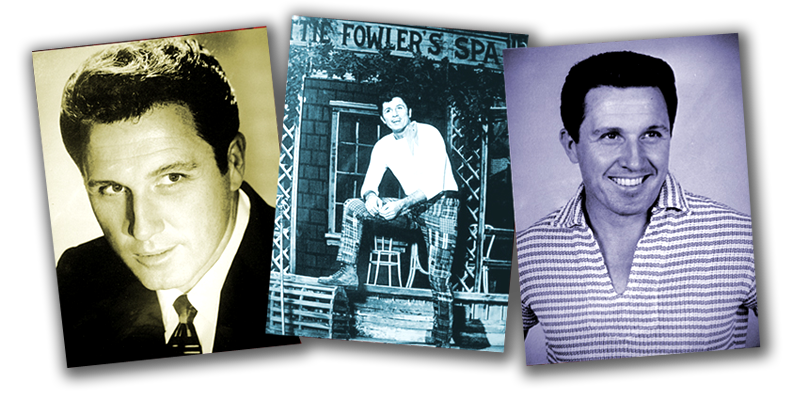
The Broadway legend and the best-selling pop-blues favorite appear together in an ‘Evening at Pops’ Boston concert that PBS will broadcast Sunday evening.

on July 7, 1992 No comments
CHRIS WILLMAN | SPECIAL TO THE TIMES

images


The most notable parent-and-child duets in recent years have been pieced together half-posthumously in the studio, with talented engineers providing much of the magic. Think of Nat and Natalie, or Hank and Hank Jr.

But with Sunday’s airing of “Evening at Pops” on PBS, fans of the popular music of two distinct generations will get a rare chance to see a father and daughter equally famous in their separate heydays team up live and on stage.

In a tape of a well-publicized Boston concert in May, Broadway legend John Raitt, 75, and best-selling pop-blues favorite Bonnie Raitt, 42, go public with the kind of dueting heretofore limited mostly to private sessions in the elder Raitt’s indoor swimming pool. They’re backed on the show by the Boston Pops Orchestra, with Bonnie’s six-piece touring band also in tow.

Bonnie Raitt and John Raitt with the Boston Pops 1992

Bonnie Raitt and John Raitt with the Boston Pops 1992

Bonnie Raitt-Angel From Montgomery

Bonnie Raitt – Nick Of Time – Evening with The Boston Pops 1992

John and Bonnie Raitt sing Its wonderful

Will the Sun Ever Shine Again

“I guess we’re a unique father-and-daughter team,” says the senior Raitt, considering the novelty. “In fact, I think Natalie Cole and Bonnie talked about that, and Natalie said how blessed Bonnie was because I’m still living and her father isn’t.
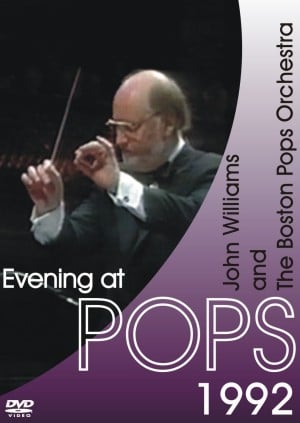
Evening At Pops 1992

“The Boston Pops about two years ago contacted my manager and said they’d like to have a concert with Bonnie and her dad. It took me two years to convince her it was her idea,” he adds with a laugh. “That’s what you have to do with Bonnie. She’s very strong.” This isn’t actually the first time the two Raitts have performed together in public. That distinction belongs to a long-forgotten episode of “The Dinah Shore Show” nearly two decades ago, when Bonnie’s career was just starting out and father and daughter engaged in a trio with the series’ host.

But Bonnie has been markedly reluctant to appear with her father often since then–nervous about performing with a full orchestra, and wary that her somewhat earthier style wouldn’t go over with an audience focused on her father’s robust readings of show tunes.
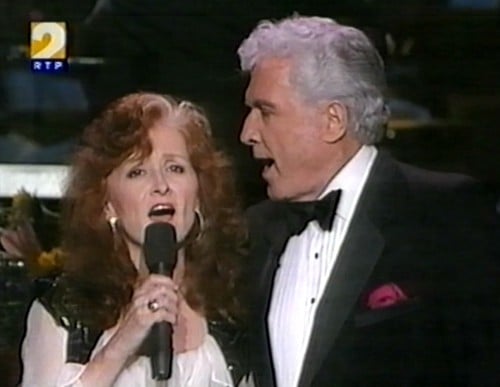
pops92_05

But, taking a meeting in the pool inside John’s Pacific Palisades home, they ironed out an approach for this show, agreeing to separately do one or two songs from their individual repertoires and then three duets: “They Say It’s Wonderful” from “Annie Get Your Gun” (one of John’s earliest stage successes), “Hey There” from “Pajama Game” (he starred in both the movie and on Broadway), and finally–from one of Bonnie’s ’70s albums–“I’m Blowin’ Away.”

“One of the critics in Boston was so impressed he said she might be the next Mary Martin of Broadway if she wanted to be,” says the proud papa–careful to quickly add, “but she doesn’t want to do that.”

The two Raitts also now find themselves unexpected labelmates. Bonnie’s two most recent (and by far most successful) albums are on Capitol Records, the same label that released three LPs by John in the late 1950s. Two of those, “Highlights of Broadway” and “Under Open Skies,” have just been reissued on a single CD, joining the many cast albums already on the market featuring Raitt’s all-American baritone.

“We did that first album when I was doing ‘The Pajama Game’ on Broadway, eight shows a week, in 1955,” he recalls. “In those days, to make an album you did three two-hour sessions–four songs in two hours, that was it. Then I had to go over and do the show at night afterward.” He knows that’s ancient history: “I was with Jackson Browne the other night, and they spent 45 minutes on eight bars. And Bonnie takes sometimes eight months to do an album.”

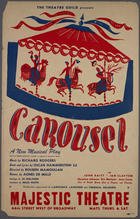
Best known for originating the leads in “Carousel” and “Annie Get Your Gun,” and also oft-associated with “Oklahoma!” and “Man of La Mancha,” Raitt figures he’s logged more leading-man performances in the musical theater than any other actor. He credits his days as a physical education major at USC and the University of Redlands for setting the course of lifelong fitness that continues to keep body and baritone alike in remarkable shape.
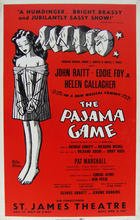
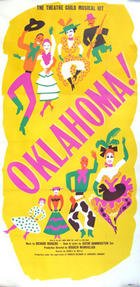
Though the stamina is apparently undiminished, he admits to slowing down a bit, doing only about 20 concert dates a year and having only one musical currently on the docket–an “Annie” revival this month in Reno, in which he’ll finally play Buffalo Bill instead of his trademark Frank Butler. (“I enjoy firsts,” he says of the switch.)

One reason for relaxing a bit, points out the erstwhile vagabond, is his second wife, Rosemary–the childhood sweetheart with whom he was reunited in 1981, after a staggering 41 years and a respective marriage for each between their courtship and wedding day.

“She was from a Spanish land-grant Catholic family, I was Scotch-Presbyterian; on that basis they broke us up in those days, and you listened in those days, too. So this has been a wonderful experience. That’s one reason I don’t want to be that much away from Rosemary, just to make up for those years we were apart.”

Though in decades past he hosted his own network summer variety show, was a star of stage and screen and enjoyed the ears of a theater-savvy nation, Raitt claims not to be too jealous that his Grammy-winning daughter’s notoriety has eclipsed his own–though he jokes of embarrassment when Bonnie insists on picking up the check as the clan’s greater wage-earner.

“I get kids come up and say, ‘Are you by any chance related to Bonnie?’ I say, ‘Well, how many R-a-i-t-t-s can there be? Yes, I’m her father.’ Then they say, ‘Oh yeah, you look like her.’ I say, ‘Thanks a lot.’ ” He adds this last sarcastic grace note in an attempt to seem the curmudgeon, but it’s not much of a show.

“We have a wonderful thing,” he adds. “When I first played ‘Sunday Night at the Palladium,’ a television show like our old ‘Ed Sullivan Show,’ I got a cablegram that read ‘Keep the name flying–the Raitts of Aberdeen, Devonshire and Dundee.’ So every time I send a wire to Bonnie, we say, ‘Keep the name flying.’ We have quite a mutual admiration society.”


Source: © Copyright Los Angeles Times
Info:
John Raitt website
The John Williams Collection

But wait, there's more!

Bruce Springsteen Returns: Joins Bonnie Raitt, Jackson Browne For Christic Benefit
Springsteen performs two emotionally charged acoustic sets for the public-interest organization

on January 10, 1991 No comments
By Anthony DeCurtis
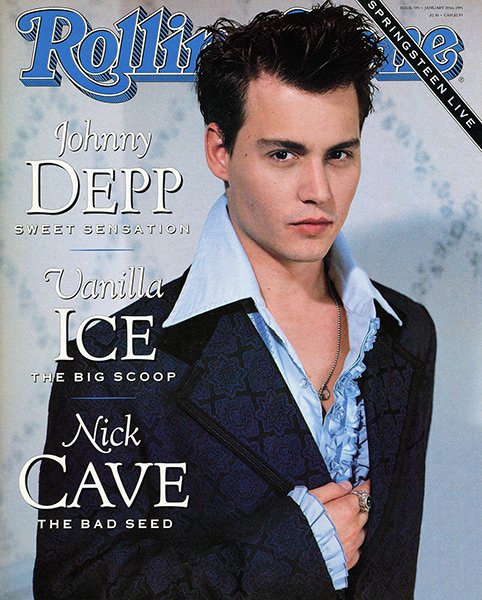
Rolling Stone (595) Jan.1991

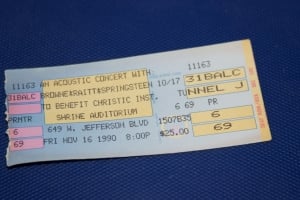
When everybody starts believing those big illusions,” said Bruce Springsteen from the stage of the Shrine Auditorium, in Los Angeles, “you end up with a government like the one we’ve had for the past decade.” The occasion was the second of two benefit concerts given by Springsteen, Bonnie Raitt and Jackson Browne on November 16th and 17th for the Christic Institute, an organization that is pursuing a lawsuit against a group of United States-sponsored covert operatives for allegedly bombing a press conference in Nicaragua in 1984. The song Springsteen was introducing was “Reason to Believe,” from Nebraska, and the specific illusion he referred to was the American government’s belief in its inalienable right to police the world and shape the destiny of other sovereign nations.

Springsteen’s endorsement of the Christic Institute and its conviction that an ongoing conspiracy of government officials and former military and intelligence officers has played a major role in American foreign policy over the past three decades represents a far more radical stance than he has ever before taken. In his characteristic fashion, however, Springsteen managed to put a human face on the array of complex, far-ranging political issues the Christic Institute lawsuit addresses. His two masterful solo acoustic sets – his first live appearances since the close of the Amnesty International Human Rights Now! world tour in October of 1988 – were breathtakingly moving explorations of how self-deceit, romantic illusions and fantasies of control corrupt the bedroom and the boardroom, personal as well as political affairs, and poison human experience. With remarkable emotional sophistication, Springsteen was able to dramatize both the damage such illusions inflict and the difficulty and pain involved in giving them up for a real world that is far from a utopia.

The first evening’s show was more taut and gripping, if less relaxed, than the second. Walking out of the wings to center stage without an introduction, his hair grown long and swept back, Springsteen was clearly tense. Strumming an acoustic guitar, he mentioned not having “done this in a while” and told the audience, “If you’re moved to clap along, don’t – it’ll mess me up.” He then set the tone for the night with a stark, intense – and simply spectacular – reading of “Brilliant Disguise,” a song about the virtual impossibility of understanding your own emotions, let alone another person’s. His singing strong and supple, Springsteen incited howls of excitement with the subtlest gestures, such as sliding his voice into a fragile falsetto on certain line endings. “Is it me, baby, or just a brilliant disguise?” Springsteen nearly whispered to the crowd of 6200 people witnessing his return to the public eye. The question seemed far from innocent a little later when, after a fan screamed, “We love you, Bruce,” Springsteen responded, without a shred of irony, “But you don’t really know me.”

A modified arrangement of “Darkness on the Edge of Town” was somewhat less successful – it would work far more effectively the next night – but a haunted “Mansion on the Hill,” with Springsteen providing a plaintive harmonica solo, proved riveting. The singer bemoaned how “over the past decade the country’s been sold an illusion of itself” and praised the Christic Institute for “trying to make us grow up” by way of leading into “Reason to Believe,” which he souped up with a chilling slide-guitar part.

The set took an amusing turn when Springsteen – obviously in a 2 Live Bruce mood – hauled out a song he’d written the night before called “Redheaded Woman,” which he dedicated to “my two favorite redheads”: Bonnie Raitt and, of course, Patti Scialfa. “Well, now, listen up, stud, your life’s been wasted,” Springsteen wailed over a propulsive rockabilly beat, “till you been down on your knees and tasted a redheaded woman.” In “57 Channels,” another funny new song with a rockabilly feel, Springsteen described shooting out his television Elvis style because “there’s fifty-seven channels, man, and nothing on.”

The fun halted with a heart-stopping version of “My Father’s House,” which Springsteen prefaced with a wrenching description of how, “three or four times a week,” late at night, by himself, he used to drive past the houses in which he grew up with his parents. Concerned, he consulted a psychiatrist, who explained that “something went wrong” in those houses, something broke down, and that Springsteen was driven to return to the scene in a desperate, compulsive effort to “make it right.” “But,” the psychiatrist concluded, “you can’t.” The song ends: “My father’s house shines hard and bright/It stands like a beacon calling me in the night/Calling and calling so cold and alone/Shining across this dark highway where our sins lie unatoned.”

Bruce Springsteen-Highway 61 w/ Jackson Browne and Bonnie Raitt (Christic Shows, November 16, 1990)

Across The Borderline-Bruce Springsteen,Jackson Browne,Bonnie Raitt(16-11-1990 Shrine Auditorium,LA)

Bruce Springsteen – Red Headed Woman (Acoustic Live 1990-11-17)

Christic Institute Benefit News Coverage

The Christic Institute: Heart Of The Matter BBC 1987

The degree to which Springsteen’s tangled feelings about his parents have been reactivated – possibly by his having a child of his own – was evident the following night, when he replaced “My Father’s House” with “The Wish,” a poignant song about his mother. “If pa’s eyes were windows into a world so deadly and true,” he sang, accompanying himself on guitar. “You couldn’t stop me from looking, but you kept me from crawling through.” While Springsteen’s struggle with his tormented feelings about his father fuels his greatest art – “My Father’s House” is, significantly, a far more compelling song than “The Wish” – his feelings about his mother account for the sweeter, more vulnerable aspects of his personality.

On Friday night, Springsteen moved over to the piano after “My Father’s House” for “Tenth Avenue Freeze-Out.” Despite the raw energy of Springsteen’s R&B-flavored rendition, that song – along with the spellbinding, introspective version of “Thunder Road” he performed later, also at the piano – essentially served as an elegy for the E Street Band. Hearing Springsteen belt out a line like “When the change was made uptown/And the Big Man joined the band” as he sat alone on the large, dark stage was a powerful moment. “I’m all alone, I’m on my own,” he sang. “And I can’t find my way home.”

Brilliant, spare versions of “Atlantic City” and “Nebraska” framed Friday night’s biggest surprise: the rarely performed “Wild Billy’s Circus Story,” from The Wild, the Innocent and the E Street Shuffle. A new song called “When the Lights Go Out” – about deception, corruption of spirit and the darker elements within us – followed “Nebraska.” “Thunder Road” – which Springsteen stopped midsong because he forgot the lyrics, shaking his head and saying, “I knew this would happen” – came next, and a stunning, mournful “My Hometown,” performed on piano, closed the set proper.

For his encore, Springsteen played a new song at the piano, a stirring ballad called “Real World,” which he co-wrote with E Street Band pianist Roy Bittan and dedicated on Saturday night to Patti Scialfa, who was backstage with their new baby, Evan James. A bracing, hymnlike love song, “Real World” is about abandoning fairy-tale fantasies and accepting the limits and delights of the possible. “Ain’t no church bells ringing, ain’t no flags unfurled,” sang the man whose storybook marriage ended bitterly and whose most popular tour became an orgy of flag-waving. “Just me, you and the love we’re bringing into the real world.”

Jackson Browne and Bonnie Raitt – whose opening sets were strong but, unfortunately, entirely overwhelmed by Springsteen’s performance – then joined Springsteen for a rousing cover of Bob Dylan‘s “Highway 61 Revisited.” The trio alternated lead vocals and harmonized on the choruses. Browne’s driving acoustic rhythm guitar – Springsteen played harmonica and Raitt rattled a tambourine – turned Dylan’s blackly humorous tale of profit frenzy and war fever into an insinuating boogie workout With Browne playing piano, Springsteen playing acoustic guitar and Bonnie Raitt playing slide guitar, the night ended with a feeling rendition of Ry Cooder‘s “Across the Borderline.” A song about Central and South American immigrants who come to Texas to find a “broken promised land,” it provided a touching multicultural complement to the domestic dislocation of Springsteen’s “My Hometown.”

tip: most convenient way to listen while browsing along is to use the popup button of the player.

On Saturday night, in addition to substituting “The Wish” for “My Father’s House,” Springsteen deleted “Wild Billy’s Circus Story” and “Atlantic City” and added “State Trooper,” a stately, dignified reading of “Tougher Than the Rest” and a new song called “Soul Driver.” Taken together, the two shows – beginning with a “Brilliant Disguise” and ending in the “Real World” – demonstrated that Springsteen’s ability to seize the moment onstage and make palpable the meaning of potent emotional and social issues has not at all diminished. He continues to look deep inside himself and find a world there, a world we can enter to learn a bit about how a life proceeds, to learn a bit about ourselves and our own world.

“I built a shrine in my heart/It wasn’t pretty to see/Made out of fool’s gold, memory and tears cried,” Springsteen sang in “Real World.” “Well, now I’m heading over the rise.” It’s a necessary trip, and with as much conviction as ever, he’s taking us along with him.

Download

Source: © Copyright Rolling Stone
More info: The Christic Institute Archives
But wait, there's more!

Bonnie Raitt gets misty, then comes out smoking at State Fair concert

on August 28, 1990 No comments
By Jon Bream
Staff Writer

A review
Bonnie Raitt

August 27 : MN State Fair – St. Paul, MN

Opening acts: Jeff Healey Band, Charles Brown
Review: Abetted by hometown harmonica player Pat Hayes, Raitt hammed it up a bit for the fans in her second hometown. However, the performance turned into her most emotional performance here— and one of her best ever locally— as she dedicated the evening to her colleague Stevie Ray Vaughan, who died in a helicopter crash yesterday.

Bonnie Raitt plays Minnesota State Fair, St. Paul, MN – Aug 27, 1990 © Richard Sennott

Long before Bonnie Raitt was synonymous with the Grammys, she acknowledged her debt to the blues figures who influenced her. She toured with her now-deceased mentors Fred McDowell and Sippie Wallace, she recorded with John Lee Hooker (they shared a blues Grammy this year) and now she has Charles Brown as an opening act on the biggest tour of her career.

Raitt, 40, also is connected to her fellow contemporary blues practitioners. She dedicated her concert Monday night at the Minnesota State Fair to Texas blues guitarist Stevie Ray Vaughan, who died in helicopter crash yesterday morning.

“I’ll turn this feeling around,” Raitt said last night. “That’s why the blues was invented.”

That’s what her head thought, anyway; her heart often felt otherwise. She admitted last night she was wearing her heart on her sleeve so she warned that she’d have a difficult time singing ballads on this “lump-in-the-throat kind of day.” But her performance rated two thumbs up — on the ballads, rockers, blues, R&B, guitar, you name it. It was certainly the most emotional concert among the many that Raitt has given here since she recorded her 1971 debut album on an island in Lake Minnetonka.

Raitt performed with more sass and attitude in her eyes and in her strut. As always, her slide guitar was smokin.’ Her voice was strong and passionate, especially on the ballads.

An acoustic version of Paul Siebel’s “Louise,” about a prostitute “who died that afternoon,” found Raitt misty-eyed, and her poignant performance made many of the 16,607 fans feel the same. Her encore of the piano ballad, “Nick of Time,” was dedicated to Vaughan, whom she said inspired her to play the blues without “the torture” of booze and drugs. “Nick of Time,” which was released in early 1989, was the first album she has recorded sober. Last night, she said it was the first time she’d ever had to deal with the loss of someone close to her while she was sober.

Raitt’s 85-minute set was heavy on tunes from “Nick of Time,” which won the Grammy in February for album of the year. Longtime fans might have yearned for more oldies and more jams from Raitt’s excellent six-man band. The solos by Raitt, guitarist Johnny Lee Schell, saxophonist Marty Grebb and Minneapolis harmonica player Pat Hayes were hot but invariably short and to the point.

It wasn’t until “Willya Wontcha,” a Schell tune, that the band truly jammed, with Raitt and Schell trading off fiery guitar lines. Piano man Brown joined in for the encore of “Think,” during which Hayes was given extra room to move. And then Raitt and her band turned “Give It Up” into a blazing Dixieland delight.

A truncated version of the band cooked on an acoustic rendition of the bluesy “Drop Down Baby” and Raitt’s “The Road’s My Middle Name,” during which a drawing of a full moon was hoisted over the painted mountains that served as a backdrop. A face cryptically painted into the moon looked a bit like Stevie Ray Vaughan.

The Jeff Healey Band, the trio that kicked off the evening, offered a scorching encore of Vaughan’s “Called Shot,” during which Healey played a quiet, emotional guitar solo. Healey mentioned how he had been with Vaughan just 48 hours earlier in Wisconsin. (Raitt also had attended that show, featuring Vaughan, Eric Clapton and Robert Cray.)

Last night, the Healey trio smoked from its first song. However, the material was inconsistent (the noisy rocker “Full Circle” and the Cray-like “I Think I Love You Too Much” didn’t measure up to “Blue Jean Blues” and “Angel Eyes”), and the 50-minute performance was not as awesome as his headlining concert last year at the Guthrie Theater.

Brown, who followed Healey, was a genuine treat. Raitt introduced him as a bluesman who started out in 1945 and influenced everyone from Ray Charles to Chuck Berry. Brown’s 20-minute cameo of uptown nightclub blues showed the 67-year-old to be a terrific piano stylist, as he drifted stylistically through New Orleans, Kansas City and his home state of Texas.

San Francisco 1990 © Joe Rockman

Jeff (Healey) (1966-2008) was one of the sweetest, most humble and talented artists I’ve met. He had a truly unique and soulful style of guitar playing, was a great singer and such an incredible fan of a wide range of music, all of which he seemed to be able to ace. I was floored to hear his Trad Jazz band and find out that was him on Trumpet and Trombone. He gave us so much in way too short a life.
One of my favorite memories of our touring together in the early 90’s, was when we both went on the swinging chair on chains ride before one of our State Fair gigs. His drummer had to take off from our line and go back to sound check and just left me with Jeff to get him safely on the ride.
I was so nervous but he put me at great ease and I loved seeing the huge grin, hearing him laugh as we swung way high above the crowd. Fearless and like a kid. Just like he was in his music.
– Bonnie Raitt


But wait, there's more!