Raised in Los Angeles in a climate of respect for the arts, Quaker traditions, and a commitment to social activism. A Stella guitar given to her as a Christmas present launched Bonnie on her creative journey at the age of eight. While growing up, though passionate about music from the start, she never considered that it would play a greater role than as one of her many growing interests.

With Just Like That…, her twenty-first album and her first new release in more than six years, Rock and Roll Hall of Famer Bonnie Raitt continues to draw on the range of influences that have shaped her legendary career, while creating something that speaks to the circumstances and challenges of these unprecedented times.
The title comes from a line in one of her new original songs (“Just like that your life can change”), which seemed especially fitting “because there’s never been a time that made me look around and say, ‘Nobody saw this coming’—where all of a sudden, everything shifted.”
As her own tour following 2016’s acclaimed Dig In Deep album was winding down, Raitt got a call from with her friend James Taylor inviting her to hit the road on a bill together. Their tour dates were extended multiple times (even taking them to Europe, concluding with a show alongside Paul Simon in London’s Hyde Park). They were planning to keep going when the world shut down in March 2020.
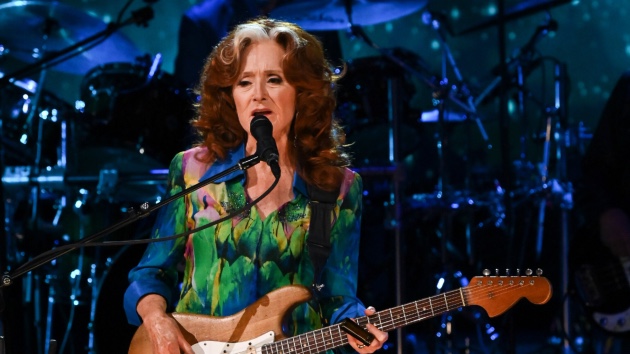
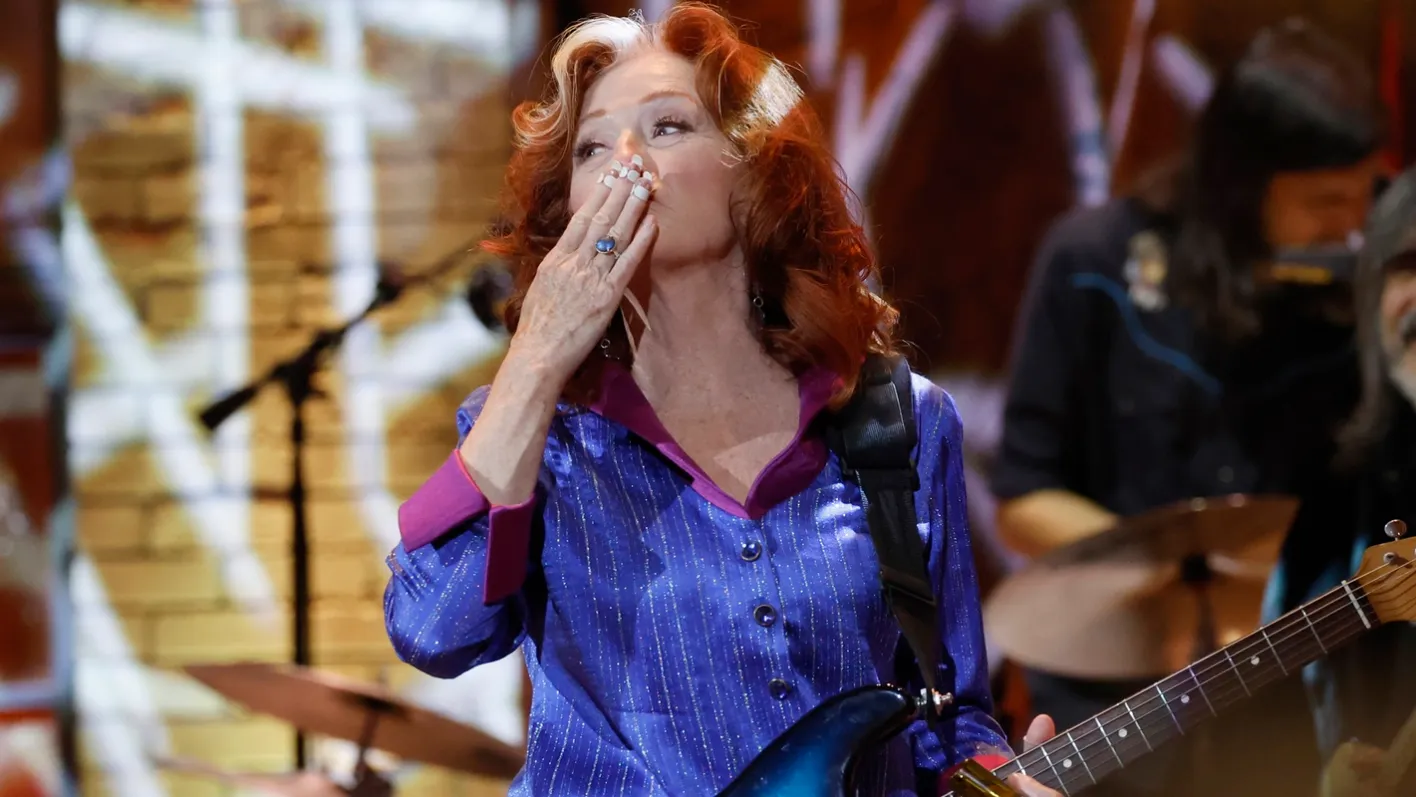
She did her best to continue playing online fundraisers around the election, social justice, and environmental issues during the pandemic, and when it looked like things were opening up in the summer of 2021, Raitt brought her band to Northern California to rehearse and, for the first time, to record closer to where she lives. “I’ve always wanted to make a record here, and once vaccinations made traveling safe again, we were thrilled to get everyone back together,” says the ten-time Grammy winner. “I think the absolute joy and relief of reuniting to play live music is really palpable on this record.”
The mix of sounds and approaches on Just Like That…reveals how, fifty years after the release of her debut album, Bonnie Raitt continues to personify what it means to stay creative, adventurous, and daring over the course of a life’s work. “On this record, I wanted to stretch,” she says. “I always want to find songs that excite me, and what’s different this time is that I’ve tried some styles and topics I haven’t touched on before.”
The album’s biggest surprises come from the four songs composed by Raitt. “Living for the Ones,” co-written with her longtime guitarist George Marinelli, is a rocking dedication to the friends and family she has lost in recent years, while the funky, sardonic “Waitin’ for You to Blow” about the devil on Recovery’s shoulder, is equal parts Mose Allison, Eddie Harris, and ‘70s funk. “There’s something thrilling about creating something brand new out of feelings and styles that have always run so deep in me,” she says.
Two songs were inspired by real-life scenarios; “Down the Hall” began when Raitt read a New York Times story a few years ago about a prison hospice program, and the album’s title track was sparked by a local news segment showing two families deeply impacted on both sides of an organ donation. “My heart was just so blown open,” she says. “I knew both times that these were what I wanted to write about.”
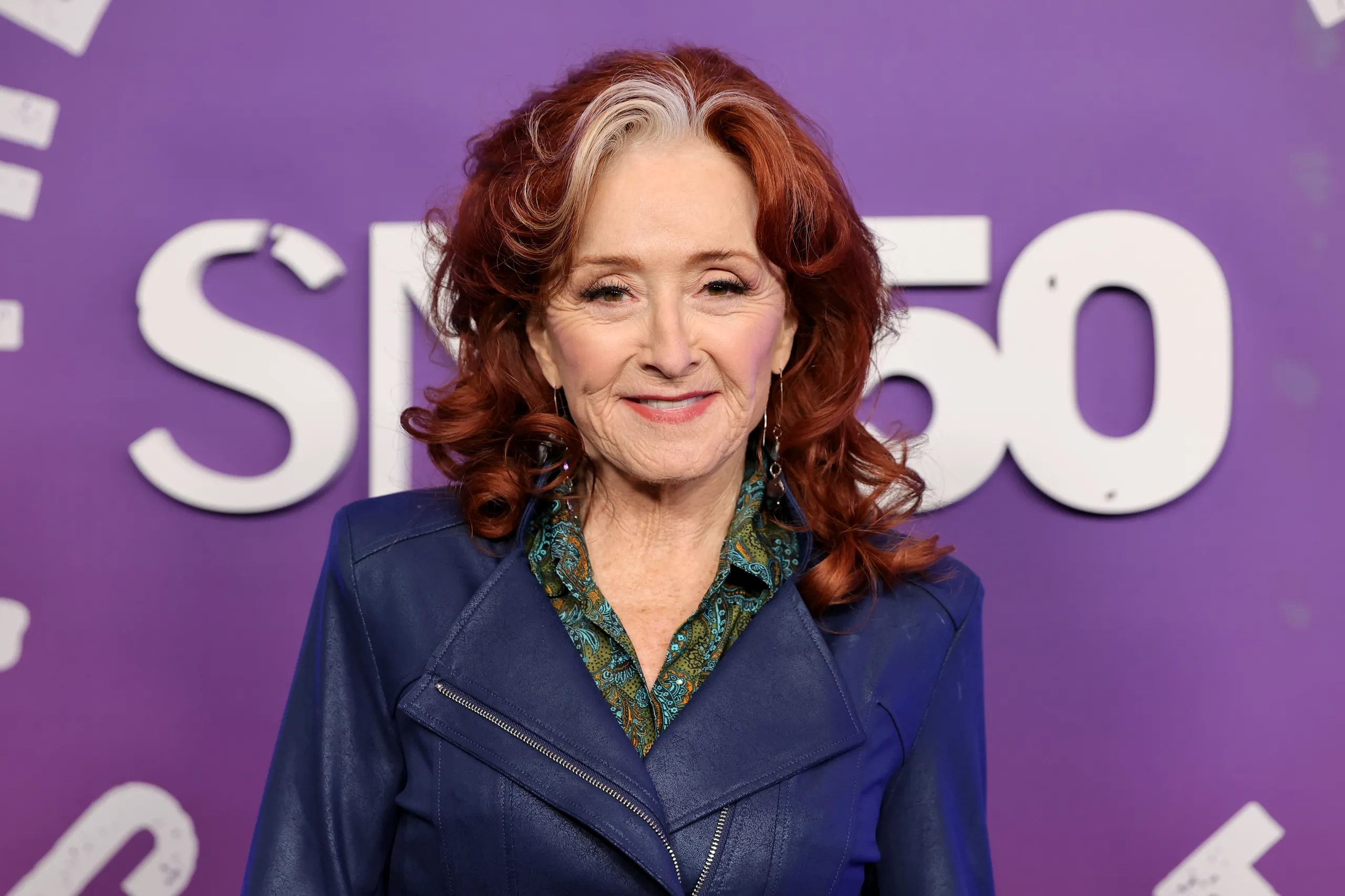
More than just a best-selling artist, respected guitarist, expressive singer, and accomplished songwriter, Bonnie Raitt has become an institution in American music. Born to a musical family, the ten-time Grammy winner, who Rolling Stone named as both one of the “100 Greatest Singers of All Time” and one of the “100 Greatest Guitarists of All Time,” is the daughter of celebrated Broadway singer John Raitt (Carousel, Oklahoma!, The Pajama Game) and accomplished pianist/singer Marge Goddard. She was raised in Los Angeles in a climate of respect for the arts, Quaker traditions, and a commitment to social activism. A Stella guitar given to her as a Christmas present launched Bonnie on her creative journey at the age of eight. While growing up, though passionate about music from the start, she never considered that it would play a greater role than as one of her many growing interests.
In the late ’60s, restless in Los Angeles, she moved east to Cambridge, Massachusetts. As a Harvard/Radcliffe student majoring in Social Relations and African Studies, she attended classes and immersed herself in the city’s turbulent cultural and political activities. “I couldn’t wait to get back to where there were folkies and the antiwar and civil rights movements,” she says. “There were so many great music and political scenes going on in the late ’60s in Cambridge.” Also, she adds with a laugh, “the ratio of guys to girls at Harvard was four to one, so all of those things were playing in my mind.”
Raitt was already deeply involved with folk music and the blues at that time. Exposure to the album Blues at Newport 1963 at age 14 had kindled her interest in blues and slide guitar, and between classes at Harvard she explored these and other styles in local coffeehouse gigs. Three years after entering college, Bonnie left to commit herself full-time to music, and shortly afterward found herself opening for surviving giants of the blues. From Mississippi Fred McDowell, Sippie Wallace, Son House, Muddy Waters, and John Lee Hooker, she learned first-hand lessons of life, as well as invaluable techniques of performance.
“I’m certain that it was an incredible gift for me to not only be friends with some of the greatest blues people who’ve ever lived, but to learn how they played, how they sang, how they lived their lives, ran their marriages, and talked to their kids,” she says. “I was especially lucky as so many of them are no longer with us.”
Word spread quickly of the young red-haired blueswoman, her soulful, unaffected way of singing, and her uncanny insights into blues guitar. Warner Bros. tracked her down, signed her up, and in 1971 released her debut album, Bonnie Raitt. Her interpretations of classic blues by Robert Johnson and Sippie Wallace made a powerful critical impression, but the presence of intriguing tunes by contemporary songwriters, as well as several examples of her own writing, indicated that this artist would not be restricted to any one pigeonhole or style.
Over the next seven years she would record six albums. Give It Up, Takin’ My Time, Streetlights, and Home Plate were followed in 1977 by Sweet Forgiveness, which featured her first hit single, a gritty Memphis/R&B arrangement of Del Shannon’s “Runaway.” Three Grammy nominations followed in the 1980s, as she released The Glow, Green Light, and Nine Lives. A compilation of highlights from these Warner Bros. albums (plus two previously unreleased live duets) was released as The Bonnie Raitt Collection in 1990. All of these Warner albums have been digitally remastered and re-released.
In between sessions, when not burning highways on tour with her band, she devoted herself to playing benefits and speaking out in support of an array of worthy causes, campaigning to stop the war in Central America; participating in the Sun City anti-apartheid project; performing at the historic 1980 No Nukes concerts at Madison Square Garden; co-founding MUSE (Musicians United for Safe Energy); and working for environmental protection and for the rights of women and Native Americans.
After forging an alliance with Capitol Records in 1989, Bonnie achieved new levels of popular and critical acclaim. She won four Grammy Awards in 1990—three for her Nick of Time album and one for her duet with John Lee Hooker on his breakthrough album The Healer. Within weeks, Nick of Time shot to number one (it is now certified quintuple platinum). Luck of the Draw (1991, seven-times platinum) brought even more success, firing two hit singles—”Something to Talk About” and “I Can’t Make You Love Me”—up the charts, and adding three more Grammys to her shelf.
The double-platinum Longing in Their Hearts, released in 1994, featured the hit single “Love Sneakin’ Up On You” and was honored with a Grammy for Best Pop Album. It was followed in 1995 by the live double-CD and film Road Tested (now available on DVD). Along with her own set, it features duets with Bryan Adams, Jackson Browne, Bruce Hornsby, Ruth Brown, Charles Brown, and Kim Wilson.
After all the awards and honors and decades of virtually non-stop touring under her belt, Bonnie continued her activism and guesting on numerous friends’ records, including Ruth Brown, Charles Brown, Keb’ Mo, Ladysmith Black Mambazo, and Bruce Cockburn, as well as tribute records for Richard Thompson, Lowell George, and Pete Seeger. She picked up another Grammy in 1996 for Best Rock Instrumental Performance for her collaboration on “SRV Shuffle” from the all-star Tribute to Stevie Ray Vaughan, and continued her “dual career,” performing with her father, John, in concerts as well as on his Grammy-nominated album, Broadway Legend, released in 1995.
In 1998, she returned to the studio with a new collaborative team to create Fundamental, one of her most exploratory projects, signaling her growing desire to “shake things up a bit.” Inspired by the music of Zimbabwean world-beat master Oliver Mtukudzi, Bonnie wrote “One Belief Away,” the first single, with Paul Brady and Dillon O’Brian.
In March of 2000, Bonnie was inducted into the Rock and Roll Hall of Fame; this was followed by her welcome into the Hollywood Bowl Hall of Fame, along with her father, in June 2001.
After the Fundamental tour, she went back into the studio with her veteran road band to record Silver Lining, released in 2002. Featuring Bonnie’s stunning interpretation of the David Gray-penned title track, the Grammy-nominated “Gnawin’ On It,” and the hit single “I Can’t Help You Now,” Silver Lining was considered by many critics to be one of the best albums of her career. She promoted the album with a lengthy world tour that included her Green Highway Festival and an eco-partnership promoting BioDiesel fuel, the environment, and alternative energy solutions at shows and benefits along the way. In 2003, she released the retrospective The Best of Bonnie Raitt on Capitol.
Raitt stayed busy with more guest appearances, including the stunning duet “Do I Ever Cross Your Mind” on Ray Charles’ final release Genius Loves Company, which won the Grammy award for Album of the Year, and a duet on the Grammy-winning album True Love by Toots & The Maytals. Her 1989 breakthrough album Nick of Time was remixed for surround sound, and released by Capitol Records in 2004 as a DVD-Audio, garnering a Grammy nomination in the newly created category, Best Surround Sound Album.
In 2003, she also participated in Martin Scorsese’s acclaimed PBS series, The Blues, performing two songs in Wim Wenders’ film, The Soul of a Man, and joining the all-star cast of Lightning in a Bottle, the live feature concert film on the Blues directed by Antoine Fuqua. She also contributed songs for two Disney movies, The Country Bears and Home on the Range. She played guitar on a track on Stevie Wonder’s 2005 album A Time To Love, and appeared in the TV/DVD tribute Music l0l: Al Green.
Souls Alike, her first album ever to bear the credit “Produced by Bonnie Raitt,” debuted at #19 on the Billboard 200 in 2005, eliciting widespread critical acclaim and propelling Raitt back onto the road. She was also selected as the inaugural artist for the VH1 Classic Decades Rock Live! CD/DVD series. Bonnie Raitt and Friends, featuring Norah Jones, Ben Harper, Alison Krauss and Keb’ Mo’, was released in 2006.
In the years in and around the release of Souls Alike, she co-headlined (with Jackson Browne and Keb Mo’) part of the historic “Vote For Change” tour leading up to the 2004 Presidential election, and then for the 2008 election, she staged a series of benefit concerts and fundraising receptions to help get out the vote and encourage voting in key Democratic Senate races. In 2007, Bonnie joined her MUSE (Musicians United for Safe Energy) friends Jackson Browne and Graham Nash to launch a campaign to prevent the legislative bailout of the nuclear industry and developed nukefree.org, a website that serves as an information and networking hub for safe energy activists. In 2011, MUSE mounted a very successful benefit concert at Shoreline Amphitheatre to raise funds for Japan disaster relief (following the devastating earthquake, tsunami and meltdown of the Daichi-Fukushima nuclear reactors earlier in the year), as well as non-nuclear organizations worldwide.
Bonnie continues to use her influence to affect the way music is perceived and appreciated in the world. In 1988, she was one of the co-founders of the Rhythm and Blues Foundation, which works to improve royalties, financial conditions, and recognition for a whole generation of R&B pioneers to whom she feels we owe so much. In 1995, she initiated the Bonnie Raitt Guitar Project with the Boys and Girls Clubs of America, currently running in 200 clubs around the world, to encourage underprivileged youth to play music as budgets for music instruction in the schools run dry. Bonnie sits on the Advisory or Honorary Boards of a number of organizations, including Little Kids Rock, Rainforest Action Network, Music Maker Relief Foundation, and the Arhoolie Foundation.
Her commitment to the redemptive power of music is expressed in the foreword she wrote to American Roots, the book based on 2001’s PBS series of the same name. “I feel strongly that this appreciation needs to be out there so that black, Latino and all kids can understand the roots of their own musical heritage,” she explains. “The consolidation of the music business has made it difficult to encourage styles like the blues, all of which deserve to be celebrated as part of our most treasured national resources.”
The years before and after Souls Alike weren’t an easy time for Raitt, with the passing of parents, her brother, and a best friend. So after following that album with her usual long run of touring—winding up with the “dream come true” of the “BonTaj Roulet” collaborative, R&B-style revue with Taj Mahal in 2009 (which raised over $200,000 for charity) and a triumphant appearance at the all-star Rock and Roll Hall of Fame 25th anniversary concerts the same year—she decided to step back and recharge for a while. Excited to have time at home and with her family and friends, she explored different kinds of music as a listener, while continuing her ongoing political work, helping to organize NukeFree.org and supporting her favorite non-profit organizations.
When she returned to the studio—first in a series of sessions with producer Joe Henry and then serving as producer herself—the result was the triumphant Slipstream. After spending her career split between Warner Bros and Capitol Records, she ventured out on her own with a label called Redwing Records. The album sold over a quarter-million copies in 2012, making it one of the top-selling independent albums, and earned Raitt her tenth Grammy Award, for Best Americana Album. From the New York Times to People Magazine, Slipstream was also lauded in numerous critics’ lists for album of the year.
Raitt played over 170 shows in North America, Singapore, Australia/New Zealand, the UK and Europe on her 2012-2013 Slipstream Tour, made numerous national TV appearances, performed at the 2012 Kennedy Center Honors, and received the Lifetime Achievement Award for Performance from the Americana Music Association.
Raitt notes that, more than anything, what struck her about the reaction she received when she returned to the stage was the range and diversity of her audience. “My fans stay loyal and stand up and cheer and love ‘Angel from Montgomery,’ but I feel like we built a whole new audience with the younger Americana generation,” she says. “It’s very gratifying to know that there’s some traction there—that it wasn’t just a couple of songs on the radio around ‘Nick of Time’ or ‘Something to Talk About’ or ‘I Can’t Make You Love Me.’ What’s going on with music now, in terms of roots music, is the harvest of what we did in the ’60s and ’70s. It’s thrilling to be around at this time. I feel part of a continuum.”
With 2016’s Dig In Deep, Raitt kept things focused and close to home. Feeling that her recent tour was one of her best ever, she was eager to get her touring band back in the studio. She again produced the album herself, and notably, she had writing credits on five of the album’s songs—the most original compositions she contributed to a record since 1998’s Fundamental. The accolades continued to accumulate; in 2017, Raitt was honored with a Lifetime Achievement Award from the National Guitar Museum, and In 2018, she received the People’s Voice Award from the Folk Alliance International in recognition of her activism.
As COVID ravaged the world, Raitt suffered the loss of several close friends and colleagues, including Toots Hibbert and John Prine. In fact, she had spent much of the previous year with Prine, performing at the ceremony when he was inducted into the Songwriters Hall of Fame and on the Grammy celebration of his receiving the Lifetime Achievement Award. She appears on the compilation released by Prine’s label, Oh Boy Records, in October 2021—one of the more than 185 outside projects on which Bonnie has participated as a special guest over the years, including work with friends, on soundtracks, and for special benefit albums. Among the highlights are duets with John Lee Hooker, B.B. King, John Raitt, Aretha Franklin, Willie Nelson, Tony Bennett, and Ray Charles. (For a complete list of recorded collaborations, please visit bonnieraitt.com/music/guest-discography/.)
Twenty-one albums in, Bonnie Raitt has never felt more grateful that she can continue making music, contributing to causes, keeping her crew working, connecting with her audience. “I’m really aware of how lucky I am and I feel like my responsibility is to get out there and say something fresh and new—for me and for the fans,” she says. “It’s really daunting not to repeat yourself, but I have to have something to say, or I wouldn’t put out a record.”
About The Author

Founder and Managing partner of Record World International


 Users Today : 54