tip: most convenient way to listen while browsing along is to use the popup button of the player.
Leading up to WFUV’s 1971 Throwback Thursday on March 25 — dedicated to albums celebrating their 50th anniversary this year — all month on “Album ReCue” we’ll be taking a deep dive into some of the ’71 releases that mean the most to our weekday FUV hosts. Above, an archive of Alisa Ali‘s conversation with Corny O’Connell about his selection, Bonnie Raitt‘s self-titled 1971 debut album, and below, Laura Fedele‘s overview of that release.
Back before the 10 Grammy awards and the guitar-god accolades, Bonnie Raitt was a California kid from a musical family who couldn’t wait to grow up and join the activist Greenwich Village folk scene. Once she got there, after her college years in Cambridge, her natural singing style and skill with the slide guitar quickly separated her from the pack, and she scored a major label deal before she was 21.
She chose her signature instrument over the folky acoustic because of the sustain, Raitt says: “the electric guitar, for me, has the raunch and the beauty that more openly reflects the range of emotions I want to get when I’m singing and playing.” Plus, it made it easy to sit in with a wide variety of players and styles: “It doesn’t matter whether you know all the chords if you know your way around with a slide.”
Bonnie Raitt: Return of the Blues Baroness
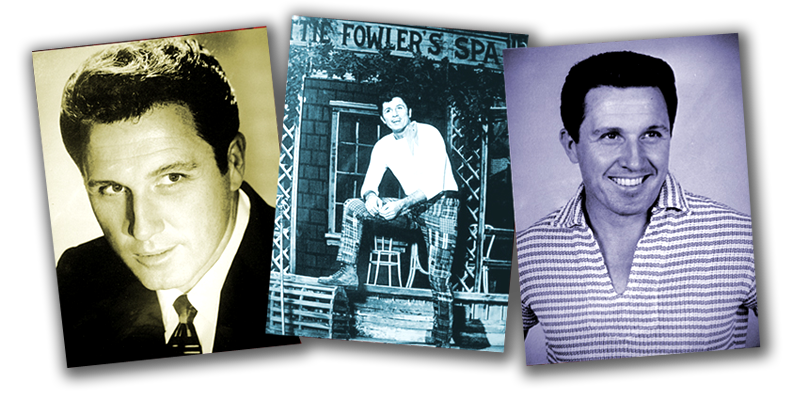
by Tessa Jeffers While teaching herself to play acoustic guitar as a teenager in the late ’60s, Bonnie Raitt—now world-renowned for her sultry voice and bracing electric slide prowess— dreamt of leaving her native California and joining the Greenwich Village beatnik scene. As soon as she was old enough, she left her parents—Broadway star John
That easy way with a jam is already in full form on her debut album, Bonnie Raitt, recorded in live sessions at an empty Minnesota summer camp. A collection of eclectic old favorites and a couple of her own tunes, each song starts out in a new direction — a rolling blues, a lilting ballad — then each one builds in its own way to a rollicking peak. You can feel the camaraderie of the band members as they move in and out of the music, like party guests gliding through the kitchen, with Raitt at the center, driving it all forward.
Stephen Stills’s “Bluebird” kicks it off, in country-blues style, Raitt’s voice gently soaring over a harmonic vocal chorus. Her own “Thank You” is the first we hear of a future career of sweet and sultry ballads, and her “Finest Lovin’ Man” gets a honky-tonk vibe from blues legend Junior Wells on the harp, pushing the rhythm forward with every breath.
Raitt’s career has embraced the sounds of rock, Americana and R&B over the years, but her love for the classics never wavers. WFUV morning host Corny O’Connell says, “Bonnie Raitt really got to me on an emotional level on her debut album through her truly authentic interpretation of the blues. She’s renowned for her slide guitar, but it was her laid-back, unaffected singing on standards like ‘Since I Fell for You’ that sealed the deal.”
Bonnie Raitt: Nick of Time
Album ReCue, a part of FUV’s EQFM initiative, takes an on-air and online look back at influential releases by women that altered our perspective not only of the artist, but her invaluable impact on music history.
Her compadres at the camp included a few who’d become longtime collaborators (like Freebo on bass and A.C. Reed on sax), plus Raitt chose two classic Sippie Wallace songs for the album (“Women Be Wise” and “Mighty Tight Woman,” both driven here by John Beach’s New Orleans-style piano), creating a bond that led to them recording and touring together through the ’70s and ’80s.
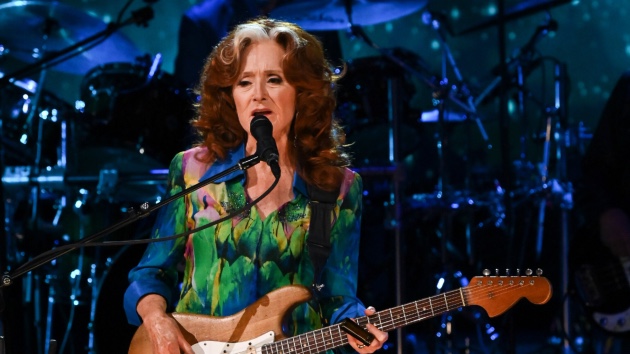
But the longest relationship in Raitt’s career started even further back than her debut: The first woman with a signature Fender guitar line, her customized Stratocaster (“Brownie”) has been with her for every gig since 1969.
Laura Fedele helms WFUV’s online efforts. Since October 2000, Fedele has been writing, designing, editing and constructing pages for wfuv.org, through several redesigns and total back-end overhauls. An FUV MVP, she also keeps up with our social media presence, cheerleads the tech-reluctant, and serves as impromptu photographer. You’ll also find Fedele at all the music festivals she can get to, preferably in the photo pit. “Bonnaroo, Newport, South by Southwest – wherever the FUV folks go, I’m there pointing some kind of camera at them. And, of course, at my favorite bands.” You can see the results of that work on the WFUV Flickr Photo Stream. A former Art Director, Fedele is also the in-house art department for banners, posters, postcards and other visuals for the station. Her favorite days include time spent with Photoshop and Illustrator. “I discovered WFUV on my car radio in 1994. I heard an Ani DiFranco song on the radio for the first time ever,” says Fedele, a New Jersey native who listened to Vin Scelsa and Dennis Elsas for years. “One day a DJ announced that FUV was looking for someone to design their web site. I kept emailing every week with ideas for the site. Finally they surrendered and gave me the job.”
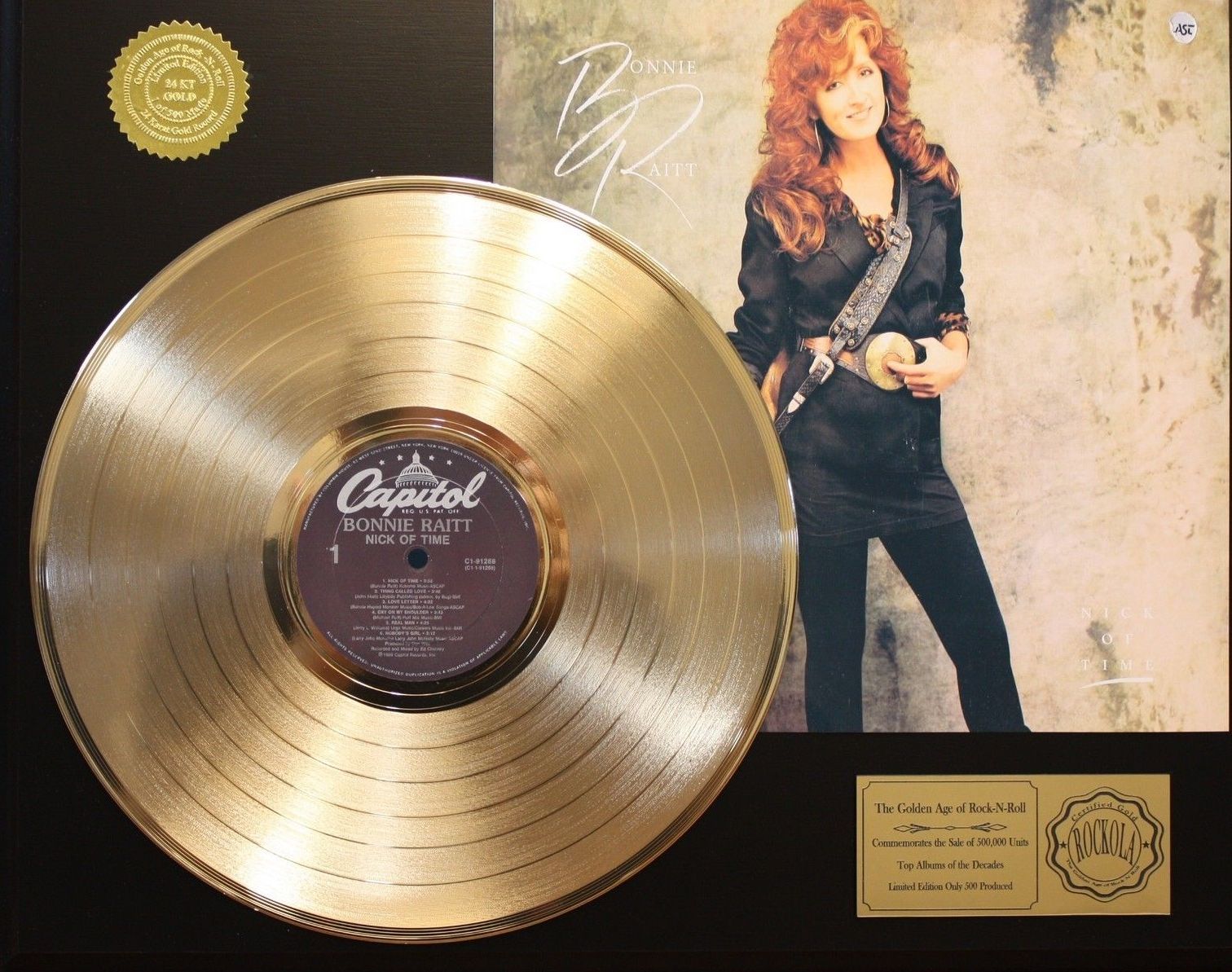
90.7 WFUV Radio - Album ReCue - Bonnie Raitt - Nick Of Time 1989
tip: most convenient way to listen while browsing along is to use the popup button of the player.
Album ReCue, a part of FUV’s EQFM initiative, takes an on-air and online look back at influential releases by women that altered our perspective not only of the artist, but her invaluable impact on music history. Above, listen to a conversation with Alisa Ali and Sarah Wardrop about Bonnie Raitt‘s 1989 album, Nick of Time, and below, Kara Manning’s overview.
Bonnie Raitt, one of the greatest blues guitarists to ever shimmy a slide down a fretboard, was nine albums into her career, battered by a biased music industry, and on the cusp of 40 when she released the album that would change her life: 1989’s Nick of Time. What a prophetic title and title track for a musician who proved that the best of a career was just beginning at middle age. Better yet, her reboot was accompanied by the perfect plot twist — Raitt won the 1990 Grammy award for Album of the Year for Nick of Time (one of four that she won that night).
The restrictive dictates and prosaic rules of the music industry in the ’70s and ’80s hurt musicians like Raitt; female artists who didn’t fill a traditional niche were routinely discarded. Despite excellent albums like 1972’s Give It Up and 1975’s Home Plate, Raitt’s brand of gritty blues and R&B, punched with a pop-friendly afterglow, didn’t settle comfortably into the usual Top 40 or FM rock radio mix, the latter usually less than welcoming to women anyway.
Like Aretha Franklin and Dusty Springfield, Raitt became an intuitive interpreter of others’ songs too, plaiting them with husky vulnerability and toughness. But even though she had a minor hit with a 1977 cover of Del Shannon’s “Runaway,” it wasn’t good enough to vault Raitt into a viable place; she was an outlier.
Brusquely dropped by Warner Brothers Records in 1983, her hard-drinking habits escalated as she navigated a breakup and scrambled to keep touring as a musician. But following a skiing accident and tired of living the blues in all the wrong ways, Raitt got sober in 1987, a decision that not only saved her career, but her life — not hyperbole in the least. “Some people don’t get out,” she told Rolling Stone in 1990. “They die. You know, the Richard Manuels, the Paul Butterfields. There’s a whole bunch of musicians who had their drug and alcohol problems encouraged by the lack of validation for their music.”
There was a brief dalliance with Prince’s Paisley Park label and two scuttled recordings with Prince (tucked away in a vault, but “I Need a Man” has emerged). Providence and Hal Willner’s Disney project, Stay Awake, led Raitt to producer Don Was and vice versa; Was was dealing with his own career crisis (“In 1986, I hit rock bottom,” he told Billboard last year, recalling Nick of Time‘s 30th anniversary). The pair began recording demos, labels be damned. There were over a dozen rejections before Capitol finally signed her; those early demos evolved into what became the multiplatinum Nick of Time, recorded with about 30 of the best session musicians that Raitt and Was knew, plus some starry names, like Herbie Hancock, Graham Nash and David Crosby.
Led by Raitt’s own “Nick of Time,” a wistful confession of hitting existential midlife crossroads (“Life gets mighty precious/When there’s less of it to waste”), the album is a canny distillation of her strengths: that wondrously expressive voice and virtuoso slide guitar genius. Two Bonnie Hayes compositions, “Love Letter” and “Have a Heart,” are good examples of Raitt’s way of transforming someone else’s songwriting. In the former, Raitt opts for a smoky saunter, all brio and hope. But in the latter, there’s a wholly different entreaty, a plaintive stew of dub grooves and defiance. The song’s lilting opening salvo, “Hey, shut up! Don’t lie to me,” is a perfect entry to Raitt’s point of view.
Album ReCue – Bonnie Raitt: 1971
Leading up to WFUV’s 1971 Throwback Thursday on March 25 — dedicated to albums celebrating their 50th anniversary this year — all month on “Album ReCue” we’ll be taking a deep dive into some of the ’71 releases that mean the most to our weekday FUV hosts.
Raitt is conversational in tone when she sings, never pushing a line; she opts for ease and an unfettered honesty. The songs she writes or chooses often tell tales of exchanges gone awry, or of women working toward a better path in love or life. And in truth, Bonnie’s recordings are often intense dialogues with her guitar: she wields her Fender Stratocaster like a bulwark, a Greek chorus, or a trustworthy friend. Riding the bumpy path of her own deliciously bluesy “The Road’s My Middle Name,” there’s a steely resolve to Raitt’s phrasing and playing, never surrender.
She improbably became a fixture on VH-1 and MTV too, thanks to the sexy shuffle of John Hiatt’s “Thing Called Love,” and that flirtatious video showdown between Bonnie’s ballsy slide glissades (and dimples) and Dennis Quaid’s bad boy grin. It might not be the most original video, but it made a massive impact. That exposure to a younger generation, especially teenage girls with a guitar in their sights, gave Raitt the kind of iconic stature that she relishes but still seems mystified by, even 30 years and seven albums down the line from Nick of Time.
“I have so many people who come to shows with their mothers, or with three generations, saying ‘My mom played this album for me in the car when I was little, and you’re one of the artists that means the most to us,’” Raitt told Billboard in 2019. “It means so much to me that Nick of Time resonated with so many women, especially. I never expected it to have the response it did.”
LISTEN
WFUV’s EQFM Album ReCue: Bonnie Raitt’s Nick of Time
Kara Manning is the director of music content and communications at WFUV, host and producer of “UKNY,” and a host for FUV Live sessions. While at WFUV, she’s chatted with Damon Albarn and Blur, PJ Harvey, Liz Phair, Michael Kiwanuka, Little Simz, English Teacher, Self Esteem, Elbow, Laura Marling, Wolf Alice, Sheryl Crow, New Order’s Bernard Sumner, St. Etienne, Courtney Barnett, Arlo Parks, Bombay Bicycle Club, Tori Amos, Aldous Harding and many others. Her favorite bands/artists include all of the above, as well as Underworld, the Cure, Sault, Dry Cleaning, Radiohead, Public Service Broadcasting, Boards of Canada, Black Country, New Road, Nubya Garcia, Sofia Kourtesis, and always Janet Jackson. Given WFUV’s equally eclectic nature, she is thrilled to be part of the WFUV team and to program and host “UKNY” on Sunday nights at 11 p.m., an hour-long excursion into new British and international music.
Few career triumphs were as deserved as Bonnie Raitt’s 1989 breakthrough with Nick of Time, her tenth album and first under a new contract with Capitol Records. Her artistic credentials had been established over nearly two decades on stage and record; she was admired by fans and critics but was too often overlooked by sales charts and radio playlists.
Raitt’s self-titled 1971 Warner Bros. debut album showcased an eclecticism rooted in folk and traditional blues, deepened by contact with elder masters including hill country bluesman Mississippi Fred McDowell and Sippie Wallace, a peer to Bessie Smith, Ma Rainey and Alberta Hunter. Her musician parents had encouraged her with childhood piano lessons before she received her first guitar at the age of 8. Inspired by the ’50s folk music revival, she was already performing for peers at the Adirondacks summer camp she attended until her mid-teens. By the time she enrolled at Radcliffe College, she was already equally steeped in the blues and progressive politics.
Raitt’s debut captured a warm, soulful voice, prodigious guitar chops and a savvy song sense that bloomed rapidly with her ’70s albums. Although she was already writing songs, she set a high bar that favored other writers, mixing blues, R&B and jazz material with works from contemporaries such as Jackson Browne, John Prine, Eric Kaz, Karla Bonoff and Chris Smither. That openness may have proven an unwitting handicap: Like Linda Ronstadt, Raitt was perceived as an interpreter and thus devalued in an era when confessional singer-songwriters were deemed more “authentic.”
An early publicity photo of Bonnie Raitt
Unlike Ronstadt, Raitt projected a tomboy’s feminism in her determination to be “one of the boys” musically (to paraphrase the title of an NRBQ song she covered in 1982). That expectation of equality extended to a forthright sexuality inspired by her early blues heroines. At a time when rock archetypes were still burdened by chauvinism, Raitt, like Janis Joplin before her, may have unnerved alpha male wannabes. For whatever reason, her sales and airplay crested with 1977’s Sweet Forgiveness and her near-hit single, covering Del Shannon’s “Runaway.”
By the early ’80s, Raitt’s career was foundering. In 1983, the day after mastering her next album, Raitt was dropped by Warner Bros. in a roster purge alongside Van Morrison, Arlo Guthrie and other major acts. The orphaned album was reactivated two years later, with Raitt re-cutting half the material on a set that surrendered her core style to ’80s industrial pop. Released in 1986 as Nine Lives, its bombast was better suited to Bonnie Tyler than Bonnie Raitt, sinking without a trace.
By then, her earlier exuberance had given way to exhaustion, amplified by years of substance abuse. “I thought I had to live that partying lifestyle in order to be authentic, but in fact if you keep it up too long, all you’re going to be is sloppy or dead,” Raitt would later recall. She became clean in 1987 and began focusing on both her physical and emotional health.
Meanwhile, two former Warner Bros. Records staffers were now part of the team looking to revitalize Capitol Records. A&R executive Tim Devine signed Raitt, with a strong ally in newly installed president Joe Smith, who had been president at Warner Bros. and then Elektra/Asylum. Bonnie brought in Don Was, with whom she’d worked on Hal Willner’s Disney tribute album, Stay Awake, to produce.
{{svg_quality_icon}}
{{quality-options}}
1
http://i3.ytimg.com/vi/odJEsYjcHbg/hqdefault.jpg
In 1988, Raitt, a native Californian, had retreated to Mendocino “to kick back and reflect on all the changes of the past year and maybe write some music honoring how grateful I felt to have made it through.” What emerged was the album’s title song, a deeply poignant recognition of time’s passage, its milestones and anxieties, presented with a pensive calm clarified by her sobriety. In her reserved, conversational vocal, Raitt let empathy seep through. Understatement only amplified midlife epiphanies, whether describing a friend’s fears over a ticking biological clock, or how aging parents serve as mirrors to our future selves:
“When did the choices get so hard With so much more at stake Life gets pretty precious When there’s less of it to waste…”
With Raitt trading guitar for electric piano, the song glides at a mid-tempo pace with an undertow of pattering percussion that evokes a ticking second hand. The final verse brings redemption—“love, in the nick of time”—but the song’s emotional punch transcends mere romance as an existential anthem for her then middle-aged peers. Succeeding as both a mission statement for the album, as well as its strongest song, “Nick of Time” is a vindication of Raitt’s discernment as both interpreter and songwriter.
{{svg_quality_icon}}
{{quality-options}}
1
http://i3.ytimg.com/vi/krF6LpUXODc/hqdefault.jpg
John Hiatt’s “Thing Called Love” offers a more upbeat life lesson, allowing Raitt to raise the temperature with a winking romantic invitation. Hiatt’s 1987 original followed his own recovery from substance abuse, enabling him to leaven the darker moments on Bring the Family, his own career breakthrough. Raitt’s lively cover follows in the wake of Ry Cooder’s signature slide work on the original, and doesn’t disappoint in her own burnished slide attack, influenced by Lowell George. The song’s lusty groove hits a familiar sweet spot in Raitt’s playing.
Among songwriters championed on the album is Bonnie Hayes, a Bay Area singer, songwriter and musician whose sadly overlooked ‘80s work straddled pop, rock and new wave. “Love Letter” is tough, teasing shuffle that finds Raitt stalking a would-be lover she’s surveilling from her car, “workin’ on a love letter, got my radio on.” Here as elsewhere on the album, Don Was taps the soulful backing vocals of his Was (Not Was) stalwarts Sir Harry Bowen and Sweet Pea Atkinson to add an aural wink.
Watch Raitt perform “Love Letter” live in Oakland in 1989
{{svg_quality_icon}}
{{quality-options}}
1
http://i3.ytimg.com/vi/R_cFTcqdtI8/hqdefault.jpg
Where “Love Letter” sizzle, Hayes’ other contribution sighs with heartbreak while still conveying the singer’s strength. “Have a Heart” sways against a floating reggae pulse as Raitt confronts commitment issues head on, buttonholing her lover with an opening cry punctuated with reverb:
“Hey! Shut up Don’t lie to me You think I’m blind, but I got eyes to see…”
Raitt’s nuanced vocal and simmering slide guitar personalize the track against a spare but lush backdrop framed by keyboards and percussion that sustains the album’s canny design, which hews to spare ensemble arrangements while drawing on 30 musicians. That strategy maintains a consistent sense of scale while enabling richly varied sonic details, an approach that Raitt and Was would retain on two subsequent, equally successful albums. Subsequent albums would also repeat Raitt’s successful balance of strong outside material coupled with original material—ironically, a return to the template on her first two Warner Bros. albums. Where her opening title track was a look ahead, her closing original, “The Road’s My Middle Name,” is both mission statement and backward glance, a chunky acoustic blues from a road wars survivor that refers stylistically to her earliest records.
Watch Raitt perform “The Road’s My Middle Name” in 1993
{{svg_quality_icon}}
{{quality-options}}
1
http://i3.ytimg.com/vi/fPeKRkwX8_k/hqdefault.jpg
Nick of Time, released on March 21, 1989, would go on to sell five million copies in the U.S., earn three Grammys (including two for the title song), and top the Billboard album chart. Two years later, Luck of the Draw would move another seven million albums in the U.S., win another three Grammys and peak at #2 on the Billboard album chart. Bonnie Raitt’s subsequent albums brought her Grammy haul to 11 awards. She was inducted ino the Rock and Roll Hall of Fame in 2000 and received a Lifetime Achievement Award at the Americana Awards in 2012.
Watch Raitt and John Hiatt perform “Thing Called Love” at Farm-Aid in 1990
Sam Sutherland has worked both sides of the music biz street as music industry journalist at Billboard and Record World (as well as freelancing for Phonograph Record, Musician Magazine, High Fidelity and Rolling Stone), and in the label trenches with Elektra/Asylum, Windham Hill Productions and Discovery Records. In the ‘90s, he was beamed up to the digital rapture via software and early online projects for Microsoft and Amazon’s original music and video storefronts. He’s since produced entertainment content for Windows Media and, most recently, MSN Music.Nevertheless, he still prefers vinyl to digital.A New York ex-pat, Sutherland lives near Seattle.
Bandana Blues is and will always be a labor of love. Please help Spinner deal with the costs of hosting & bandwidth. Visit www.bandanablues.com and hit the tipjar. Any amount is much appreciated, no matter how small. Thank you.
Bonnie Raitt is nothing if not loyal. And when she caught wind of the fact that Mike Reid and I were writing and recording together, she was quick to volunteer to sing on our song “The Bridge.” It’s one of my favorite songs Mike and I have written. And I can no longer imagine it without her heroic spirit present. ~ Joe Henry
Released on: 2025-09-05 Producer: Joe Henry Music Publisher: Rivers and Roads Music (ASCAP - admin by Endurance Music Group) Music Publisher: Mule Rider (ASCAP) Music Publisher: Blue Raincoat Music (ASCAP) ℗ 2025 Work Song Inc. marketed and distributed by Thirty Tigers
{{svg_quality_icon}}
{{quality-options}}
1
http://i3.ytimg.com/vi/VWNoTHkp6_k/hqdefault.jpg
Prison Bound Blues · Bonnie Raitt
Bonnie has contributed a new recording of "Prison Bound Blues" written by Leroy Carr to a project called Better Than Jail, an extraordinary new album benefiting Free Hearts and Equal Justice USA. Better Than Jail is available everywhere today and features covers of iconic prison songs from Steve Earle, Taj Mahal,Margo Price, The War and Treaty and many more. The album seeks to raise awareness and support for the urgent need to reduce the harm of the criminal justice system. https://found.ee/BetterThanJail.
I'm so proud to have joined in with so many illustrious artists in creating this very special album in support of rural prison reform. Overlooked for far too long, this issue cuts across all cultural and political divides and deserves all our focused attention to finally bring about some swift and meaningful action. Better Than Jail is one of the most inspired and heartfelt albums I've been blessed to be a part of and I hope it sets a fire in hearts far and wide to join in our efforts." ~ Bonnie Raitt
Released on: 2024-10-04 Executive Producer: Brian Hunt Producer: Kenny Greenberg Producer: Wally Wilson Producer: Bonnie Raitt Recording Engineer: Jason Lehning at Sound Emporium Mastering Engineer: Alex McCollough at True East Mastering Production Assistant: Shannon Finnegan Mixer: Justin Niebank at Hounds Ear Music Publisher: Universal Music Corp. Composer, Lyricist: Leroy Carr ℗ Believe Entertainment Group and Wyatt Road Records
{{svg_quality_icon}}
{{quality-options}}
1
http://i3.ytimg.com/vi/xC2BJuQbO8w/hqdefault.jpg
The Fabulous Thunderbirds - Nothing in Rambling Ft. Bonnie Raitt, Taj Mahal, Keb' Mo' & Mick Fleetwood
In celebration of the band’s 50th Anniversary, The Fabulous Thunderbirds have just released Struck Down, their first studio album in eight years on Stony Plain Records. The ten-track album includes a wonderful cover of Memphis Minnie’s “Nothing in Rambling,” featuring longtime friends, T-Birds founding member Kim Wilson, along with Bonnie, Keb’ Mo’, Taj Mahal and Mick Fleetwood. — BRHQ
{{svg_quality_icon}}
{{quality-options}}
1
http://i3.ytimg.com/vi/YmW-bgcbvQI/hqdefault.jpg
Little Feat - Long Distance Call
“I’ve always loved Little Feat and this new incarnation of the band is bringing some serious heat, cred and new blood to their enduring legacy. Every Feat fan loves us some Sam. I’m so glad he’s now gotten a chance to step out front and center and put his spin on these wonderful blues songs. I loved singing "Long Distance Call" with him, always one of my favorites, and Scott slayed on slide. Know you’ll enjoy hanging out with us at Sam’s Place!" -- Bonnie Raitt
“Long Distance Call” was written by blues legend, Muddy Waters. It has Sam Clayton and Bonnie Raitt on vocals, Scott Sharrard on Dobro, Fred Tackett on acoustic guitar, Tony Leone on drums, and Michael “The Bull” LoBue on harmonica. The album also features Bill Payne on piano and Kenny Gradney on bass.
Little Feat have composed an album that’s their love letter to the blues entitled, ‘Sam’s Place.’ “Long Distance Call” plus many other blues classics are on this album. You can stream and order ‘Sam’s Place’ here: https://orcd.co/samsplace
Broken Hearts & Dirty Windows: Songs of John Prine, Vol. 2, the anticipated new John Prine tribute record from Oh Boy Records, is out today. Stream/purchase HERE.
Created as a celebration of Prine’s life and career, the album features new renditions of some of Prine’s most beloved songs performed by Brandi Carlile (“I Remember Everything”), Tyler Childers (“Yes I Guess They Oughta Name A Drink After You”), Iris DeMent (“One Red Rose”), Emmylou Harris (“Hello In There”), Jason Isbell (“Souvenirs”), Valerie June (“Summer’s End”), Margo Price (“Sweet Revenge”), Bonnie Raitt (“Angel From Montgomery”), Nathaniel Rateliff & The Night Sweats (“Pretty Good”), Amanda Shires (“Saddle in the Rain”), Sturgill Simpson(“Paradise”) and John Paul White (“Sam Stone”). Proceeds from the album will benefit twelve different non-profit organizations, one selected by each of the featured artists.
{{svg_quality_icon}}
{{quality-options}}
1
http://i3.ytimg.com/vi/Z71L4JdrVBY/hqdefault.jpg
Bonnie Raitt - Write Me a Few of Your Lines/Kokomo Blues
60 years anniversary celebration of Arhoolie
December 10, 2020
{{svg_quality_icon}}
{{quality-options}}
1
Arhoolie Foundation celebrates it's 60th anniversary (1960-2020) with an online broadcast.
Bonnie Raitt - Shadow of Doubt
Hardly Strictly Bluegrass Festival
October 3, 2020
Hardly Strictly Bluegrass celebrates it's 20th anniversary with an online broadcast titled “Let The Music Play On”.
{{svg_quality_icon}}
{{quality-options}}
1
http://i3.ytimg.com/vi/hCJa0505jZk/hqdefault.jpg
Bonnie Raitt & Boz Scaggs - You Don't Know Like I Know
Farm Aid 2020 On the Road
Sam & Dave classic written by Isaac Hayes and David Porter.
{{svg_quality_icon}}
{{quality-options}}
1
http://i3.ytimg.com/vi/jXG6ULcK-qs/hqdefault.jpg
Sheryl Crow & Bonnie Raitt - Everything Is Broken
[Eric Clapton’s Crossroads 2019]
Eric Clapton, one of the world’s pre-eminent blues/rock guitarists, once again summoned an all-star team of six-string heroes for his fifth Crossroads Guitar Festival in 2019. Held at the American Airlines Center in Dallas, Texas, the two-day concert event raised funds for the Crossroads Centre in Antigua, the chemical dependency treatment and education facility that Clapton founded in 1998.
{{svg_quality_icon}}
{{quality-options}}
1
http://i3.ytimg.com/vi/yHeBLEo4TOM/hqdefault.jpg
'A Tribute To Mose Allison'
Celebrates The Music Of An Exciting Jazz Master
Raitt contributed to a new album, If You're Going To The City: A Tribute To Mose Allison, which celebrates the late singer and pianist, who famously blended the rough-edged blues of the Mississippi Delta with the 1950s jazz of New York City.
NPR's Lulu Garcia-Navarro talks to Bonnie Raitt about her friendship with the Mose Allison. They're also joined by Amy Allison — his daughter, who executive produced the album — about selecting an unexpected list of artists to contribute songs to the album.
Recorded on tour June 3, 2017 - Centennial Hall, London - Ontario Canada






 Users Today : 64