Reviews

Raitt and band tough to beat

on April 29, 1980 No comments

Raitt and band tough to beat

by DAVID WINKELSTERN – Journal Correspondent


There were about 1,500 empty seats in the Michigan State University Auditorium Monday night. That meant that at least that many people missed one of the better shows to come to town in a long time.

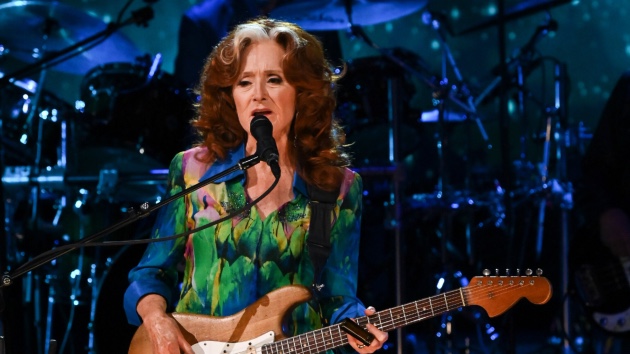
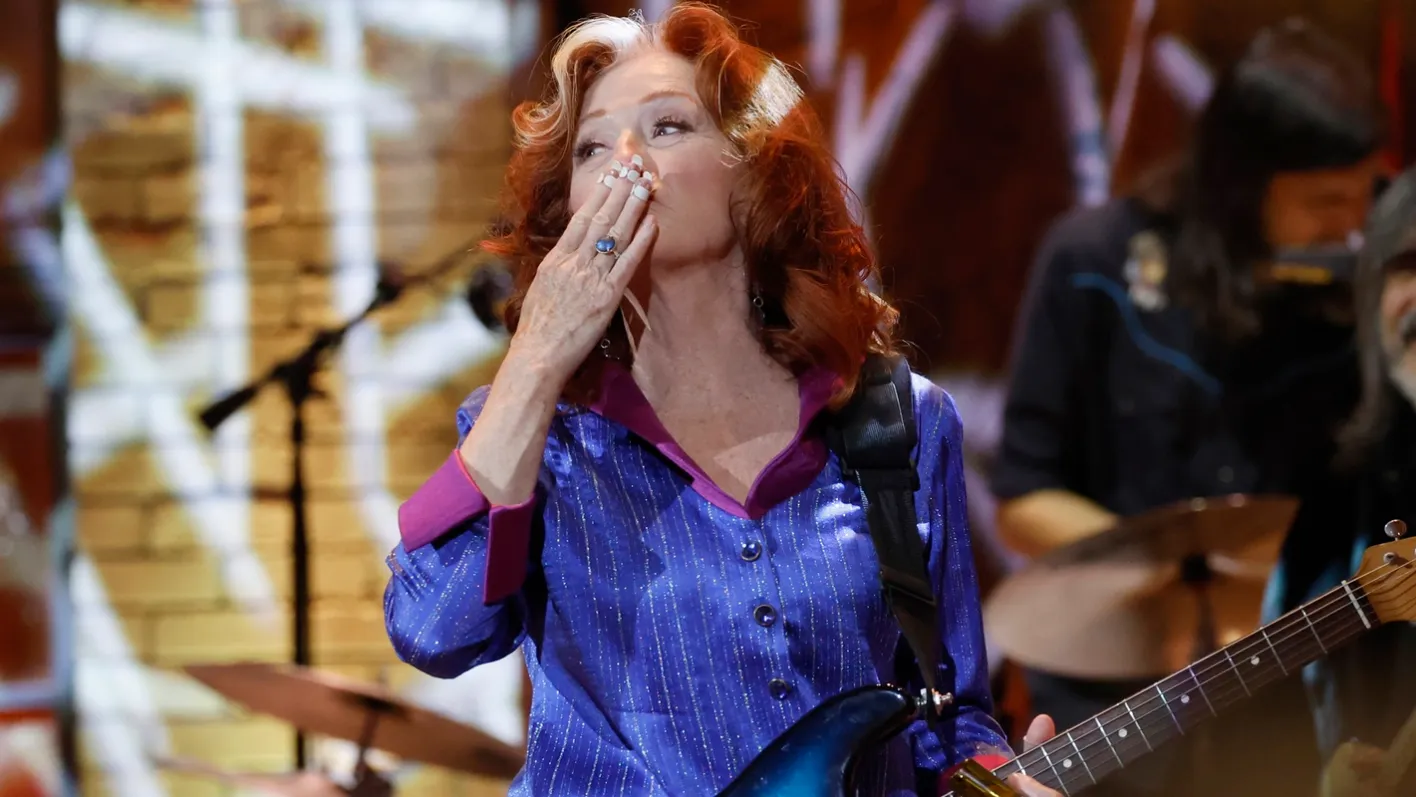
Bonnie Raitt and her band gave a performance that will be tough to beat. When she spoke, her voice sounded coarse. When Raitt sang, the sound was pure, clean and sweet. If the concert featured only her forceful vocals, it would have been enough. Together with a five-piece band that played with definite authority, it was a show to remember.

THE OPENING group was no easy act to follow either. 81-year-old Sippie Wallace was escorted to a microphone on the stage. She used a cane and she leaned on the piano while she sang. Wallace first recorded in 1923.
Many of the blusey tunes she sang last night were from the twenties. A fine Dixieland style band in matching tuxedos gave the Auditorium more of a ballroom atmosphere.
Wallace’s voice and presence had real class.

There is no question that Sippie Wallace has been around a long time. About ten years ago, she was having an influence on Bonnie Raitt. The two sang together at the end of the opening set.
That first appearance by Raitt was enough to tease the audience.
Wearing tight designer jeans and a low cut black glitter top, she looked and sounded good.

RAITT RETURNED to the stage with a collection of musicians as good as any you could find anywhere. When they finally left after a third encore, those that did make the show had to go home satisfied.
The songs and Raitt’s singing sometimes rocked and sometimes soothed.
A tasty version of Blind Faith’s “Can’t Find My Way Home” or the send-the-chills-down-the spine rendition of the classic “Runaway” were both worth the price of a ticket.
Raitt’s slide guitar work was hot stuff. It did not seem to matter that John Lee Hooker never did show up for an opening set of his own.
The music and performance oozed a feeling of quality.


Source: © Copyright Lansing State Journal Archive
Lansing State Journal – April 29, 1980

Bonnie Raitt to appear this month

Country blues singer Bonnie Raitt comes to the MSU Auditorium Monday, April 28, for an 8 p.m. show.

Raitt’s roots can be traced back to such influences as her Broadway singer father, John Raitt and her early attraction to the country blues music of John Hurt, Muddy Waters and John Hammond. Born and raised in Los Angeles, Bonnie headed east for college, entering Cambridge in 1967 when venues like the Club 47 nourished a healthy folk and blues scene. It was in Philadelphia that Bonnie first took her guitar and distinctive blues interpretations onstage.

© Michael Dobo

Initial success led to club engagements in New York, at Philadelphia’s Main Point, and at the Philadelphia Folk Festival. Thanks to the introductory efforts of Dick Waterman, who’s managed most of the blues musicians during the past 10 years, she learned from Son House, Mississippi Fred McDowell, Arthur Crudup, Howlin’ Wolf and her special mentor, Sippie Wallace. Bonnie signed with Warner Brothers in 1971.

Fans initially attracted by Bonnie’s blues performances weren’t dismayed with her debut album, Bonnie Raitt. The program included traditional material from Robert Johnson and Sippie Wallace as well as performances by Chicago bluesmen Junior Wells and A.C. Reed. The sessions were held in a garage on Lake Minnetonka, Minn., and as noted in the liner notes, “reflects the difference between music made among friends living together in the country and the kind squeezed out trying to beat city traffic and studio clocks.” Produced by Willie Murphy and engineered by Sylvia and Dave Ray of Koerner, Ray and Glover fame, the album also covered a range of styles that would become a Raitt tradition — a mixture of country blues, early R&B, interpretations of material by new songwriters as well as originial compositions.

It was with her next album, 1972’s Give it Up, that Bonnie began to get serious favorable notice. The album was recorded with members of the Woodstock and Cambridge musical communities, and brought to light the relatively undiscovered songwriting talents of Eric Kaz, Jackson Browne, Chris Smither and Joel Zoss.

1973’s Takin’ My Time brought Bonnie back to the West Coast to work with new found friends Lowell George and Bill Payne from Little Feat, Van Dyke Parks and John Hall of Orleans, who produced the album. On this album, Bonnie introduced some new elements into her repertoire — a salty calypso tune by Calypso Rose, Randy Newman’s “Guilty” and a bluesy rendition of Mose Allison’s “Everybody’s Cryin’ Mercy,” featuring Taj Mahal on harmonica.

1974’s Streetlights brought Bonnie to the uptown R&B talents of producer Jerry Ragovoy, who assembled the best New York session men on a variety of new tunes by New York songwriters. The album featured some fine interpretations of material by James Taylor, Joni Mitchell, Allen Toussaint and John Prine.

Home Plate was recorded in L.A. during 1975, where she has lived since Takin’ My Time. A reunion of sorts with the musicians from that album, it combines the production talents of Paul A. Rothchild with her growing family of musicians and friends. Along with new tunes by Toussaint and Kaz, much of the material was written and custom arranged for the album by the musicians themselves — among them, John Hall, Fred Tackett, Bill Payne and J.D. Souther.

For Sweet Forgiveness, Bonnie and Paul Rothchild teamed up again, utilizing the close knit feel of Bonnie and her touring band as the focus of the sessions. Along with works by Browne, Kaz, and Karla Bonoff is an exciting revamped version of Del Shannon’s “Runaway,” featuring Norton Buffalo on harp and Mike McDonald from the Doobie Brothers helping out on vocals. Her latest album, The Glow, was recorded in ’79.

Tickets for the concert are $7.50 and $8.50 and are available at Sounds and Diversions, WhereHouse Records, Campus Corners II and the Union ticket office.


Source: © Copyright The State News
The State News – April 15, 1980
But wait, there's more!

Lively, musical variety featured

on April 25, 1980 No comments

Bonnie Raitt, Sippie Wallace and Steve Nardella – Royal Oak Music Theatre, Royal Oak, Michigan

By ERIC MOBEY

There was something for everybody Friday night at the Royal Oak Theatre. The featured artist, Bonnie Raitt, shared the bill with Steve Nardella and the sensational Sippie Wallace. A lesser artist would have been threatened by the lively sets of Nardella and Ms. Wallace, but the confident Bonnie Raitt was unwavered.

Ann Arborites Steve Nardella and his band started the show on a lively note. Their set featured an array of styles from Blues and Rockabilly to straightahead, vintage Rock and Roll. Their performance was admirable for an opening act and helped to set a good tone for the rest of the evening.

Eighty-one-year-old Sippie Wallace followed Nardella in a most memorable appearance. Blueslady Wallace charmed the crowd with her Depression-era ragtime blues.
Sippie is a favorite of Bonnie Raitts’ and she gave her ample room to steal the hearts of the receptive audience. Backed by the tuxedoed Easy Street Jazz Band, Sippie worked her way through 11 songs.

Ms. Wallace suffered a stroke five years ago and was confined to a wheelchair. However, you can’t keep a good woman like Sippie down for long and she has recouperated to where she can stand on stage once again.

SIPPIES’ HUMOROUS song introductions and down-right assertiveness added to her still-strong vocals. She received appreciative applause every time she queried the audience with “how am I doin’?” Everytime she was ready to deliver a song, she would nod to her keyboardist with a demonstrative “Maestro, if you please” or “okay, maestro.”

Bonnie Raitt joined Sippie and the Easy Street Jazz Band for the last two songs, closing the set with a roof-raising version of “Women Be Wise.” This song showcased the fine band with solos from all members. Sippie had let her fellow Detroiters know that this lady can still sing the blues.

Finally, after a brief intermission, Ms. Raitt took the stage and proceeded to rock the socks off all those in attendance. Her raw energy and strong vocals are not for the meek or laid-back. Unlike other female vocalists, who sometimes appear fragile alongside their all-male bands, Raitt steps right in and plays along.

HER ABILITY ON electric guitar adds greatly to the performance. Not one to play into the helpless female role, Railt moves and plays in a style that would appear contrived by most female rock singers. Yet Raitt does not come off like the women in Sippies “Hard Boiled Mama.”

Ms. Raitt seemed especially pleased to have Sippie Wallace along on this outing. Her admiration for Sippie was verbalized throughout the evening. While other teen-agers of her generation were influenced by pop music of the day, Raitt was sampling Sippie’s old records. This seems odd when you consider her father is Broadway slnger-actor John Raitt. Personally, I’m glad she didn’t get in, say, “Oaklahoma.”

The concert was a good mix of several styles from Sam and Dave’s “And I Thank You” to a different version of Del Shannon’s “Runaway.” She was particularly striking on ‘Three-Time Loser” with low-down blues vocal that was punctuated with a great saxophone solo.

In fact, horns were predominant throughout the evening. This fine musicianship lifted both Sippie and Bonnies’ performance. On “Give It Up,” Bonnies’ band was joined by two members of the Easy Street Jazz Band. The combined force of trombone, two clarinettes and Freebo’s tuba augmented Bonnies’ vocal tremendously.

One seldom sees this abundance of talent and professionalism in one show. In these inflationary times performances seldom equal the hefty ticket prices.

I’m reminded of Sippie Wallaces song with the line: “You can make me do what you want me to, but you gotta know how to do it.” I don’t know what this show did to get Nardella, Sippie and Bonnie to do what they did, but they did know how to do it.


But wait, there's more!

Most ‘protesters’ really just rock fans

on July 6, 1979 No comments
by Jon Bream – Staff Writer

The times, they have a-changed.
Protest concerts used to mean a long march, standing in front of a government building, singing along with Phil Ochs, Bob Dylan and Joan Baez as they strummed acoustic guitars and sang against racism and war.

Those were the days.
These days, however, you pay $12.50 to benefit organizations fighting against nuclear power and sit in a theater listening to pop stars like Jackson Browne and Bonnie Raitt sing love songs.

A sellout crowd of 2.600 persons turned out Thursday night at the first of two benefit concerts at the St. Paul Civic Center Theater (the second show was reportedly sold out, too). It wasn’t difficult to figure out why most of the people showed up.

They didn’t come to hear John Trudell, president of the American Indian Movement, rail eloquently about “nuclear madness” and the “oppressor man.” They came to hear Browne, Raitt and Jesse Colin Young play their California “mellow-music” in an intimate setting. After all, this was a rare opportunity.

The three-hour program opened with a moment of silence for “sky father, earth mother and all brothers and sisters.” The solitude was brief, however, as a few cat-callers urged “on with the show.”

It wasn’t difficult to read the mood of the audience. The smell of marijuana smoke was in the air, there were chants for “boogie” and the queue at the beer stand was considerably longer than the gathering at the no-nuke, pro-solar concession booth. Anyway, most of the souvenir buyers seemed to favor the Jackson Browne T-shirts over the ones emblazoned with “Question Authority,” “No Nukes” and “People Before Profits.”

The free literature discussing such topics as “nuclear power and your electric bill” and “how the power line affects you” was largely’ unsampled by the concertgoers. They probably had no idea their ticket monies were going to the Black Hills Alliance, General Assembly to Stop the Powerline, Badger Safe Energy Alliance and other organizations that campaign against various aspects of energy technology.

For most of these well-scrubbed, clean-cut, young people, it was, quite frankly, just another concert with a slightly different twist. Ticket prices were higher than usual, but there were four established performers and they were appearing without their usual electric guitars and full-band accompaniment.

They had waived their performance fees and usual concert accoutrements. The musicians wore faded jeans and T-shirts from the concession stands, rather than their usual flashier stage duds. They used lyric sheets on a couple of songs and one singer even botched the words on one of his own numbers.

It was a casual atmosphere that provided some refreshing music and a great showcase for the songs themselves, rather than heavily orchestrated performances. In many ways, it seemed like a throwback to the singers’ first appearances here years ago when they were struggling soloists.

Danny O’Keefe, the singer-songwriter from Washington state who attended high school in St. Paul, opened with a thoughtful albeit largely apolitical set. For his last number, Raitt joined in on electric slide guitar.

“I want to thank you,” O’Keefe told the crowd before he paused for a brief Raitt solo, “Stop the nukes.” Then Raitt revved up again. “And help the Indians.”

Young, California’s answer to John Denver, followed with his mellow-music visions of Indian life before the white men. Without the customary jazzy accompaniment, Young’s songs seemed self-consciously meaningful; the lyrics often came off as trite and the selections as inartistic.

However, Young redeemed his performance with the inevitable ’’Come Together,” his anthem of the late 1960s, for which Browne made his first appearance. The teen-aged girls in the audience screamed when the popular singer joined in, yet the outbursts seemed more for adoration than the sentiment of the song.

Raitt returned for her own set with her bass player, Freebo, but she somehow forgot that it was supposed to be an acoustic performance. With all due disrespect to nuclear power, Raitt plugged in her guitar and offered an uplifting reworking of Chris Smithers’ “Love Me Like a Man.” “The music is for men and women,” she explained in her introduction, “and the words are for the bastards at the power companies.”

{{svg_quality_icon}}
{{quality-options}}

Musical excerpts from the “No More Nukes” documentary featuring Bonnie Raitt, Jackson Browne, Graham Nash, Norton Buffalo, Joan Baez, Mimi Farina. This was an anti-nuclear protest rally at the San Francisco Civic Center on April 7, 1979 after the Three Mile Island Nuclear Accident in Pennsylvania.
Produced and directed by David Ludwig.
For the complete documentary, see here.

Raitt, who has been a local favorite for the past seven years, played some blues songs and then Browne joined her for “Under the Falling Sky,” which she dedicated to the “American government who sent up Skylab.” It was a moving performance, marked by the rare spontaneity of a late night jam at a funky coffeehouse.

Then, it was time for the singer over whom the young girls were swooning. Browne, accompanied by guitarist-violinist David Lindley, sang his elliptical visions of the apocalypse and “The Crow on the Cradle,” an anti-nuke song from the 1960s. Yet, he did not perform his breakthrough hit, “Running on Empty,” which is about cruising, not conservation.

All the performers then returned for “Willin’,” a tribute to the redoubtable guitarist Lowell George, who died last week, and John Hall’s “Power,” which has become the theme song of this ad hoc no-nuke troupe that has scheduled several benefits this summer.

“Power,” a bland pop ditty, does not seem destined to become the 1980s’ answer to “We Shall Overcome” and “Blowin’ in the Wind.” The concertgoers did not sing along with the kind of fervor that might indicate many of them would follow the anti-nuke troupe to Rapid City, S.D., this weekend for a major demonstration against uranium mining in the Black Hills.

Anyway, who ever heard of a protest concert going on the road? Do caravans of sympathizers follow the troupe hoping to score tickets? Are there actually no-nuke groupies?

The times have a-changed, indeed.

St. Paul Civic Center Theatre, St. Paul, MN


Source: © Copyright StarTribune

But wait, there's more!