Reviews

Warmth and Simplicity: Raitt and Koerner

on February 14, 1972 No comments

by Pam Brown

Bonnie Raitt and Spider John Koerner – Brown University, Alumnae Hall – February 11, 1972

Alumnae Hall lost some of its forbidding austerity when two young blues artists from Massachusetts, Bonnie Raitt and Spider John Koerner performed there Friday night.

The cold, New England formality of the building was countered by a music whose roots lie in small, Southern churches, Appalachian back porches and railway depots, a music that is born of raw feelings and basic human experiences.
Although both singers spoke of the difference between their usual barroom engagements and the Brown concert, their music transcended the setting, evoking a sense of down-home warmth and simplicity.

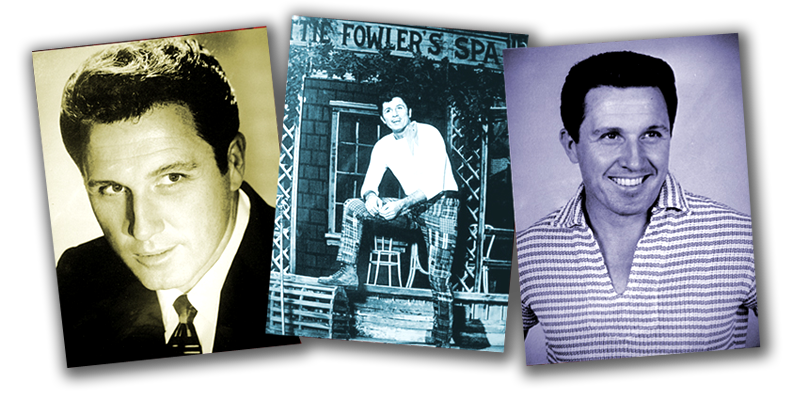
Spider John, who appeared first, came across as almost too relaxed. His style was unimposing, from his fresh-scrubbed looks and quiet patter, to his unvaried, standard guitar work. According to Koerner, his guitar refuses to play at any other speed, but I find that cute story a weak excuse not to expand upon his competent but only standard musicianship.
He did sing some nice, twangy “goin’ down the road” type of songs, and occasionly broke into fine harmonica playing. Unfortunately, Koerner doesn’t get past the merely agreeable.

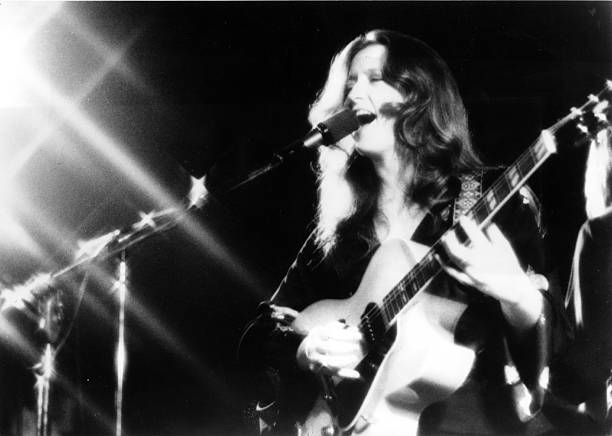
Bonnie Raitt. on the other hand, had the audience completely under her spell from the moment she walked out on stage arrayed from head to toe in purple. She too, is an unimposing, totally calm kind of person, but because her music had great emotional presence and a tremendous range of style, her performance never degenerated into dullness.
Blues music is a somewhat limited form to work within, and its power comes more from its emotional urgency and universality than from great technical innovation or a tour de force show of skill.
Although Bonnie is an excellent guitarist, both on standard steel-string and bottleneck guitar, she never lets her virtuosity get in the way of the overall unity of each song.
Opening with a Sippie Wallace tune, which included some exciting picking on the breaks, Bonnie went on to do a wailing version of Steve Stills’ (“an old bluesman who’s really paid his dues”) ’’Bluebird’’.
Her voice is strong and rich and curls beautifully around the notes.
Although not without the earthy insight of Janis Joplin, her style more resembles that of Tracy Nelson, with the same qualities of purity and power.

The rest of Bonnie’s long set included practically every type of blues song. Many were about love–from a plea for honesty and responsibility to a quiet John Koerner tune, “I Ain’t Blue”, to a very mellow version of “Since I Fell For You”.
The loving slid easily into the sexual, and in this genre Bonnie really got it on, ranging from another Sippie Wallace tune on not advertising your man’s assets, to a Mississippi John Hurt piece proclaiming the free woman, to an outrageous number of her own called “Let me be your blender, baby”.
The set also included a great bottleneck guitar rendition of Robert Johnson’s “Walking Blues” and another show of virtuosity on “Rollin’ and Tumblin’”.
Bonnie Raitt plays the blues like she means it, and she pulled a very basic emotional identification from her audience Friday night.
More power to her, and others like her, for helping us get back to ourselves.

THE BAND

Bonnie Raitt (guitar, vocals)
Peter Bell (guitar, percussion, vocals)
John Beach (piano) 
Freebo (bass, kazoo)
Stephen Bradley (drums)


Source: © Copyright rirocks.net

But wait, there's more!

Bonnie Raitt: Bonnie Raitt

on February 3, 1972 No comments
By Chris Hamel

Bonnie Raitt’s debut album features an unusual collection of songs performed by an unusual assortment of musicians. And Bonnie is something out of the ordinary herself. She has been traveling the blues-festival circuit since 1968, playing the Boston-New York-Philadelphia folk run, since 1970. Now she has done something unusual with her first Warners album.

Willie Murphy and Bonnie Raitt – Insider Magazine, September 1971

In August, Bonnie rented a fishing camp on a Minnesota island, solicited the production services of Willie Murphy, the musical talent of his Bumblebees, and the fourtrack equipment of “Snaker” and Sylvia Ray. Bonnie then enticed Junior Wells and A.C. Reed from Chicago to join her regulars, bassist Freebo and guitarist-folk-singer Peter Bell. The sessions were done in a two-car garage and the product is good: a different album, a representative portrait of this artist.

Bonnie accompanies her folk-blues on a Mississippi National steel guitar. Her slide work is uncommonly good, equal to her straight acoustic stuff — in fact, it is simply among the best. Unfortunately, her ability is not fully captured on this album, because Bonnie’s guitar is not amply showcased — a major fault of the production.

There are two obvious idioms on the album — rock-soul and folk-blues. A third genre consists of three estranged numbers that are joined by the mood of their rendition. In their melancholy tone, these songs are the most consistently pleasing — Paul Seibel’s countrified quickie of an incredible lyric, “Any Day Woman,” “Spider” John Koerner’s rainy-day special, “I Ain’t Blue,” and Bonnie’s simple, personal piano ballad, “Thank You.” On these tunes, Bonnie’s thin, folk-founded voice is properly suited with a minimal amount of backing. Her ability to communicate emotion and involvement is most effective here.

Comparatively, the rock-soul treatments, reminiscent of Rod Stewart’s reworking of “I’m Losing You,” are heavily produced. Bonnie capitalizes on the soulful potential of Steve Stills’ “Bluebird” and the existent groove of a former Marvelettes single, “Danger Heartbreak Dead Ahead.” On these songs, the shift in emphasis goes from mood to delivery, and Bonnie succeeds best vocally on “Danger.” There’s an inkling of her electric slide talent there, too, as she weaves around the song, using the slide as an additive agent, not a gimmick. And this is an arrangement where you’d least expect to hear bottleneck. On “Bluebird,” Bonnie’s ability to use musical cliches tastefully is exemplified by the “bum-do-wadda” chorus that is carried in a joyful, respectful vein without the cynicism that so often undercuts such maneuvers.

In keeping with Bonnie’s image and preferences, there are five blues numbers. The selections are rare (Sippie Wallace’s “Women Be Wise,” “Mighty Tight Woman,” and Tommy Johnson’s “Big Road”) traditional (Robert Johnson’s “Walkin’ Blues”) and contemporary (Bonnie’s “Finest Lovin’ Man”). Arrangements are consistently good, the music solid. Yet congruent with the proverbial blues predicament, the songs fall short, into a gray area between the other cuts. Combining the elements scattered throughout the album is a bittersweet version of an old Lenny Welch hit, “Since I Fell For You,” and justice is done to it. As Bonnie says, “A.C. [tenor sax] blows his ass off on that one.” Reed, Jimmy’s brother, is the stellar sideman throughout the album. When the back-up occasionally absorbs Bonnie’s role as primary figure, A.C. stands out as most likely successor.

At times, Bonnie is a self-conscious vocalist and the tension in her voice is evident. So are the good times, struggles, exhaustion, creativity caught by this informal, somewhat bizarre recording. The weirdness of the whole affair is best summed up in the sound reproduction. When played on a low quality system at high volume or a high quality box through earphones, the results are best. It wouldn’t be surprising if that was intentional too.

Original 1971 album liner notes

Musicians:

Bonnie Raitt: vocals, acoustic and slide guitar
Junior Wells: harp
A.C. Reed: tenor sax solo
Willie Murphy: piano
Freebo: fretless bass
Peter Bell: electric guitar
Douglas “Toad” Spurgeon: trombone

The Bumblebees

Russell Hagen: electric guitar
Steven Bradley: drums
Voyle Harris: trumpet
Maurice Jacox: baritone sax, flute*
Eugene Hoffman: tenor sax
John Beach: piano
___________________________________________________________

Side One

Bluebird  3:26
(Stephen Stills)

Bonnie, A.C., Peter, Freebo, Steve, Eugene (cowbell), Willie
Background vocals: Bonnie, Peter, Paul Pena (bass), Reeve Little

Mighty Tight Woman  4:19
(Sippie Wallace, arr. John Beach)

Bonnie, John, Freebo, Steve, Junior

Thank You  2:48
(Bonnie Raitt)

Bonnie (piano), Willie (guitar), Freebo, Steve, Maurice*, Voyle

Finest Lovin’ Man  4:41
(Bonnie Raitt)

Bonnie, Junior, Russell, Willie, Freebo, Steve, A.C., Voyle, Eugene, Maurice

Any Day Woman  2:19
(Paul Seibel)

Bonnie, Willie (vocal), Freebo, Steve
___________________________________________________________

Side Two

Big Road  3:31
(Tommy Johnson, arr. Bonnie Raitt)

Bonnie, Peter (acoustic), Junior, Freebo (tuba), Toad, Steve, Willie

Walking Blues  3:35
(Robert Johnson, arr. Bonnie Raitt)

Bonnie, Junior, Peter (hambone)

Danger Heartbreak Dead Ahead  2:50
(Ivy Hunter-Clarence Paul-William Stevenson)

Bonnie (electric slide), Willie, Russell, Freebo, Steve, A.C., Eugene, Voyle, Maurice
Background vocals: Bonnie, Peter, Chris Rhodes

Since I Fell For You  3:03
(Bud Johnson)

Bonnie, Willie, Freebo, Steve, Eugene, Voyle, Maurice, Russell, A.C. (sax solo)

I Ain’t Blue  3:35
(John Koerner)

Bonnie, Freebo, Maurice*
Percussion and background vocals: Peter (shingle), Willie (shuttlecock in cup), Steve Raitt (stick on plastic pitcher)

Women Be Wise  4:13
(Sippie Wallace, additional lyrics by John Beach)

Bonnie, John, Voyle (naked), Freebo, Steve
___________________________________________________________

PRODUCED BY WILLIE MURPHY

Engineers: Dave and Sylvia Ray
Remix Engineer: Kendall Pacios
Recorded at Sweet Jane, Ltd. Studios, Minneapolis, August, 1971

Personal Management: Dick Waterman, Avalon Productions

Dedicated to Barnaby Ray
___________________________________________________________

WB WS 1953

© 1971 Warner Bros. Records Inc. (P) 1971 Warner Bros. Records Inc.
Warner Bros. Records Inc., a Subsidiary & Licensee of Warner Bros. Inc., 4000 Warner Blvd., Burbank, Calif. 91505. 44 East 50th Street, New York, New York 10022. Made in U.S.A.


Source: © Copyright Rolling Stone

But wait, there's more!

Bonnie Raitt: Blues From a Shack

on November 17, 1971 No comments
by George Kimball

BONNIE RAITT
Warner Bros. WS 1953

Bonnie Raitt 1971 © Hal Moore

Bonnie Raitt’s reputation has by now spread far and wide, well beyond the bounds of Cambridge, and her stature among other musicians — particularly other blues musicians — is perhaps unmatched among female performers on the scene today. Everyone from Arthur “Big Boy” Crudup. Buddy Guy and Mississippi Fred McDowell to Rosalie Sorrels and Steve Weber of the Holy Modal Rounders has made the observation that there is probably not another woman alive who plays slide guitar to well, and as a singer it is not so much the quality of her voice but the honesty and authenticity of her delivery that make her so effective.

With a six-figure, three-record contract from Warner Brothers, Bonnie flew to Minnesota late this summer, where this album was recorded in a matter of a few weeks. Many people conversant with the music business were appalled and horrified upon learning that she intended to cut the record entirely on four-track. It did seem somewhat astonishing, particularly in light of the resources behind the album in the first place.

Willie Murphy and Bonnie Raitt – Insider Magazine, September 1971

Bonnie says that “we wanted a more spontaneous and natural feeling in the music — a feeling that often is sacrificed when the musicians know they can overdub their part on a separate track until it’s perfect.” This is no doubt true, but it is also true that she wanted to cut the album at Dave “Sneaker” Ray’s new studio, which at this point only has accommodations for four-track equipment, and that Minneapolis happens to be the home of her producer, Willie Murphy.

The musicians include Junior Wells, A.C. Reed (Jimmy Reed’s brother), Murphy, a six-piece instrumental combo (The Bumblebees), in addition to her more-or-less regular backup musicians, bassist Fearless Freebo and Cambridge guitarist Peter Bell. Actually, the versions here are quite refreshing, and on only two songs does the material seem top heavy with accompaniment. On both cuts ‘Bluebird” and “Danger Heartbreak Dead Ahead” — the fault seems to lie not so much in attempting to channel too much background into the original recording, but in the remix. The album was remixed in Boston, and with the addition of backup vocals (by Bonnie herself and several local performers, including Reeve Little, Chris Rhodes, Paul Pena and Bell) these songs simply acquire too much unbalanced weight.

The material on the album will be familiar to Bonnie’s admirers, the tunes are almost exclusively her “standards” — after hearing Bonnie sing Stills’ “Bluebird,” Paul Siebel’s “Any Day Woman” or Sippie Wallace’s “Mighty Tight Woman” so many times, it’s sometimes difficult to remember that she didn’t write them herself. Two of her own compositions are offered here — “Finest Lovin’ Man” and an absolutely beautiful version of her “Thank You,” in addition to her arrangements of songs by Robert and Tommy Johnson.

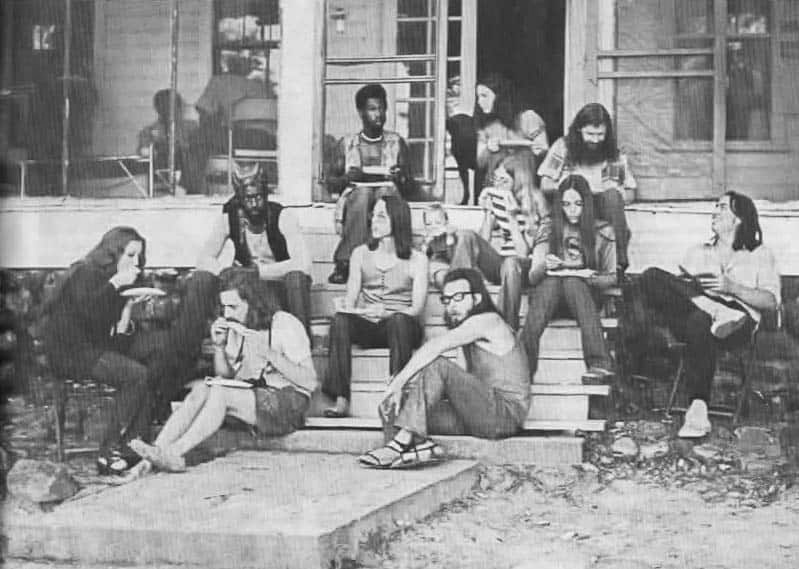
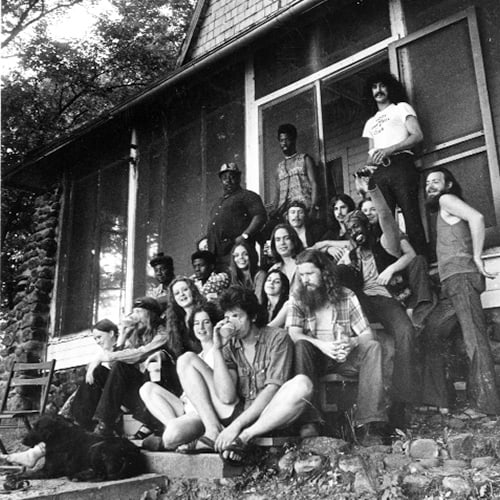
The entire assemblage lived together in the country during the making of the album, sandwiching recording sessions in between fishing, partying and relaxation, and what comes across more than anything else is that this must have been an enjoyable experience for everyone concerned. (On “Big Road,” for example, Junior Wells’ harp solos fill the breaks while Freebo lays down the bass line with a tuba, and “Since I Fell For You” is highlighted by A.C. Reed’s lovely, King Curtis – like tenor solo.)

It’s a remarkable album, and for the most part an achievement whose success should silence these who initially doubted the wisdom of recording a first album on four-track in a shack in the woods. As Bonnie says, it “reflects the difference between music made among friends living together in the country and the kind squeezed out trying to beat city traffic and studio clocks.”

Bonnie Raitt, Freebo, Dave Ray, Willie and the Bees, et al, take a break during the recording of Raitt’s debut album on Enchanted Island on Lake Minnetonka – August 1971 © Courtesy of Eugene Hoffman

About The Author


Source: Copyright The Boston Phoenix

But wait, there's more!