Reviews

Falling in love with Bonnie Raitt for the first time

on November 10, 1971 1 comment
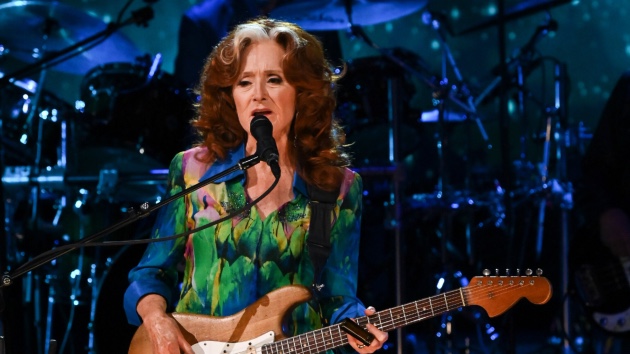
Photo © Terry McGovern / written by Harry Viens

In 1971 The Cellar Door, a nightclub in Washington DC, was on a roll, discovering and booking fresh new musical talent virtually every week. That year alone The Eagles had made their first public appearance at “The Door;” Emmy Lou Harris had been “discovered” at The Door; Bill Danoff and Taffy Nivert had written and performed Country Roads with John Denver at The Door and their song was a breakout national hit.

As the year was winding down, all of us working at The Cellar Door were energized. We felt like we were living on the leading edge of the music scene and wondering who Jack Boyle (who owned the club and booked all the talent) would bring in next. It was a heady time, and we were not disappointed when Jack announced that he had booked John Prine for the week of November 8th. John had been recently been discovered by Kris Kristofferson and released his first album to critical acclaim, not to mention ours. Being located in DC had turned us all onto the country and folk music scene, and The Cellar Door was a premier venue for country artists in those days. After Jack had finished briefing us on the schedule for the month one of the waiters, Dave “The Dude” Sless (now a professional sound engineer in Washington DC) pointed out that we had missed the biggest news of all: Bonnie Raitt was opening for John Prine. We all looked at each other and shrugged. The truth is none of us had a clue who she was. Dave stood up, and proclaimed, “Bonnie is going to blow John Prine right off the stage,” waving his arm across the room for emphasis. We’d seen a lot of talented musicians over the year, so Dave’s proclamation set a pretty high expectation. Two weeks later we met Bonnie.

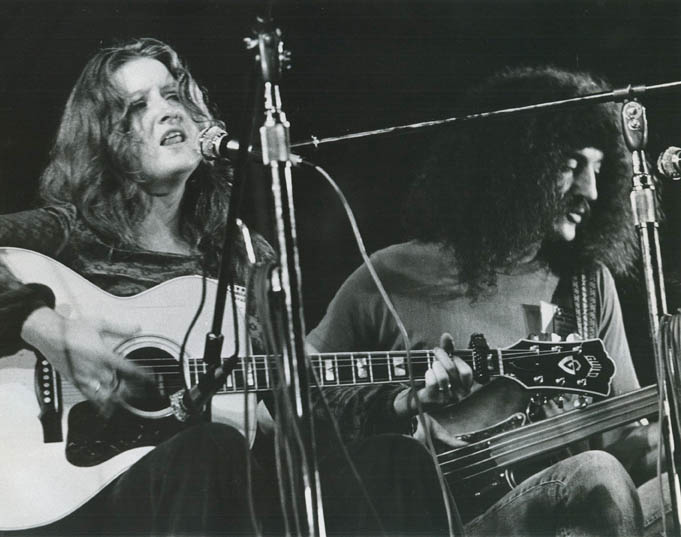
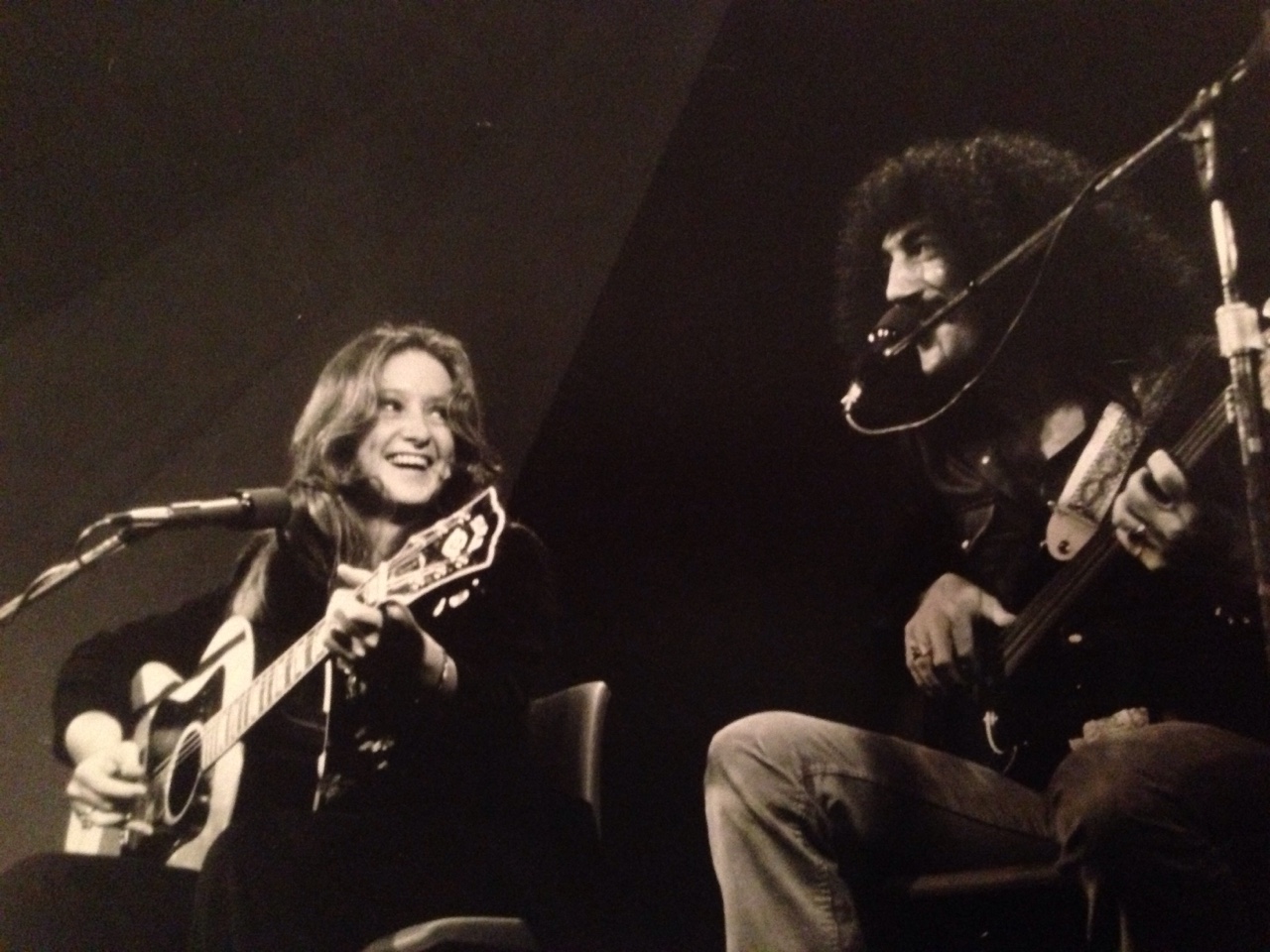
She showed up early Monday afternoon for the stage setup and sound check with a single back up musician, a bass player who went by the name of “Freebo.” None of us ever learned his real name, but he was a very talented musician and had a seemingly endless supply of hashish. He became very popular with the waiters very quickly.

I’ve met musicians with egos, musicians with an attitude and musicians who were just “plain folk.” Bonnie turned out to be something special; probably one of the most sincere, genuine people I’ve ever met. She was sweet, soft spoken and funny. She played a mean guitar and sang with conviction. Her most remarkable trait was simply paying attention to you and making you feel like she really cared about you and what you had to say. I can say this with some conviction, Bonnie is a “real” person, and she cares deeply about the people and world around her.

By the end of the afternoon we’d had a preview of her songbook and were excited and impressed with what we’d heard. Oh, and we were all in love with her, and looking forward to her first show that evening at 7:00 PM, which is when Freebo let it slip that today, the 8th, was her 21st birthday.

After the show that night the waiters, the cook and I conspired with Freebo and planned a surprise party for her the next night. Most of us were working our way through college so we had classes to contend with but we managed to get everything pulled together in time. By four o’clock we were at work in the Cellar Door’s modest kitchen (this was not a club known for its food) whipping up a vegetarian birthday buffet for Bonnie. It was one of those meals where everybody cooked something they loved; for me it was stuffed mushrooms; one of the waiters whipped up some baked zucchini, one of our doormen made a pasta dish and a couple of the waiters actually baked a birthday cake with vanilla frosting. Amazing what a bunch of college boys can do in a pinch.

Freebo somehow delivered Bonnie to the dressing room a couple of hours early where we had assembled most of the waiters, doormen, the assistants, even the club accountant. When Bonnie walked in we all yelled “surprise” and started singing Happy Birthday. She put her hands to her face, bent over a little and then came up with a huge smile. We spent the rest of the afternoon just eating, talking and getting to know this lovely, talented woman. That evening, during the first show she told the crowd what had happened and dedicated a song to us. I think the birthday party may have been the high point of the week for Bonnie. John Prine’s audiences were more folk and country oriented, and Bonnie was singing the blues at that point in her career. The audience was receptive, and sometimes enthusiastic, but they were really there for John. Dude’s prediction wasn’t far from the mark for us though; Bonnie blew us away with her music and her personal warmth.

Harry Viens, a former advertising executive and author of the novel Virgin Logic resides in New Hartford, Connecticut and is currently writing a novel about his years at The Cellar Door. He can reached through www.HarryViens.com.

Source: © Copyright Bonnie Raitt-The Unofficial Site
But wait, there's more!

The Many Facets of Blues

on October 2, 1971 No comments
by Michael Cuscuna

PHILADELPHIA, PA, — At Philadelphia’s Civic Center recently, an outstanding line-up of blues artists played a benefit for Catholic Charities to a crowd of about 7,000 hard core fans.

Super Blues Jam with Allman Brothers Band – Buddy Guy – Luther Allison – Mississippi Fred McDowell – Bonnie Raitt – Philadelphia Civic Center, Philadelphia, Pennsylvania, USA – August 16, 1971

The show opened with Arhoolie recording artist Mississippi Fred McDowell, an authentic master of the bottleneck guitar. Fred’s playing an electric guitar now and singing better than ever. He performed several tunes from his Capitol album “I Do Not Play No Rock and Roll,” a success disc which has helped him gain a wider audience. But he realy reached the crowd with “My Babe,” a common rhythm and blues number done in a most uncommon way.

Next came Warner Brothers artist Bonnie Raitt and her bassist Freebo. Bonnie sings with a clear, powerful voice and plays a strong, articulate acoustic guitar. She is well versed in all areas of the blues, an outstanding interpretive performer. Aside from many old blues numbers, her repertoire includes the old Lenny Welch hit, “Since I Fell for You,” and “Set You Free This Time,” which Gene Clark wrote when he was with the Byrds.
If this was strictly an Allman Brothers audience, Bonnie and Fred won a great many new friends that night.

Next came Atlantic’s Buddy Guy with his full electric band, serving up an electric collection of blues, rock, jazz and soul. The band sounded tight. Buddy got the crowd going with some soulful singing and flashy but bluesy guitar work.

Allison Surprise

Luther Allison, who is thus far represented by only one album on Delmark, was the real surprise of the evening. His band was strong and together. But the main attraction was Luther’s amazing voice and his fantastic guitar work. He could have wailed all night, playing many of the great Chicago blues classics. A good portion of the audience gave him a standing ovation.

But the concert had been rocking for more than four hours, and it was time for the Allman Brothers. In full force, the Allmans and their group offered the most tasteful and musically creative fusion of rock blues ever heard. They stretched on every song, covering their most familiar material from “Whipping Post” to “In Memory of Elizabeth Reed.” The Allmans’ live Atlantic album is representative.

Several thousand people left that night with the satisfaction of having heard a most diversified yet unified concert that illustrated the many facets of the blues. Well done.


Source: © Copyright Record World Magazine
Record World magazine October 2, 1971
But wait, there's more!

Mighty Tight Woman – SIPPIE WALLACE

on April 15, 1967 No comments

by Paul Oliver

{{svg_quality_icon}}
{{quality-options}}

A splendid anachronism, Sippie Wallace; a singular survivor of a long past blues tradition. There was a time, in the Forties, when almost the only form of blues which had any recognition was that called ‘classic blues’. The term itself is vague enough and does not carry in it any specific form, or style, or means of expression.
But though it lacks a real definition the classic blues has meant for collectors and jazz enthusiasts the singing of the blues artists who worked with the jazz bands of the 1920s. There were few enthusiasts of the blues in the early years of the traditional jazz ‘revival’ and, in consequence, the blues singers who had associations with jazz were those whose names appeared in the articles and the occasional books which mileposted the developing interest in this form of music. When the ‘trad’ boom was over and the Dixieland bands and the New Orleans bands had fought out their battles of authenticity and purity to meet at last over glasses of warm beer to rue the passing of a fad, attention to the classic blues went too.

In the past few years a rise in interest in the blues has echoed in some respects the traditional jazz phase, sustaining a large number of imitative musicians, developing a market for the issue and reissue of the music of the past, and promoting the rediscovery of veteran musicians.
In all this activity in the blues field there has been little attention to the work of the classic singers. Sadly their link with jazz which had inspired interest in the past is now contributory to the present disregard. Once again, the arguments over authenticity have produced artificial barriers, have classified, often meaninglessly, the categories into which musicians and singers conveniently fall and have imposed a highly artificial form of arbitrary evaluation. And the arguments have weighed heavily against the classic blues singers when indeed, they enter the discussion at all.

tip: most convenient way to listen while browsing along is to use the popup button of the player.

The appearance of Sippie Wallace at the Folk Blues Festival concerts in 1966 must be counted from any point of view, a conspicuous success. Her single appearance has caused critics to reconsider their opinions, some writers to admit grudgingly that there may after all, be some value in the work of singers of her type and generation. As the reviews and the spontaneous acclamation of the audiences revealed, Sippie Wallace’s majestic singing was both a personal triumph and a smashing blow against those who found the classic singer inadmissable to the blues pantheon.

To the extent that the term has any meaning, Sippie Wallace is a classic blues singer. But the term is elastic enough to include at one pole the work of artists of the stature of Bessie Smith and Gertrude Ma Rainey, and at the other the entertainment of Rosa Henderson and Viola McCoy. While the former showed in their every phrase the influence of the blues, the latter singers were vaudeville entertainers whose links were as much with white show business as they were with the Negro tradition of song. No derogatory implications are intended; only some indication of the looseness ot the terminology. Nearly all these singers were women and it is probably a reflection of the recording patterns of the day that while there were few rural women singers recorded in the Twenties the classic singers were almost exclusively female. Those who showed the greatest association with the blues tradition inevitably appeal today to a greater extent than do those whose singing was a part of the vaudeville entertainment of the early years of the century, and for this reason Lillian Glinn, Cleo Gibson or Clara Smith are among the few that are remembered. Standing pre-eminently in their company is Sippie Wallace.

But wait, there's more!