magazine

All posts tagged magazine

Bonnie Raitt: Lady Talks The Blues

on February 19, 2016 No comments
By Jaan Uhelszki ( Classic Rock )

Bonnie Raitt is an American blues icon, one with a string of hugely successful albums, a shelf-full of Grammys and collaborations with everyone from John Lee Hooker and Buddy Guy to Jackson Browne and Little Feat to her name. In 2016, as she prepared to release her 17th album Dig In Deep, Classic Rock caught up with one of music’s great survivors.

Twenty albums, 10 Grammys and three comebacks in, Bonnie Raitt could be taking it easy. But the blues megastar still has a lot to do and say.
Classic Rock (221) – February 2016
Classic Rock issue 221

It’s two weeks before Christmas. But, in the sleek modern lobby of the Hotel Amarano in Burbank, California, you would be hard-pressed to know that. It’s like sitting in the middle of a very large marshmallow; everything is a quiet study of a sanitarium white, from the ivory marble tiles to the linen couches, the champagne-beige rugs to the cream-coloured lampshades. Even the floor-to-ceiling-bookshelves are filled with tomes that have all been covered in white leather, with none of the titles showing. It’s a metaphor that is as disturbing as it is a bland diet for the eyes. Worse, the Christmas tree is done up in monochromatic beige that absorbs more light than it reflects.

It is a hushed and quiescent place, with an almost inaudible soundtrack of unobtrusive jazz playing in the background, conveying, as the hotel’s general manager brags, “a place where a five-time Oscar winner can walk in the door and no one’s going to ask for an autograph”. Given that only cinematographers, make-up artists, dress designers, visual effects supervisors, the late Walt Disney and composer Allen Menken (who won eight) generally reach those multi-Oscar heights, that doesn’t seem like a tall order.

But that’s not even true. Once, I spotted someone march right up to basketball bad boy Dennis Rodman and ask him to sign his coat. Then there was the time that Julia Roberts threw open the French doors of her second-storey room and screamed down at the hotel’s gardener to stop using the electric leaf blower because she couldn’t hear herself think. It’s more like a place where Oscar winners come to recover after having facial surgery.

But not Bonnie Raitt. The seemingly ageless musician sweeps into this austere lobby in a riot of colour and feverish activity, wrapped up in a winter coat against the December chill, her trademark red hair swathed in a long cashmere scarf the shade of the storm clouds outside and which exactly matches the blue-grey liner that rims her watchful eyes.

Raitt looks more like that elegant and tough-talking old-school Hollywood actress of yore Barbara Stanwyck at about the time she made the classic Double Indemnity than like a legacy artist who is one of the world’s most steadfast sustainers of the blues tradition and the best slide guitar player of her generation – making it on to Rolling Stone’s lists of both the top 100 guitarists and top 100 singers. But really, Raitt looks like nobody so much as herself – that is, when she’s properly made up.

“Oh my god, I just did my eyeliner in the car,” Raitt laughs, sitting at a small table in the hotel’s tiny bar and rummaging in her purse for a small bottle of vanilla Stevia. “I never wear eye make-up in real life because people don’t recognise me if I don’t have it on. If I’m drawing my eyes, I must be going back to work.”

Which she is. She’s just come from finishing up some last-minute chores. She’s closing her Redwing Records for the holidays later today, and there are still cards to send, packages to wrap, tour dates to finalise, and a performance with her old friend Jackson Browne for the Plastic Pollution Coalition. Right after she’s finished here she’s off to meet her long-time stylist for a fitting of the stage clothes for her upcoming world tour, which will run at least through 2017. Which means a lot of outfits, most of which – you guessed it – Raitt designs herself.

“I’ve designed my shirts since I was twenty-one, and piece them together. I take the sleeves from this shirt I like and a collar from that, and then I custom-make it to my body, and we pick new fabrics and have different things. So it’s really creative. As is designing a set and working with somebody that’s doing that. So there’s a lot of things that harken back to producing a Broadway show or a movie. There’s a lot of things that I have my fingers involved in, as creative to me as the music part.”

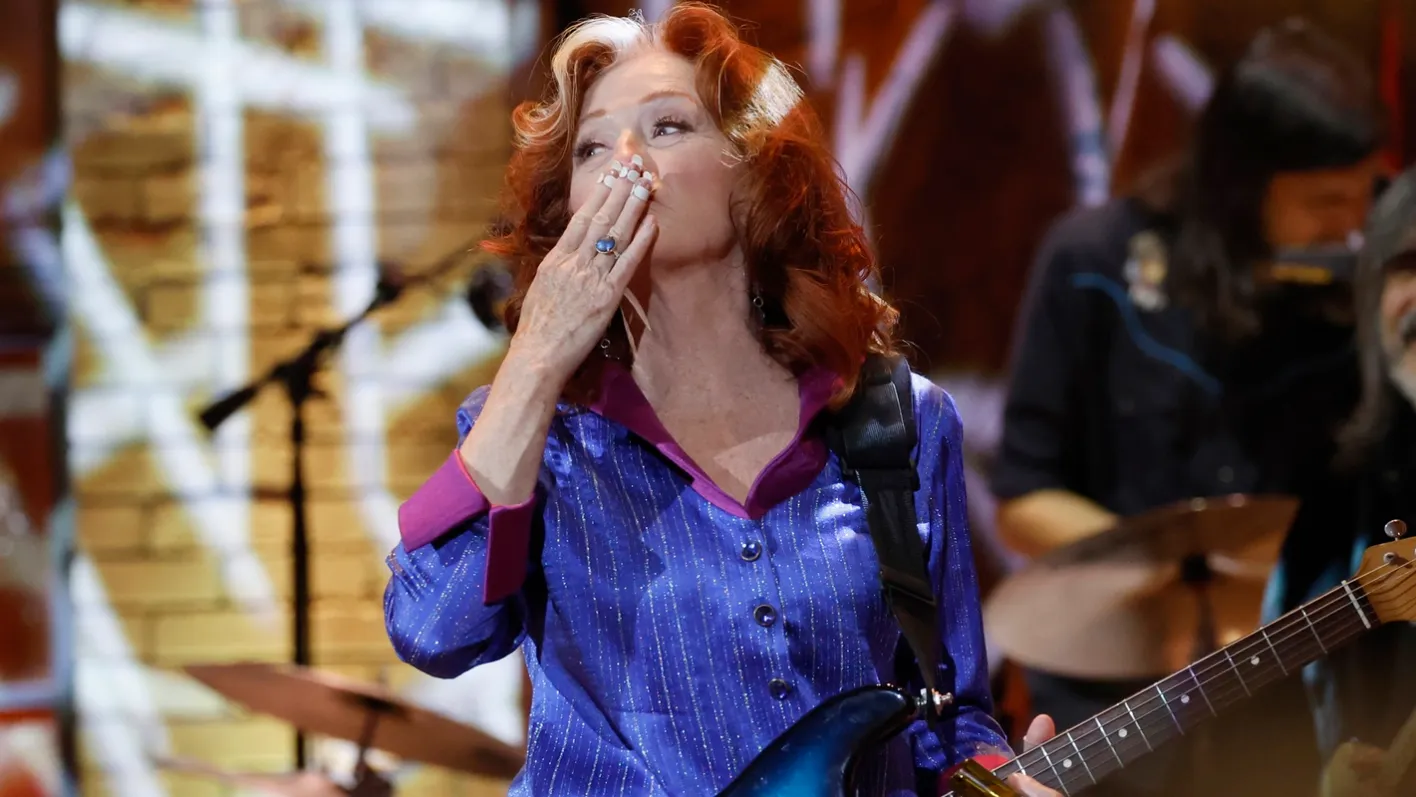
In her own style, Bonnie Raitt in concert 1977 Amsterdam, Netherlands © Gijsbert Hanekroot /Redferns

As well as being a label head, the fingers in every pie extend to producing and writing nearly half the songs on her new album, Dig In Deep, released on February 26. She produced everything except for one track: You’ve Changed My Mind, written by Joe Henry, a friend and the producer of her previous album, Slipstream, after a conversation the two of them had. That rather qualifies as a co-write in itself, so it wouldn’t be wrong to add it to the five songs she wrote on the 12-song album, the most since 1998’s Fundamental. And the subject matter is similar to Fundamental’s: navigating that sometimes mysterious terrain that exists between men and women. It’s not exactly new territory for Raitt.

“Well, a lot of music is writing about what goes on between men and women,” she tells me. “I’ve written other songs like this. What do you do in relationships where you are bumping up against each other? How do you get back to what you had? I’d forgotten till after I wrote these. But there’s one on Fundamental that I wrote called Meet Me Halfway, and on Sweet Forgiveness there’s Standing By The Same Old Love. There’s been a lot of times when I’m talking to the person that I’m with and I’ve said: ‘Hey, man, let’s pay attention. We’re gonna lose it.’ And there’s another one, called Baby, I’m On Your Side, that’s also on Fundamental, that’s about how we lost the thread here. Now let’s get it back.”

On Dig In Deep, Raitt shows you how. Over the 12 songs, she unsentimentally helps to solve that age-old mystery that has stumped philosophers, sages and big thinkers since time began: what do you do to make love last? To echo Yoda, in this epoch of Star Wars resurgence: “Do. Or do not. There is no ‘try’.” Raitt’s advice on The Unintended Consequence Of Love is the same: ‘Let’s dig in deep and get out of this rut.’ No therapists. No recriminations. Just put in the effort and save what is worth saving.

Raitt is one of the very few artists who goes out of her way to help you solve your problems. Urban artists, rap stars and MCs let things get personal and specific on their songs, but very few rock artists really have the courage or wherewithal to share the experience of their hard-won romantic conflagrations, or dispense advice the way she does. But then Bonnie Raitt did name her publishing company Open Secret Music.

Do the lessons come from her own life?

“Well, The Ones We Couldn’t Be is very autobiographical,” she says. “Ironically the Joe Henry song [You’ve Changed My Mind] is too. Maybe not about this relationship, but Unintended Consequences is absolutely from my own experiences. I’ve been in that situation in many of my relationships. What You’re Doing To Me is this point in time when you think your heart’s shuttered, and then somebody pulls you out again. You’ve Changed My Mind and What You’re Doing To Me also are about being yanked back out from the brink of giving up and back into the sun.”

Raitt is nothing if not direct, never coy; emotionally honest, without pretense as both a person and an artist. It’s those qualities that illuminate the songs she writes or chooses to cover. But with a difference: the kind of songs that appear on Dig In Deep are the kind you can’t write or sing until you’ve lived them. They needed the life behind them in order to be born; the scars, the lessons, the deep knowledge from coming out the other side of something. Behind them is a maturity, an intelligence and, most of all, a knowing that you can hear in her thoughtful phrasing and common-sense solutions to not-always-common problems. Conversations set to music, really.

And on the whole they’re unsentimental in their sparse pragmatism, except perhaps on The Ones We Couldn’t Be, which has the poetry and regret of an Irish lament. Is it about the end of her marriage? Perhaps. If not that, it’s certainly about one of those relationships that leave a deep mark, and an even deeper lesson about one’s capacity to be true to oneself.

Which is probably the most telling thing about Raitt’s 20th album. She is resolutely herself. No Don Was to put a shine on her lyrics. No Mitchell Froom and Tchad Blake to gloss up the instrumentation. No Joe Henry to bring out the best in Raitt. Here she stands alone. And the music is better for it.

So what is the key to making an album? “Timing,” she says simply, sitting up a little straighter in her seat. She is smaller and more delicately built than you might think from her photographs, with a posture that seems to speak to her inner fortitude and judiciousness – or maybe the result of her five-days-a-week yoga practice. She and a friend do it together by Skype or FaceTime, depending where Raitt is.

{{svg_quality_icon}}
{{quality-options}}

“I mean that in big and small ways. Sometimes it’s just your time. Or as Elvis Costello calls it: ‘It’s your time on the wheel.’ There’s a spin, and other people have to come up, and then you’re up next. If Nick Of Time [her three-Grammy-winning ‘comeback’ album, released in 1989] had come out in ninety-six it wouldn’t have been a hit. It was just my time. And with [2012’s] Slipstream, I think I’d had a lot of loss and I just was rejuvenated, so there was a really strong batch of songs, because I had extra time to write them. Which is one of the reasons Nick Of Time was better than some of my other stuff, because I had all that time from eighty-six to eighty-nine to find great songs. And, you know, if you race into the studio you might have fewer great songs.”

Dig In Deep had a four-year gestation period, which is about the average time for Raitt to give birth to an album, given the two years she spent on the road touring Slipstream.

“I know it’s time to make a record when I have eleven or twelve songs,” she says. “Making an album is like building a set. There’s a certain arc to sequencing a show, and there’s a certain arc to sequencing a record, and you get good at it early on or else you make crummy records.”
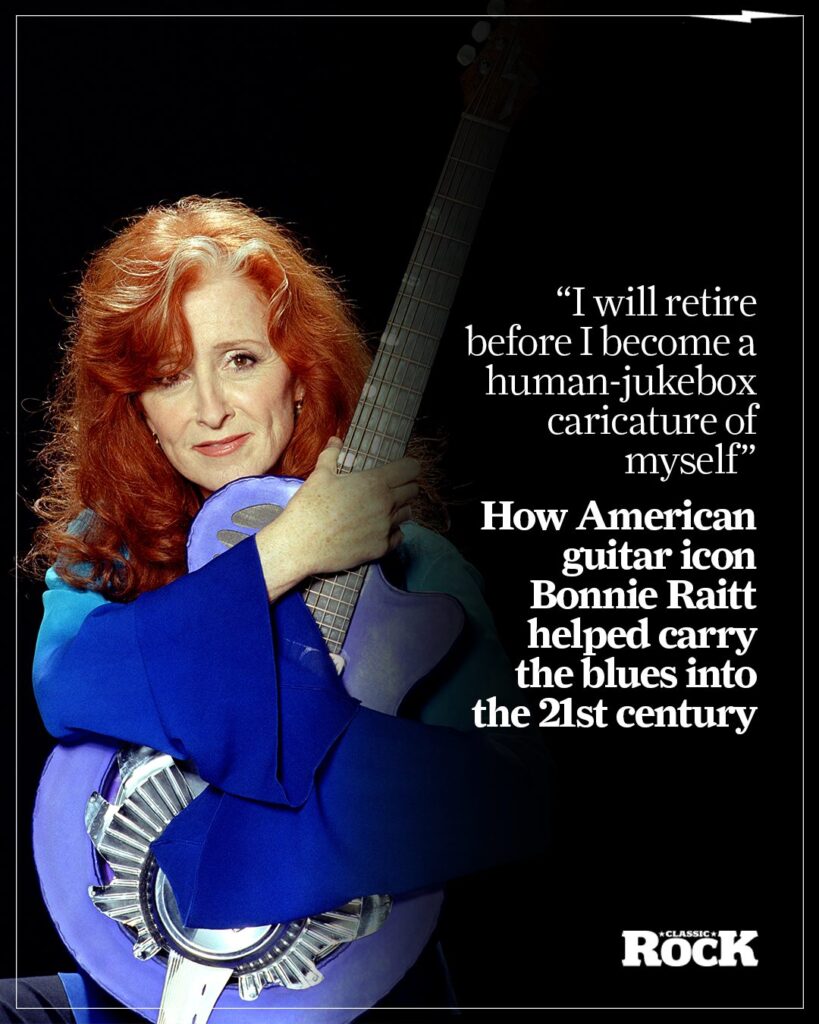
Bonnie Raitt poses for a portrait circa 1994 in Los Angeles, California. © Lester Cohen /Getty Images

Not a natural writer, Raitt says she writes when she realises something is missing in her set. “Writing is not something I do naturally, but when I have something I really want to play, like certain grooves that I realise I’m missing in my show, I’ll have to write it. First I’ll look for a perfect song that’s in that feel, but if I don’t find it I gotta write it. I only really write on assignment. I don’t sit around and worry about it. Or think, I hope everybody’ll think I’m cool if I write more. It’s hard, and every single time I wonder if I can do it. George [Marinelli, Raitt’s long-time guitarist] sent the music to If You Need Somebody, and I realised I had to write words for it. But I found that once I started going it was definitely a pull, not a push. I can’t say that it’s going to happen every time like that.’’

What remains consistent is the way Raitt writes; idiosyncratic bordering on the miraculous. “I like to write lyrics out in nature. I like to go somewhere else to write the lyrics, so I won’t get too distracted – because it’s really easy for me to do,” she says, laughing. “A lot of the music, I write in my head, I don’t play the instrument. In fact I didn’t play some of these songs till I got in the studio, and then I did it in one take, like with The Ones We Couldn’t Be.”

{{svg_quality_icon}}
{{quality-options}}

Or the rough-and-ready Coming Round Is Going Through, a song that would have felt right at home in a Mark Knopfler set. Fast-paced and raw with a buzzy guitar and a seditious whine, it’s one of the rare Raitt songs that deal overtly with the political situation. Usually she is much more subtle about her leanings, allowing the organisations she supports to set up tables at her shows and donating a portion of every ticket sale. Even though she’s a founding member of MUSE (Musicians United for Safe Energy), who produced the historic concerts, album and film No Nukes in 1979, she rarely lets such leanings creep into her music.

“I usually don’t write political songs, but I’m so angry about democracy getting hijacked by big money and the lack of reform. And I wrote it knowing that not everybody that comes to see me or listen to my records has the same progressive kind of view that I do. But at this point everybody in this country is disgusted with how few people are getting a too big a piece of the pie. [I don’t have] the answer for why that is or who’s to blame or how to fix it, but I just wanted to do a rock’n’roll stomper that would allow me to express how pissed off I am. The last time I did something like that is when I wrote Spit Of Love, when I was at the end of a relationship and just seething. That song feels exactly like what I’m singing about. There are certain songs that are just so hellaciously infectious for me.”

Mutual respect: John Lee Hooker with Bonnie Raitt at his RockWalk induction in Hollywood – February 24, 1995 © Robert Knight Archive /Redferns

But no matter how strong her writing is, Raitt just can’t envision the day when she writes everything on one of her albums. “Honestly, I would never do a whole album of my own songs even if I had them, because I like mixing and matching. I would never write anything like the Los Lobos/T Bone Burnett song [Shakin’ Shakin’ Shakes]. There are certain songs that are in my wheelhouse, and other ones I need to go outside it for. Besides, it’s fun to reinterpret tunes that were done originally either by men or have a whole different feel. Then I’ve got my own thing, and there’s a certain originality in that, if you can use that word. There’s a certain artistry in reframing a song in a different way. That’s why it was really fun to do Gerry Rafferty’s Right Down The Line [on Slipstream] as a reggae song.”

There is little that is more revealing about artists than the songs they cover. It’s akin to Halloween, when the costume you choose says volumes about how you see yourself. For example, Raitt’s cover of INXS’s 1987 No.1 hit Need You Tonight. That’s on a par with Patti Smith doing the Tears For Fears anthem Everybody Wants To Rule The World on her Twelve album.

“I knew that would throw everybody for a loop. I’ve been wanting to cut Need You Tonight since it came out. I just wanted to be able to stop and say: ‘You’re one of my kind.’ It’s just a very, very sexy song.”

Especially for a 66-year-old. But Raitt is a role model for how to age in this business. Or maybe that you don’t have to. Her father, Broadway star John Raitt, kept working long past when most people retire. “As he got older he did the older roles. So he stayed out there. And then did concerts till he was in his mid-eighties. He was a normal guy,” she says with affection.

“My heroes are Ella Fitzgerald and BB King, Tony Bennett, my dad and John Lee Hooker. As a blues and roots artist I have the luxury of being able to age with esteem and respect if I keep my chops together and keep growing artistically. If I just become a human-jukebox caricature of myself, then it’ll be an oldies show, and I’ll still work, but it won’t be… well, anything I could do. I will retire before I do that. So I love playing, but I don’t want to play the same songs all the time.”
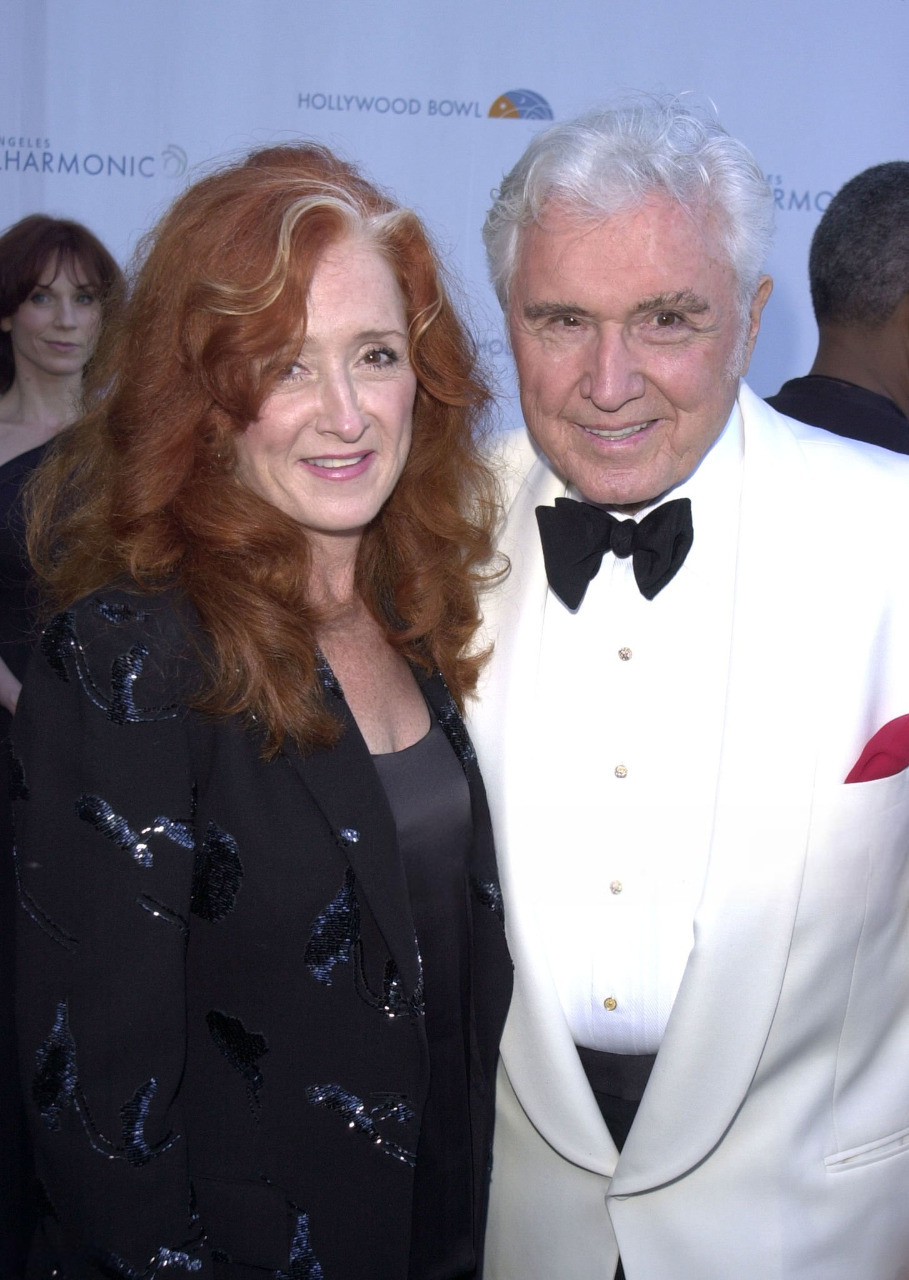
Daddy’s girl: Bonnie Raitt & Father John during Hollywood Bowl Season Opening & 2nd Hall Of Fame Induction Gala at Hollywood Bowl in Hollywood, Ca. 6-29-2001. © J. P. Aussenard /WireImage

There doesn’t seem to be any chance of Raitt repeating herself. Her need to expand her horizons and do different kinds of material is what led former Village Voice reviewer Robert Christgau to say, when reviewing her 1995 live album Road Tested: “[This] two-CD mix of old songs and new illustrates why Raitt became an icon while Ronstadt turned into a gargoyle.”

So much of an icon, in fact, that over her career she has had, by her own account, three “comebacks”. But that shouldn’t surprise anyone who noticed that her 1986 album was titled Nine Lives. What is more telling is that in 2012 she won her 10th Grammy, for Slipstream.

Was that Grammy more satisfying because it showed that you were indeed getting better as you got older? That you still had it?

“Oh, I was so glad when the record got reviewed the way it did. The same way I was for Nick Of Time. I wasn’t expecting to get a Grammy. It’s wonderful to be nominated. And I know it sounds like a cliché, but it’s really true. But I don’t gauge my self-esteem by whether I have a hit record or whether I win awards. The tenth Grammy was totally unexpected for Album Of The Year. But it’s similar to Nick Of Time. I was already so happy with the response of the record, and it was already selling really well. So by the time I got a Grammy nomination I was knocked out. And I was hoping those younger bands weren’t resentful that an old warhorse got it. Because, really, I have enough Grammys. I don’t need any more.”

What do you need?

“The love of my close friends. I think they think I’m kind and generous, and they love me in spite of some of my other tendencies. Sometimes I can be a know-it-all or cranky – and we all can – but they love me. True friends love you in spite of those things, and they understand when you’re having a rough day. So I think we all feel about the same of each other.”

There are few who are as generally loved in the musicians’ community as Bonnie Raitt. Along with Jackson Browne and Stevie Wonder, she sang Amazing Grace at Stevie Ray Vaughan’s funeral in Dallas. Eric Clapton once asked her to play the guitar solo in Cream’s Sunshine Of Your Love at one of his Crossroads events. She is even more loved by the blues community, having helped resurrect the careers of Sippie Wallace and Charles Brown. But above all others, there was a special corner in John Lee Hooker’s heart for the red-headed she-wolf guitarist. He recalled: “I knew Bonnie when she was playing around Boston and places like that. I knew that she was gonna really be a big star one day. She’s got no ego. She’s down to earth. She loves the blues and she loves old blues singers.”

“Oh, he was such a great guy,” Raitt says, smiling at the thought of the bluesman, who died in 2001. “Very impish behind those badass glasses. I loved the way he would giggle and hold his mouth over his teeth, which a lot of people do who are self-conscious about their teeth.

“You asked what I needed. Mostly it’s to continue doing what I do. The thing that has contributed to my longevity is my absolute love of what I do. I don’t want to do something else. I love and I live to do this. A lot of people and causes depend on me for their support. But honestly, as much as that’s important, it’s so much fun and so rewarding to get to do this, and such a miracle that I can, that I’m still here and having people come and see me, that I just want every show and every record to be the best possible I could do. I got it from my dad. He said every night is opening night. All it takes is one bad show and they won’t come and see you again, because you will have lost it. I am grateful I never have.”
{{svg_quality_icon}}
{{quality-options}}

About The Author


Source: © Copyright Louder – Classic Rock

But wait, there's more!

Bonnie Raitt: One Life To Live
The changes aren’t drastic on her new album Dig In Deep, but they reveal how she’s taking charge of her music.

on February 9, 2016 No comments
Written By Geoffrey Himes
Photos by Marina Chavez

“I Knew,” the third song from Bonnie Raitt’s new album, Dig In Deep, begins with her longtime band punching out a funky groove, but the singer’s slide guitar hovers uncertainly, as if pondering its next move. The red-headed singer’s huge soprano also seems undecided, unsure whether she can keep going in the face of so much loss. “Time ain’t never healed the wound,” she sings with a world-weary sigh, “can’t think of anything that gets any better ‘cause it’s old.”

Time looms large in this new project, not just in the lyrics to the songs but also in the challenge of an artist staking out some new territory that won’t repeat what she’s already done. By the time you turn 66, as Bonnie Raitt did in November, you can’t ignore the past; you have to wrestle with it. “I would have run,” she sings on the chorus of “I Knew,” “but I couldn’t run; I would have lied, but I couldn’t lie, ‘cause I knew.”

She knew that if she wanted to release a 17th studio album, she would have to write and/or find a dozen songs that said something she hadn’t said on the 16 previous projects. She knew that if she wanted to escape the curse of the aging-pop-legend-turned-oldies-act, she had to have songs that could hold their own in her live set. And she felt she had more to communicate. “How cruel is it,” she sings on another song from the new record, “that fate has to find me all alone with something to say?”

“I’ve got a lot of decades of music that I’ve recorded,” she says over the phone from California, “a lot of music that’s been loved by other people, so when I do an album I don’t want to repeat myself; I don’t want to use words that someone else has already used. Otherwise it’s just a retread. So I try to write a song or find a song that says something new. Because if you’re not saying something new, why are you even out here?”

Raitt’s decades of music tell an unusual tale. She started out as a folk-rock-blues singer with a big voice, a slashing slide-guitar sound and knack for reinventing other people’s songs. Her nine albums for Warner Bros. between 1971 and 1986 didn’t sell many copies, but she was a favorite of critics, musicians and roots-music fans.

That all changed in 1989, when Nick Of Time, her first album for Capitol and her first album made sober, won three Grammies, topped the Billboard pop charts and sold more than five million copies. The follow-ups, 1991’s Luck Of The Draw and 1994’s Longing In Their Hearts, also went multi-platinum, charting #2 and #1 respectively and winning additional Grammies.

It proved that you could toil away under the damning label of “a critic’s favorite” for 18 years and then suddenly break through to a much wider audience. But after that best-selling trilogy, it was back to modestly selling records and devoted live audiences.

In this, the 45th year of her recording career, how does Raitt find something new to say? The first verse of “I Knew,” which originally appeared on songwriter Pat McLaughlin’s 2008 Horsefly album, finds Raitt casting off doubt as her voice and guitar commit themselves to moving forward. “Change,” she sings, locking into the beat, “would probably do me good.”

The changes aren’t drastic on Dig In Deep, but they reveal how she’s taking charge of her music. She has often included her own songs on her albums, but this one includes three originals and two co-writes — 42 percent of the songs compared to her previous percentage of 16 percent. This is her second album on her own label, Redwing Records, following Slipstream, and the first that she’s produced by herself — though she’s been credited as a co-producer since 1991’s Luck Of The Draw.

“I’m not a person who gets produced, quote-unquote, by another person,” she argues. “When we’re in the studio discussing the snare-drum sound or the mic placement, I’m right there and involved in the discussion. I’ve been producing as a partner all along. On recent albums I’ve asked a co-producer to join me because I’ve liked the sound of a record they’d done recently. But when I met Ryan [Freeland, her engineer], I knew what direction I wanted to go in and decided I didn’t need a co-producer this time. I’m so comfortable with Ryan and with my band that we know where we’re going without a lot of discussion.”

Four of the five new songs that Raitt wrote or co-wrote are uptempo rockers, from the slippery funk number, “Unintended Consequence Of Love,” which she wrote with New Orleans keyboardist Jon Cleary, to the Stones-like stomper of “The Comin’ Round Is Going Through,” which she co-wrote with her regular guitarist George Marinelli. “There are certain grooves I like to play that I wanted to add to the live show,” she explains, “so I was clear about what I wanted to work on.”

But an awareness of time passing sneaks into even these rambunctious party numbers. The Cleary song finds her addressing a longtime lover and asking whatever happened to the optimistic, enthusiastic people they used to be. “I guess time wore us down,” she sings, “expectations run aground. It’s an unintended consequence of love.”

Another number, “What You’re Doin’ To Me,” is sung by someone who has been worn down by those consequences and has given up on romance altogether. “Just when I thought the coast was finally clear,” she sings in surprise, “you come busting in the door.” The excitement of such an unexpected, late-life love is communicated by a rollicking R&B groove that pits Mike Finnigan’s B-3 organ against Raitt’s piano.

“There’s a style of gospel piano playing that I’ve always liked,” she says, “because it’s a place where honky-tonk, gospel and soul all intersect, whether it’s Leon Russell or Ray Charles. I grew up listening to a lot of black gospel singing on the radio. I don’t play a lot of piano, but that’s a kind of piano I really love.”

Raitt plays a different kind of gospel piano on the album’s final track, “The Ones We Couldn’t Be,” a slow hymn, a post-mortem on a relationship gone bust. She’s “looking through these photographs,” she sings to the other person, “searching for a clue” as to why they were pulled so tightly together and then flung so far apart. This is Raitt at her best, slowly filling her powerful voice with heartbreak. Accompanied only by Patrick Warren’s synthesizer strings, she confesses, “I’m so sorry for the ones we couldn’t be.”

“I still think in terms of a whole album,” she admits, “even though I know people are into downloading individual tracks now. But I’m old-school; I like putting an album together so it tells a story from the beginning to the middle to the end. Finding the right place for a ballad is the hardest, most important decision. That’s why sequencing is so crucial. To me the most important song is the last one.”

To these ears, the album’s linchpin ballad is “Undone,” written by Nashville singer-songwriter Bonnie Bishop. Over Finnigan’s B-3 and ex-Beach Boy drummer Ricky Fataar’s brushes, Raitt eulogizes a shattered romance. “Battle waged and nothing won,” she sings with those big open vowels of hers. “Oh what have I done? The blood has run.

Some things can’t be undone.”

By the time that chorus comes around for the third time, however, she sounds as if she’s singing not merely about a specific relationship but a lifetime of struggles and disappointments — not just her lifetime but anyone’s. The words and music are Bishop’s but Raitt claims them completely as her own.

“That’s just something I do,” she says of interpreting other people’s songs. “I listen to something and by the time it comes out of my head and my guitar, it’s going to sound different. Especially if it’s a song written by a man, there’s going to be changes in keys and in lyrics; it’s going to be reframed in my own style. That’s how I grew up, hearing people like Frank Sinatra, Ella Fitzgerald and my father do the same thing.”

Her father was John Raitt, the star of such musicals as Carousel, Oklahoma! and The Pajama Game on Broadway, in movies and on television. He emerged in a time when singer and songwriter were considered two very separate roles in the music-making process. That changed, of course, in the ’60s, not only because songwriters wanted to perform their own works but also because singers wanted to keep the publishing money for themselves.

“Bob Dylan, James Taylor and Carole King ushered in a new era with singers doing their own songs,” Raitt acknowledges, “but there has always been a parallel track where people like me, Aretha, Emmylou and Linda Ronstadt interpret other people’s songs. I grew up singing songs I loved in the backseat of our car, singing my dad’s show tunes, folk-music songs, blues. I came up in an era when people were singing other people’s songs.”

Today interpretive singing seems an endangered art form as every artist and every producer want to control their own publishing, one of the few reliable income streams left in the shrinking music business. What gets lost in this shift is the chemistry of a great singer embodying the work of a great songwriter — of one strong personality encountering another. John Prine, Randy Newman and Chris Smither are superb songwriters, but they have modest voices, and songs such as “Angel From Montgomery,” “Guilty” and “Love Me Like A Man” take on a different life when sung by someone like Raitt.

On the other hand, Raitt is an astonishing singer, but she’s not a prolific writer — and she lacks the rare verbal wit of Prine, Newman and Smither. So she looks for songs like theirs — and he claims that the search for new songs is not all that different from the writing of new songs.

“It’s equally challenging to write a new song or to find a new song,” she claims. “Both can be frustrating. You write and write and you’re not hearing what you want to hear. Or you listen and listen and you’re not hearing what you want to hear. But you keep going till you hear it. You have to come up with new songs or else you’re going to be repeating yourself.”

And what is she listening for from these new songs? In one sense, she’s looking for what she’s always sought: words and music that resonate with the emotional puzzles she’s trying to solve in her own heart. But those puzzles are different in her 66-year-old heart than they were in her 26-year-old heart, so the songs must be different too.

“I can’t separate my growth as a person,” she says, “from my choices of songs over the years. That line, ‘I’d give anything to see you again,’ from ‘Love Has No Pride,’ is something I wouldn’t say now, but there was a time I felt that way — and I still identify with that person. Since I’ve been sober for 30 years, I don’t sing Randy Newman’s ‘Guilty’ the same way, but it’s a useful reminder of the way I was.

“At this point in our lives, with our parents passing and so many friends getting sick, with the condition of the world so terrible, you have to find a way to center yourself so you can withstand the heavy weather, I was a lot more carefree in my 20s and 30s, but that was a different world and I was a different person.”

“Like a heartbeat,” she sings on “All Alone With Something To Say,” “timing is everything. I looked at love when love looked away.” The song is about that familiar experience of realizing what you should have said in a key moment only when that moment is long gone. The song seems to be about a splintered romance, but like so many songs on this album, it could apply equally well to departed parents (Raitt’s mom and dad died in 2004 and 2005) or lost friends. And just because wisdom comes too late for some situations doesn’t lessen its value for all the situations to come.

“To survive that heavy weather,” she says, “you have to try to be good to other people and to be good to yourself — and clean up the messes when you make a mistake. When something’s wrong in your relationships —whether it’s with a lover or at work or in your family — you have to square your shoulders and face it and do something about it. If it doesn’t change in six months, move on, because this isn’t a rehearsal; this is the only life we get.”


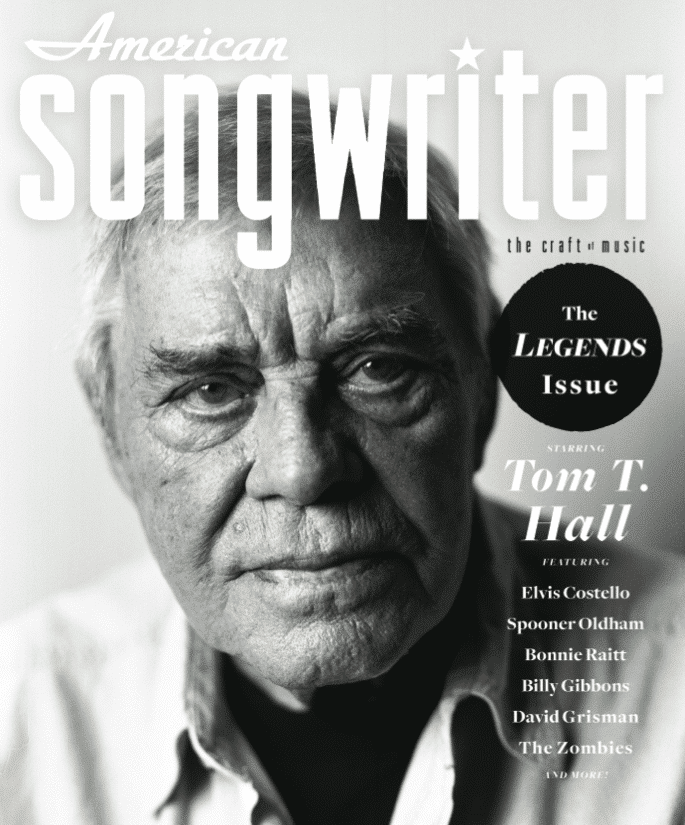
American Songwriter (31) 2016
American Songwriter Jan-Feb 2016
Source: © Copyright American Songwriter But wait, there's more!

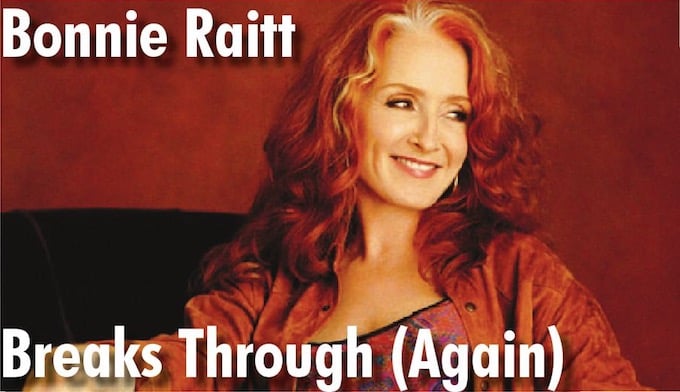
Bonnie Raitt breaks through (Again)
The redheaded singer-slide guitarist who once idolized and emulated blues legends s now one herself.

on November 20, 2013 No comments

By Lori Hoffman • feedback@acweekly.com

In the late 1960s-early 70s Bonnie Raitt was a young artist on the college/folk music circuit who idolized the African American blues legends whose music she emulated — people like Mississippi Fred McDowell, Sippie Wallace, Muddy Waters and Ruth Brown. Sometimes she opened for them in concert all the while developing a distinctive blues rock and pop style all her own.

   For many years that made Raitt a cult favorite with albums that included Give It Up, Takin My Time, Streetlights and Green Light. This was until a magical period in 1989 through the mid-1990s when Raitt became a bonafide star thanks to the commercial and multi-Grammy winning albums Nick of Time and Luck of the Draw and hit songs such as “Nick of Time,” “A Thing Called Love,” “Something to Talk About” and “I Can’t Make You Love Me.”

   In the years since, Raitt has continued to deliver critically acclaimed albums and become a beloved music icon for younger artists like Adele, Bon Iver and Katy Perry, who have all covered “I Can t Make You Love Me.”

   In 2012 she released her first album in seven years, Slipstream, another gem featuring her still powerful vocals and dynamic bottleneck guitar picking. The final leg of her Slipstream tour stops at Caesars Atlantic City, Saturday. Nov. 23. Prior to that visit, Atlantic City Weekly had a chance to chat with Raitt

“In a climate that sells less CDs, it’s a good investment to have your own label”

   You’ve had a career that has come full circle. You once idolized great blues artists like Fred McDowell and Sippie Wallace and now young artists like Adele and Bon Iver are covering your songs. How do you feel about that?
   My heart is warmed. I’m excited. I was very happy to have a new crop of fans coming to my concerts and more interest in my music whether it is shows like The Voice or American Idol that cover “Something to Talk About” or “I Can t Make You Love Me” and I hear about it, Justin Vernon of Bon Iver and Adele, to have people of their caliber cover that song [“I Can t Make You Love Me”] has been wonderful. To reach this point where Muddy and John Lee and Sippie Wallace were when I started out. You are at that point where you don’t have to look over your shoulder to see if your next record will be received well. I have a little bit of security and I thank my fans for that.

   Slipstream is a terrific album earning a Grammy award for a newer category, Americana.
   It was great that they came up with that umbrella. People like to put music in little boxes. There is such a wide range that fits in Americana [roots blues folk].

   You self-released Slipstream on your Redwing Records. What made you decide to start a record label? Was it a necessity because of the current record business?
   No not at all. I had a lot of interest from some labels. For me as a legacy artist who is established, the math works really well if you have the stomach and the staff to put together a great distribution, PR and management team. I have three wonderful women who are great at accounting, social media and my social activism side. Managing a label is very daunting task and those three are fantastic. In a climate that sells less CDs, it’s a good investment to have your own label.

   How comfortable are you with the way records are released and promoted with social media?
   It is certainly a great way to get the information out starting with the Web site. It’s a great way to communicate directly with fans and the fact that we can sell digitally is another reason for having our own label. Unfortunately, like bookstores the mom and pop record stores are [nearly gone]. It’s just a reality of the business.

   You came out on stage with Mick Jagger and the Rolling Stones in San Jose to sing “Let It Bleed.” That must have been amazing.
   It was wonderful. I’ve known [Jagger] since I was 19 and I hung out a lot with those guys over the years. We’ve opened for the Stones a few times and I was actually on their last DVD. It’s an honor to be included and a lot of fun. I’m such a big fan.

   With your early success in the Philadelphia region, you should have a great audience here in Atlantic City, not a typical casino crowd.
   We did almost 100 dates in the U.S. and we were two months Down Under and two months in the U.K. and Europe earlier this year. These 40 dates are really to pick up the fans that didn t get a chance to see us last time. It’s a continuation of the Slipstream tour with a lot of songs from the new album and other songs from my previous catalog I switch around depending on how I’m feeling that night. Playing with Marc Cohn is such a treat. We did a lot of shows with him and with Mavis Staples last year. As for the casino audience verses regular venues, by the time the lights go down and I come out there on the stage I’m just grateful to have a heated venue with great lighting, a showroom with comfortable seats and great sight lines. With my fans there it just feels like another Bonnie Raitt concert.

   Will you be working on a new album after this tour? You took seven years between albums last time.
   With all the preparation before recording the album it has been a three-year cycle and I think I deserve a break. But I’ve definitely got some ideas in mind and I’m hunting for new songs. I haven’t really had any time at home in the last couple years. It will be nice to settle for a bit and unpack my suitcase and not repack it right away.

   You are well known for being passionate about various charitable and political causes over the years. What’s your current passion?
   Getting money out of politics Whether you are left or right or the middle. I hope that is something we can all agree on going forward. It is just a travesty what has happened to what we call democracy. It is really an auction instead of an election these days. And clearly the energy and climate situation, whether its Hurricane Sandy or the fires out west we [need] to keep pushing for safer alternatives to nuclear energy, coal and fracking. Those alternatives are available and we can bring the price down. The energy situation, the campaign reform and Wall Street reform, those are high on my list ■

EVENT INFO – Saturday Nov 23. 9pm Caesars Circus Maximus. Atlantic City – $67.50, $89, $99


https://issuu.com/atlanticcityweekly/docs/acw_112113
But wait, there's more!