magazine

All posts tagged magazine

Singer Bonnie Raitt: “I’m afraid of hits”

on May 21, 1977 No comments
Haagse Post – Bert Jansen

Bonnie Raitt is a new generation blues singer. White and young, but aware of the debt to an old black generation. With her sixth LP Sweet Forgiveness (8 on HP’s Top 10) the breakthrough seems to have finally begun. Bert Jansen spoke to her in Los Angeles for VARA’s Wonderland. About the committed musician in America and the role of a woman in an “all-male” band.

A spacious flat converted into an office. A sink in the corner reminds of that. Bonnie comes in five minutes later with a hair dryer in her hand. Introducing herself and disappears giggling in another room. “I need to do something about my hair. Already not mother’s most beautiful. Can you please wait? “It is something that with her arrival has blown into the room, so un-American. So unusual and on the other hand very reassuring that we have all the time in the world for her. European flux-de-bouche. Maybe it’s also because she brought her sister with husband and two children. “They’re staying with me and I had promised them we would go into town this afternoon.” A somewhat messy family, one of the children has a runny nose. Bonnie gives them ten dollars and they will return an hour later. Above the murmur of the hair dryer she now and then screams something unintelligible into the room. Fifteen minutes later she comes back inside. “How do I look now?” In the same way as in the past my sister used to show a just purchased dress.

The phenomenon Bonnie Raitt, because that’s what she is, is gradually becoming better known in America. For a long time – she was more popular in the Netherlands than in America. A change has been noticeable for a month and a half. Her latest album, Sweet Forgiveness, is gratefully accepted thanks to a sympathetic bow to commerce. And her version of Del Shannon’s Runaway is featured on a lot of playlists of many radio stations. After six years and the same amount of LP’s. Bonnie Raitt’s music is in the blues idiom, occasionally mixed with a well-lived “listening song” in the genre of Jackson Browne. She plays excellent acoustic and electric guitar and controls the bottle-neck technique better than many male colleagues.

{{svg_quality_icon}}
{{quality-options}}

Why are you interested in the blues?
“I grew up in Los Angeles, California. During the period when The Beach Boys and surfing were in. The beach scene that was it back then. But I have red hair and never get tanned, so I stayed at home. Apart from that, I hated the American culture of the time: become tanned, white teeth, surfing, big cars. American Graffiti. I listened to the radio a lot, Muddy Waters and soul records. It was not possible then, to love soul music. “I came into contact with people who were involved in the Civil Rights Movement through a summer camp at highschool. One thing led to another: Joan Baez, The Newport Folk Festival. And I wanted to leave the L.A.-scene almost desperately. I went to study in Cambridge, Massachusetts. There were many folk & blues clubs there. Taj Mahal, Paul Butterfield and Kurt Rainclover played there. I hung out in those clubs until late at night and taught myself to play the guitar. And met Dick Waterman, my manager. He also represented interests in Son House, Fred McDowell, Arthur Crudup and Skip James. They are now deceased. But he still books Buddy Guy and Junior Wells, and that’s how I got to know them and often played with them. We are good friends. “
(On this point, the relationship between Waterman – Raitt needs to be explained in more detail. They have lived together for years, seem to have been married, but that cannot be traced. However, it is a fact that Waterman can be seen as the rediscoverer of many long-forgotten blues artists, who had a meager existence as a pump attendant or gardener. He is one of the blues authorities. Owns a large collection of 78rpm records in this field and devotes all his time to one of America’s most important cultural expressions: the blues.)

Did they respect you, all those important and influential rich blues musicians?
“I believe so. They thought it was funny to see an eighteen-year-old girl playing the slide guitar. I mean, I saw them so many times that we were already friends before I started making music professionally. I started with the music because I was fed up with typing. Every night I went to a club and saw people playing there. And I thought: if they earn their money with that, then I can
do it also. “

You’re one of the first Americans who has deliberately started digging into the past of the blues of your country, where people here were already much more involved in Europe. John Mayall, the whole blues boom here. Ten years ago.
“Yes, first of all it is a shame that you don’t have a record shop anywhere in America where you can buy old Chess and Checker records from Howlin’ Wolf. Let alone old Delta blues. Because it has never been commercial in the sense that you supposedly can’t dance to it. While the blues, as Son House told me, actually originated as entertainment, dance music on the plantations and so on. But it developed before the record industry came into being. In 1929 there was a large market for this type of music. The race records. Which made many people famous. But then the depression came and everything collapsed like a house of cards. And after that the blues was forgotten. “After World War II the electric guitars came and the blues was adapted. Chicago blues. Bobby Bland, T-Bone Walker and BB. King. The rhythm & blues was only one step further. Through Arthur Crudup that evolved into soul. I’m talking about the fifties now. And that soul still exists and has been bringing in money for decades. And that seems to be important after all anyway.

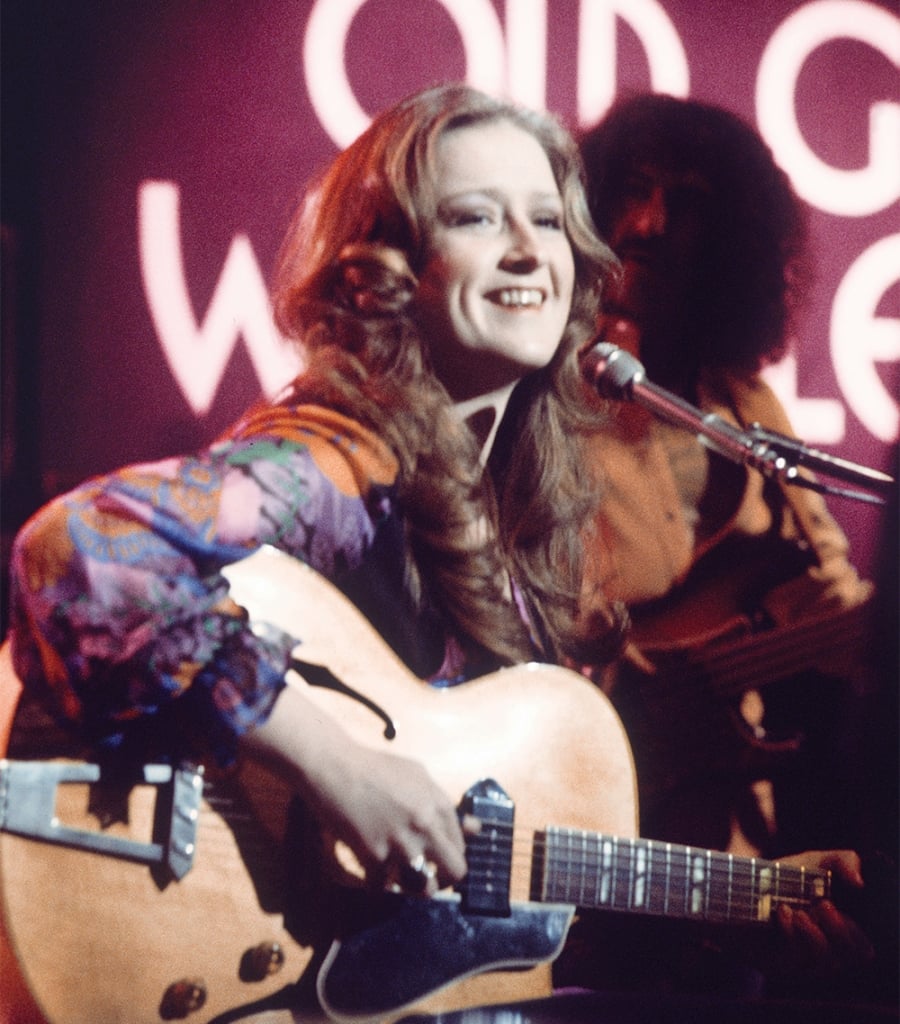
Bonnie Raitt performs live in 1977 in San Francisco, CA © Richard McCaffrey /Michael Ochs Archive/ Getty Images

Nowadays, the black people here don’t care about the blues. In fact, it reminds them of their past, poverty and the rest. The people on the corner of the street who are my age, twenty seven, just don’t want it. It is the music of their grandparents. And to return to your question: in the sixties you had a generation of middle-class teenagers in Europe, who fought for the blues from a semi-revolutionary point of view and thought that was it. And what happened was that the Rolling Stones and Eric Clapton brought the blues back to America. To the country it once came from. Without them, there would never have been a blues-revival here. There had been no support for it, I mean. Apart from the fact that some freak might graduate with a thesis on black culture that casually the blues would be discussed also.

For me, there are few positive sides to the blues-revival socially. I think it’s very sad that on the one hand people from their rather comfortable lives have been put in the spotlight for little money, while on the other hand people like Janis Joplin and Johnny Winter made $ 50,000 a night from their music. Not that I think they get their bread in a handy way, I also play blues. It is very nice to earn your money with it but then you have to help the people too, from whom it came, who you got it from, I think. But most people who used to like Sonny Terry and Brownie McGhee now prefer to see a young white person imitate them, then. . . the real thing. ”

You’re one of those “young whites”. What do you do about it?
“I try to have old traditional artists in the opening acts of my concerts, with which I play together also at the end of the concert. Even if the audience doesn’t want it. I’m just telling them to shut up. It is necessary that they know where it comes from. And I work together with Sippie Wallace (a blues singer who was already emancipated in the 1920s and shows this in her songs and is gratefully interpreted by Bonnie Raitt) on a film that we want to make. I am convinced that it is very important that that generation is captured. Before all of them being dead.
In the past two years about sixteen major blues artists have died: Jimmy Reed, Mance Lipscomb, you name them. It is also unimaginable how the black history is ignored in the schools in this country. Before they value the blues here in America as an American expression of art, the first generation of musicians has long since died. Hence my plan to raise so much money that I can make movies and TV shows with that people before they are no longer there.
“But as it is in a capitalist society: if there is no profit to be made then there is no interest whatsoever. In my point of view the government needs to establish a fund for the blues. . . as National Art. It is one of the most important parts of our history and people just ignore it!”

Money and commerce. The main driving force in America. It is all the more remarkable that you have been able to make five albums without any profit for the company and without a hit anywhere.
“Only on the first album (Bonnie Raitt 1971) they did earn anything”. Because I recorded it on a ordinary recorder with friends in the garage. But I am certainly not a commercial success. I earn just enough to support myself and my band. By playing a lot and everywhere. That’s okay. I could have recorded songs that would have been more commercially acceptable. It’s just what you want: a white Rolls Royce and a tennis court in your backyard, or make the music you believe in and a limited fan base. I know how to fill small halls and my records sell just enough. “I’m afraid of hits. They are one-off, if you don’t come up with the next one soon, then people quickly forget you. Don McLean had one hit and who knows him now? No, then I am more proud of the group of people who buy my LP’s every time, so that we can just break even. “On the other hand, that money is attractive. I could finally start making that movie that I have been talking too long and too passionate about. And I don’t have to perform every other day. “


You are very close friends with Little Feat. I get the impression that this band is very underestimated here in America.
“It is the best pop group in the world. Perhaps in the entire universe. It is the mixture. Every instrumentalist in that band is my favorite on that instrument. If you split me up, Billy Payne would be the best keyboard player for me and Lowell George the best guitar player. They sound right up my alley. Something from Howlin’ Wolf, something like. . . everything actually. It is unique music. “They’re the reason I came back to LA from Boston at the time. I heard a Little Feat record and I said: I don’t know who or what it is, but I’m going there to get it, you see? Nobody likes it here in America, but I assume they will become very famous in due course. But I like that they are so unknown, that makes me part of it, I can hold them here in my hand and say they are mine. It’s with Little Feat just like Jimi Hendrix, he first had to go to England to become famous. America becomes constantly faced with what it unconsciously or perhaps also consciously missed. It’s the irony of the people who never appreciate what they have in their backyard. And on the other hand a compliment for the good taste of the people in Europe. They were the first also by appreciating the blues…”

I think you do survive well as a woman in that harsh male-dominated world of pop music.
“Like Alice in Wonderland. (A shy smile that just isn’t enough for her to hide honest determination.) I love it. Traveling with ten guys. I like to work at night. Performing an hour and a half every evening is very different from sitting behind a desk for eight hours during the day do other people’s work. Except running my own business is not nice. There are more fun things to do than keep a business going, hire musicians, find songs, write arrangements. If you were to ask the first on the street if he or she can sing and play an instrument and you would give them the choice of making money with that or sitting at a desk, getting married and having children, they would choose first. I’m sure about that.”

But still, as a woman you seem very un-American. No glamor, heavy makeup or a psychiatrist within reach. You don’t correspond to the familiar image at all.
“When I was a kid, my parents were sent a catalog of Frederick’s of Hollywood, the famous firm of sexy lingerie, four times a year. The mannequins had the hair – that blonde cotton candy – and the figure of Dolly Parton. Big tits and a wasp waist. When I got older I didn’t understand why I didn’t
become just like them. “As an adult I once bought clothes there and nothing fit. You can’t look like nature has made you, you have to change yourself, make it more attractive. Artificial, plastic.
“Until recently, as a woman you had to look so dressed up to be able to make it a bit in show business. Fortunately, it is finally here that you no longer need to have the voice of Olivia Newton-John and the figure of Mae West to make it. That did result in the sixties. . . I believe that the young people will soon be in charge here. Half of the population of this country is below twenty five. I long for the time when a band of exclusively women no longer needs to perform in sexy clothes and be exploited by the men in the music industry who only see the money. ”

{{svg_quality_icon}}
{{quality-options}}

Like The Runaways?
“Yes. But I don’t like commercialization anyway, be it men or women. And the music business is one of the most commercial and rotten industries in this country. It’s like the TV commercial where they tell you what kind of corn flakes to eat. It is the structure of America. Money creates opportunities. And the music business has made clever use of the post-war baby boom for its share. Now everybody wants a piece of the pie, and the kids in the street their records.”

Many pop artists have been campaigning for presidential candidate campaigns last year.
“I did something for Tom Hayden, Jane Fonda’s husband. They acted together against the Vietnam War at the time. He then ran for election to the Senate. I thought that was quite brave, after Vietnam he could have rested on his laurels but he decided to put on a suit and take the whole trip. With Jackson Browne, James Taylor and Maria Muldaur we did benefits for him. Because I consider myself a “radical” and have more confident in him than the Republicans and those who are in power now. But the funny thing is that when you have brought all those people together and the goal has not been achieved, everything falls apart immediately. Especially for me because I was involved in the university riots and had been throwing stones during Vietnam demonstrations and had connections with the Weathermen.
And nowadays. . . . kids are going to the dogs!. I have the impression that the new generation is hanging around and alone but interested in getting high. We are back at the same point as before the sixties. They don’t care anymore, they prefer to watch TV. Apathy. No activity at all. Just like with musicians. They just hang out in the hotel and their only concern is getting stoned. Not that I’m such a good person myself, I also have my weaknesses. I know that I now speak like my parents when they said, “What should become of this generation?” I see fourteen-year-olds going to bed at high school, and stuff. I mean, I would rather go back to when I was young. When a little went a longer way.”

Politics and pop, can go hand in hand? For example, you once had put on a record sleeve “dedicated to the people of North-Vietnam.”
“In my case I would like to give the context of my concerts a political basis. By returning part of the money I earn with it to the community where it came from. But I have never been able to sing “protest songs”. Of the type “let’s hold hands together”. Those terrible songs they sing at meetings. For me, it boils down to basically wanting to do benefit concerts for every organization in need. In principle, in the sense that I should be able to unite myself with it.”

How do you feel about the content of the lyrics you sing?
“I sing most about love and people getting messed up in a room. That’s also political, you know, the relationship between men and women. It is equally important. It is as political as war. And it is the oldest war in existence. I have experience with it, who doesn’t?”


Translated from Dutch. Apologies for any grammatical errors.
HP 20 – May 21, 1977

But wait, there's more!

Bonnie Raitt – A Talent In Transition
From Blues to Rock

on May 1, 1977 No comments

Cover photo by Neil Zlozower

Classic Interview

By Patricia Brody

© Mark MacLaren

BONNIE RAITT was almost a folksinger, part of the plethora of guitar-playing protesters of the Sixties led by Bob Dylan and Joan Baez. Sitting in her girlhood bedroom in a house atop Coldwater Canyon’s peacefully affluent Mulholland Drive, Bonnie, born in Burbank, California, in 1949, was inspired by loneliness to teach herself guitar. “If I’d been able to hang out with other kids, I’d never have gotten into it,” says the daughter of successful Broadway actor John Raitt, best known for his leading roles in musical comedies like Pajama Game, Oklahoma, and Carousel.

    The Raitt house—last stop on the school bus route—though somewhat isolated and not particularly conducive to visits with friends, hardly seemed located within earshot of the whiney, mournful tones of a generation of blues guitarists whose techniques and repertoire Bonnie came to adopt. Blues developed far from what Raitt describes as the Los Angeles “blonde-streaked surf scene” whose “political and intellectual vacancy” drove her to a progressive Quaker boarding school in upstate New York. There, feeling more in her element among, as she calls them, “the precocious children of leftist lawyers and actors into modern theater of the absurd and Marxism,” Raitt listened to Pete Seeger records and expressed her own discontent playing Peter, Paul, And Mary and Kingston Trio-type laments on her guitar. “For years,” she recalls, “I wanted desperately to get old enough to be able to go to civil rights demonstrations and peace marches, be a beatnik, grow my hair, and have cheek bones like Joan Baez.”

    Encouraged in a musical home where “my mother was my father’s accompanist, and we’d all sit around singing together,” plus five years of piano lessons, Bonnie first turned to guitar, a Stella given to her as a Christmas present by her parents and grandparents, at the age of ten. She enthusiastically pursued her hobby through several summers at camp, in Massachusetts, where her counselors inspired even more longing for contact with the outside world, with their exciting reports of musical events at the nearby Newport jazz and folk festivals.

    Then, an album, Blues At Newport ’63 (on Vanguard, S79145) containing tracks by John Lee Hooker, John Hammond, Mississippi John Hurt, as well as several other blues and folk artists fell on Raitt’s fourteen-year-old ears with enough impact to permanently change the direction of her music. “From that point on,” she remembers, “I was split into two parts. One side of me was all Joan Baez, my early idol, or Childe-type ballads, while the other suddenly had to learn whatever the hell it was Mississippi John Hurt was doing on ‘Candy Man’.’’ Being Bonnie Raitt, she learned “Candy Man.”

    An acceptance from Radcliffe College in Cambridge, Massachusetts—they didn’t have curfews there—further assured Raitt’s entanglement with the blues. Though she began by majoring in African studies with plans to do a community development, political organizing program, she soon came into contact with a leading figure of what she terms the blues “mafia.” Dick Waterman, manager and promoter for many blues artists and events, seems to have been the catalyst who turned Bonnie’s guitar hobby into a pursuit of somewhat greater intensity. It was at Waterman’s Cambridge apartment that Bonnie met Son House, the first in a long chain of encounters with aging blues giants who were to definitively shape the young woman’s entire career. She did not become a political organizer or a white Odetta (another of her childhood influences). The black woman with whom she is most identified is Sippie Wallace, a blues artist now in her eighties who has been making records since the Twenties, and many of whose songs—”You Got To Know How,” “Mighty Tight Woman”—have become Raitt standards.

    Hindered, she says, by a voice more Judy Collins than Memphis Minnie, Raitt has worked continuously for nearly ten years to combine her evocative Delta-style slide guitar with her “white girl’s” vocals to create a memorable sound. Her playing has expanded to include electric explorations on a Gibson ES-175 and a Fender Stratocaster, in close coordination with a five-member band, while her voice has noticeably matured. She’s a long way from the bonier days of just “Freebo [her bassist from the beginning], my little dog Prune, a Matthews amp, and me.” In some ways. Upon the release of her sixth album, Sweet Forgiveness, Raitt does not deny her impatience for the long awaited, frustratingly elusive hit. Yet she maintains a unique hesitancy about making it big. Despite half-hearted forays into the realm of commercial appeal with her last two LPs, Streetlights and Home Plate, she seems to have returned to staunchly guarding her independence. Her most fervently expressed hopes focus on taking the blues into a new form; finding her own sound.

    “I’ve been almost making it for a long time,” she says with traces of irony. “My records are never everything to everybody, but I’ve always got another chance to make something new. Once you have a hit, you’ve got to follow it up; that becomes your object or you won’t stay around.” Raitt is apparently not about to disappear from today’s music scene.

*   *   *   *

© Neil Zlozower

    How did you first learn to play slide?
    I just broke off a wine bottle! Well, the style was called bottleneck, so I figured that’s what it was. The only problem was you couldn’t get wine bottles too easily if you didn’t drink, and at boarding school there weren’t a whole lot of wine-drinking orgies.

    Were you still playing the Stella?
    No, after the Stella I got a red Guild with gut strings. No idea of the model number, but I remember wanting the red one because everyone else had white-topped guitars, and the red one went with my hair. I thought it made me look like an Irish Setter. Later I saved up and bought my first Guild. I forget the number, but I always play an F-50 now. My first National was a copper-colored metal one but it was painted. They used to paint them to look like wood. The one I have now is around a 1929. It has a wooden body which is very unique.

    Cambridge, Massachusetts, was a turning point for you. What happened there?
    I went there to go to college. I just played guitar as a hobby, but I ran into a lot of blues freaks at the Harvard station, WHRB, and at Club 47 in Harvard Square, a major outlet for musicians like Buddy Guy, Junior Wells, Taj Mahal, and Canned Heat, not to mention John Hurt and Skip James. Strangely enough. I’d rushed to get old enough to catch this great Greenwich Village folk scene I’d heard about, and naturally the year I moved to Cambridge the club closed, and along came The Ultimate Spinach and acid rock. This whole incredible political scene went to pot, literally, but that’s when I met Dick Waterman.

    By coincidence?
    No, I was already a blues freak when I left California. There was a kind of blues mafia between New York, Philadelphia, and Cambridge—all these esoteric people talking about their blues idols’ eating habits, the obscure 78s they’d find, and Dick was a kind of liaison, but he was unique in his concern for taking care of artists who were still alive rather than trying to revive an era that was dead. Everyone at the Harvard station knew him, and if you wanted to do a blues show, you’d call Dick Waterman. Periodically Son House, Skip James, or Arthur Crudup would come to town. Anyway, one afternoon a friend of mine invited me to this apartment on Franklin Street, and who was there housesitting for Dick Waterman, but Son House. I was just floored. Then I began to meet them all.

    All through Waterman?
    Dick at the time managed Junior Wells, Buddy Guy, Magic Sam, Otis Rush, Luther Allison, J.B. Hutto, as well as many other traditional bluesmen. The reason it made sense to have so many under one agency was to protect them from the abuse of white blues promoters. Club owners would play one bluesman against the other. They’d say, “Well, we can get Bukka White for $200 less, so why bother with Son House?” Then Son’s manager would have to drop his price in order to get the guy a gig at all. Dick was outraged, and by keeping them all under one agency he could protect their rights. “You’re not going to get any of them to play unless you pay what they deserve,” he’d say. I started traveling around with Dick, driving Son, Skip, or Sleepy John Estes to the blues festivals, and I became real tight with them. With Buddy or Junior Wells, guys in their forties, that was fun, but with the older men friendship was difficult. John Hurt died right before I met Dick, and that was just the beginning of a series of five or six deaths, which was terribly painful for those who knew them. But still, meeting them and knowing them was overwhelming; I can’t describe it.

    Of all these legendary figures, who influenced you the most?
    That’s impossible to say. One of them had to be Fred McDowell, who stayed with Dick when he was in town. He thought it was really funny, this little eighteen-year-old girl playing guitar, but he was flattered at my interest, and he taught me. Also, I’d say I emulate Muddy Waters’ style.

    Did you actually try to imitate him or any of the others?
    Not exactly. You can’t help but learn if you sit and play music with somebody. It was like being stung with a guitar style, and I had to play that way, or else it didn’t feel good. It’s not like a singing style where you try to avoid sounding like someone else.

    When did you develop confidence in playing ‘their’ style?
    During my first gig with Taj Mahal one afternoon. I took out my National and started playing some Fred McDowell stuff, and Taj, who didn’t know me, looked over and said, “hey all right.” He came over, took out his guitar, and we started playing a wordless duet, him playing Willie Brown to my Charley Patton [both Delta blues figures]; you know, just throwing blues licks off each other, not saying anything. Finally he reached out his hand and said, “Hello, my name is Taj Mahal.” [Blues interpreter] John Hammond has been a great help to me. I had a crush on him for years. Being a girl helped. These musicians came in, heard me sounding—or trying to—just like them, and they’d be flattered, and helpful. If I’d been a young guy doing a show just like John Hammond’s, he might have felt a bit threatened. I wasn’t playing as good as them, but they were real tickled that I was into their style.

© Jon Sievert

    How did you develop your own style out of the traditional blues?
    My style is probably the result of a problem. My voice, actually soprano, is around five keys up from where Robert Johnson or Son House would do a song, say in Spanish open G tuning. I can’t tune the strings up or down to get that open octave;
I have to capo up three or five frets to get the same tuning, which is the only way to make the guitar part sound good. You lose the octaves—with no cutaway you can’t get your hand up there, and you’ve got only around three frets left to play slide. My National has a new, hybrid neck with fourteen frets, and that’s one of the reasons I went to electric, for the longer neck. Just adding my voice to a Fred McDowell guitar part would bring about a unique style, though.

    Do you have trouble with your voice?
    As my throat doctor says, “You’re trying to sing that Afro style.” I lose my voice often, because I do push it a lot to sing more blues, soul, or R&B. It was hard to do “Walking Blues” (on Bonnie Raitt) for instance, but I was not born with a voice like Mavis Staples or [contemporary English blues singer] Jo Ann Kelly who sounds uncannily like Memphis Minnie, or any ballsy, chesty blueswoman. My voice is neo-Judy Collins.

    You don’t really sound like her.
    Well, I’ve beaten my voice down over the years by pickling it with alcohol and screaming and yelling, so it’s gotten lower. If I was to sit here and play some blues for you now, and not worry about singing, I’d play what I feel is real good. I’d have liked to play more Fred McDowell and Robert Johnson stuff, but I have kind of this bird voice. As I was learning how to sing in public, I found that putting the tune in my key took away a lot of beautiful positions. My style is not a B.B. King lead guitar solo style, but just kind of half rhythm, usually in the key of E or A drawn from Muddy Waters, Brownie McGhee, John Hammond, Fred McDowell. It limits what I can do. Instead of doing a song in D, like most guitarists who really know their way around the neck, I move the capo around because I don’t want to miss that Muddy Waters-type blues riff. That’s the only way I can get the sound I want.

But wait, there's more!

Bonnie Raitt… Bottleneck Feminism

on May 1, 1976 No comments
by Penny Valentine

At 17 she was reading African studies, planning to work in the Third World. One day Dick Waterman ‘phoned: he invited her to his house to meet some people . . .Fred McDowell, Son
House and Otis Rush.

FREEBO’S SHAGGY, morose head appears through the doors of the van; “There is no truth in the
rumour,” he shouts, “that when Bonnie Raitt arrived in this country Harold Wilson was forced to quit.” And he retires, slamming the doors shut, with a triumphant grin.

8.45am and the VW is taking Bonnie from Blake’s Hotel in Kensington to London Airport. It’s 24 hours since she flew in from America and today is the first of a heavy two-week schedule of promotional work. This is stage one in the behind-the-scenes work that may break Bonnie Raitt, make her more accessible, help her sell records.

Five albums and six years on the road have her packing halls tight across America, but she can‘t sell enough albums there to break the top 50. In Britain she had had no more than an ardent fringe following until now. At the end of this two weeks there‘s her first concert appearance — the only cream on offer. For the rest it’s a relentless energy-consuming, fairly unstimulating and well-trodden path. Like a candidate for the primaries, Bonnie Raitt must smile and talk, talk and smile, until her voice is hoarse, and her face hurts.

IN I963 Bonnie Raitt underwent a conversion to the blues beneath the sun at the Newport Festival. She had been a rather insular Californian teenager, spending most of her comfortable LA years indoors listening to music on the radio. While her rich friends sported themselves at Malibu.
Raitt, whose fair skin was in constant battle with sunburn, stayed home and developed an intense fascination with folk and soul music.

The daughter of a Quaker family whose political stance was liberal pacifist and (in American terms) left, Raitt was instantly drawn to Dylan and Baez. By 11 she was playing acoustic guitar, encouraged by her father, musical/comedy star John Raitt. When school holidays came round she would move over to the East coast to be near her mother, and attend summer camp where there was more Dylan and Baez, and involvement with the peace movement. One year she went back home to the lush pastures of Beverly Hills and tuned into local soul radio stations and her rejection of the Californian lifestyle, surf music and the sunbaked brains around her was complete.

At Newport she saw great blues artists for the first time. Stunned and moved by people like Muddy Waters and Jimmy Reed she was finally faced with music rooted in first-hand experience of the struggle for survival. She picked up her guitar again: “It wasn‘t,” she recalls, “too far a jump. I went from the Miracles to Muddy Waters overnight. I got hold of all the old Vanguard records. so I could teach myself blues guitar. I was a blues freak completely. But I was a rotten blues guitarist because I was doing everything wrong.”

Music was a pastime. Raitt never considered becoming a professional and she had no ambition to be in the limelight. Her whole childhood had been spent surrounded by film stars and actors . . . she knew from close to what ‘fame’ did to people and she wasn‘t interested. What she was attracted to was a cultural and political movement.

By 17 she was attending Radcliffe College in Massachusetts, reading African studies. She planned to work in the newly emerging Third World. One day Dick Waterman, musician and old friend, phoned her up. Would she like to come over to his house? He had some people there he thought she‘d be eager to meet — Fred McDowell, Son House and Otis Rush.

” ‘CAUSE NO mater what you do, even pray to heaven abo-ove, all you get from her is — long distance lo-ooove” . . .

Unexpectedly the sun has chipped its way through the London clouds and along the M4 Little Feat play on tape. Bonnie, dark gIasses, wavy hair thrown back, sings to her own harmony work. She stamps her feet and chuckles at the end of the track: “Ooooh I love that band to death!”

She turns to Warner Bros. promotion man Rick Savage: “What am I doing today?”. Savage runs down the itinerary without looking — at noon lunch with the producer at Radio Clyde in Glasgow: at 2.00pm an interview with the station they’ll use in two sections for different programmes. Then a drive to Edinburgh so by 4.30 she can do a quick live appearance on Radio Forth to plug the album: then a long taped interview for later programming. Flying back from Edinburgh around 6.00pm. Raitt sighs a small “Oh”. She has only had four hours sleep.

Her personal manager, Mark Hammerman, looks at her with a little concern. Hammerman once managed Fanny, before that he was involved with Alice Cooper. A small genial man in his 40s he now handles Jackson Browne, co- manages Maria Muldaur with Raitt‘s boyfriend Gary George, and Bonnie along with her original mentor, blues afficianado Dick Waterman.

Hammerman says the ‘guys’ shouldn’t have got her into partying last night when she needed to sleep. Freebo, Will McFarlane, Alan, Dennis Whitted can treat this two weeks as a holiday while Raitt does all the groundwork. That’s the ballgame. She smiles ingenuously at Hammerman.

“I couldn’t tell y‘know Mark, how much I drank last night I was so out of it. So this morning I woke up and thought ‘OK, this is where it hits me and I find out’. Hey I got out of bed and didn’t start the day throwing up, pretty good huh?”

Bonnie Raitt, portrait, London, 1976. © Michael Putland /Getty Images

BY THE time she left Radcliffe in 1969 Bonnie Raitt was playing blues guitar. Up on stage at small coffee houses Raitt would pour out the influences she’d soaked up that summer: “I had spent all my free time with those Chicago blues guys, just hanging out and hearing them play —— realising they had more to offer and I had a much neater time with them than I‘d ever had with anyone my own age.” Nobody told her it was strange that a young fair-haired white girl should be playing music “like a 90 year old black man”, so Bonnie went freewheelin‘ on sleeping through the sunny days she’d always detested and singing and playing through the night. But she was finding it harder to hold out against the record companies who continually pestered her to sign a contract. The clubs were beginning to complain about booking her in without advertising and she couldn‘t pay for her own promotion — there was little money going around and by now she was working on acoustic with bass player Freebo. Finally she signed with Warner Bros., a company that seemed ready to support her even though the music she was making was “uncommercial”.

‘I grew up as the Women’s Movement in America grew . . . l was never oppressed. I grew up already liberated, so that‘s in me. It’s not something I had to struggle with along the way.

That was four years ago. Since then Bonnie Raitt has put out five albums, become a superb bottleneck guitarist, and been on the road touring non-stop for 32 months. Once on the road Railt entered her work over-zealously. Her personal life suffered and she took to partying it up and boozing fairly steadily. Committed as a musician, her sources came from her roots and her experiences. So Mose Allison and Sippie Wallace numbers were threaded in among Jackson Browne and Eric Kaz downers. ‘Been Too long At The Fair‘ and ‘Blowin’ Away” began to reflect too closely what Bonnie Raitt‘s life had become. Her audiences were growing across the country — fascinated by a woman who was so obviously pure musician in a world where the mere word had male connotations, intrigued by her equally acute understanding of the frail human condition that added tone and pitch to her work, overlaying the fine driving playing with pain and delight. More and more Raitt attracted a vast section of young girls into her audiences.

“I ran away from a normal life and it‘s real easy to let that take over and be your life. The reason I was on the road so much at the start was because I didn’t have a home life or a relationship that I trusted”, she says. “So it became a vicious circle. If I’d had a good relationship I wouldn’t have been on the road, and I couldn’t have that because I was on the road too much too long”.

Since Gary George came on the scene twelve months ago things have changed. The relationship had steadied Railt up and she‘s the first to admit it: “I’m trying to maintain a balance now between my career and my personal life and my health. To be a more sensible human being after these past four years”.

The London-to-Glasgow shuttle is packed with business men off to meetings and conferences — all pressed suits and high polished shoes. Raitt gives them the once over with a wicked gleam in her eye. She sits across the aisle filling in her diary: “I’ve started up again just to keep a check on the money. I have to. I used to keep a real personal one before,“ she grins with exagerated coyness. “In code.”

BONNIE RAITT was the first of her contemporaries, the first woman to emerge as a musician liberated as a performer since Baez, and she’s still the best. She is, she says, a feminist by background rather than by conversion.

“I grew up as the womens‘ movement grew in America — around 68/69 and I was leftist politically because of my family. That‘s when they started talking about sexism within the movement aside from just in society at large. That was my age group so I was never oppressed as I grew up. So many women are, then they realise at 25 or whatever that their husband has been holding them back, that what they’d really like is a career and self-expression and someone else to look after the kids. That‘s a difficult time for women. I grew up already liberated, it’s part of what I am. So that’s in me and I can concentrate on my work and my life within that framework. It’s not something I have to struggle with along the way”.

Off stage she works quietly and consistently for women — doing benefits for day-care centres across America: working with listener-sponsored radio for women‘s ‘specials’, advising the newly formed feminist record label Olivia. Yet, thankfully, she‘s not a hard line women’s libber. There’s no militancy in her attitude, and her choice of Sippie Wallace‘s ‘Don‘t Talk ‘Bout Your Man‘ is a cheerful reminder that Raitt has a keen eye for competition and a protective arm round her relationship.

THE FIGURE that strolls into the Glasgow hotel foyer in its jeans, boots and embroidered coat looks taller and slimmer than last year in New York: “That’s because she’s been eating her own cooking”, says Hammerman knowingly. Off the road for a few weeks, away from the convenience foods and the booze.

Bonnie Raitt onstage in 1976 at Shepherd’s Bush Theatre in London for Old Grey Whistle Test. © Alan Messer /REX/Shutterstock

Inevitably jet lag is beginning to catch up with Raitt. She has just completed tracks on a James Taylor album and starts a Little Feat tour of America in May: “That’s if our respective old ladies and men will let us!, ‘hey man‘,” she growls, “those two bands on the road together? You gotta be kiddin‘ — they‘ll kill each other!” Before she flew on to London she and the band did a couple of warm-up gigs. For three weeks now she hasn’t hit more than four hours sleep a night. 24 hours before she left New York she flew to a Maria Muldaur concert to spend a little time with George. She sat through the show (Maria, along with Emmylou Harris, is a close friend), then had a business talk with Jerry Wexler about producing her next album: “And all I wanted to do was run up to a bedroom with Gary.” she says wistfully. She is very tired and suddenly her composure crumbles away, two deep ridges forming under her eyes. Over the lunch table her head droops behind a menu.

“What you want to start with?” asks Hammerman.
“A little boy”,
“No Bonnie — something that‘s on the menu.”

AT RADIO Clyde she finds out they don’t have her first two albums. She looks aggrieved: “They were really important ones. Ummm, I mean I don’t know how much you can do it without those two”. McAllam gently steers her away from the subject and asks if there‘s anything she wants. The smile comes up for air. “Just a piece of mind between weight bread — Oh God I have the retention of a fern!” She’s not worried about being tired, she says later, just cross that because of it she may foul up what she considers an important side of her work. When the recording light goes on they’re into her first involvement with the blues: “Well I was tinkering with my radio — it was all my mother would let me tinker with at the time . ..”

RAITT’S ANCEST’ORS were Scottish. Some were massacred at Culloden. Later the others packed up their castle and moved across the Atlantic. She is happier whipping through the streets of Glasgow on the way to Edinburgh. There’s the occasional squeal — all this red hair, and this is where she gets her wierd mouth from, what she calls “a potato with a slit in it.” She taps the chauffeur on the shoulder. “Excuse me — if we see some sheep can we stop?”.” He laughs. This woman is obviously an American nut. She sinks back in her seat: “I always had this fantasy about coming to live up here and raise sheep. Then I found out what people did with them and I decided to stay in LA!”

LIVE WORK takes up eight months of Bonnie Raitt’s year, another three is spent working on an album. She ends up with four weeks to give full time to her own life and this goes on until she can sell as many records as she can pack concerts. She is currently depressed that her most recent album, Home Plate, is actually selling no more than her earlier work: “Each time you do a record it gets harder and harder. Each time you use up ten songs and it’s more difficult to find ten more. Now with Emmylou and Maria and Linda — there are tons of women coming out now and we‘re all tapping the same source. We write very little ourselves and we all do a little country. a little John David Souther, a little Eric Kaz. It‘s not that I started it, it’s just the way it’s gone. I‘ve done a Mose Allison and a Sippie Wallace —— how many more can you do? How many ‘Shuffle Blues In E’? Like people say ‘Hey, where‘s the guitar on records?” and I say — ‘Where‘s the songs?”

It’s likely that Raitt‘s own solution to bad album sales is the right one — that she won‘t break it until she cuts a live set. Somehow right from the first album cut in a Woodstock garage, nobody has managed to get her essence down on tape. Some albums have veered close — Give It Up and Taking My Time — some, like Streetlights, missed it completely. Even when she’s in overall charge as she was on Home Plate the results are disappointing.

“Sure it’s irritating to sell less of an album I’ve worked on this hard. I’m not sure it‘s any better than any of the others but I like my voice better now because I‘m older, and I know more about professionalism in the studio. But it continued to be difficult to make, both emotionally and physically. It takes those three months out of your life and by the end of it everyone‘s at each others throats. But I was completely involved in this one, I oversaw the arrangements, everything. So if someone doesn’t like the strings I‘ll take the blame.

“I had a kinda chip on my shoulder with that first onslaught of press in America. I’d never thought about a girl playing a guitar the way I did and so when I got this, well kind of ‘gimmick‘ attitude it shocked me. I reacted pretty badly to things for a while. Like they‘d say ‘why don’t you play more slide?‘ and I’d say why didn‘t they go stuff it. I‘ll play what I wanted to. I‘m not going to be your female Jimi Hendrix. Now I like to be appreciated for my guitar playing but I want to be able to do the songs I like without a ‘Where’s the blues?” I didn‘t play much guitar on the last album because it was easier to just have me singing. Let’s face it John Hall and Bill Payne and those guys have better things to do than wait around for me to learn the guitar parts! It’s something an outsider might not think of. Like people think someone‘s producing me and taking my guitar style away. Hell, nobody ‘takes it away’. It‘s just something I decided to do.”

{{svg_quality_icon}}
{{quality-options}}

FOR THE next two days Bonnie Raitt will do a concentrated line-up of newspaper interviews. At the weekend the band rehearse for Old Grey Whistle Test (She is worried about the show’s audience reaction until she‘s told that half of them walked into the theatre on the wrong night and expected a religious discussion); then she does a chat appearance on Charlie Gillett‘s informal radio show on BBC Radio London; Tuesday she goes to Nottingham and Birmingham for more radio stations; then there‘s two days in Holland and finally back to London for what turns out to be a triumphant New Victoria concert.

ON THE plane back from Edinburgh while the businessmen eat dinner Bonnie Raitt, her dark glasses on the end of her nose, her coat pulled round her shoulders, is fast asleep.

By 9pm she‘s back at Brown‘s Hotel — 13 hours after she left. She messes her hair with her fingers and kisses everyone. “Hey — thanks for coming along.” Raitt staggers towards the lift ignoring the cocktail bar and just before the doors open she turns round with a now familiar smile: “Ugh — listen, how about Poland next time?”


Street Life was a UK magazine launched in 1975 as a UK equivalent to Rolling Stone, but which ceased publication in 1976.

But wait, there's more!