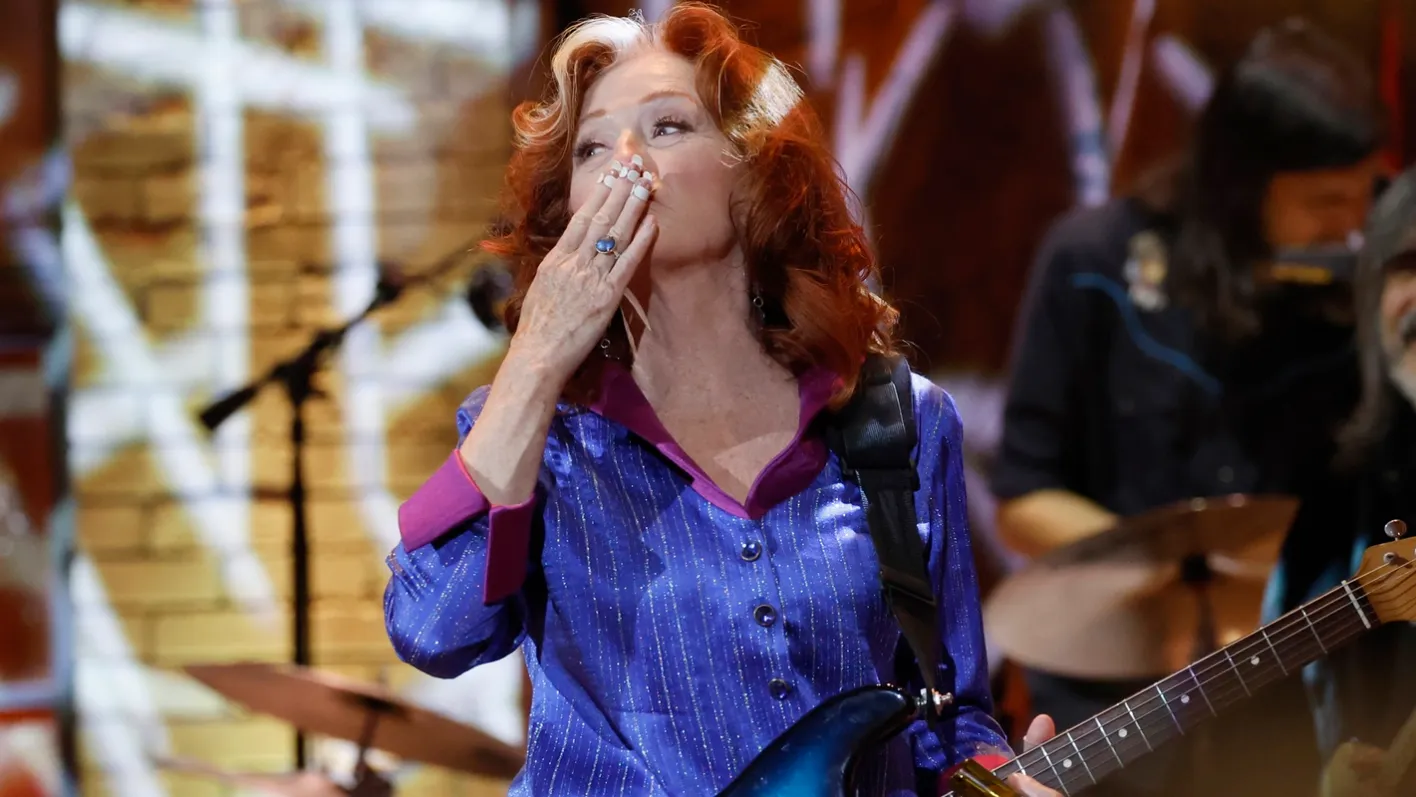
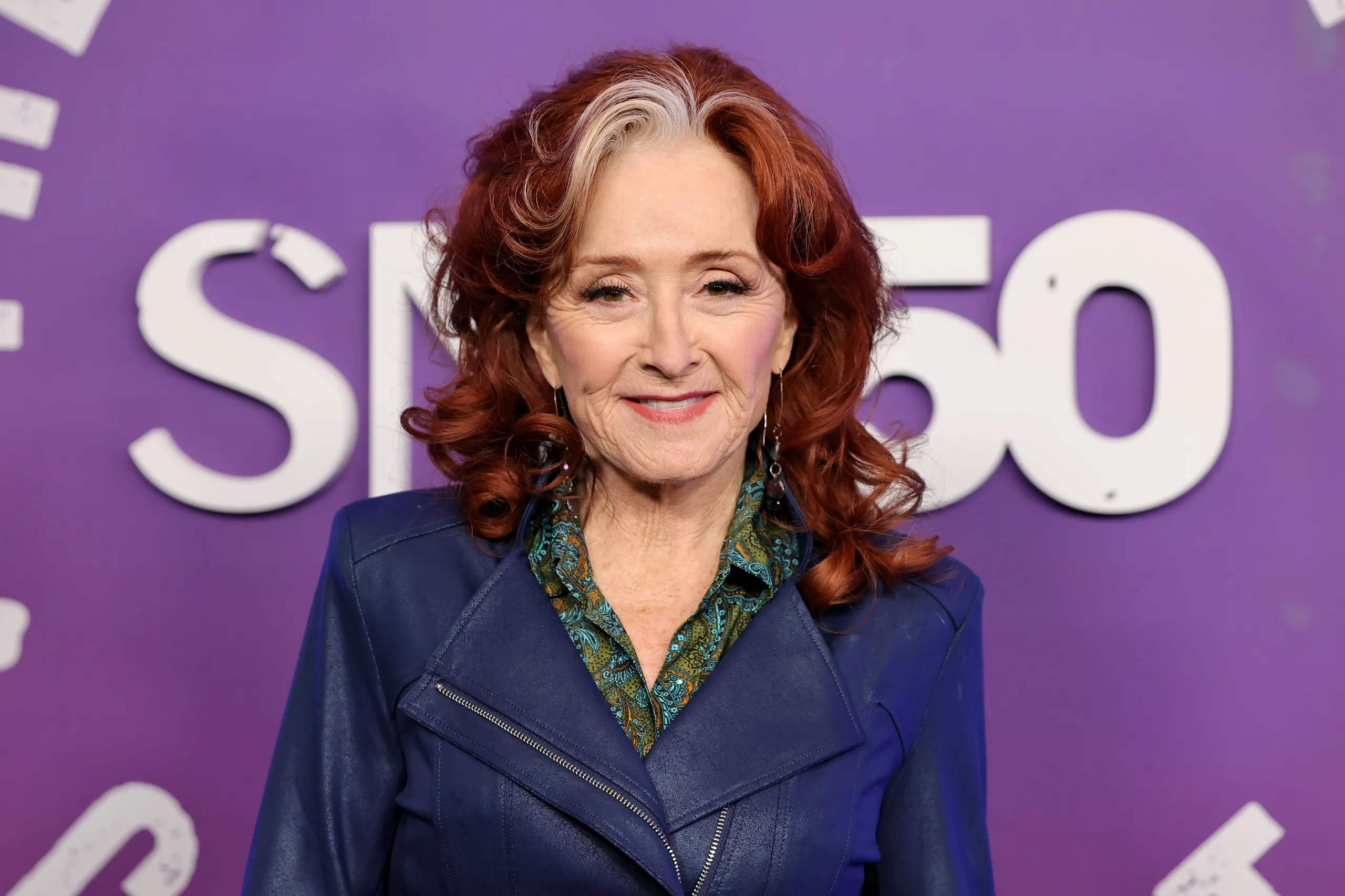
Let’s just put aside for a moment the fact that Bonnie Raitt is one of the most important musicians of this century, showing the world that a woman can wield a guitar while holding her own alongside the legends. And let’s ignore the detail that as a singer, this whiskey-voiced performer nails every note, and will move you wherever she wants you to go – to dance, cry, laugh, or sigh. And while we’re at it, forget that we’re talking about a truly great songwriter – one whose modesty tends to downplay that particular talent. Let’s just take all of those elements, wrap them up in a package, and put a nice bow on it.
Now step back and take a look. You’ll see that what we’re left with overshadows all individual talent and skill, and it’s something that should never, ever be taken for granted. And that is Bonnie Raitt, the woman who has made an immeasurable difference in this world and on the lives of all who are within her far-reaching touch.
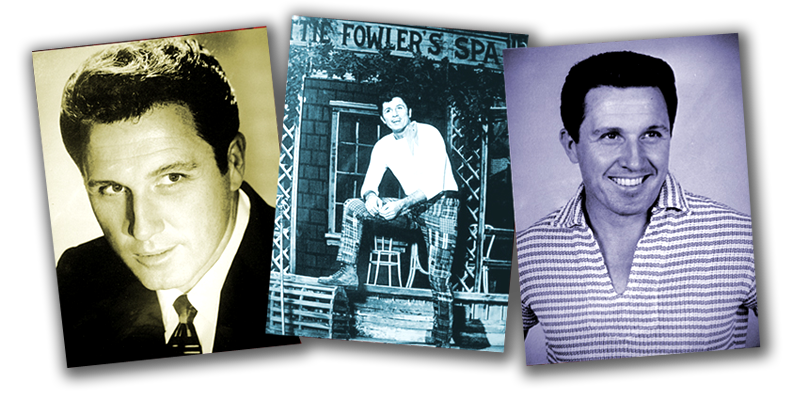
Bonnie was born and raised in Los Angeles, the daughter of Marjorie – an accomplished pianist – and Broadway singer John Raitt (star of Pajama Game and Carousel). At the age of 8, she was given a Stella guitar and her life was never the same. “I was such a music fan that I played until my fingers bled when I was little, learning every Joan Baez record that I had,” she says. “And I then proceeded to learn what this thing was called bottleneck, which I’d never seen anybody do because nobody was playing it on TV. There weren’t any photographs of it or books written on it. And I literally found a Coricidin bottle, took the label off, and figured out it was an open tuning.”
In 1967 she left L.A. and moved to Cambridge, Massachusetts where she entered Radcliffe, only to drop out to follow her true passion which she had found in music. She began playing in local folk and blues clubs, and Dick Waterman – longtime blues aficionado – signed her and introduced her to blues legends like Howlin’ Wolf, Sippie Wallace, and Mississippi Fred McDowell. “I became kind of a quasi assistant road manager. I would help with the logistics of getting suitcases, and getting food and liquor set up in the dressing room, and basically hanging out with my heroes – never expecting to have ever met them, let alone become friends.”
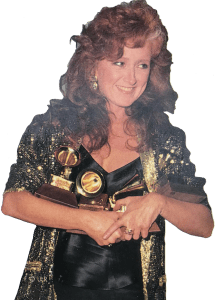
Her reputation in Boston and Philadelphia led to a record contract with Warner Brothers, and between 1971 and 1986 she released nine albums before her deal came to an end. But the tenth album was the charm. In 1989, Bonnie re-emerged on Capitol Records with her Don Was-produced breakthrough album, Nick of Time. It topped the charts, sold four million copies, and won a Grammy for Album of the Year. (It was actually one of four Grammys that she won that year, with the dazed and exalted Bonnie making 1990’s award show one of the most memorable in its history.)
The winning streak continued with 1991’s Luck of the Draw, which included the hit singles, “Something To Talk About” and “I Can’t Make You Love Me.” It sold over four million copies and earned three more Grammys. Her last two albums have both been chart-toppers and critical successes as well – ’94’s Longing In Their Hearts and ’98’s Fundamental. And in March, Bonnie will be this year’s only female to be inducted into the Rock and Roll Hall of Fame.
But awards and accolades aside, what makes Bonnie so beloved is that throughout her career she has maintained a commitment to social activism and general kindness to others that few artists can match. Uniting social awareness with music, she has played hundreds of benefits to aid causes that cover nuclear issues, anti-apartheid, pro-choice and women’s rights, Native American rights, and environmental protection…just to name a few.
In 1991 she became a co-founder of the Rhythm and Blues Foundation and works tirelessly to raise awareness and money for musicians who were pioneers in the music industry, but were left destitute by unjust record deals and lack of health insurance. She also brings those overlooked heroes of R&B on the road to open for her, showering them with a deserved spotlight. In 1995 Bonnie set up a program with Fender and the Boys and Girls Clubs of America to develop the Music Education Program, providing disadvantaged youth – particularly young girls – access to instruments and instruction.
And even though she is a gifted songwriter (just take a listen to “Nick of Time”), she has become one of this era’s finest and most respected interpreters of others’ songs. She has a gift for finding those rare musical gems, all the while championing lesser-known writers and introducing them to a wider audience. In short, Bonnie Raitt has become the matron saint of songwriters.
So let’s bring the package back to the center of our view, pull out all of her musical virtues, and stand them up next to the plethora of work she has done to promote justice and improve the quality of life on this planet. Now we have a clear picture of Bonnie Raitt. A woman who’s changing the world. No doubt about it.
How did you first become aware of the plight of the rhythm and blues artists and their failure to receive royalties?
My friend, Howell Begle, is an attorney in Washington who has long been a music fan of R&B and blues, and he informed me that he had approached Atlantic Records to find out why some of the giants that they had recorded over the years still hadn’t received any royalties. Laverne Baker, Ruth Brown, The Clovers, The Drifters… So he formed the Rhythm and Blues Foundation from an endowment from Atlantic Records president Ahmet Ertegun who is also a board member.
A $1.5 million grant started a program to help with medical and financial assistance for these R&B pioneers who were basically the victims of unfair and dated royalty practices. At that time, artists were supposed to pay the entire cost of all the recording out of approximately one percent – which was the standard royalty. And since then the record companies have sold and re-sold these masters to different labels without paying these artists. And even with new formats like CDs, 8-Tracks, and cassettes, there’s been no way that these artists could ever make any money. So 20 and 30 years down the line you have an entire population that is the foundation of our music business – rock and roll, soul music, and every other form of music that we all make our living from – who’ve still never been paid.
When I heard about the situation, I – and most of the people in the world – didn’t know that every time we bought a new Sam and Dave record those guys didn’t get a piece of it. And it not only was rhythm and blues artists, it was all artists that recorded before about 1970 when royalty rates were customarily low. When the era of the singer-songwriter came in, the high-powered lawyers and managers started to negotiate for a more fair royalty rate.
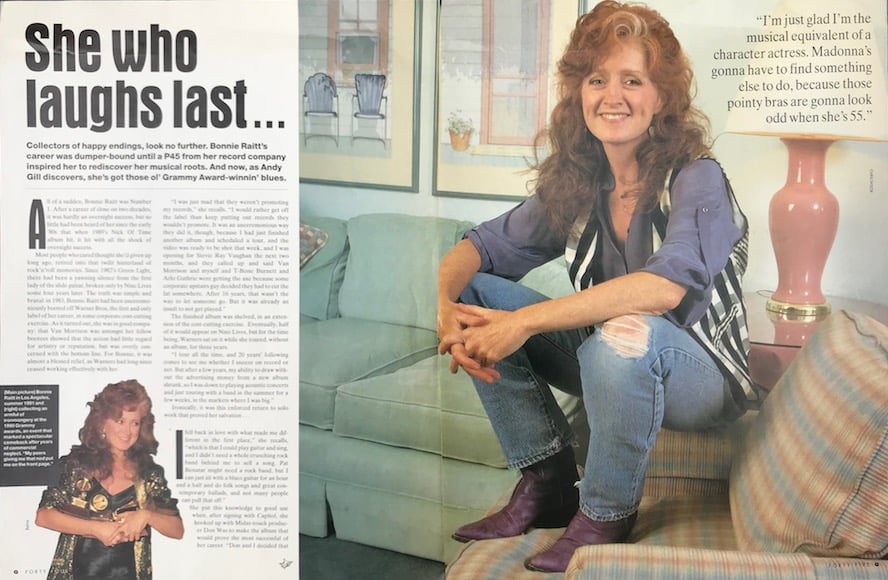
Collectors of happy endings, look no further. Bonnie Raitt’s career was dumper-bound until a P45 from her record company inspired her to rediscover her musical roots. And now, as Andy Gill discovers, she’s got those ol’ Grammy Award-winnin’ blues.
All of a sudden, Bonnie Raitt was Number 1. After a career of close on two decades, it was hardly an overnight success, but so little had been heard of her since the early ’80s that when 1989’s Nick Of Time album hit, it hit with all the shock of overnight success.
Most people who cared thought she’d given up long ago, retired into that twilit hinterland of rock’n’roll memories. Since 1982’s Green Light, there had been a yawning silence from the first lady of the slide guitar, broken only by Nine Lives some four years later. The truth was simple and brutal: in 1983, Bonnie Raitt had been unceremoniously booted off Warner Bros, the first and only label of her career, in some corporate cost-cutting exercise. As it turned out, she was in good company: that Van Morrison was amongst her fellow bootees showed that the action had little regard for artistry or reputation, but was overly concerned with the bottom line. For Bonnie, it was almost a blessed relief, as Warners had long since ceased working effectively with her.
“I was just mad that they weren’t promoting my records.” she recalls. “I would rather get off the label than keep putting out records they wouldn’t promote. It was an unceremonious way they did it, though, because I had just finished another album and scheduled a tour, and the video was ready to be shot that week, and I was opening for Stevie Ray Vaughan the next two months, and they called up and said Van Morrison and myself and T-Bone Burnett and Arlo Guthrie were getting the axe because some corporate upstairs guy decided they had to cut the fat somewhere. After 16 years, that wasn’t the way to let someone go. But it was already an insult to not get played.”
The finished album was shelved, in an extension of the cost-cutting exercise. Eventually, half of it would appear on Nine Lives, but for the time being, Warners sat on it while she toured, without an album, for three years.
“I tour all the time, and 20 years’ following comes to see me whether I sneeze on record or not. But after a few years, my ability to draw without the advertising money from a new album shrunk, so I was down to playing acoustic concerts and just touring with a band in the summer for a few weeks, in the markets where I was big.”
Ironically, it was this enforced return to solo work that proved her salvation …
“I fell back in love with what made me different in the first place,” she recalls, “which is that I could play guitar and sing, and I didn’t need a whole crunching rock band behind me to sell a song. Pat Benatar might need a rock band, but I can just sit with a blues guitar for an hour and a half and do folk songs and great contemporary ballads, and not many people can pull that off.”
“They said Van Morrison and myself were getting the axe because some corporate guy had decided to cut the fat. After 16 years, that wasn’t the way to let someone go.”
She put this knowledge to good use when, after signing with Capitol, she hooked up with Midas-touch producer Don Was to make the album that would prove the most successful of her career. ‘‘Don and I decided that if I couldn’t make a song work with just myself and one instrument, it wasn’t the right song for me. That’s why Nick Of Time and some of the songs on Luck Of The Draw (her new album) started out small and grew.”
Most striking of the songs on Nick Of Time was the title track, a touching mid-tempo ballad whose subject – the maternal yearnings felt by single career women fast approaching 40 – seemed to strike a particularly loud chord among her fellow baby-boomers. As with several of her peers – Paul Simon and Neil Young most notably – she found her career reviving by chronicling the maturing process through which her generation was passing.
“I think it’s our job to write about what we’re going through at the moment,” she explains, “and being 41 I’m not going to write about the same things I wrote about at 20. I don’t think artists should be farmed out to pasture just because they’re in rock’n’roll. Elvis might have compromised his musical style a bit towards the end, but that doesn’t mean that artists from the rock’n’roll/folk-roots culture – of which he was not really a part – shouldn’t get better as they get older, like the great jazz or blues artists. Their experience deepens, and if you can continue to tap into that muse and have an audience that’s your age, there’s no reason why such as Sting and Don Henley and Jackson Browne, when they’re 65, shouldn’t be writing about what it’s like to be 65. And anyway, universal themes cut across all ages – otherwise, I wouldn’t be so touched by some of the older blues people.
“A lot of it,” she continues, “is to do with growing up and not getting soft and flabby; you can get tepid and sugary with your writing, or you can come to grips with things like relationships, as opposed to being single; how to keep a marriage vital: how to be dangerous even though you’re straight, have quit drinking and can’t stay up all night – those are issues about cynicism, about depression, about getting older, period, and what that does to your body and outlook. And of course the political situation is always worth writing about.
“There’s important issues at every juncture of your life. I’m just glad that I’m the musical equivalent of a character actress, because blues singers can keep singing and having an audience at 35, and someone like Madonna’s gonna have to find something else to do, ’cos I don’t care how pointy those bras are that she wears, they’re still gonna look a little odd when she’s 55!”
After years in the showbiz wilderness, Bonnie found several things had changed by the time Nick Of Time was released. Most importantly, the radio and MTV stations that had ignored her before had adjusted to fit her demographic. Where previously she had been a difficult artist to slot – part rock, part country, part pop, and perhaps too many parts blues – now her eclecticism and adult approach were perfect for VH1, the “adult contemporary” version of MTV; particularly when, out of left field, she won a Grammy.
It’s four minutes before the taping of The Arsenio Hall Show, and Bonnie Raitt has lost something.
”Where’s my honey?” she asks plaintively, striding down a Hall
hall. Following Raitt is her manager, Danny Goldberg, who has his own
problems. He’s not sure he wants a reporter hanging around in the
nervous minutes before the taping; then, too, another of his clients,
Rickie Lee Jones, has shown up suddenly, and he wants to make sure she
receives some of his dutiful attention as well. Nonetheless, Goldberg
narrows his eyes and tries to concentrate on Raitt’s question.
”Now, Bonnie,”
he says with a grim smile, ”by ‘honey,’ do you mean the stuff that
soothes your throat, or that wonderful husband of yours?”
Raitt and
Goldberg turn a corner in the maze of this Paramount television studio
in Hollywood and the question is abruptly answered. ”There he is!”
Raitt hoots, nearly bumping into actor, writer, and, yes, a real honey
of a husband, Michael O’Keefe, who has been roaming the halls looking
for his honey. They kiss, they grin, they look like what they are:
newlyweds, married since April.
Everyone retreats to a tiny dressing room, where Goldberg is happy to report that in next week’s Billboard Raitt’s new album, Luck of the Draw,
will remain a hit top-10-with-a-bullet success. With the first single
from the album, ”Something to Talk About,” moving into the Top 40,
Raitt has her second smash in a row — and her amazing comeback
continues.
Before Bonnie Raitt released Nick of Time
in 1989, she had received strong critical praise and the fervent
admiration of a loyal following, yet in 18 years only two of her 11
albums had sold the 500,000 copies needed to make them gold records. Nick of Time
changed all that by selling more than 2 million copies and bringing
her a remarkable three Grammy awards — Album of the Year and best
female vocals in both the rock and pop categories. At a time when many
pop icons would rather prance and pose than play music, Raitt has come
to stand for something more than just the great songs and progressive
attitude that have always been her hallmarks. For the baby-boomer
audience that has grown up with her and for the legion of younger fans
she’s now attracting, the veteran of folk, blues, rock, hard times, and
hard-won triumph transcends stardom: She embodies an emotional and
artistic honesty and a survival instinct to be admired. And because of
that, ironically, Bonnie Raitt has become a star at last.
She didn’t set out
to be a pop star or even, exactly, a pop singer. Despite being the
daughter of musical-comedy star John Raitt (Carousel, The Pajama Game),
Raitt never embraced mainstream show biz. Given a guitar at the age of
8, she got hooked on folk music and the blues. By the time she was a
teenager attending Radcliffe, she was moving up through the late-’60s
Boston and Philadelphia folk scenes to establish her distinctive
combination of bottleneck-guitar playing and no-bull frankness about
romance, heartbreak, and bitterness.
From the start, Raitt was more wittily eclectic than any of her folk or blues heroes — her first two albums, Bonnie Raitt (1971) and Give It Up
(1972), included songs from the Marvelettes, Robert Johnson, and
Jackson Browne. Working out of Los Angeles, she struggled to achieve
the commercial breakthrough that singer-songwriter contemporaries like
Browne, Joni Mitchell, and the Eagles were enjoying, but without
compromising her adventurous aesthetic. She made great music, but one
after another, the albums flopped. The closest she came to a hit was a
No. 57 single in 1977 — a cover of Del Shannon’s ”Runaway” that didn’t
begin to suggest the depth and passion that her fervent following knew
characterized her best work. The modest success of a song so atypical
of her style seemed to throw her. ”Why the hell was that a hit?” she
still asks. ”It made no sense to me.”
What followed
was a series of increasingly uneven releases, each containing a few
glowing high points. It wasn’t until Don Was, who produced Nick of Time,
that she connected with someone who knew how to extract hits from her
while clearing the way for her to make the straightforward, soulful
music she’d always wanted.
”It touched me so much that Don was a real fan,” she says of the coleader of the group Was (Not Was), ”that he knew my work and respected it, and wasn’t trying to make me over into something else. I was able to use my past as a bedrock, and build something new on it.”
The out-of-nowhere triumph of Nick of Time
has expanded her audience so dramatically that she is both surprised
(again) and grateful. ”It’s unbelievable the way people react to me
now,” Raitt says, laughing. ”It’s like I’ve become some living proof
that there is justice in the world.”
At the Arsenio taping, Raitt and O’Keefe barely react to the good news about Luck‘s continuing commercial success, because her honey has Raitt in stitches doing a masterful impersonation of Martin Short doing a masterful impersonation of Bob Dylan as a rabbi. It’s easy to see why they get along: They’re both fast-talking wiseacres who like to discuss everything except the music biz, and their conversation zips from Zen (O’Keefe is a serious student of the stuff) to Berkeley in the Sixties, a PBS documentary they had loved the night before.
The taping goes
well (Arsenio:””What does (winning all those Grammys) mean to you?”
Bonnie: ”What it means is I get to smile a lot more”), and Raitt and
her touring band perform rousing versions of two new Luck
songs, ”Something to Talk About” and ”I Can’t Make You Love Me.”
Backstage, the green room is filled with hangers — on and the show’s
other guests, including Twin Peaks‘ Lara Flynn Boyle, out to promote her new film, Mobsters.
Boyle is wearing a black sequined minidress which three women, any one
of whom might be her mother, take turns yanking at, foolishly
optimistic about the chances of forcing it to reach midway down her
thighs.
”You look fabulous,” says one of the women.
Boyle, staring at the monitor as Raitt performs, murmurs, ”Yeah, well, I wish I looked as good as she sings.”
Raitt is sitting in a dark little grotto of a hotel restaurant off Sunset Boulevard, not far from where she and O’Keefe live, in the Hollywood hills. Relaxed and cheerful, she doesn’t look like a performer who’s just finished a month-long tour of Europe and is about to launch an extended series of American dates. Her pale skin is swirled with a mixture of freckles and wrinkles; she looks at once younger and older than her 41 years.
”I’ve always been very self-conscious about my looks,” she admits, ”and even more so now, when I’m being recognized, more and more people are coming up and talking to me and checking me out up close. I guess I feel that I look older than I feel, and in a way it’ll be a relief to reach an age where I can be all wrinkly because I’m supposed to be all wrinkly.” As a result, she seems genuinely alarmed at the prospect of being on the cover of this magazine. ”Oh, no — you don’t want me on the cover, do you?” she pleads. ”But you need young, beautiful girls to sell magazines! I mean, I’m worried your circulation will drop, and it’s such a nice young magazine!”
Indeed, Raitt’s
compulsive modesty makes it difficult to secure new pictures of her —
she routinely declines to be photographed — but that is the opposite of
classic star vanity. ”You’re not dealing with Cher here,” says manager
Goldberg. ”Bonnie is not the kind of person who thinks of herself as a
walking media event, who wants to have her every move and expression
documented.”
Perhaps looking to steer the subject away from her appearance, Raitt starts talking about Suzanne Pleshette, at a nearby table. ”She’s great — she’s got that rough, sexy voice,” she whispers. ”Anyone who managed to make Bob Newhart seem like an ideal husband — that’s a good actress, right?” Then Peter Boyle (The Dream Team) stops by to say hello. He and Raitt had met at various political rallies but haven’t seen each other in years. ”Hey Pete, you’ll be pleased,” says Raitt. ”I married an Irishman, and one with a great ass, too!” ”It’s an ethnic trait, I believe,” says the Irish Boyle.
After he leaves, Raitt mumbles something about the crazy world of show business, and offers opinions on everything from Roseanne Barr (”Why do people give her such a hard time? She’s a really smart, very up-front feminist. She’s always been nice to me; I barely know her, and she and Tom sent us flowers for our wedding”) to Thelma & Louise: ”Wasn’t it wonderful? I cheered and clapped involuntarily when Susan Sarandon shot that guy who was trying to rape Geena Davis — Michael looked at me like I was from the moon. I’ll bet a movie like Thelma & Louise will change some people’s lives, especially women’s, for the better.”
Raitt’s strong opinions, taken with the steely, unsentimental music on Luck, should allay any fears that her recent good fortune is turning her into a softy. Luck
moves beyond the sort of my-baby-broke-my-heart songs that used to
dominate Raitt records to grapple with questions of commitment and
marriage. The most moving of these is ”One Part Be My Lover,” which she
cowrote with O’Keefe.
”People ask me
if I’ve lost my edge because of all the good things in my life now,”
she says. ”Well, no matter how nice things get, I’m not gonna turn into
John Denver and start writing ‘Rocky Mountain High’ — you don’t have
to worry about that.”
She grins a little grimly. ”You know why I say that? Because no matter how popular I may get, I just don’t relate to the mainstream. My parents were like that, and it’s the way I felt when I was a kid, when Vietnam War protesters felt that the world was divided into Us against Them. Basically, I still feel that way, I think. The rest of the world is this jingoist, mean mess.”
If her new success
has caused Raitt any problems, they have to do with adjusting to the
intense examination that pop stardom brings. Soon after expressing
these opinions, for example, she starts worrying whether she should be
speaking out so forcefully. ”I used to express my opinions virulently —
partly because I never believed people were reading what I was
saying,” she says. ”But most of the time I feel a desire to be more
closed-in since I got more famous. The glare of the spotlight is more
powerful than I was expecting, and I can see now where spouting off
about people can really hurt them. I started going out with Michael
just as I was becoming more well known, and seeing my personal life
written about really threw me. My life was never under that kind of
scrutiny before.”
Raitt grows more
somber, because she knows where this line of chatter is inevitably
leading — to that most highly scrutinized aspect of her recent life:
her newfound sobriety after many years of heavy drinking and fitful
drugging. Her low point came about five years ago, when, having been
dropped by her career-long label, Warner Bros., she was without a
record contract, romantically bereft, and ”just about broke.”
”I’d go to visit
my father, and I think he was really scared, because he saw me
collapsing inside myself, right in front of his eyes. I mean, I wasn’t
stumbling around, doing a Foster Brooks-drunk thing, but I was bloated
and depressed and I wasn’t responsive. I couldn’t think beyond myself,
about how miserable I was. It was easier to deal with life if I was
loaded for at least half the day.”
In early ’87,
Raitt finally entered a substance-abuse program. You can hear in her
voice a profound relief mixed with guardedness when she speaks of it.
”You’re not supposed to talk much about these programs — that’s why
they’re anonymous. But I needed to get back some self-respect. And it
was as if, having taken that first step toward getting sober, I was
rewarded. I got signed to Capitol and hooked up with Don Was and we
made Nick of Time; then I met Michael and fell in love. Then
the Grammys, and…” She takes a sip of cappuccino that’s getting cold.
”I know it sounds like a bad movie, but I’m really glad I decided to
stick around and enjoy my life and the people around me.”
The people
around Raitt include, most devotedly, her parents, with whom she has
remained close throughout everything. They are divorced — her mother,
Marjorie Haydock, lives in Connecticut, her father in Los Angeles. ”My
dad is 74 and he’s out on the road, touring in Man of La Mancha.
He does eight shows a week — it’s unbelievable! When we’re both in
L.A., I go over to his house and swim in his pool while he jogs around
it — and we sing Christmas carols to each other. Every time we do that,
I wish I was videotaping it, because it’s such a crazy scene, but such
a sweet one, too.” Father and daughter are considering doing a
Broadway show together. ”The Double Raitts,” she laughs,
”wouldn’t that be great? I’ve talked with a Broadway production company
and they think there’d be an audience for it. He’d sing some of my
songs, I’d sing some of his, and we’d do a few duets.”
For now, though,
there is the work of touring. Pushing aside her plate, Raitt lays her
head on the table and emits a mock groan. ”Oh, it’s hard work!” Then
her head pops up and she smiles. ”Before Nick of Time, I was
bored with it, but not anymore, because after all those years of
playing the same clubs in the same towns, I’m playing different halls —
much bigger ones, with some new people in the audience who aren’t
going to just be calling out for songs from my first album 20 years
ago.” And, as always, Raitt tries to involve her audience with her
political concerns. In a number of cities, as she has for many years,
she will raise money for various left-liberal causes, ”especially
abortion rights this time, that’s really the crucial issue out there
right now.”
For so socially
involved a performer, it’s interesting that Raitt avoids sloganeering
in her work. ”I can’t write songs about what’s wrong with a country
that seems to lack compassion for pain and suffering,” she says. ”I’ve
never written one that works as both a statement and a piece of music.
Besides, I never really know what I’m going to end up with when I write
— it’s kind of haphazard. Marriage is the same thing — I have no idea
what I’m doing, and that’s what makes it so exhilarating.”
Dinner is over,
and Raitt goes over to compliment the pianist who has been playing
discreetly dry versions of pop standards in the hotel bar. She
introduces herself, but she needn’t have: ”I swear, I bought Luck of the Draw two days ago!” says the young fellow. As Raitt walks to the door, the pianist calls out, ”I’ll try playing ‘Nick of Time!”’
”Naw,” Raitt says over her shoulder, ”you’ll give yourself a hernia — it’s a real hard song to play on the piano. Stick to Cole Porter — he’s a better songwriter.”
Bandana Blues is and will always be a labor of love. Please help Spinner deal with the costs of hosting & bandwidth. Visit www.bandanablues.com and hit the tipjar. Any amount is much appreciated, no matter how small. Thank you.
Bonnie Raitt is nothing if not loyal. And when she caught wind of the fact that Mike Reid and I were writing and recording together, she was quick to volunteer to sing on our song “The Bridge.” It’s one of my favorite songs Mike and I have written. And I can no longer imagine it without her heroic spirit present. ~ Joe Henry
Released on: 2025-09-05 Producer: Joe Henry Music Publisher: Rivers and Roads Music (ASCAP - admin by Endurance Music Group) Music Publisher: Mule Rider (ASCAP) Music Publisher: Blue Raincoat Music (ASCAP) ℗ 2025 Work Song Inc. marketed and distributed by Thirty Tigers
{{svg_quality_icon}}
{{quality-options}}
1
http://i3.ytimg.com/vi/VWNoTHkp6_k/hqdefault.jpg
Prison Bound Blues · Bonnie Raitt
Bonnie has contributed a new recording of "Prison Bound Blues" written by Leroy Carr to a project called Better Than Jail, an extraordinary new album benefiting Free Hearts and Equal Justice USA. Better Than Jail is available everywhere today and features covers of iconic prison songs from Steve Earle, Taj Mahal,Margo Price, The War and Treaty and many more. The album seeks to raise awareness and support for the urgent need to reduce the harm of the criminal justice system. https://found.ee/BetterThanJail.
I'm so proud to have joined in with so many illustrious artists in creating this very special album in support of rural prison reform. Overlooked for far too long, this issue cuts across all cultural and political divides and deserves all our focused attention to finally bring about some swift and meaningful action. Better Than Jail is one of the most inspired and heartfelt albums I've been blessed to be a part of and I hope it sets a fire in hearts far and wide to join in our efforts." ~ Bonnie Raitt
Released on: 2024-10-04 Executive Producer: Brian Hunt Producer: Kenny Greenberg Producer: Wally Wilson Producer: Bonnie Raitt Recording Engineer: Jason Lehning at Sound Emporium Mastering Engineer: Alex McCollough at True East Mastering Production Assistant: Shannon Finnegan Mixer: Justin Niebank at Hounds Ear Music Publisher: Universal Music Corp. Composer, Lyricist: Leroy Carr ℗ Believe Entertainment Group and Wyatt Road Records
{{svg_quality_icon}}
{{quality-options}}
1
http://i3.ytimg.com/vi/xC2BJuQbO8w/hqdefault.jpg
The Fabulous Thunderbirds - Nothing in Rambling Ft. Bonnie Raitt, Taj Mahal, Keb' Mo' & Mick Fleetwood
In celebration of the band’s 50th Anniversary, The Fabulous Thunderbirds have just released Struck Down, their first studio album in eight years on Stony Plain Records. The ten-track album includes a wonderful cover of Memphis Minnie’s “Nothing in Rambling,” featuring longtime friends, T-Birds founding member Kim Wilson, along with Bonnie, Keb’ Mo’, Taj Mahal and Mick Fleetwood. — BRHQ
{{svg_quality_icon}}
{{quality-options}}
1
http://i3.ytimg.com/vi/YmW-bgcbvQI/hqdefault.jpg
Little Feat - Long Distance Call
“I’ve always loved Little Feat and this new incarnation of the band is bringing some serious heat, cred and new blood to their enduring legacy. Every Feat fan loves us some Sam. I’m so glad he’s now gotten a chance to step out front and center and put his spin on these wonderful blues songs. I loved singing "Long Distance Call" with him, always one of my favorites, and Scott slayed on slide. Know you’ll enjoy hanging out with us at Sam’s Place!" -- Bonnie Raitt
“Long Distance Call” was written by blues legend, Muddy Waters. It has Sam Clayton and Bonnie Raitt on vocals, Scott Sharrard on Dobro, Fred Tackett on acoustic guitar, Tony Leone on drums, and Michael “The Bull” LoBue on harmonica. The album also features Bill Payne on piano and Kenny Gradney on bass.
Little Feat have composed an album that’s their love letter to the blues entitled, ‘Sam’s Place.’ “Long Distance Call” plus many other blues classics are on this album. You can stream and order ‘Sam’s Place’ here: https://orcd.co/samsplace
Broken Hearts & Dirty Windows: Songs of John Prine, Vol. 2, the anticipated new John Prine tribute record from Oh Boy Records, is out today. Stream/purchase HERE.
Created as a celebration of Prine’s life and career, the album features new renditions of some of Prine’s most beloved songs performed by Brandi Carlile (“I Remember Everything”), Tyler Childers (“Yes I Guess They Oughta Name A Drink After You”), Iris DeMent (“One Red Rose”), Emmylou Harris (“Hello In There”), Jason Isbell (“Souvenirs”), Valerie June (“Summer’s End”), Margo Price (“Sweet Revenge”), Bonnie Raitt (“Angel From Montgomery”), Nathaniel Rateliff & The Night Sweats (“Pretty Good”), Amanda Shires (“Saddle in the Rain”), Sturgill Simpson(“Paradise”) and John Paul White (“Sam Stone”). Proceeds from the album will benefit twelve different non-profit organizations, one selected by each of the featured artists.
{{svg_quality_icon}}
{{quality-options}}
1
http://i3.ytimg.com/vi/Z71L4JdrVBY/hqdefault.jpg
Bonnie Raitt - Write Me a Few of Your Lines/Kokomo Blues
60 years anniversary celebration of Arhoolie
December 10, 2020
{{svg_quality_icon}}
{{quality-options}}
1
Arhoolie Foundation celebrates it's 60th anniversary (1960-2020) with an online broadcast.
Bonnie Raitt - Shadow of Doubt
Hardly Strictly Bluegrass Festival
October 3, 2020
Hardly Strictly Bluegrass celebrates it's 20th anniversary with an online broadcast titled “Let The Music Play On”.
{{svg_quality_icon}}
{{quality-options}}
1
http://i3.ytimg.com/vi/hCJa0505jZk/hqdefault.jpg
Bonnie Raitt & Boz Scaggs - You Don't Know Like I Know
Farm Aid 2020 On the Road
Sam & Dave classic written by Isaac Hayes and David Porter.
{{svg_quality_icon}}
{{quality-options}}
1
http://i3.ytimg.com/vi/jXG6ULcK-qs/hqdefault.jpg
Sheryl Crow & Bonnie Raitt - Everything Is Broken
[Eric Clapton’s Crossroads 2019]
Eric Clapton, one of the world’s pre-eminent blues/rock guitarists, once again summoned an all-star team of six-string heroes for his fifth Crossroads Guitar Festival in 2019. Held at the American Airlines Center in Dallas, Texas, the two-day concert event raised funds for the Crossroads Centre in Antigua, the chemical dependency treatment and education facility that Clapton founded in 1998.
{{svg_quality_icon}}
{{quality-options}}
1
http://i3.ytimg.com/vi/yHeBLEo4TOM/hqdefault.jpg
'A Tribute To Mose Allison'
Celebrates The Music Of An Exciting Jazz Master
Raitt contributed to a new album, If You're Going To The City: A Tribute To Mose Allison, which celebrates the late singer and pianist, who famously blended the rough-edged blues of the Mississippi Delta with the 1950s jazz of New York City.
NPR's Lulu Garcia-Navarro talks to Bonnie Raitt about her friendship with the Mose Allison. They're also joined by Amy Allison — his daughter, who executive produced the album — about selecting an unexpected list of artists to contribute songs to the album.
Recorded on tour June 3, 2017 - Centennial Hall, London - Ontario Canada







 Users Today : 305