Concerts

I Am (Not) a Diva

on June 5, 2019 No comments
By Nick Spitzer

What comes to mind when you hear the word “Diva”? We’ve found that it’s a word that can go both ways—as praise for an accomplished and magnetic performer, or as a put-down to someone seen as pompous or high-strung. We’re singing divas’ praises while also exploring the term’s various connotations through music and interviews from high-minded women with conflicting views on the word: Bonnie Raitt, the late Abbey Lincoln, Norah Jones, and New Orleans Gospel Diva, Cynthia Girtley.
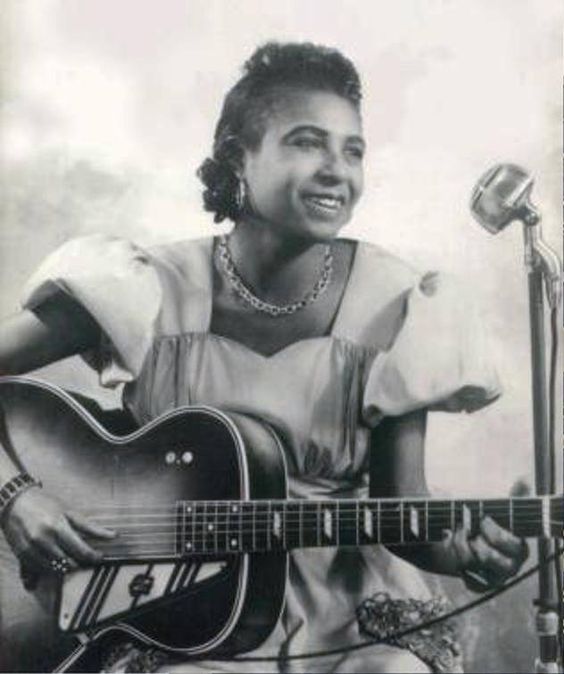
Me and My Chauffeur Blues

Memphis Minnie
Four Women Blues, BMG
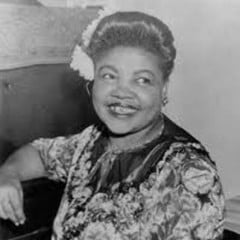
I’m A Mighty Tight Woman

Sippie Wallace
The Johnny Dodds Collection 1923-29, Acrobat

Sippie Wallace was definitely an inspiration to Bonnie Raitt. In the 1970’s, Bonnie sought out the elderly singer in Detroit, and they sang together at the Ann Arbor Blues Festival. Back then, Bonnie was just starting out as a guitarist and singer, recording a string of LPs that mixed new tunes with classic blues women’s songs. After 20 years in the biz, Bonnie topped the pop charts in her early 40s with the album “Nick of Time.” Since then, she’s continued to release great records and stay out on the road. It’s a work ethic she inherited from a musical family in southern California.

tip: most convenient way to listen while browsing along is to use the popup button of the player.

Excerpt
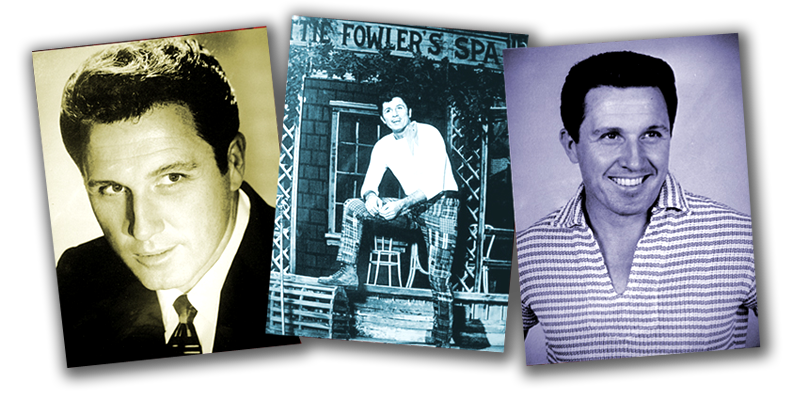
Bonnie Raitt: Well I come from a very musical family, my mom has a degree–a Master’s in music–and she was my dad’s accompanist and music director. My dad of course is John Raitt, the Broadway star of Carousel and Pajama Game. He toured and did concerts during my whole childhood and is in fact still out on the road at 85. But I really fell in love with Folk music, which was really kind of the music of my day, by going to camp, summer camp. Fell in love with Bob Dylan and Joan Baez. And that’s why I picked up the guitar, was folk music.

Nick Spitzer: I wonder in all this world of music you came up through, how did you really get directly exposed to some of the blues performers that influenced you and you appeared with on stage later as time passed? I mean, you don’t necessarily meet Fred McDowell or Junior Wells unless you …

BR: Oh yeah, it was incredible luck. I mean because I was going to Harvard and there was a very terrific radio station, great blues show, and I used to listen to it all the time when I was studying. My friend Jack Fretell, who was also a Blues hound, he called me up and he said “You know, the guy that manages Son House lives in Cambridge, and he hangs out at the Club 47 all the time.” And Son was doing an interview on WHRB, and he says, “If you want, we could go up to Dick’s house and meet him.”

NS: This is Dick Waterman’s house?”

BR: Dick Waterman! And I mean, how lucky is that for somebody that said, “Let’s go hang out.” I went to his house and I met Son, and through Dick I met all of the people he managed – the great Skip James, Big Boy Arthur Crudup, Mississippi Fred McDowell, Junior Wells, Buddy Guy, then Magic Sam. And then my life kind of escalated because at that point, I just happened to be everybody’s cheapest, most versatile opening act because I could carry my own guitar, I didn’t need a band, didn’t care about being a star, or getting paid a lot. And I just happened to know somebody that booked all these blues acts. Hey, would you have gone back for your senior year when you could have that? 

BR: It was actually quite awkward in the mid 70’s when my fame eclipsed theirs. I said, well the person I really want to play with is Muddy Waters. But for me at 25 to have to look into his eyes and say, “Well, I think I have to headline.” That was a painful lesson in sociology when white blues artists become more financially viable in this culture than the originals sometimes. 

NS: How about the classic Blues women, on some of the early recordings you did the Sippie Wallace song and a few other things. 

BR: Well I didn’t get to know too– most of the old classic blues artists had passed away. And so Sippie, I got to meet Sippie Wallace, and she was the one that I really would have to say I was the closest to. And I really didn’t know she was alive until right before I played the Ann Arbor Blues and Jazz Festival. I found out that she was living in Detroit, and I said I would play the festival if I can bring Sippie Wallace out. And that’s a great story because she didn’t want to play any more blues because she was in the church. And like a lot of older black blues artists, they feel like if they’re getting health problems they better start getting right with God. And then she heard me practicing “Women Be Wise” from my first album in the trailer before I went on stage and she started to just strut a little, go “Well maybe I’ll do just one tune with you.” And that was it. 

To hear the full program, tune in Saturdays at 7 and Sundays at 6 on WWNO, or listen at americanroutes.org.
About The Author


Source: © Copyright American Routes and WWNO 89.9 and WWNO 89.9 But wait, there's more!

2019 New Orleans Jazz Fest Day 4 Highlights: Van Morrison and Bonnie Raitt Bring Down the House

on April 29, 2019 No comments
by Paul de Revere

The 2019 New Orleans Jazz and Heritage Festival brought out the big veteran guns on Sunday (April 28), with career-spanning sets from everyone from Bonnie Raitt and the Indigo Girls to Van Morrison

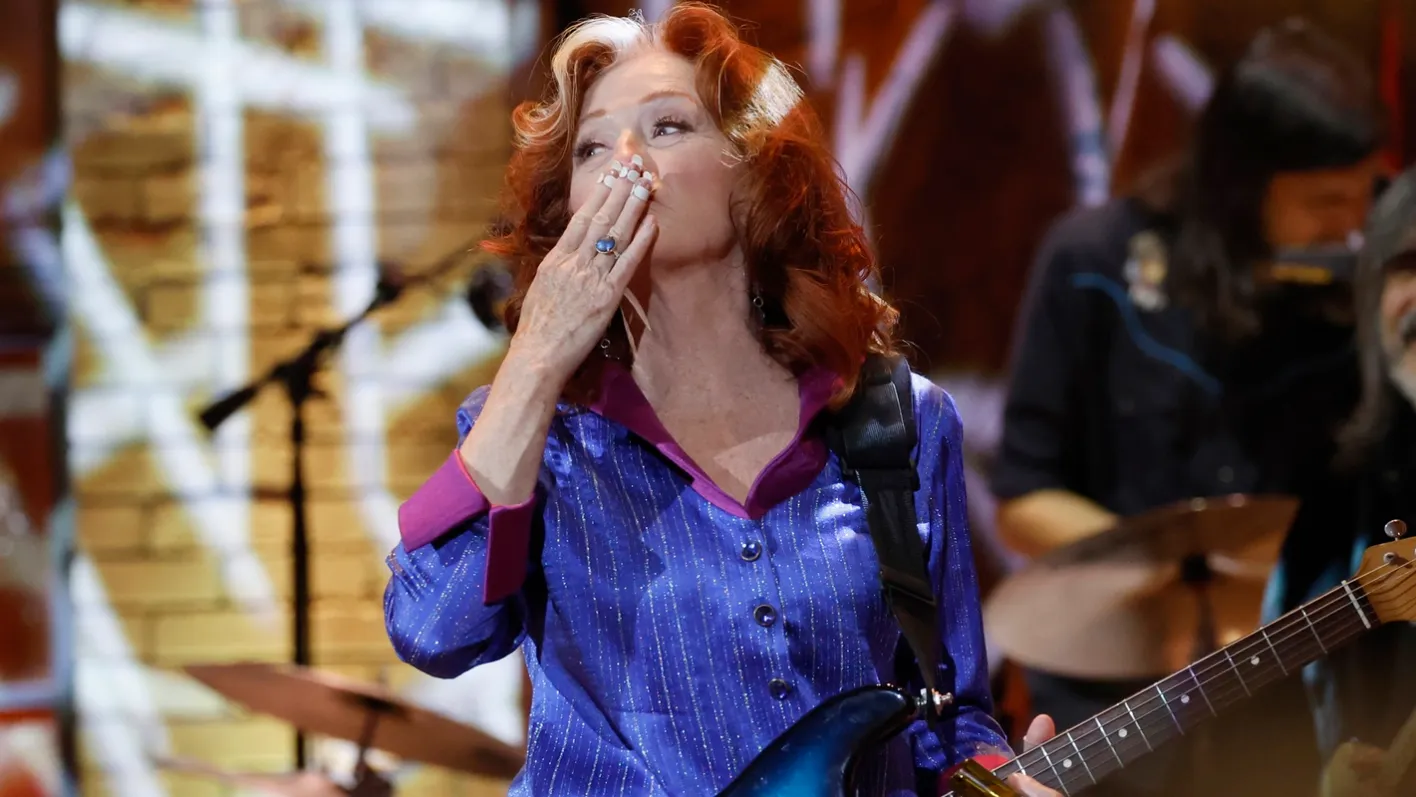
It’s 50th Anniversary of Jazz Fest Storytime with Bonnie Raitt at Acura Stage and she’s dropping anecdotes, music history and names like mad. “This is the greatest festival in the world for artists of all stripes,” she says from Acura Stage, and points out “it’s an endangered species,” which is sadly too true. Too few festivals do what Jazz Fest does. Raitt calls it “hallowed ground,” even, but it when comes to all the Jazz Fests she’s played (this is her tenth!) and the thick and thin of her career, well, “That’s why I don’t wanna write a book, there’s some things that I don’t even wanna remember.” She’s a font of bluesy wisdom but she keeps the set moving with “Unintended Consequence of Love” with New Orleans gadfly and pianist Jon Cleary. She introduces her longtime side men, including Hutch Hutchinson on bass, Ricky Fataar on drums and George Marinelli on lead guitar before “Need You Tonight” off her latest 2015 LP Dig In Deep.

Rock and Roll Hall of Fame artist Bonnie Raitt performs on the Acura Stage during the 50th annual New Orleans Jazz and Heritage Festival at the Fairgrounds in New Orleans Sunday, April 28, 2019.
Gallery +17
Bonnie Raitt and Jon Cleary on piano and the Fats Domino Orchestra perform a tribute to Dave Bartholomew and Fats Domino on the Acura Stage during the 50th annual New Orleans Jazz and Heritage Festival at the Fairgrounds in New Orleans Sunday, April 28, 2019.
Bonnie Raitt performs during a tribute to Dave Bartholomew and Fats Domino on the Acura Stage during the 50th annual New Orleans Jazz and Heritage Festival at the Fairgrounds in New Orleans Sunday, April 28, 2019.

Raitt dug deep into wardrobe to avoid being noticed at the fest or around town, where she wore a hat and sunglasses to avoid being mobbed. “I’ve heard some of the most treacherously great music the last few days” at the fest, she says. She mentions the Cultural Pavillion and dedicates “One Belief Away” as tribute to the late recently passed Oliver Mtukudzi, a co-writer on the track. Raitt covers The Fabulous Thunderbirds song “I Believe I’m in Love” with Cleary on piano and a little hip check from her to punctuate its final note.

“Damn, Cleary, you’re a mess in all the right ways!” She has kind words for John Prine as well (“having a helluva year,” she says, followed by a rueful, “It’s a miracle any of us are still around!”). It’s all by way of her introduction to “Angel from Montgomery,” Prine penned but Raitt popularized. She remarks on the 30th anniversary of Nick of Time before playing “Something to Talk About.”Then there’s a funked-up version of “Love Letter” from Nick of Time, dedicated to all the New Orleans funk greats. Too many great Raitt tunes and anecdotes to list, she winds down her set with the maudlin “I Can’t Make You Love Me.”

Raitt sat down with Billboard earlier to talk her personal Jazz Fest history, the fest’s significance and ways she sees music at the fest and around New Orleans without being noticed. “This festival changed the whole nature of festivalgoing,” she says, nodding at what set the bar for fully immersive live-music experiences in the ’70s. “There were Grateful Dead concerts, and then there was Jazz Fest. It was a precursor to Coachella and Bonnaroo and a lot of festivals were modeled on it.” If it’s changed much at all, Raitt said, it was “the volume” of it. “They need to get those headliners in there, sometimes people wish it weren’t so crowded, but it’s just the way they keep the economics of it going.”

So how has Raitt been able to enjoy it all this years without being asked for selfie every ten steps she walks? “It’s a total immersion of food and culture,” she says. “I try to plan a couple days off before, I put on a hat and be incognito and just be a fan, you know? I love just being among a swarm of people, which I don’t get at my own gigs. It’s been great to go around and pick and choose what to eat and which acts to see when. The fun part is the audience, for me, as well.”

Bonnie Raitt silencing the crowd

There were no bad parts of Bonnie Raitt’s set, and no mediocre parts; at 69 years old, the singular blueswoman remains capable only of varying degrees of transcendence, plucking which of her vast catalog of unforgettable songs she’ll breathe new life into with each respective set. At the Jazz Fest, she was joined by Jon Cleary, Ivan Neville and briefly, Boz Scaggs — Cleary and Scaggs helped her to pay tribute to Allen Toussaint with a stripped down, beautifully harmonized version of “What Do You Want the Girl to Do?,” which Raitt originally recorded a gender-flipped cover of in 1975.

But towards the end of her set, when she said she was about to play another sad song, the audience grumbled a little. Then the band hit the opening riff of “I Can’t Make You Love Me,” and any other noise seemed to disappear completely. There was only Bonnie, singing the song like it was the first time — except that she was joined, as quietly as 50,000 people can sing, on the chorus. When she finished the last refrain, for a moment she looked down with her eyes closed, seemingly feeling the heft once again of her best-known song.


New Orleans Jazz and Heritage Festival Program 2019
OffBeat Magazine Jazz Fest Bible 2019
OffBeat Magazine, New Orleans and Louisiana’s music and culture publication’s June 2019 issue features our annual “Jazz Fest Redux”—a wrap-up of the great 2019 New Orleans Jazz & Heritage Festival, with a feature story on Anders Osborne and his newest CD; pianist Mitch Woods; The New Orleans Daiquiri Queens, interviews with Gina Brown, dining “Al Fresco” in New Orleans, a review of Demonica restaurant, music reviews, club listings and much more.

About The Author

Source: © Copyright Billboard But wait, there's more!

James Taylor, a master, lets Bonnie Raitt ‘steal the show every night’
Even the headliner at Rupp Arena knew who really ruled the evening.

on February 28, 2019 No comments
BY WALTER TUNIS
This was the first time Bonnie Raitt has ever played Rupp Arena, Lexington 2-27-2019 © Alex Slitz / aslitz@herald-leader.com

As he got down to business on Wednesday with a near-two hour, hits-laden show full of sublime and unavoidably sentimental tunes spanning over five decades, James Taylor remarked to the audience of 7,200 that one of the greatest pleasures of his nearly concluded tour was watching his co-billed pal Bonnie Raitt “steal the show every night.”

Count Rupp as one of those nights. Oh, nothing against Sweet Baby James. At age 70, he still exuded a good-natured folk-pop exuberance that serviced tunes as varied as the show opening reverie “Carolina in My Mind” and the tropically jovial “Mexico.”

His vocal work – with a few rare, reedy exceptions – has aged remarkably well, too, as did his way with an orchestrally inclined 11-member band that included, get this, a pair of champion Frank Zappa alums (drummer Chad Wackerman and trumpeter Walt Fowler.)

But the divine Ms. Raitt – who, amazingly, was making her Rupp debut –took this night home in her hip pocket.

Bonnie Raitt routinely steals the show, said James Taylor. And her hour-long set at Rupp Arena, featuring the showstopper “Angel from Montgomery,” demonstrated why. 2-27-2019
Gallery (7)

© Alex Slitz / aslitz@herald-leader.com

At 69, her vocals revealed a regal glow, assimilating, as they have throughout her career, a balance of blues, soul and rock ‘n’ smarts. Similarly, her guitar work – a gorgeous, slide-savvy tone that ignited the set-opening “Unintended Consequence of Love” – would serve as rocket fuel throughout the concert.

The sheer scope of what Raitt packed into her hour-long performance was, frankly, astounding. It ran from a slow, swampy revamping of the INXS hit “Need You Tonight” and a solo acoustic blues reading of Skip James’ “Devil Got My Woman” to a cool but decidedly torchy take on her own 1991 hit “I Can’t Make You Love Me.”

But the showstopper was clearly “Angel from Montgomery,” the John Prine classic Raitt is largely responsible for introducing to the world (she recorded it in 1974, three years after Prine, but before many audiences were familiar with the song.) She gave it a solemn but emotive delivery draped with a kind of tasteful world-weariness that yielded a sense of scholarly humanity.

There was also an obvious level of camaraderie between Raitt and Taylor at the show. Taylor began the evening with an extended and heartfelt introduction of Raitt that nicely set the pace for the program’s overall charm that carried over into segments when the two artists sat in on each other’s sets at their conclusions – Taylor during Raitt’s career re-defining take on John Hiatt’s “Thing Called Love” and Raitt as a co-pilot for Taylor’s encore segment that blasted off with a jovial reading of “Johnny B. Goode.”

Again, don’t get the idea that Raitt’s triumph demeaned Taylor’s showing. His set offered a few nice setlist surprises early on – namely, 1970’s “Sunny Skies,” the autumnal title tune to 1974’s overlooked “Walking Man” album and the fatherly snapshot “First of May” (one of the only tunes in the set to venture beyond the ‘70s.)

But it was with two very familiar 1970 works, played back-to-back late in the show, that the emotive extremes of Taylor’s writing came into view.

The first, “Sweet Baby James,” remained a quiet anthem of child-like expression, a cowboy lullaby that unfolded with still-vital innocence. After that came “Fire and Rain,” Taylor’s career-making single – a curiosity, given how the song is a eulogy full of blunt sadness that the singer communicated at Rupp with conversational reserve. In the end, that just made the musical impact all the more devastating.

About The Author


Source: © Copyright Lexington Herald Leader But wait, there's more!