The times, they have a-changed.
Protest concerts used to mean a long march, standing in front of a government building, singing along with Phil Ochs, Bob Dylan and Joan Baez as they strummed acoustic guitars and sang against racism and war.
Those were the days.
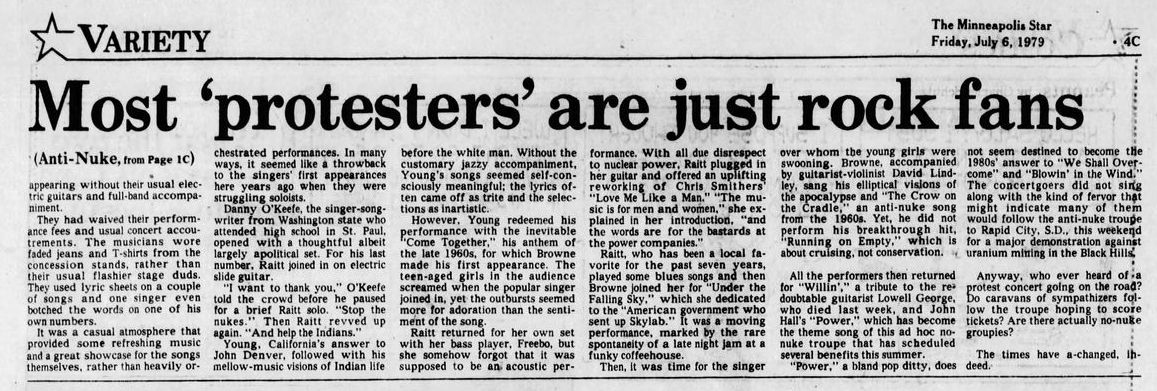
These days, however, you pay $12.50 to benefit organizations fighting against nuclear power and sit in a theater listening to pop stars like Jackson Browne and Bonnie Raitt sing love songs.
A sellout crowd of 2.600 persons turned out Thursday night at the first of two benefit concerts at the St. Paul Civic Center Theater (the second show was reportedly sold out, too). It wasn’t difficult to figure out why most of the people showed up.
They didn’t come to hear John Trudell, president of the American Indian Movement, rail eloquently about “nuclear madness” and the “oppressor man.” They came to hear Browne, Raitt and Jesse Colin Young play their California “mellow-music” in an intimate setting. After all, this was a rare opportunity.
The three-hour program opened with a moment of silence for “sky father, earth mother and all brothers and sisters.” The solitude was brief, however, as a few cat-callers urged “on with the show.”
It wasn’t difficult to read the mood of the audience. The smell of marijuana smoke was in the air, there were chants for “boogie” and the queue at the beer stand was considerably longer than the gathering at the no-nuke, pro-solar concession booth. Anyway, most of the souvenir buyers seemed to favor the Jackson Browne T-shirts over the ones emblazoned with “Question Authority,” “No Nukes” and “People Before Profits.”
The free literature discussing such topics as “nuclear power and your electric bill” and “how the power line affects you” was largely’ unsampled by the concertgoers. They probably had no idea their ticket monies were going to the Black Hills Alliance, General Assembly to Stop the Powerline, Badger Safe Energy Alliance and other organizations that campaign against various aspects of energy technology.
For most of these well-scrubbed, clean-cut, young people, it was, quite frankly, just another concert with a slightly different twist. Ticket prices were higher than usual, but there were four established performers and they were appearing without their usual electric guitars and full-band accompaniment.
They had waived their performance fees and usual concert accoutrements. The musicians wore faded jeans and T-shirts from the concession stands, rather than their usual flashier stage duds. They used lyric sheets on a couple of songs and one singer even botched the words on one of his own numbers.
It was a casual atmosphere that provided some refreshing music and a great showcase for the songs themselves, rather than heavily orchestrated performances. In many ways, it seemed like a throwback to the singers’ first appearances here years ago when they were struggling soloists.
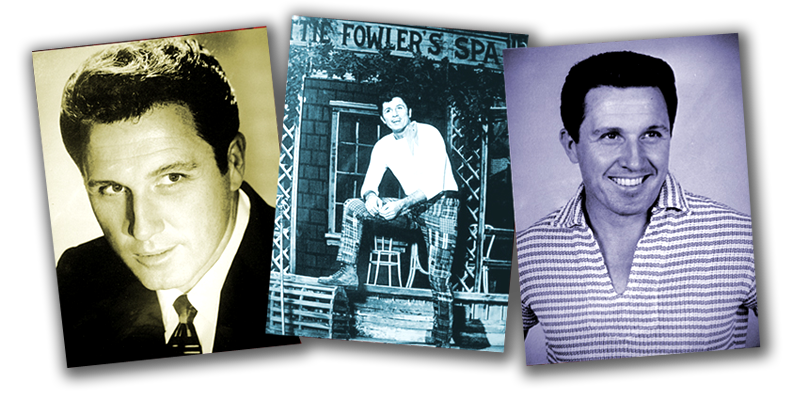
Danny O’Keefe, the singer-songwriter from Washington state who attended high school in St. Paul, opened with a thoughtful albeit largely apolitical set. For his last number, Raitt joined in on electric slide guitar.
“I want to thank you,” O’Keefe told the crowd before he paused for a brief Raitt solo, “Stop the nukes.” Then Raitt revved up again. “And help the Indians.”
Young, California’s answer to John Denver, followed with his mellow-music visions of Indian life before the white men. Without the customary jazzy accompaniment, Young’s songs seemed self-consciously meaningful; the lyrics often came off as trite and the selections as inartistic.
However, Young redeemed his performance with the inevitable ’’Come Together,” his anthem of the late 1960s, for which Browne made his first appearance. The teen-aged girls in the audience screamed when the popular singer joined in, yet the outbursts seemed more for adoration than the sentiment of the song.
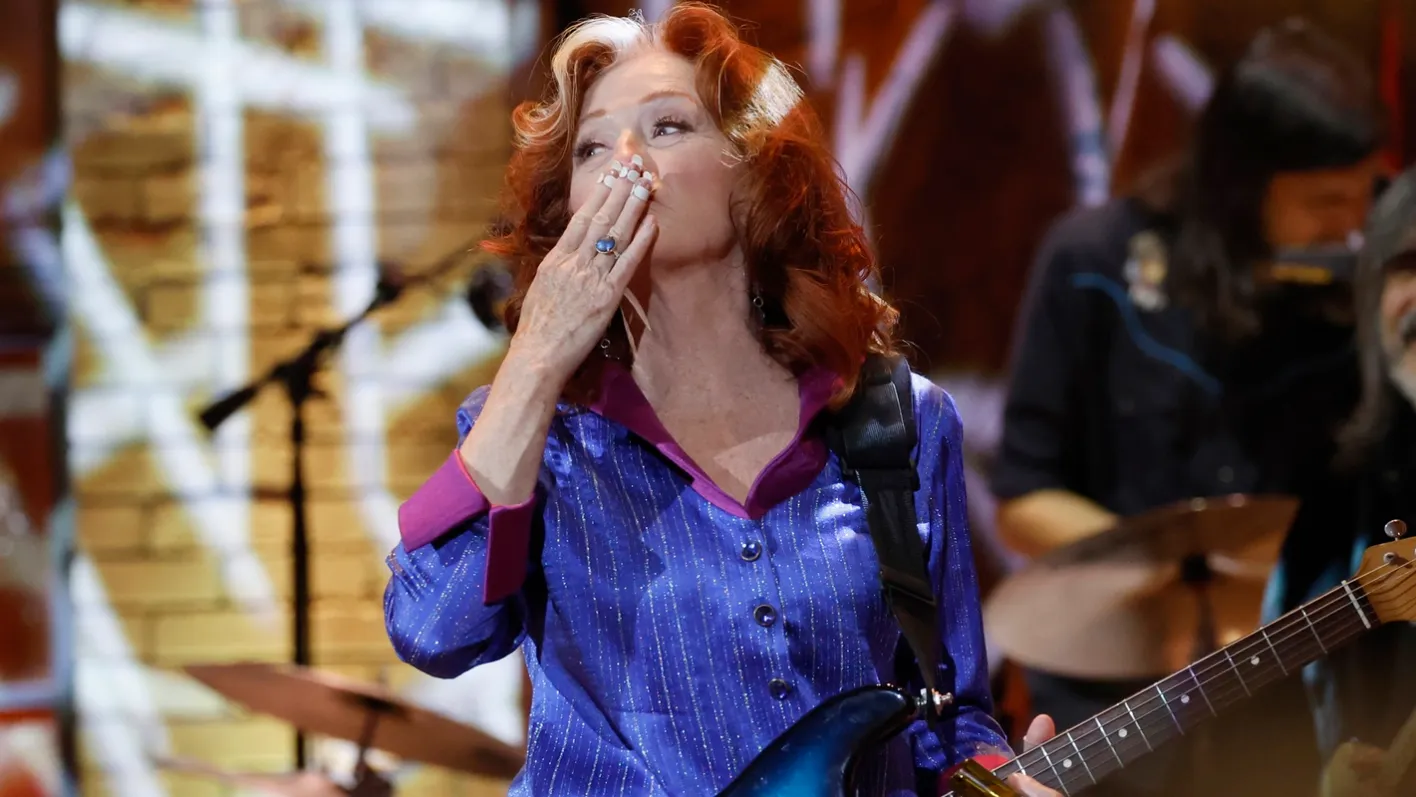
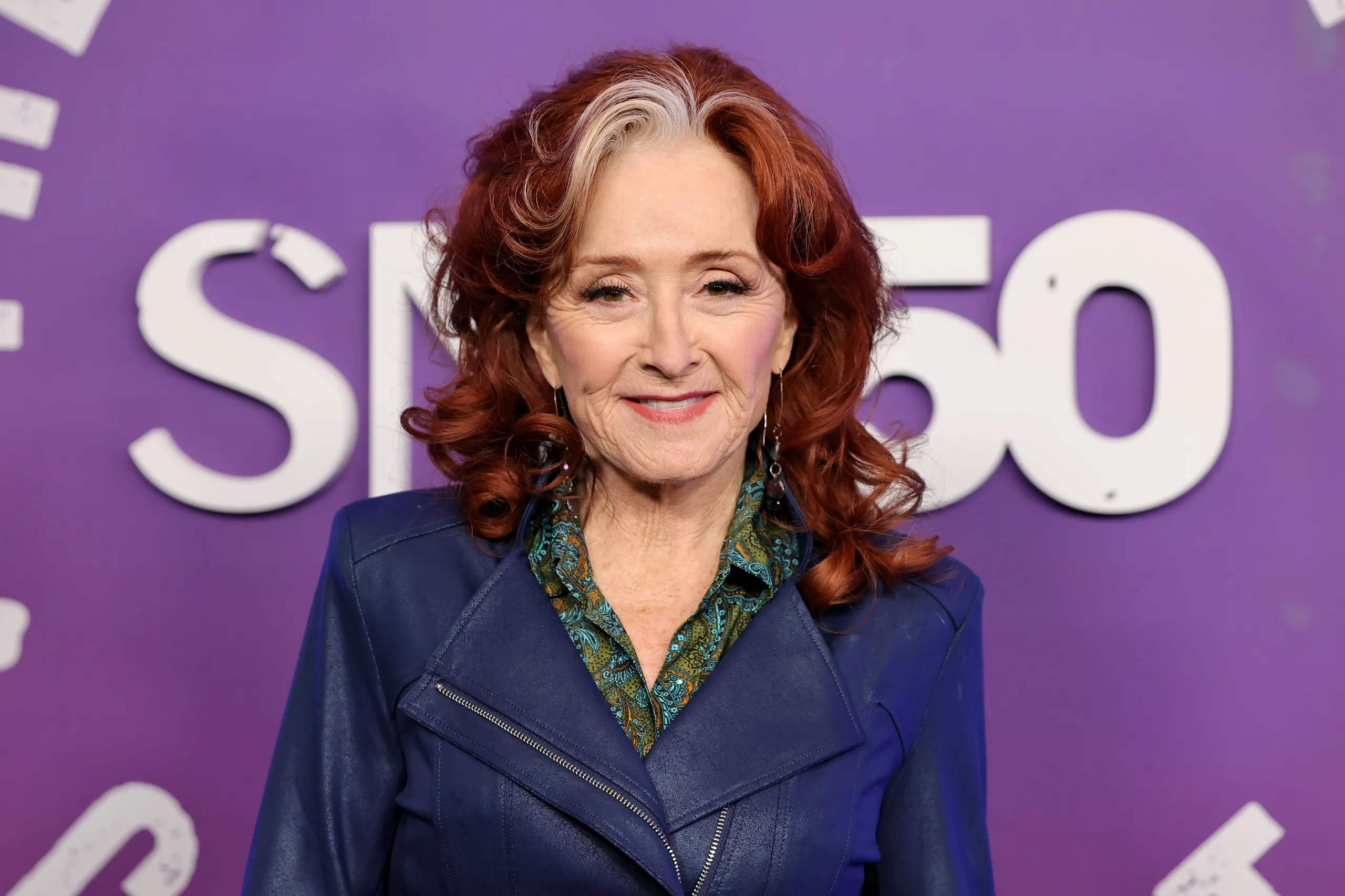
Raitt returned for her own set with her bass player, Freebo, but she somehow forgot that it was supposed to be an acoustic performance. With all due disrespect to nuclear power, Raitt plugged in her guitar and offered an uplifting reworking of Chris Smithers’ “Love Me Like a Man.” “The music is for men and women,” she explained in her introduction, “and the words are for the bastards at the power companies.”
Musical excerpts from the “No More Nukes” documentary featuring Bonnie Raitt, Jackson Browne, Graham Nash, Norton Buffalo, Joan Baez, Mimi Farina. This was an anti-nuclear protest rally at the San Francisco Civic Center on April 7, 1979 after the Three Mile Island Nuclear Accident in Pennsylvania.
Produced and directed by David Ludwig. For the complete documentary, see here.
Raitt, who has been a local favorite for the past seven years, played some blues songs and then Browne joined her for “Under the Falling Sky,” which she dedicated to the “American government who sent up Skylab.” It was a moving performance, marked by the rare spontaneity of a late night jam at a funky coffeehouse.
Then, it was time for the singer over whom the young girls were swooning. Browne, accompanied by guitarist-violinist David Lindley, sang his elliptical visions of the apocalypse and “The Crow on the Cradle,” an anti-nuke song from the 1960s. Yet, he did not perform his breakthrough hit, “Running on Empty,” which is about cruising, not conservation.
All the performers then returned for “Willin’,” a tribute to the redoubtable guitarist Lowell George, who died last week, and John Hall’s “Power,” which has become the theme song of this ad hoc no-nuke troupe that has scheduled several benefits this summer.
“Power,” a bland pop ditty, does not seem destined to become the 1980s’ answer to “We Shall Overcome” and “Blowin’ in the Wind.” The concertgoers did not sing along with the kind of fervor that might indicate many of them would follow the anti-nuke troupe to Rapid City, S.D., this weekend for a major demonstration against uranium mining in the Black Hills.
Anyway, who ever heard of a protest concert going on the road? Do caravans of sympathizers follow the troupe hoping to score tickets? Are there actually no-nuke groupies?
The times have a-changed, indeed.
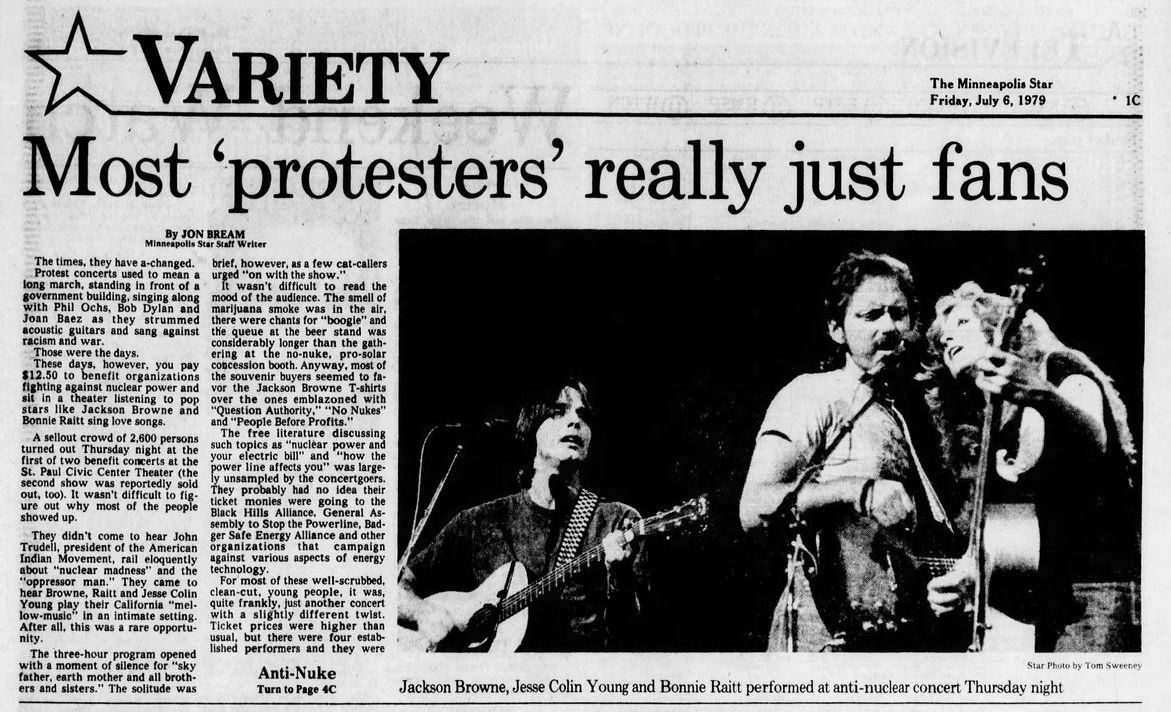
St. Paul Civic Center Theatre, St. Paul, MN





 Users Today : 303