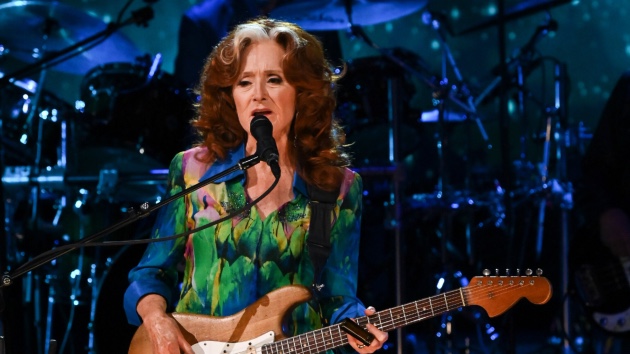
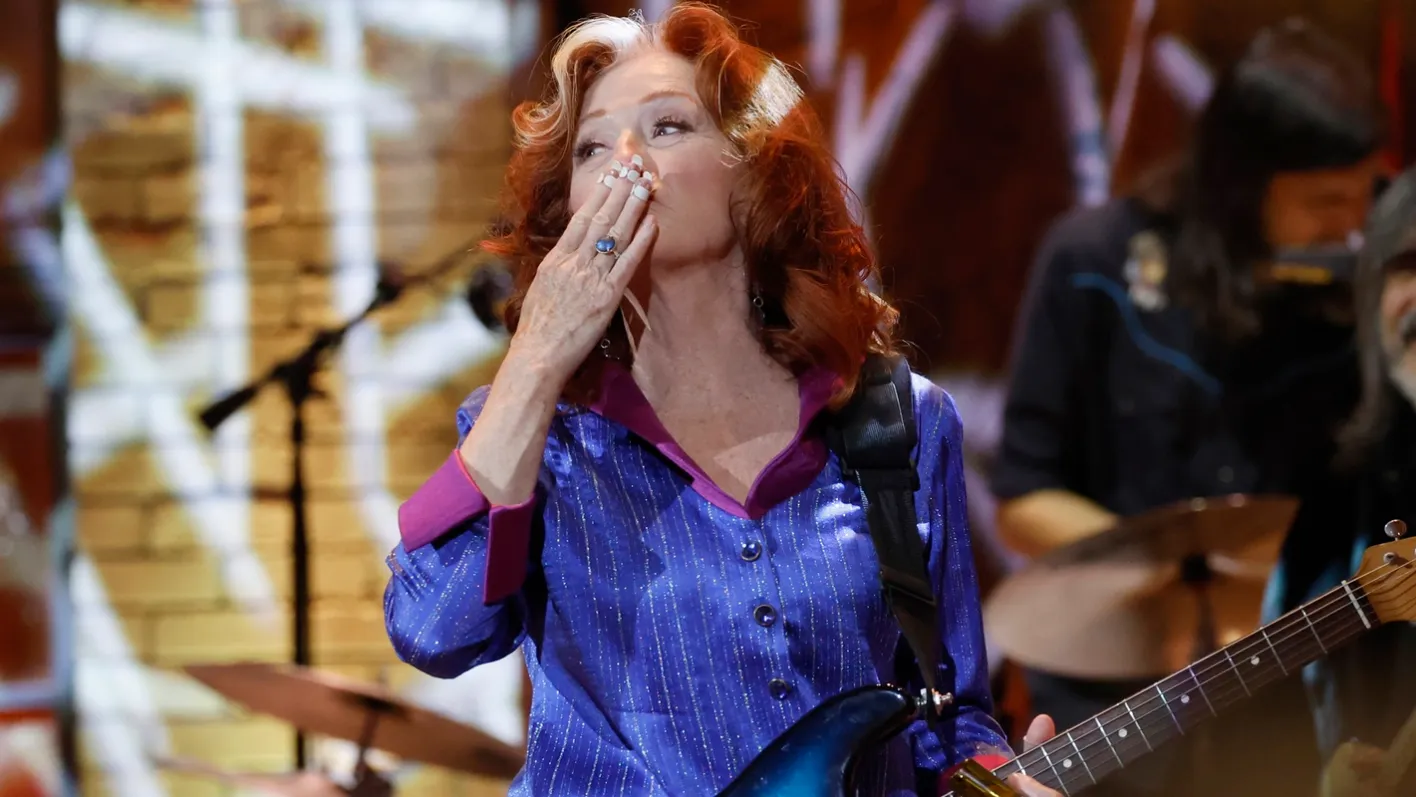
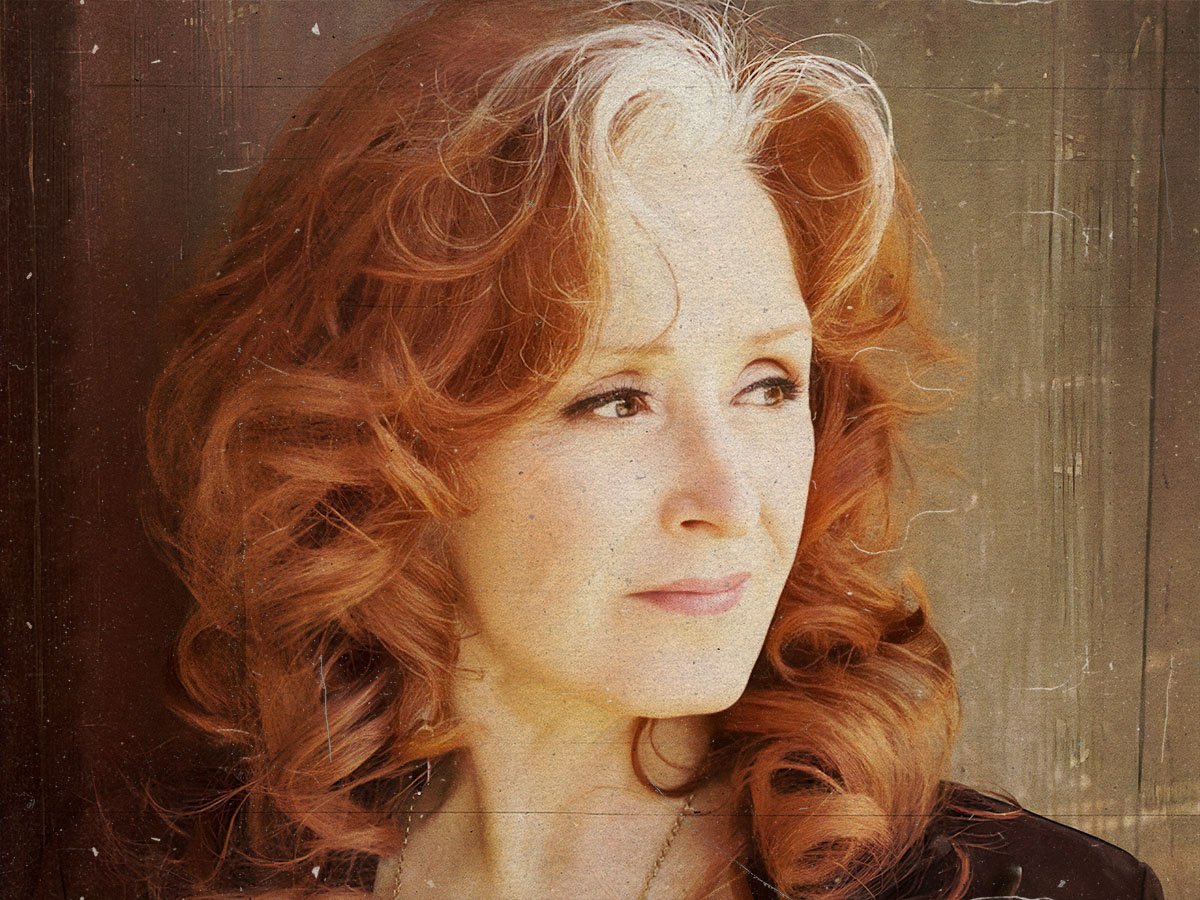
She recently returned from a year off. It was supposed to be her first break in 26 years. She spent it giving benefit concerts and guesting on other people’s albums.
But now she is back on her own with a new album, “Fundamental,” released today, and a tour of small theaters before she joins the all-women Lilith Festival this summer with sisters in music such as Erykah Badu and Sheryl Crow.
“I’m just looking forward to the hang,” she says. “My band is looking forward to it, too, as long as they don’t have to wear dresses.”
Raitt clearly likes to stay busy. She whipped through town recently for a quick weekend respite in the Mill Valley home she has kept for 10 years or so. But by the next night she was playing slide guitar onstage in Los Angeles with Eddie Vedder, Ani DiFranco and Tom Waits, while Lyle Lovett and Tim Robbins watched, at a benefit for two groups associated with Sister Helen Prejean of “Dead Man Walking” fame. Her theater tour with opening act Keb ‘Mo starts April 18 in San Diego and will play June 6 at the Warfield, June 9 at the Paramount Theatre in Oakland and June 10 at Flint Center in Cupertino.
“The ultimate success is not having to crank out a record so you can make a living,” Raitt says. “Now I just make records when I want to, and I don’t care what size venue I play.”
Late-bloomer Raitt, 48, cut her first al– bum in 1971 but didn’t crack the Top 10 until 18 years later when “Nick of Time” blew through the roof and introduced the formidable blues-blasting redhead to a larger audience. But for her first new studio album in five years, Raitt abandoned the team — producer, engineer and band — that produced not only that 1989 multiplatinum album but also the two subsequent best-sellers, “Luck of the Draw” and “Longing in Their Hearts,” which together sold more than 14 million copies and made Raitt the best-selling artist on Capitol Records.
For “Fundamental” Raitt tapped producer Mitchell Froom, a former Petaluma resident who has steered albums by Elvis Costello, Paul McCartney, Los Lobos, Richard Thompson and Froom’s wife, Suzanne Vega. Froom and his associate, engineer Tchad Blake, gave Raitt a stripped-down, bare-bones sound on the new album — no processed drums, no reverb, vintage microphones and tube amps. They recorded the album in a relatively crisp 29 days last summer.
“It sounds more like me to me,” says Raitt, sipping a bowl of soup in a Tony Marin roadhouse.
The first track released to radio, “One Belief Away,” a wistful reggae- infused love song, has already shot to the top of FM radio charts. “To me they’re all singles,” she says. “I like every song. I wanted to start with ‘Cure for Love’ ’cause it was the most out.”
“Cure for Love” is a bluesy piece of deep soul written by David Hidalgo and Luis Perez of Los Lobos, guitarist Hidalgo lending the track his best B.B. King impression. “It’s the funkiest thing I have ever cut,” Raitt says.
Finding the songs always poses the biggest challenge. “It’s what always takes the longest,” she says. Raitt has been known to go through hundreds of songs before starting an album. For “Fundamental” she wrote five herself and found the others. “I just do the best songs at the time,” she says. “I don’t plot anything out like a concept or theme.”
She did return to songwriter John Hiatt for the acid “Lovers Will” on the new album. Hiatt wrote “Thing Called Love,” the song that kick- started “Nick of Time” on the radio. Songs on “Fundamental” include “Round and Round,” an obscure number the great Willie Dixon wrote with Chicago bluesman J.B. Lenoir, which Raitt makes darkly personal, and “I Need Love,” a trademark piece of spunky pop from Joey Spampinato of NRBQ, who plays bass on “Fundamental.” Raitt’s friendship with NRBQ goes back to 1982, when she recorded the song “Green Lights,” which Spampinato co-authored, for her album “Green Light.”
Raitt says “Green Light” is the true predecessor of “Fundamental.”
” ‘Green Light’ was, in a way, premature,” she says. “It was a rock ‘n’ roll record. We were all impressed with the Ian McLagan solo record at the time and wanted to make something that sounded like a Stones record.”
It is like Raitt to compare her new record to an album most of the millions who bought her multiplatinum hits have never heard.
Success never changed the way she looks at her work: Raitt has always seen herself as a musician.
With guests who included Jackson Browne, Bruce Hornsby and Bryan Adams, Bonnie Raitt undoubtedly captured an exciting television special and live album, even if the proceedings tended to drag toward the end of her nearly three-hour performance Tuesday at the Paramount Theatre.
But with her trademark honesty, she faced the sometimes intrusive mechanics of such a production by building them right into her act. She piped the talkback between the recording truck and herself into the house sound system. She stopped songs midway and started over, even doing second takes of performances. Serving as emcee for the evening was her record producer, Don Was.
“I’ve waited 25 years to make a live album,” Raitt told the crowd. “I thought it would be a good idea before menopause.”
The capacity crowd clearly didn’t mind. They applauded the second version of “I Can’t Make You Love Me” with, if possible, even greater enthusiasm than the first. They sat pin-drop still for two consecutive takes of “My Opening Farewell,” a song she and Browne sang together, from his first album.
It was an extraordinary evening. Raitt ranged across the full breadth of her remarkable gifts — from driving, slashing bottleneck guitar rock to deep country blues, buoyant pop and aching, plaintive ballads — liberally sprinkled with marvelous matchups with special guests.
She and Kim Wilson of the Fabulous Thunderbirds romped through his “I Believe I’m in Love,” trading walloping instrumental verses on harmonica and bottleneck. Rhythm and blues greats Charles Brown and Ruth Brown, who served as the evening’s opening acts, returned for a three-way frolic early on, with Wilson whiffing away behind them on his harmonica.
Hornsby was greeted by a standing ovation when he joined Raitt to play electric piano on “I Can’t Make You Love Me.” Adams and Raitt turned up the steam on a jolting “Rock Steady,” a song Adams wrote for her that will surely be one of the highlights of the album and PBS special.
Raitt herself supplied more than an album’s worth of goose- bump moments. Her set-closing version of the Talking Heads‘ “Burning Down the House” brought that surefire rouser into the house of rhythm and blues. Her performance of Richard Thompson‘s “Dimming of the Day” — “Of all the songs I’ve recorded,” she said, “I think this is my favorite” — burst into an explosion of pain and longing as she reached deep inside for the final chorus.
But that, ultimately, is what makes Raitt so special. She crawls inside these songs and lives them each time she sings. The heart of each piece is so plainly evident, so palpably exposed.
Furthermore, after essentially spending the past eight years on the road in the wake of her “Nick of Time” breakthrough, Raitt has drilled her exceptional band into a combat-tested cadre, schooled to close-order precision in her style. This flexible unit moved fluidly from supple, spare folk accompaniment to loud, raucous rock. Guitarist George Marinelli shifted from background to foreground at the drop of a pick. Bassist Hutch Hutchinson pulled out a hollow- body model to stitch limber, loping lines into the densely woven fabric Raitt laid down on Mississippi Fred McDowell’s delta blues, “Sweet Home Kokomo.”
After spending more than 20 years beating the bushes, plugging away at nightclubs and recording worthy album after album that few noticed, Raitt has earned her stardom. Maybe that explains why nobody wears the crown with more grace, dignity and ease.
She explained to the audience why she chose the Bay Area to record this album and TV special: “I wanted to feel comfortable in front of people who are rhythm and blues fans,” she said, “who appreciate a good ballad and who know I’m not a country act.”
Bonnie Raitt started out in the 1970’s as a blues singer. Two decades later, her songs still hold on to the forthrightness and the pained determination of the blues. But at Radio City Music Hall on Wednesday night, when she opened a two-night stand, the most telling moments came during her ballads.
Ms. Raitt is one of the least showy singers in rock; she makes the song seem to tell its story by itself. Her voice has a girlish sweetness deepened by a grainy sense of experience; it can cut through a full band in a rock song, but it can also make ballads float in their own world.
She sets forth melodies clearly and plainly, adding a slide, a blues turn or a hint of vibrato only when a word needs illumination. Within such artful simplicity, every detail becomes vivid. And in songs like Richard Thompson’s “Dimming of the Day” or her own “I Can’t Make You Love Me,” all it took was a crescendo or a quiver of vibrato to fill a song with aching honesty. John Prine’s “Angel From Montgomery” was a marvel, mixing hymnlike purity with conversational directness.
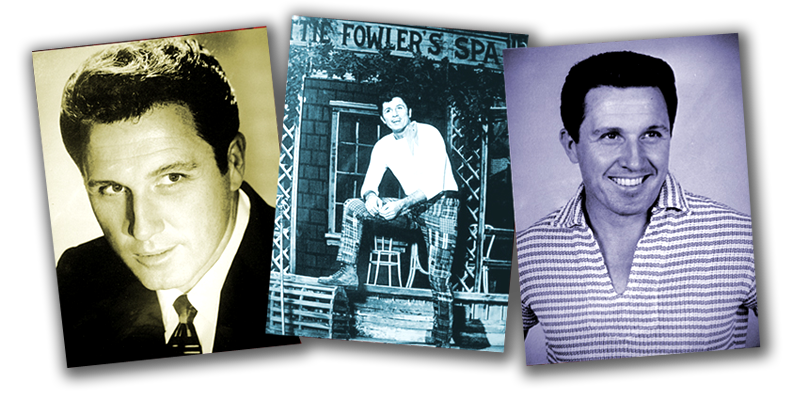
In a way, Ms. Raitt has returned to her heritage. She is a second-generation performer, the daughter of John Raitt, who played Broadway leads in “Oklahoma!” and “Carousel.” And she grew up in Los Angeles, where in the 1970’s, a school of songwriters and performers perfected a style that gave down-home Americana — country and blues, along with Brill Building pop — a Hollywood sheen. When Ms. Raitt and her producer, Don Was, picked up the lessons of Peter Asher’s mid-1970’s productions of Linda Ronstadt for her 1989 album, “Nick of Time,” Ms. Raitt became a million-seller.
Mass success, after years of a steady cult following, seems to have given Ms. Raitt new confidence as a songwriter. Through the years she has usually recorded a song or two of her own per album, and by now she has amassed a sizable catalogue. Her songs have had a consistent persona: that of a woman who’s both loving and self-reliant, both sensual and, almost despite herself, sensible. One of her new songs, “Feeling of Falling,” confesses to missing wilder times but refusing to go “over the ledge.” In songs like “Nick of Time” and “Circle Dance,” she acts her age (44), examining questions of mortality and forgiveness across generations.
Ms. Raitt still seems surprised by the size of her audience. At Radio City, she started by urging the audience to “pretend we’re at a club tonight,” and throughout the show she spoke to the audience casually, taking pains to credit other songwriters and her band members. She singled out James (Hutch) Hutchinson, on bass, for bringing African and Celtic music into her songs.
For most of her summer tour, Ms. Raitt is performing at large outdoor halls (including the Jones Beach Theater in Wantagh, L.I., on Aug. 18 and 19), and she had a stage backdrop and lighting effects that were occasionally distracting. But she’s reluctant to play the rock star; only in an encore, John Hiatt’s “Thing Called Love,” did she carry her guitar to the edge of the stage and strut through a solo.
She also had a show-business finale: a guest appearance by her father. The 77-year-old Mr. Raitt, his voice still hearty and accurate, joined his daughter for a duet in “They Say It’s Wonderful,” from “Annie Get Your Gun,” and took over for “Oklahoma!” Ms. Raitt’s own style, reserved and confessional, is a generation away from her father’s gusto, but her filial pride was obvious.
Bandana Blues is and will always be a labor of love. Please help Spinner deal with the costs of hosting & bandwidth. Visit www.bandanablues.com and hit the tipjar. Any amount is much appreciated, no matter how small. Thank you.
Bonnie Raitt is nothing if not loyal. And when she caught wind of the fact that Mike Reid and I were writing and recording together, she was quick to volunteer to sing on our song “The Bridge.” It’s one of my favorite songs Mike and I have written. And I can no longer imagine it without her heroic spirit present. ~ Joe Henry
Released on: 2025-09-05 Producer: Joe Henry Music Publisher: Rivers and Roads Music (ASCAP - admin by Endurance Music Group) Music Publisher: Mule Rider (ASCAP) Music Publisher: Blue Raincoat Music (ASCAP) ℗ 2025 Work Song Inc. marketed and distributed by Thirty Tigers
{{svg_quality_icon}}
{{quality-options}}
1
http://i3.ytimg.com/vi/VWNoTHkp6_k/hqdefault.jpg
Prison Bound Blues · Bonnie Raitt
Bonnie has contributed a new recording of "Prison Bound Blues" written by Leroy Carr to a project called Better Than Jail, an extraordinary new album benefiting Free Hearts and Equal Justice USA. Better Than Jail is available everywhere today and features covers of iconic prison songs from Steve Earle, Taj Mahal,Margo Price, The War and Treaty and many more. The album seeks to raise awareness and support for the urgent need to reduce the harm of the criminal justice system. https://found.ee/BetterThanJail.
I'm so proud to have joined in with so many illustrious artists in creating this very special album in support of rural prison reform. Overlooked for far too long, this issue cuts across all cultural and political divides and deserves all our focused attention to finally bring about some swift and meaningful action. Better Than Jail is one of the most inspired and heartfelt albums I've been blessed to be a part of and I hope it sets a fire in hearts far and wide to join in our efforts." ~ Bonnie Raitt
Released on: 2024-10-04 Executive Producer: Brian Hunt Producer: Kenny Greenberg Producer: Wally Wilson Producer: Bonnie Raitt Recording Engineer: Jason Lehning at Sound Emporium Mastering Engineer: Alex McCollough at True East Mastering Production Assistant: Shannon Finnegan Mixer: Justin Niebank at Hounds Ear Music Publisher: Universal Music Corp. Composer, Lyricist: Leroy Carr ℗ Believe Entertainment Group and Wyatt Road Records
{{svg_quality_icon}}
{{quality-options}}
1
http://i3.ytimg.com/vi/xC2BJuQbO8w/hqdefault.jpg
The Fabulous Thunderbirds - Nothing in Rambling Ft. Bonnie Raitt, Taj Mahal, Keb' Mo' & Mick Fleetwood
In celebration of the band’s 50th Anniversary, The Fabulous Thunderbirds have just released Struck Down, their first studio album in eight years on Stony Plain Records. The ten-track album includes a wonderful cover of Memphis Minnie’s “Nothing in Rambling,” featuring longtime friends, T-Birds founding member Kim Wilson, along with Bonnie, Keb’ Mo’, Taj Mahal and Mick Fleetwood. — BRHQ
{{svg_quality_icon}}
{{quality-options}}
1
http://i3.ytimg.com/vi/YmW-bgcbvQI/hqdefault.jpg
Little Feat - Long Distance Call
“I’ve always loved Little Feat and this new incarnation of the band is bringing some serious heat, cred and new blood to their enduring legacy. Every Feat fan loves us some Sam. I’m so glad he’s now gotten a chance to step out front and center and put his spin on these wonderful blues songs. I loved singing "Long Distance Call" with him, always one of my favorites, and Scott slayed on slide. Know you’ll enjoy hanging out with us at Sam’s Place!" -- Bonnie Raitt
“Long Distance Call” was written by blues legend, Muddy Waters. It has Sam Clayton and Bonnie Raitt on vocals, Scott Sharrard on Dobro, Fred Tackett on acoustic guitar, Tony Leone on drums, and Michael “The Bull” LoBue on harmonica. The album also features Bill Payne on piano and Kenny Gradney on bass.
Little Feat have composed an album that’s their love letter to the blues entitled, ‘Sam’s Place.’ “Long Distance Call” plus many other blues classics are on this album. You can stream and order ‘Sam’s Place’ here: https://orcd.co/samsplace
Broken Hearts & Dirty Windows: Songs of John Prine, Vol. 2, the anticipated new John Prine tribute record from Oh Boy Records, is out today. Stream/purchase HERE.
Created as a celebration of Prine’s life and career, the album features new renditions of some of Prine’s most beloved songs performed by Brandi Carlile (“I Remember Everything”), Tyler Childers (“Yes I Guess They Oughta Name A Drink After You”), Iris DeMent (“One Red Rose”), Emmylou Harris (“Hello In There”), Jason Isbell (“Souvenirs”), Valerie June (“Summer’s End”), Margo Price (“Sweet Revenge”), Bonnie Raitt (“Angel From Montgomery”), Nathaniel Rateliff & The Night Sweats (“Pretty Good”), Amanda Shires (“Saddle in the Rain”), Sturgill Simpson(“Paradise”) and John Paul White (“Sam Stone”). Proceeds from the album will benefit twelve different non-profit organizations, one selected by each of the featured artists.
{{svg_quality_icon}}
{{quality-options}}
1
http://i3.ytimg.com/vi/Z71L4JdrVBY/hqdefault.jpg
Bonnie Raitt - Write Me a Few of Your Lines/Kokomo Blues
60 years anniversary celebration of Arhoolie
December 10, 2020
{{svg_quality_icon}}
{{quality-options}}
1
Arhoolie Foundation celebrates it's 60th anniversary (1960-2020) with an online broadcast.
Bonnie Raitt - Shadow of Doubt
Hardly Strictly Bluegrass Festival
October 3, 2020
Hardly Strictly Bluegrass celebrates it's 20th anniversary with an online broadcast titled “Let The Music Play On”.
{{svg_quality_icon}}
{{quality-options}}
1
http://i3.ytimg.com/vi/hCJa0505jZk/hqdefault.jpg
Bonnie Raitt & Boz Scaggs - You Don't Know Like I Know
Farm Aid 2020 On the Road
Sam & Dave classic written by Isaac Hayes and David Porter.
{{svg_quality_icon}}
{{quality-options}}
1
http://i3.ytimg.com/vi/jXG6ULcK-qs/hqdefault.jpg
Sheryl Crow & Bonnie Raitt - Everything Is Broken
[Eric Clapton’s Crossroads 2019]
Eric Clapton, one of the world’s pre-eminent blues/rock guitarists, once again summoned an all-star team of six-string heroes for his fifth Crossroads Guitar Festival in 2019. Held at the American Airlines Center in Dallas, Texas, the two-day concert event raised funds for the Crossroads Centre in Antigua, the chemical dependency treatment and education facility that Clapton founded in 1998.
{{svg_quality_icon}}
{{quality-options}}
1
http://i3.ytimg.com/vi/yHeBLEo4TOM/hqdefault.jpg
'A Tribute To Mose Allison'
Celebrates The Music Of An Exciting Jazz Master
Raitt contributed to a new album, If You're Going To The City: A Tribute To Mose Allison, which celebrates the late singer and pianist, who famously blended the rough-edged blues of the Mississippi Delta with the 1950s jazz of New York City.
NPR's Lulu Garcia-Navarro talks to Bonnie Raitt about her friendship with the Mose Allison. They're also joined by Amy Allison — his daughter, who executive produced the album — about selecting an unexpected list of artists to contribute songs to the album.
Recorded on tour June 3, 2017 - Centennial Hall, London - Ontario Canada




 Users Today : 280