Reviews

MUSIC: Bonnie and the Blues

on April 4, 1994 No comments
Richard Corliss

The music isn’t called just blue. It’s the blues; it holds a hundred shades of misery and ecstasy. And Bonnie Raitt, the show-biz baby who went to Radcliffe and looks like Meryl Streep’s grittier sister, finds those shades in her songs. She wears tinges of folk and rock, country and pop, but her regular outfit is multihued blue. She makes it so smart that when she sings it, it’s everyone’s favorite color.

Raitt knows the blues is gut music, halfway between groin pulse and heartbeat. The trick, or the wisdom, is to embrace those sexual and spiritual polarities. That’s Raitt’s strength. In a single phrase her voice can skip from sweet to rowdy, as if she were sipping church-social lemonade one moment and gargling rotgut the next. Meanwhile, her handsome slide-guitar work instantly sets a song’s mood. Over the course of the 12-song set on her fine new album, Longing in Their Hearts, Raitt takes you to hell and heaven and safely back home, wherever you live.

By now — she’s 44 and hitting the quarter-century mark in a career that flowered into stardom in 1989 with her multiplatinum, multi-Grammy-winner Nick of Time — Raitt has lived in most of the places she sings about. She has raised hell and been nearly crushed by it. The authority she puts into a lament called Circle Dance (“After a while I learned that love/ Must be a thing that leaves”) didn’t come from convent life. But the nights of high- wire partying are now song fodder; in one of her new tunes she sings, “Sometimes I miss that feeling of falling/ Falling on over the edge.”

Is there any future after such a fall? Not for some pop stars, whose recklessness has meant an early death. But Raitt’s path led to maturity — and no sentimental rue. “It’s hard to become a responsible, mature adult,” she says. “Sometimes we all want to drive way too fast or never come back to our family or just be out of control. Yeah, I miss the wilder days of youth. But do I miss staying up all night and getting messed up? No.”

In the Hollywood hotel room where Raitt is chatting, a visitor watches her search for missing car keys and asks if she belongs to the Automobile Association of America. That prompts a sassy, alto laugh: “These days I belong to A.A. and the Triple A. I’m pretty disgustingly healthy. I’m a vegetarian, I don’t eat dairy, I work out. My vice is torturing myself. My mind is my own trap. It is not easy to be awake with this brain all the time.”

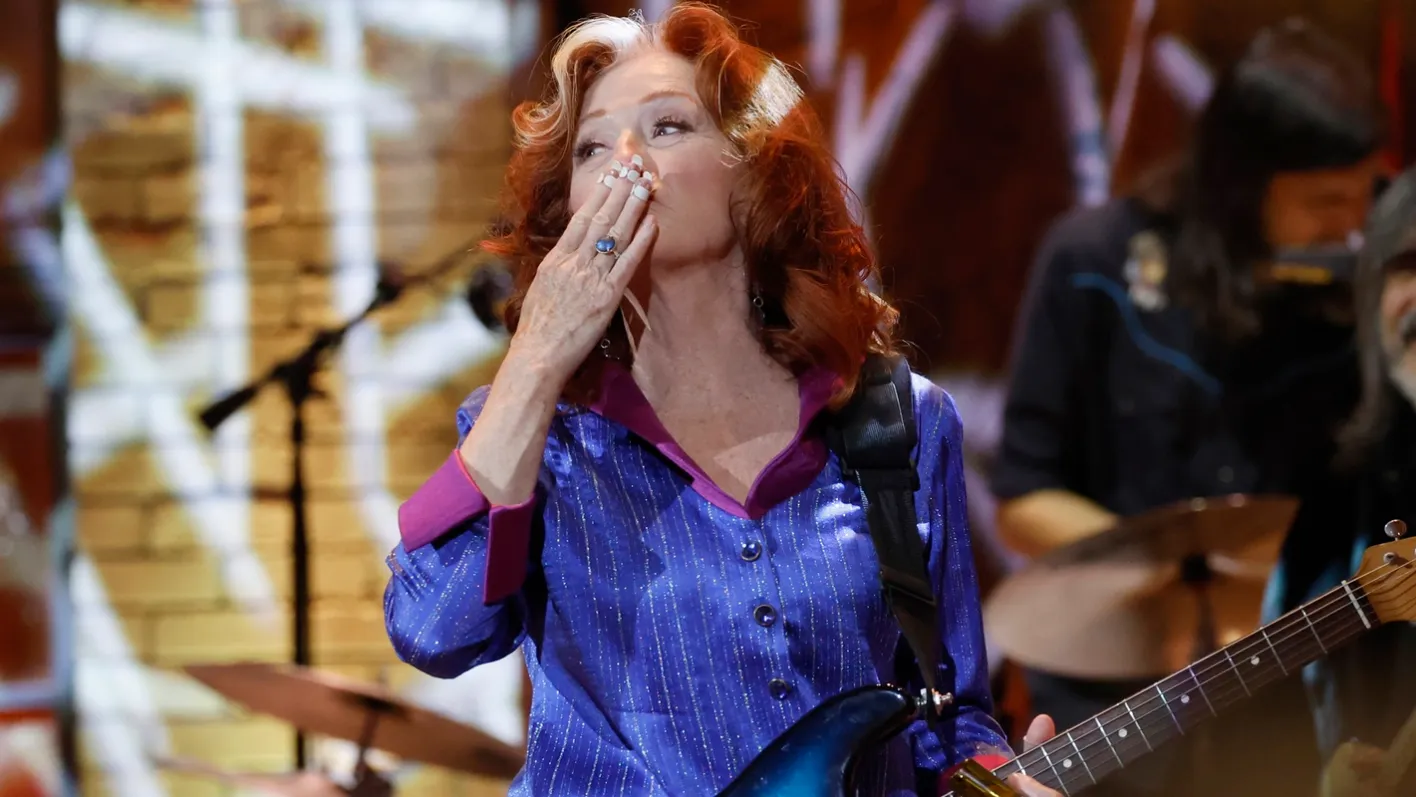
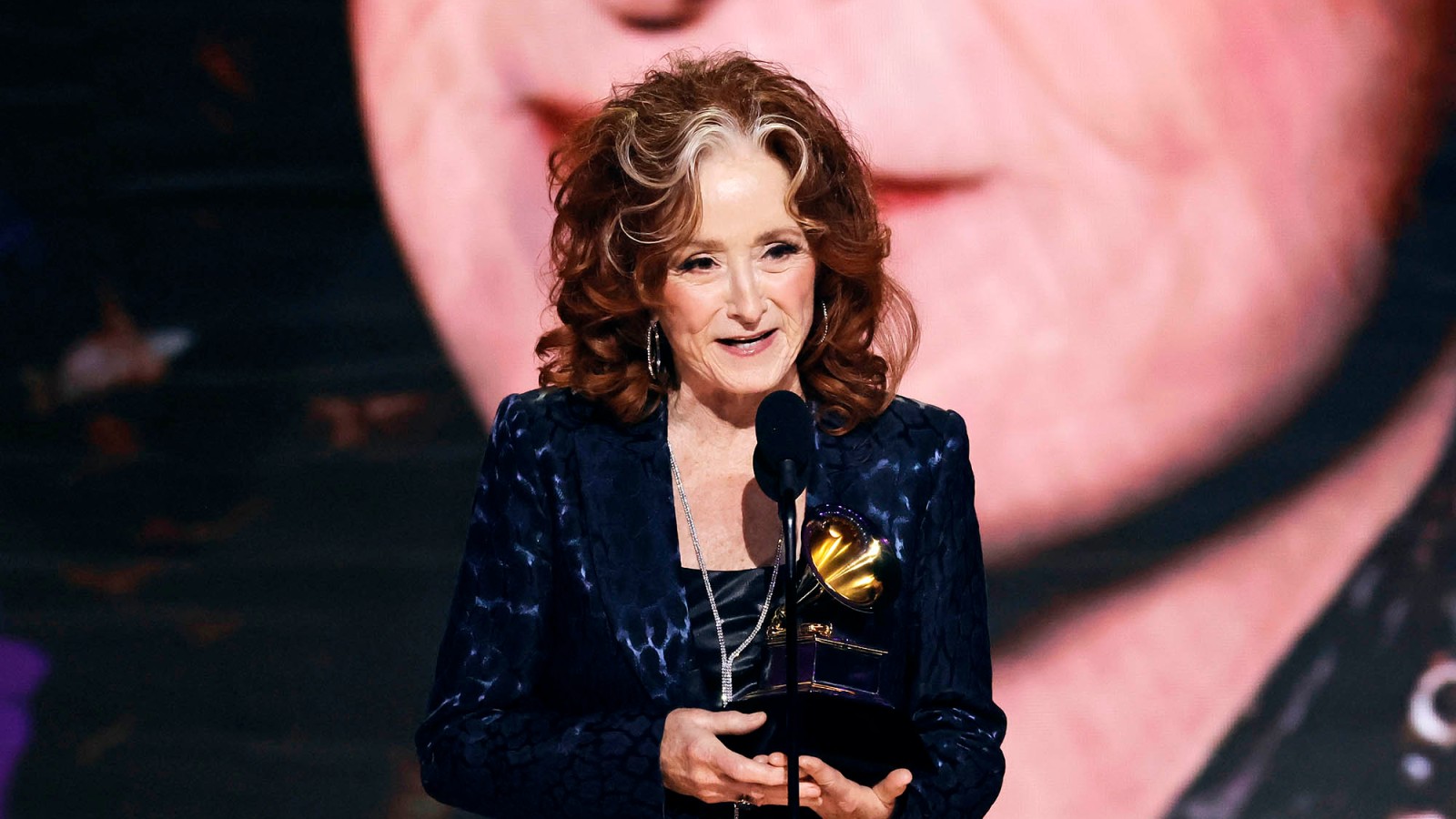
American blues singer, guitarist, songwriter and activist Bonnie Raitt sings during the filming of her song “Storm Warning” circa 1994 in Los Angeles, California. © Lester Cohen /Getty Images

Maybe not, but it must be an adventure. It has been from the start, when Raitt was born in Burbank, California, to John Raitt, robust tenor of Broadway (Carousel) and Hollywood (The Pajama Game), and his wife Marge. The Raitts were Quakers — no movieland socialites. Bonnie attended Quaker camps and then Radcliffe College. It’s unlikely that inside many Cliffies a singing sharecropper struggles to burst out, but Raitt had been touched by John Lee Hooker, Sippie Wallace and other emissaries from the delta. In 1970 she left school to sing the blues.

Raitt’s wide repertoire and potent musicianship soon earned her a following among the good ole boys on both sides of the footlights. She spent more time on the road than Wile E. Coyote; she played (and still does) untold free dates in support of liberal causes. But her record company, Warner Bros., eventually dropped her, finding her mix of bar-band rock and oozy blues tough to market. “It’s not rock,” Raitt says. “It’s rock ‘n’ roll and rhythm ‘n’ blues. That ‘n’ in the middle is important: it’s a swing back and forth. I’m more interested in the side-to-side than the up-and-down.”

Switching to Capitol Records and teaming with ace producer Don Was, Raitt finally found the up. Nick of Time and Luck of the Draw (1991) made her a best seller without selling her out. “Here I am, not having sought it, but somehow getting it,” she says. “But the idea of playing the game of being ‘hot’ is offensive to me.” The fact is, Raitt loves the road; hot or cold, she’ll be happy as long as she’s working. “When the lights go down, it is the same gig as 15 years ago. I have the coolest job of anyone I know.” On the new album that joy comes through in its most splendid form in You, a moving declaration of love. In Raitt’s poignant voice you can hear the ache of angels as they gaze down on a dark and tangled earth.

In 1992 she wed actor Michael O’Keefe, 38, now a regular on TV’s Roseanne and Raitt’s occasional songwriting partner. “It’s been satisfying and very challenging,” she says. “When you have two strong personalities, it’s an adjustment to learn how to compromise. There’s a constant thrust and parry in allowing the other person to have some space. It’s a classic case of ‘I can’t believe I’m saying these things that I heard my parents say across the dinner table.’ “

A knowledge of the blues tells Raitt that life is a heroic struggle. “Just because you have some of your dreams realized,” she says, “doesn’t mean you’re necessarily going to be content.” The hurt and the hope are evident in her new album’s last cut, Shadow of Doubt, in which Raitt sounds like a Mississippi field hand, bent by age and travail: “Oh but Lord no/ Don’t make it easy/ Keep me workin’/ ‘Til I work it on out/ Just please, please/ Shine enough light on me/ ‘Til I’m free from/ This shadow of doubt.”

Prayer answered. Bonnie Raitt is out of the shadow, into the light.

{{svg_quality_icon}}
{{quality-options}}

About The Author


Source: © Copyright TIME

But wait, there's more!

BONNIE RAITT’S NIGHT OF POWER

on January 26, 1994 No comments
By Geoffrey Himes

Voters for Choice fundraiser for Roe v. Wade Anniversary with Jimmy Dale Gilmore, CSN, The Story – Constitution Hall, Washington, D.C. 1-22-1994

When the Supreme Court handed down the Roe v. Wade decision on Jan. 22, 1973, Bonnie Raitt’s career was just getting underway. To celebrate the 21st anniversary of that ruling at Saturday’s Voters for Choice benefit concert in Constitution Hall, Raitt revisited those days. Accompanied only by guitarist-bassist Johnny Lee Schell, she built her set around old blues tunes by Fred McDowell, J.B. Lenoir and Chris Smither. “I haven’t played these songs in so long,” she exclaimed. “This is a powerful night for me.”

It was a welcome reminder of the long, glorious career Raitt had before she became an “overnight” success in 1990. Raitt may fill another shelf with Grammies from her new album due next month, but it’s unlikely she will ever give a performance more forceful than Saturday’s rendition of John Prine’s “Angel From Montgomery.” On this song about what happens to a woman with not enough choices, Raitt delivered some verses talking-blues style and belted out the chorus in that blues-soaked, daughter-of-Broadway voice of hers. Later she was joined by David Crosby and Graham Nash for harmonies on “Love Has No Pride,” and she joined them on the finale, “Teach Your Children.”

Crosby, Stills & Nash, the evening’s headliners, are little more than a nostalgia act these days. At least they faithfully re-created their earlier recordings Saturday — something they have often failed to do over the past 10 years. Opening the show was the Story, sort of a young, female version of Crosby & Nash. Like the headliners, Jonatha Brooke and Jennifer Kimball offered earnest politics and ethereal harmonies untethered to any particular tradition.

Well rooted in traditions was Jimmie Dale Gilmore, who preceded Raitt. The evening’s emcee, Gloria Steinem, introduced him as a “bridge builder,” and the long, tall Texan proved it by stitching his blues, honky-tonk and bohemian-folk sources into a sound unified by its warbling beauty. Backed by guitarist Chris Gage and percussionist Paul Pearcy, Gilmore sang songs by Johnny Cash, Butch Hancock and Lucinda Williams and made them all sound like acts of confession.


Source: © Copyright The Washington Post

But wait, there's more!

Lending a Helping Hand to a Friend
Benefit concert for William Smith: A warm feeling of family.

on February 1, 1992 No comments
by Steve Hochman – Special to The Times

We’re quite used to seeing Jackson Browne, Bonnie Raitt and Graham Nash performing in support of some political or environmental cause. So though the circumstances were unfortunate, it was a nice twist to see them Thursday at the Palace singing to benefit an ailing friend, keyboardist/songwriter William (Smitty) Smith, who is recovering from a stroke he suffered on New Year’s Day. A friend in need just seems to be better inspiration than an issue.

As a musician, Smith, 47, is known both for his conviviality and his command of rock, soul and gospel styles, and has long been a favorite musical partner of such notables as Bob Dylan, Nash, Ry Cooder and David Lindley. As a songwriter he’s known for smooth, gospel-rooted soul. Both facets were represented Thursday, the former in casual acoustic sets by Lindley, Cooder, Browne and Nash, the latter by more formal turns by pop-soul stalwarts Boz Scaggs, Brenda Russell and Michael McDonald.

Throughout the show there was a warm feeling of family – literally in such moments as Cooder’s 13-year-old son Joachim joining his dad on percussion in the early show’s opening set and Lindley’s 21 -year-old daughter Roseanne impressively belting a blues number with her dad in the second show. Unscheduled guest Raitt joined Browne for two gorgeous songs in the second show.

“Friends of Smitty” a benefit concert for William D. “Smitty” Smith – Bonnie Raitt and Jackson Browne with David Lindley – The Palace, Hollywood, CA – January 30, 1992 © Jill Jarrett

The warmth extended to the soul portions as well. In a particularly fitting case of what goes around comes around, drummer Dallas Taylor, himself the honoree of a concert two years ago after he had a liver transplant, backed singer Bonnie Sheridan (formerly Bramlett) on a show-stopping blues.

Scaggs (looking fit and trim and comeback-ready), Russell and McDonald all turned in powerful short sets of their own, backed effectively by a versatile crew, including Toto guitarist Steve Lukather and noted drummers Mike Porcaro and Jim Keltner.

The only slightly sour note was the absence of Dylan, who, though unavailable for this date, had been included in some press releases and advertisements due to a miscommunication.

But that hardly dampened the spirit of the event, which hit its peak at the end of the first show when Smith for whom there are hopes for a full recovery – was brought on stage in a wheelchair as singer Phil Perry raised the roof with a gospel-fired version of “I Need You,” a song Smith co-wrote. Choked with emotion, Smith waved his hand across the musician-strewn stage and said simply, “My friends – give them a hand.”

{{svg_quality_icon}}
{{quality-options}}

Source: © Copyright Los Angeles Times

But wait, there's more!