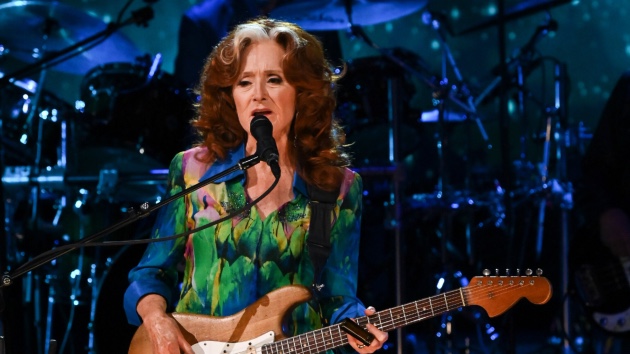
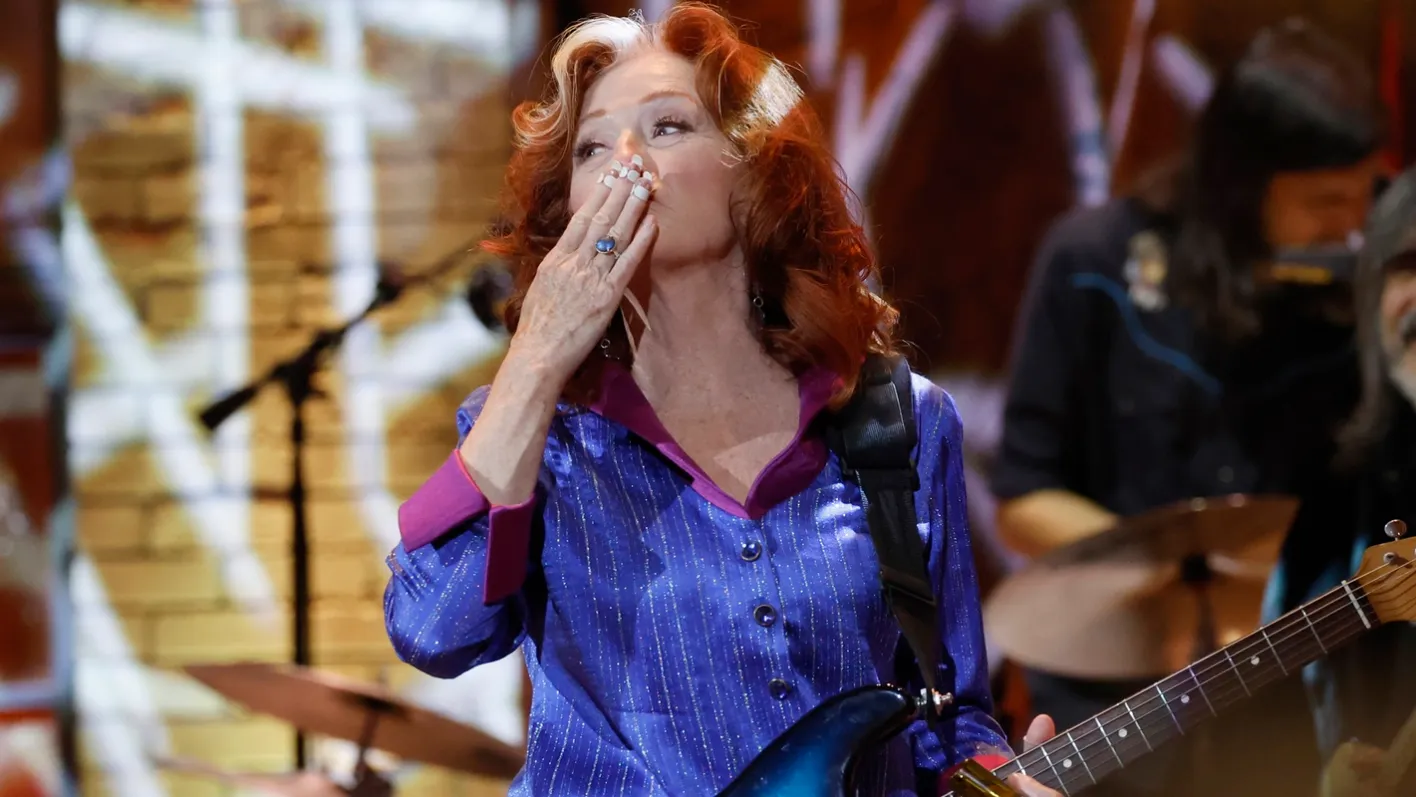
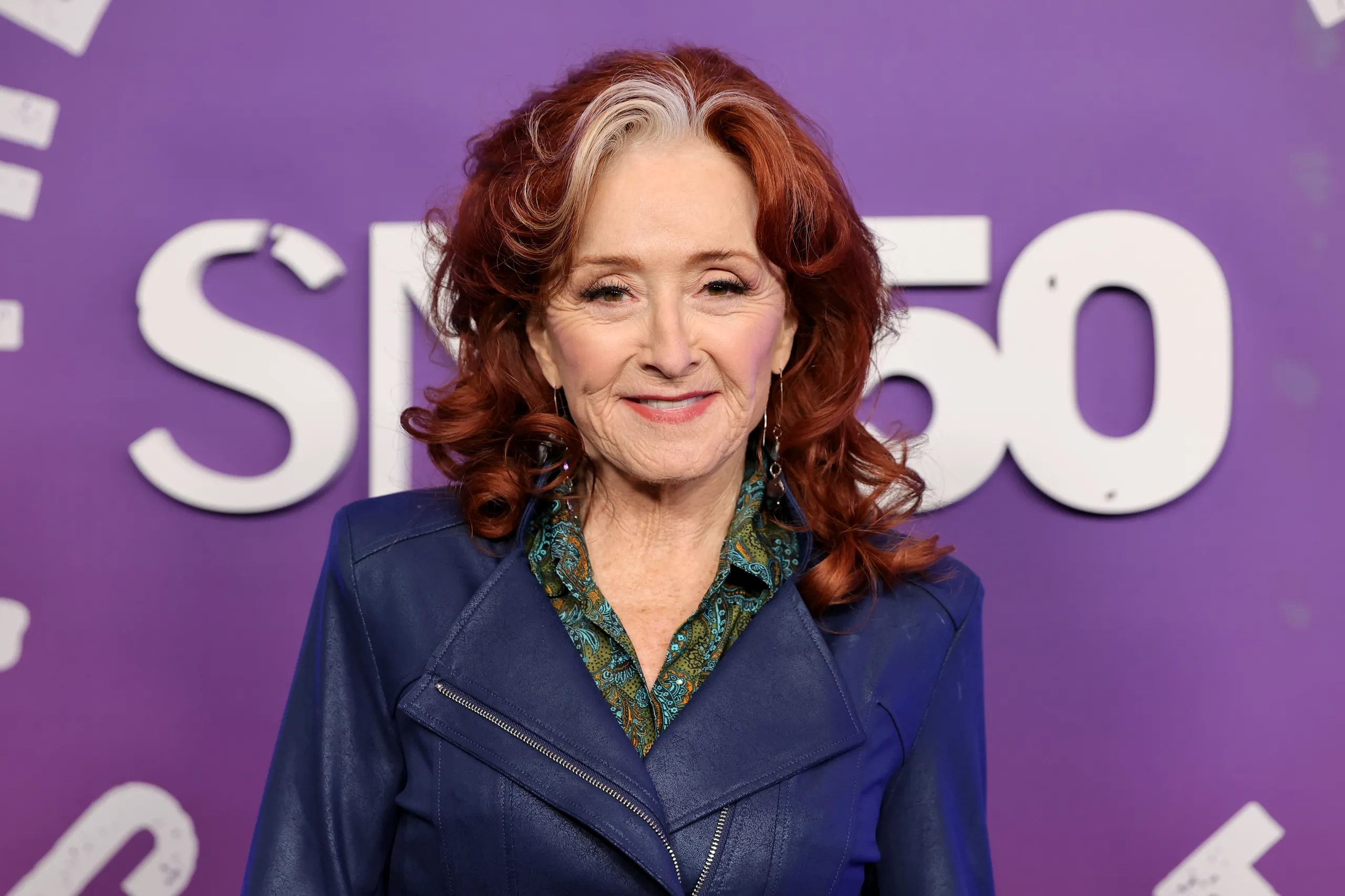
THE RELEASE OF this 20-track retrospective of her nine Warners albums must be sweet revenge for Bonnie Raitt.
An original member of the quality school of writers and performers who were nourished by the label in the early ’70s, Raitt was twice dropped by Warners in the ’80s. When she and the label parted company in 1986, Raitt was alcoholic, overweight and seemingly on the scrapheap. But, as one of the great white blues interpreters, Raitt knows a bit about fighting back. Last year’s Capitol debut, Nick Of Time, earned her Grammys galore and the first million-seller of her career.
This personally selected compilation is a testament to Raitt’s ability to make songs her own and further evidence that she isn’t always the best judge of her own material. The set seems to concentrate too heavily on Raitt in blues mode at the expense of her folksy/interpretative side, with the peculiar result that the 20 tracks add up to something of an overload. Raitt’s skills as an emotive blues mama are well represented by ‘Give It Up Or Let Me Go’ and both ‘Love Has No Pride’ and ‘Guilty’ remain superb examples of her confessional style at its most undefended. Yet the fact remains that her first five albums were far superior to the increasingly desperate production experiments that succeeded 1975’s superb Home Plate. The true depth and variety of Raitt’s talents are best found on the albums of the early ’70s and this retrospective’s well-meaning decision to choose two tracks from each of her albums offers evidence of this later decline without quite doing justice to the artistic triumphs of her beginnings.
As Nick Of Time proved, balance is everything on a Bonnie Raitt record. Balance isn’t quite achieved here but there are more than enough reminders that she remains one of the finest singers of her generation, with a gift for going straight to the emotional heart of a song with a lack of self-consciousness that proves her a true child of the blues.
Opening acts: Jeff Healey Band, Charles Brown Review: Abetted by hometown harmonica player Pat Hayes, Raitt hammed it up a bit for the fans in her second hometown. However, the performance turned into her most emotional performance here— and one of her best ever locally— as she dedicated the evening to her colleague Stevie Ray Vaughan, who died in a helicopter crash yesterday.
Long before Bonnie Raitt was synonymous with the Grammys, she acknowledged her debt to the blues figures who influenced her. She toured with her now-deceased mentors Fred McDowell and Sippie Wallace, she recorded with John Lee Hooker (they shared a blues Grammy this year) and now she has Charles Brown as an opening act on the biggest tour of her career.
Raitt, 40, also is connected to her fellow contemporary blues practitioners. She dedicated her concert Monday night at the Minnesota State Fair to Texas blues guitarist Stevie Ray Vaughan, who died in helicopter crash yesterday morning.
“I’ll turn this feeling around,” Raitt said last night. “That’s why the blues was invented.”
That’s what her head thought, anyway; her heart often felt otherwise. She admitted last night she was wearing her heart on her sleeve so she warned that she’d have a difficult time singing ballads on this “lump-in-the-throat kind of day.” But her performance rated two thumbs up — on the ballads, rockers, blues, R&B, guitar, you name it. It was certainly the most emotional concert among the many that Raitt has given here since she recorded her 1971 debut album on an island in Lake Minnetonka.
Raitt performed with more sass and attitude in her eyes and in her strut. As always, her slide guitar was smokin.’ Her voice was strong and passionate, especially on the ballads.
An acoustic version of Paul Siebel’s “Louise,” about a prostitute “who died that afternoon,” found Raitt misty-eyed, and her poignant performance made many of the 16,607 fans feel the same. Her encore of the piano ballad, “Nick of Time,” was dedicated to Vaughan, whom she said inspired her to play the blues without “the torture” of booze and drugs. “Nick of Time,” which was released in early 1989, was the first album she has recorded sober. Last night, she said it was the first time she’d ever had to deal with the loss of someone close to her while she was sober.
Raitt’s 85-minute set was heavy on tunes from “Nick of Time,” which won the Grammy in February for album of the year. Longtime fans might have yearned for more oldies and more jams from Raitt’s excellent six-man band. The solos by Raitt, guitarist Johnny Lee Schell, saxophonist Marty Grebb and Minneapolis harmonica player Pat Hayes were hot but invariably short and to the point.
It wasn’t until “Willya Wontcha,” a Schell tune, that the band truly jammed, with Raitt and Schell trading off fiery guitar lines. Piano man Brown joined in for the encore of “Think,” during which Hayes was given extra room to move. And then Raitt and her band turned “Give It Up” into a blazing Dixieland delight.
A truncated version of the band cooked on an acoustic rendition of the bluesy “Drop Down Baby” and Raitt’s “The Road’s My Middle Name,” during which a drawing of a full moon was hoisted over the painted mountains that served as a backdrop. A face cryptically painted into the moon looked a bit like Stevie Ray Vaughan.
The Jeff Healey Band, the trio that kicked off the evening, offered a scorching encore of Vaughan’s “Called Shot,” during which Healey played a quiet, emotional guitar solo. Healey mentioned how he had been with Vaughan just 48 hours earlier in Wisconsin. (Raitt also had attended that show, featuring Vaughan, Eric Clapton and Robert Cray.)
Last night, the Healey trio smoked from its first song. However, the material was inconsistent (the noisy rocker “Full Circle” and the Cray-like “I Think I Love You Too Much” didn’t measure up to “Blue Jean Blues” and “Angel Eyes”), and the 50-minute performance was not as awesome as his headlining concert last year at the Guthrie Theater.
Brown, who followed Healey, was a genuine treat. Raitt introduced him as a bluesman who started out in 1945 and influenced everyone from Ray Charles to Chuck Berry. Brown’s 20-minute cameo of uptown nightclub blues showed the 67-year-old to be a terrific piano stylist, as he drifted stylistically through New Orleans, Kansas City and his home state of Texas.
Jeff (Healey) (1966-2008) was one of the sweetest, most humble and talented artists I’ve met. He had a truly unique and soulful style of guitar playing, was a great singer and such an incredible fan of a wide range of music, all of which he seemed to be able to ace. I was floored to hear his Trad Jazz band and find out that was him on Trumpet and Trombone. He gave us so much in way too short a life. One of my favorite memories of our touring together in the early 90’s, was when we both went on the swinging chair on chains ride before one of our State Fair gigs. His drummer had to take off from our line and go back to sound check and just left me with Jeff to get him safely on the ride. I was so nervous but he put me at great ease and I loved seeing the huge grin, hearing him laugh as we swung way high above the crowd. Fearless and like a kid. Just like he was in his music. – Bonnie Raitt
Jon Bream has been a music critic at the Star Tribune since 1975, making him the longest tenured pop critic at a U.S. daily newspaper. He has attended more than 8,000 concerts and written four books (on Prince, Led Zeppelin, Neil Diamond and Bob Dylan). Thus far, he has ignored readers’ suggestions that he take a music-appreciation class.
Bream has interviewed such music royalty as the King of Pop (Michael Jackson), the Queen of Soul (Aretha Franklin) and Prince as well as Bob Dylan, U2, three Beatles, four Rolling Stones and all of Maroon 5. He has performed with Alice Cooper, jogged with Willie Nelson and walked the streets of New York with Bruce Springsteen. A longtime voter for the Rock and Roll Hall of Fame, Bream has also written for the Los Angeles Times, Billboard, Vibe and other publications. He has a journalism degree from the University of Minnesota, where he established the Jon Bream Scholarship for Arts Criticism.
July 28 1990 – Mann Music Center – Philadelphia, PA
Slicing her guitar through the air at the end of the opening number “Three Time Loser,” Bonnie Raitt stood center stage at the Mann Music Center Saturday and proclaimed “I don’t have to take it anymore.”
Bonnie Raitt, whose “Nick of Time” album won three Grammys.
This wasn’t merely a statement of frustration, or a jilted lover’s bitter resolution. This was fact: Raitt, who has encountered surprisingly warm commercial reception ever since her 10th album Nick of Time was released in 1989, was celebrating her new, improved working conditions.
Life has changed for this perennial critic’s favorite. Her blues-influenced but not blues-based album won three 1989 Grammys (she won a fourth for an appearance on John Lee Hooker’s The Healer LP), and constant touring has made it double platinum. Her old label, Warner Bros., has acknowledged her extraordinary output by issuing a 20-track collection of (shoulda-been) hits and rarities she personally selected. She has been on the cover of Rolling Stone. After more than 20 years of grinding out sweaty rhythm-and-blues in bars, she’s now a star.
In the build-’em-up-knock-’em-down world of show business, such massive success is typically followed by artistic overindulgence. But Raitt appears emboldened by her recent experience, yet mindful that her direct-to-the-heart music is responsible for this change of fortune. She is playing slide guitar with rewardingly spare strokes, turning short eight-bar solo segments into clear, definitive statements. She is singing with a wise authority and an unerring sense of timing.
Although she still plays the Nick of Time tunes (the ska-kissed “Have a Heart,” John Hiatt’s shuffle “Thing Called Love”) with gusto, she filled her show with the music she understands best – the blues. Mixing swamp guitar, Chicago roadhouse harmonica and a stomping Memphis backbeat, Raitt showed command of the whole of blues tradition, from the naive realism of Mississippi Fred McDowell to the contemporary show style of Robert Cray.
Supported by an excellent six-piece band – keyboardists Walt Richmond and Marty Grebb, bassist Hutch Hutchinson, drummer Tony Braunagel, harp player Pat Hayes, guitarist Johnny Lee Schell – Raitt stirred up a high-energy shout (“Give It Up or Let Me Go”), harmonized with R & B veteran Charles Brown (who offered a criminally short set at the piano before Raitt), created a sassy vocal harmony blend to cover Allen Toussaint’s funk workout “What Is Success,” and sang woefully about her experiences as a traveling musician (“The Road Is My Middle Name”).
The opening act, the Jeff Healey Band, was useful only for contrast: Healey’s frothy guitar spasms made Raitt seem even more profound.
Philadelphia Inquirer review of Bonnie Raitt’s July 28, 1990, concert at the Mann, her first appearance at the venue following her multiple Grammy-winning 1989 album, Nick of Time.
Bandana Blues is and will always be a labor of love. Please help Spinner deal with the costs of hosting & bandwidth. Visit www.bandanablues.com and hit the tipjar. Any amount is much appreciated, no matter how small. Thank you.
Bonnie Raitt is nothing if not loyal. And when she caught wind of the fact that Mike Reid and I were writing and recording together, she was quick to volunteer to sing on our song “The Bridge.” It’s one of my favorite songs Mike and I have written. And I can no longer imagine it without her heroic spirit present. ~ Joe Henry
Released on: 2025-09-05 Producer: Joe Henry Music Publisher: Rivers and Roads Music (ASCAP - admin by Endurance Music Group) Music Publisher: Mule Rider (ASCAP) Music Publisher: Blue Raincoat Music (ASCAP) ℗ 2025 Work Song Inc. marketed and distributed by Thirty Tigers
{{svg_quality_icon}}
{{quality-options}}
1
http://i3.ytimg.com/vi/VWNoTHkp6_k/hqdefault.jpg
Prison Bound Blues · Bonnie Raitt
Bonnie has contributed a new recording of "Prison Bound Blues" written by Leroy Carr to a project called Better Than Jail, an extraordinary new album benefiting Free Hearts and Equal Justice USA. Better Than Jail is available everywhere today and features covers of iconic prison songs from Steve Earle, Taj Mahal,Margo Price, The War and Treaty and many more. The album seeks to raise awareness and support for the urgent need to reduce the harm of the criminal justice system. https://found.ee/BetterThanJail.
I'm so proud to have joined in with so many illustrious artists in creating this very special album in support of rural prison reform. Overlooked for far too long, this issue cuts across all cultural and political divides and deserves all our focused attention to finally bring about some swift and meaningful action. Better Than Jail is one of the most inspired and heartfelt albums I've been blessed to be a part of and I hope it sets a fire in hearts far and wide to join in our efforts." ~ Bonnie Raitt
Released on: 2024-10-04 Executive Producer: Brian Hunt Producer: Kenny Greenberg Producer: Wally Wilson Producer: Bonnie Raitt Recording Engineer: Jason Lehning at Sound Emporium Mastering Engineer: Alex McCollough at True East Mastering Production Assistant: Shannon Finnegan Mixer: Justin Niebank at Hounds Ear Music Publisher: Universal Music Corp. Composer, Lyricist: Leroy Carr ℗ Believe Entertainment Group and Wyatt Road Records
{{svg_quality_icon}}
{{quality-options}}
1
http://i3.ytimg.com/vi/xC2BJuQbO8w/hqdefault.jpg
The Fabulous Thunderbirds - Nothing in Rambling Ft. Bonnie Raitt, Taj Mahal, Keb' Mo' & Mick Fleetwood
In celebration of the band’s 50th Anniversary, The Fabulous Thunderbirds have just released Struck Down, their first studio album in eight years on Stony Plain Records. The ten-track album includes a wonderful cover of Memphis Minnie’s “Nothing in Rambling,” featuring longtime friends, T-Birds founding member Kim Wilson, along with Bonnie, Keb’ Mo’, Taj Mahal and Mick Fleetwood. — BRHQ
{{svg_quality_icon}}
{{quality-options}}
1
http://i3.ytimg.com/vi/YmW-bgcbvQI/hqdefault.jpg
Little Feat - Long Distance Call
“I’ve always loved Little Feat and this new incarnation of the band is bringing some serious heat, cred and new blood to their enduring legacy. Every Feat fan loves us some Sam. I’m so glad he’s now gotten a chance to step out front and center and put his spin on these wonderful blues songs. I loved singing "Long Distance Call" with him, always one of my favorites, and Scott slayed on slide. Know you’ll enjoy hanging out with us at Sam’s Place!" -- Bonnie Raitt
“Long Distance Call” was written by blues legend, Muddy Waters. It has Sam Clayton and Bonnie Raitt on vocals, Scott Sharrard on Dobro, Fred Tackett on acoustic guitar, Tony Leone on drums, and Michael “The Bull” LoBue on harmonica. The album also features Bill Payne on piano and Kenny Gradney on bass.
Little Feat have composed an album that’s their love letter to the blues entitled, ‘Sam’s Place.’ “Long Distance Call” plus many other blues classics are on this album. You can stream and order ‘Sam’s Place’ here: https://orcd.co/samsplace
Broken Hearts & Dirty Windows: Songs of John Prine, Vol. 2, the anticipated new John Prine tribute record from Oh Boy Records, is out today. Stream/purchase HERE.
Created as a celebration of Prine’s life and career, the album features new renditions of some of Prine’s most beloved songs performed by Brandi Carlile (“I Remember Everything”), Tyler Childers (“Yes I Guess They Oughta Name A Drink After You”), Iris DeMent (“One Red Rose”), Emmylou Harris (“Hello In There”), Jason Isbell (“Souvenirs”), Valerie June (“Summer’s End”), Margo Price (“Sweet Revenge”), Bonnie Raitt (“Angel From Montgomery”), Nathaniel Rateliff & The Night Sweats (“Pretty Good”), Amanda Shires (“Saddle in the Rain”), Sturgill Simpson(“Paradise”) and John Paul White (“Sam Stone”). Proceeds from the album will benefit twelve different non-profit organizations, one selected by each of the featured artists.
{{svg_quality_icon}}
{{quality-options}}
1
http://i3.ytimg.com/vi/Z71L4JdrVBY/hqdefault.jpg
Bonnie Raitt - Write Me a Few of Your Lines/Kokomo Blues
60 years anniversary celebration of Arhoolie
December 10, 2020
{{svg_quality_icon}}
{{quality-options}}
1
Arhoolie Foundation celebrates it's 60th anniversary (1960-2020) with an online broadcast.
Bonnie Raitt - Shadow of Doubt
Hardly Strictly Bluegrass Festival
October 3, 2020
Hardly Strictly Bluegrass celebrates it's 20th anniversary with an online broadcast titled “Let The Music Play On”.
{{svg_quality_icon}}
{{quality-options}}
1
http://i3.ytimg.com/vi/hCJa0505jZk/hqdefault.jpg
Bonnie Raitt & Boz Scaggs - You Don't Know Like I Know
Farm Aid 2020 On the Road
Sam & Dave classic written by Isaac Hayes and David Porter.
{{svg_quality_icon}}
{{quality-options}}
1
http://i3.ytimg.com/vi/jXG6ULcK-qs/hqdefault.jpg
Sheryl Crow & Bonnie Raitt - Everything Is Broken
[Eric Clapton’s Crossroads 2019]
Eric Clapton, one of the world’s pre-eminent blues/rock guitarists, once again summoned an all-star team of six-string heroes for his fifth Crossroads Guitar Festival in 2019. Held at the American Airlines Center in Dallas, Texas, the two-day concert event raised funds for the Crossroads Centre in Antigua, the chemical dependency treatment and education facility that Clapton founded in 1998.
{{svg_quality_icon}}
{{quality-options}}
1
http://i3.ytimg.com/vi/yHeBLEo4TOM/hqdefault.jpg
'A Tribute To Mose Allison'
Celebrates The Music Of An Exciting Jazz Master
Raitt contributed to a new album, If You're Going To The City: A Tribute To Mose Allison, which celebrates the late singer and pianist, who famously blended the rough-edged blues of the Mississippi Delta with the 1950s jazz of New York City.
NPR's Lulu Garcia-Navarro talks to Bonnie Raitt about her friendship with the Mose Allison. They're also joined by Amy Allison — his daughter, who executive produced the album — about selecting an unexpected list of artists to contribute songs to the album.
Recorded on tour June 3, 2017 - Centennial Hall, London - Ontario Canada




 Users Today : 5