POP VIEW
One of the biggest attractions of the pop music world is following the spins of its wheel of fortune and watching where the golden arrow comes to rest. Each month brings a surprise or two, but when a deserving artist like Bonnie Raitt is suddenly, unexpectedly rewarded, one’s fascination in the whole hit-making process becomes rekindled.
Had I been asked three years ago to evaluate the chances of Ms. Raitt’s winning four Grammy Awards – for album of the year, best female pop vocalist, best female rock vocalist and best traditional blues recording – with an album that would sell over two million copies, I would have shaken my head and said impossible. Now the impossible has happened. By last week, as ”Have a Heart,” the third single from the album, rose to No. 57 on the singles chart in its third week, the album had jumped to No. 6 on Billboard’s pop album chart. Before the Grammies it had dropped as low as No. 119 after having peaked at No. 22 earlier last year.
Three years ago, I would have gone on to lament the injustice of the fact that Ms. Raitt, a first-rate folk-blues singer who exudes a special sort of true grit, never got the commercial recognition she deserved. When Capitol Records signed Ms. Raitt after her 15-year stint on Warner Bros., I imagined that even in the best of all possible worlds, the most a new album could sell would be about 300,000 copies.
Those 300,000 consumers would have been the remnants of the 40-year-old singer’s loyal college-educated baby-boomer fans from the 1970’s. Many might have first heard her in a folk club in a Cambridge, Mass., where she had come from Southern California to go to college. To many of those fans, Ms. Raitt has always seemed to be ”too good” a singer – too self-effacing, too subtle, too ”real” – to become major pop star.
Then last spring, her first Capitol album, ”Nick of Time,” was released. The record was not radically different from its nine Warner Bros. predecessors except for the fact that everything she has always done well came out sounding a little bit better. Where her previous albums had been flawed by her selections of mid-tempo rock-and-roll songs of dubious quality, the same kind of songs on ”Nick of Time” were stronger than on her earlier albums.
And the title song, one of two selections that she had written herself, addressed a sensitive subject – aging, the biological clock and intimations of mortality – with a tough-minded directness and lack of self-pity that no songwriter of her generation had brought to a subject that in the youth-obsessed world of rock seemed faintly taboo.
In the lyrics’ sharpest lines, Ms. Raitt sings matter-of-factly:
I see my folks are getting on and I watch their bodies change
I know they see the same in me and it makes us both feel strange
No matter how you tell yourself it’s what we all go through
Those lines are pretty hard to take when they’re starin’ back at you.
”Nick of Time” ends with a leap of faith, as the singer professes gratitude for having found ”love in the nick of time.” In interviews, Ms. Raitt went out of her way to say that the ending of ”Nick of Time” was only half true. Though she hadn’t found a mate, she had recently become sober after years of overindulgence in alcohol and had discovered that for the first time in her life she didn’t feel that her personal happiness depended on being in a relationship.
The love that Ms. Raitt found was a healthy self-esteem. And listening to ”Nick of Time,” one can hear the increased solidity and strength of her singing and sense that at last she has become in her own mind someone close in spirit to the independent, self-determining persona she projects in concert and on records.
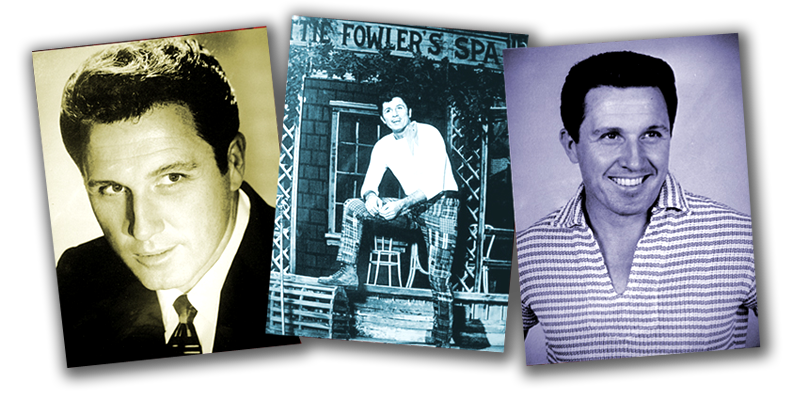
That personality has always been one of the more appealing female images in rock. Here was a show-business kid, the daughter of the Broadway singer John Raitt, who without thumbing her nose at her father’s world celebrated the American roots music that the pop-music establishment of earlier generations had either ignored or looked down on.
Furthermore, she did it with an exuberance, sincerity, intelligence and good humor that made her appear to embody her generation’s faith in the connection between personal freedom and rock-and-roll music. Where so many other singers of her generation studiously affected the mannerisms and accents of African-American blues and soul singers, Ms. Raitt didn’t parrot the black-is-hip attitude but instead applied her own plain-but-pretty delivery to a musical tradition she approached with humility.
In Sippie Wallace, the early blues singer whose music she steadfastly championed, Ms. Raitt also discovered an icon from the past whose bawdy songs of free-spirited female sexual independence fit right into the equal-rights ethos of the sensual 1970’s. And Ms. Raitt’s powerful, insinuating electric slide guitar playing bolstered her image as a gutsy, self-determining contemporary woman whose values were shaped by the music she performed. Implicitly feminist but not hostile to men and sexy in an unstudied casual way, she stood as a positive role model for a segment of the liberal, white baby-boom intelligentsia.
But while Ms. Raitt was able to sustain a recording career for nearly two decades, other women from the same Southern California musical world won most of the glory. In the early and mid-70’s, Joni Mitchell’s confessional songs defined the social and sexual mood of Southern California rock. And in the late 70’s the voice of Linda Ronstadt distilled the same ethos. Ms. Raitt, though a good writer, only dabbled in songwriting. Compared to Ms. Ronstadt’s, Ms. Raitt’s voice was not as curvaceous or hon-eyed. Her taste in songs was not as acute, and the productions on her albums not as opulent.
Before ”Nick of Time,” only two of Ms. Raitt’s records reached Billboard’s pop singles chart. The most successful, her 1977 remake of Del Shannon’s ”Runaway,” stopped at No. 57, but it helped propel her sixth album, ”Sweet Forgiveness” to No. 25 on Billboard’s pop album chart. After her 1979 album, ”The Glow,” produced by Ms. Ronstadt’s manager and producer, Peter Asher, only went as high as No. 30, her recording career went into a slow eclipse. And in 1986, after her ninth Warner Bros. album, ”Nine Lives,” peaked at No. 115, she left the label.
Although Ms. Raitt’s albums are all flawed – some more than others – they reveal a fairly steady gathering of strength. When she began, Ms. Raitt had a higher, lighter voice than she does today. Although from the outset, her singing was marked by a refreshing, no-nonsense directness and utter lack of affectation, back then the earthy resiliency of the blues lyrics she sang didn’t quite jibe with her sound.
Throughout her career Ms. Raitt has often shied away from ballads in favor of assertive rock-and-roll and blues numbers. This is a shame, because her understated performances of ballads convey a clear-eyed self-assessment even in the midst of emotional turmoil. Her recorded performances of James Taylor’s ”Rainy Day Man,” John Prine’s ”Angel From Montgomery,” Randy Newman’s ”Guilty,” John David Souther’s ”Run Like a Thief,” and Kin Vassy’s extraordinary ”My First Night Alone Without You,” among others, are definitive.
Although luck certainly has something to do with where the arrow stops in pop’s wheel of fortune, Ms. Raitt’s late-blooming success is anything but accidental. ”Nick of Time,” captures and defines a moment in her generation’s self-awareness. The title song stands as the natural centerpiece of a collection of rhythm-and-blues-flavored songs into which Ms. Raitt projects a confident, mature sensuality that seems completely natural and remarkably unmannered.
Singing in a voice that’s clear, rich and filled with subtle emotional catches, Ms. Raitt expresses optimism, sadness, desire and a strong-willed determination all at once. At her best, she has always conveyed the sense of a song flowing directly and truthfully out of her life without calculation. And on ”Nick of Time” that sense is stronger than before.
”Nick of Time” is a statement of faith from a woman who like millions of her peers heeded rock-and-roll’s call to freedom and lived out its promises and perils. Like them, she dived into the fire and has only recently emerged fortified with the strength that often comes out of hard-won personal experience.
RAITT ON RECORD: A DISCOGRAPHY
”Bonnie Raitt” (Warner Bros. 1953; all three formats, 1971). Her debut is her most blues-oriented album and includes her performances of Sippie Wallace’s ”Mighty Tight Woman” and ”Women Be Wise.”
”Give It Up” (Warner Bros. 2643; all three formats, 1972). A critically acclaimed record, ”Give It Up” mixes blues songs with folk-pop and rhythm-and-blues and includes her stunning rendition of ”Love Has No Pride.”
”Takin’ My Time” (Warner Bros. 2729; all three formats, 1973). With the same overall blend as its predecessor, ”Give It Up,” the album includes strong renditions of Eric Kaz’s ”Cry Like a Rainstorm” and Randy Newman’s ”Guilty.”
”Streetlights” (Warner Bros. 2818; all three formats, 1974). Guided by the rhythm-and-blues producer Jerry Ragavoy, the singer moves into more contemporary pop-soul territory. The record also includes the folk-pop ballads ”Rainy Day Man” and ”Angel From Montgomery.”
”Home Plate” (Warner Bros. 2864; cassette and CD only, 1975). High points in a strong collection, produced by Paul A. Rothschild, are beautifully sung and arranged renditions of ”Run Like a Thief” and ”My First Night Alone Without You.”
”Sweet Forgiveness” (Warner Bros. 2990; all three formats, 1977). The mix of contemporary folk-pop songs and oldies, such as ”Runaway,” offers the same strong mix of styles.
”The Glow” (Warner Bros. 3369; cassette and CD only, 1979). Under Peter Asher’s direction, there is stronger keyboard presence. The high points are two torch songs, ”The Glow” and ”Goin’ Wild for You Baby.”
”Green Light” (Warner Bros. 3630; cassette only, 1982). Although the singing and playing on this straight-ahead rock-and-roll album are spunky, most of the material is below par.
”Nine Lives” (Warner Bros. 25486; cassette only, 1986). The same problems that afflict ”Green Light” grow more acute, and Ms. Raitt sounds dispirited.
”Nick of Time” (Capitol 91268; all three formats, 1989). The producer Don Was finally discovers the right Bonnie Raitt sound in the album’s refined but unfussy rhythm-and-blues-flavored arrangements. High points are the title song, the soulful ballads ”Too Soon to Tell” and the entranced reggae of ”Have a Heart.”-


 Users Today : 7