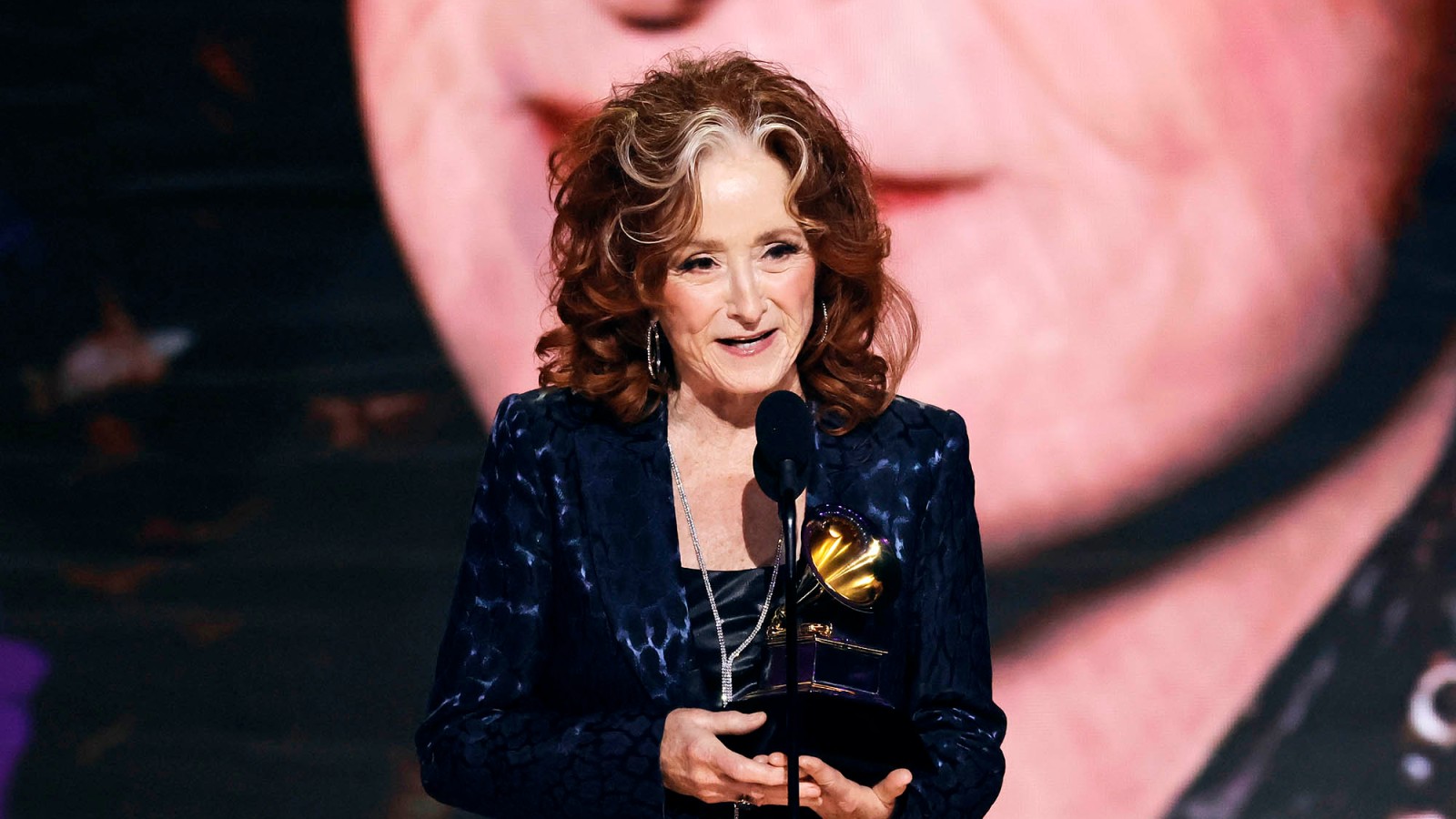
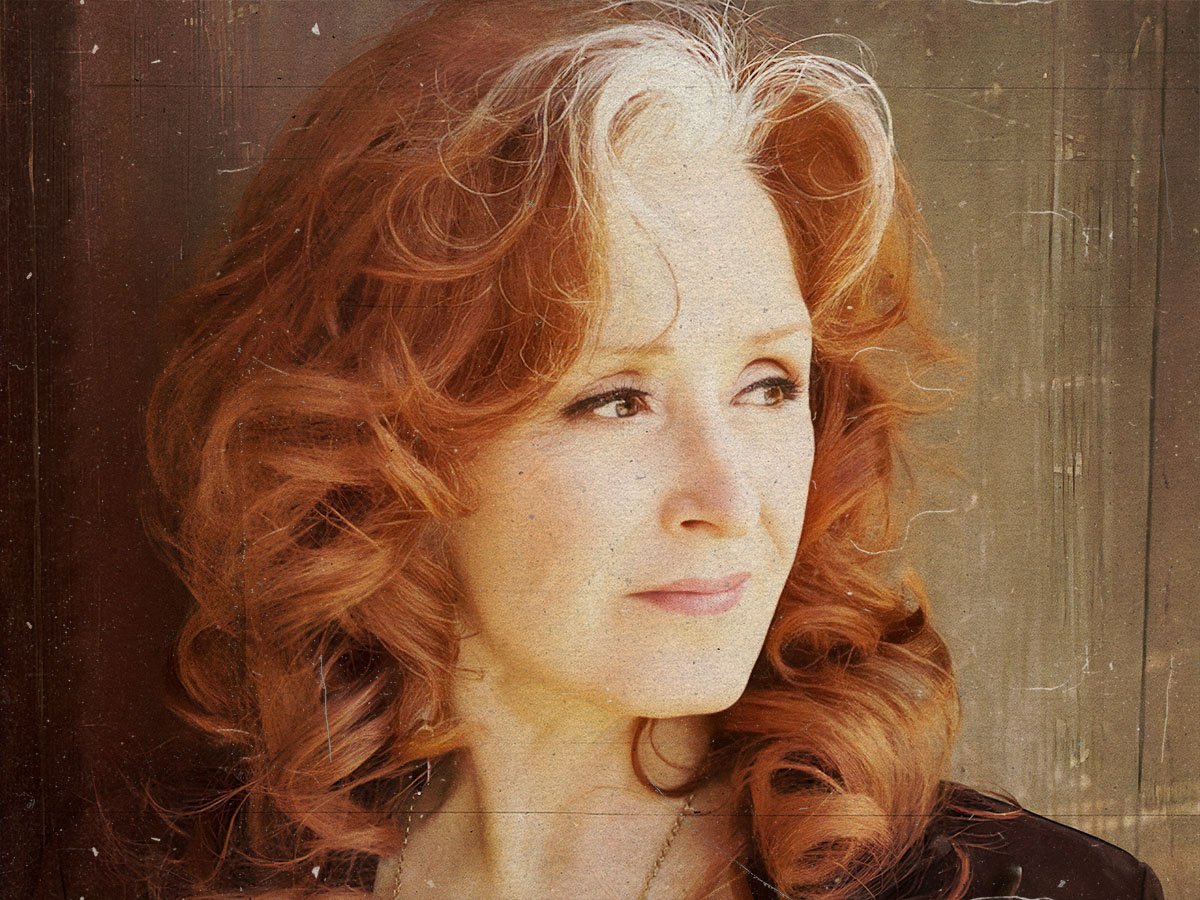
American singer and guitarist Bonnie Raitt is one of the most consistent and acclaimed country performers of the past five decades. Here, on her first UK jaunt in three years, the 66-year-old demonstrated that she’s keeping on keeping on.
This two-hour set was a rollicking good ol’ showcase of Raitt’s great talent – and perhaps her limitations. Yes, the Rock and Roll Hall of Famer’s inimitable husky timbre, her singular, superlative slide-guitar skills and her convivial Californian cheerfulness all remain intact. And yes, she’s still at her best when interpreting the musical vignettes of others rather than delivering her own.
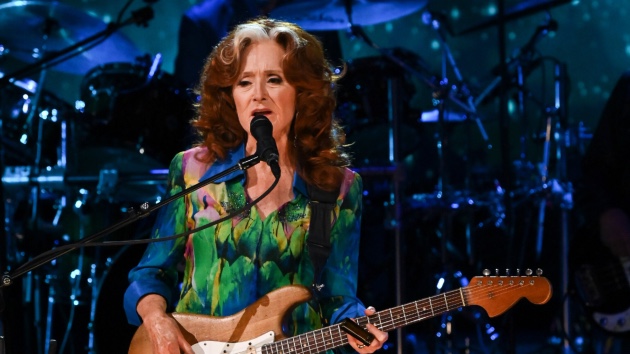
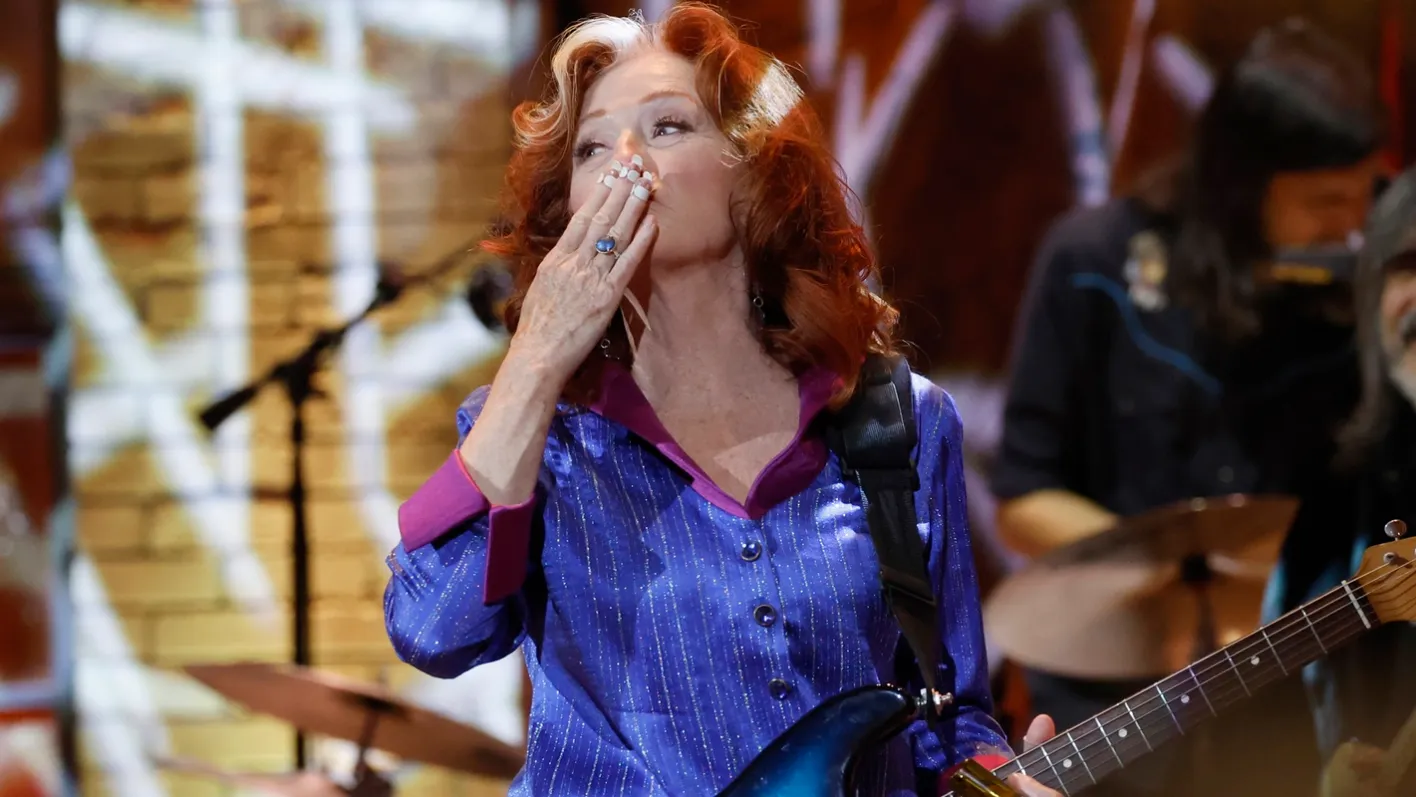
So it was fitting that Raitt began with a cover – a strutting, blues-rock stomp through INXS’s Need You Tonight. The effortless, raspy resonance of her vocals, at once sultry and raw, set the tone. With her shock of red hair, tight black jeans and the same unpainted Fender Stratocaster she’s been using since 1969 slung around her waist, Raitt exuded the confidence of a 10-time Grammy winner with nothing to prove.
The track was taken from her new album, Dig in Deep, her 20th, and first to breach the UK Top 40 since 1994. Billed as record which, in part, deals with the loss of her parents (in 2004 and 2005) and brother (four years later), it even features five songs co-written by Raitt, her first originals in a decade.
It was a shame, then, that those she chose to air here steered clear of these poignant subjects. Both the socially conscious Comin’ Round is Going Through and loved-up What You’re Doin’ to Me were just prosaic driving blues, which lacked the mellifluous poise she distils in songs by other people.
But there was plenty to celebrate in her astute and discerning mix of blues, jazz, roots and rock. On new track Undone and a raucous Let’s Give Them Something to Talk About, Raitt’s voice had the emotional heft and muscle of a power balladeer – almost 30 years clean and sober has protected her most valuable instrument. The afrobeat gospel of Hear Me Lord and gritty, paired-down folk of Angel from Montgomery confirmed her enviable musical dexterity.
An affectionate Hammersmith Apollo crowd were drawn to their feet for several standing ovations – including for a gorgeous encore of her signature torch song, I Can’t Make You Love Me, a 1991 hit penned by Nashville country writers Mike Reid and Allen Shamblin. Raitt seemed to inhabit every fragmented note with a tender intimacy that made it feel as if she was singing to each audience member individually. When you’re this good at turning fine songs into great ones, there’s no reason to change pace now.
“You know there are ghosts in there. They don’t tell you about the ghosts when you take the tour.”
In the back of a taxi in Nashville, I am listening to a story from an eager taxi driver about the Ryman Auditorium – the “true story,” he said. “The one they won’t tell you when you walk inside.”
Businessman Thomas Ryman and preacher Samuel Porter Jones fought long and hard for the soul of Nashville in the late 1800s: Ryman with his tent revivals and Jones with his fleet of riverboats. Whiskey, music, and gambling sent men straight from one to the other and back again. One night in 1885, the legend goes, Ryman dropped in to hear Jones preaching in a tent at the corner of Eighth and Broad, fully intending to heckle. Jones, knowing this, preached a passionate sermon on the evils of drink and the cleansing power of faith. Ryman, instantly converted, walked from the tent that night and went back to his boats, sacrificing all of his whiskey to the Tennessee River and repenting for his sins. He was so convinced by this single night of preaching that he dedicated the next several years to building and opening the Union Gospel Tabernacle, a space where the people of Nashville could attend Jones’s large-scale revival meetings indoors. When Ryman died, in 1904, Samuel Porter Jones named the Tabernacle after him, and his ghost was the first of many to take up residence in the pews. This, my cab driver tells me, is the true story of the Ryman Auditorium. A story of haunting, like so many others in America.
If you are big enough in Nashville, everyone calls you by your first name only. I learn this by the way the locals address me when I look most lost. I stare at my GPS downtown at a stoplight, and a woman glances over out of the corner of her eye to ask, “You here to see Bonnie?” I ask a server what the best thing on the menu is at an iconic BBQ restaurant, and she smirks at the Ohio button on my bag: “You must be here to see Bonnie.” By the fourth time this happens, when I hit full tourist mode and stop to take multiple pictures of a statue, I confirm with a street musician that yes, I am in town to see the second night of Bonnie Raitt’s two-show stand at the Ryman. “Man, good ol’ Bonnie,” he replies. “She’s gonna put on a hell of a show, if she don’t do nothin’ else.”
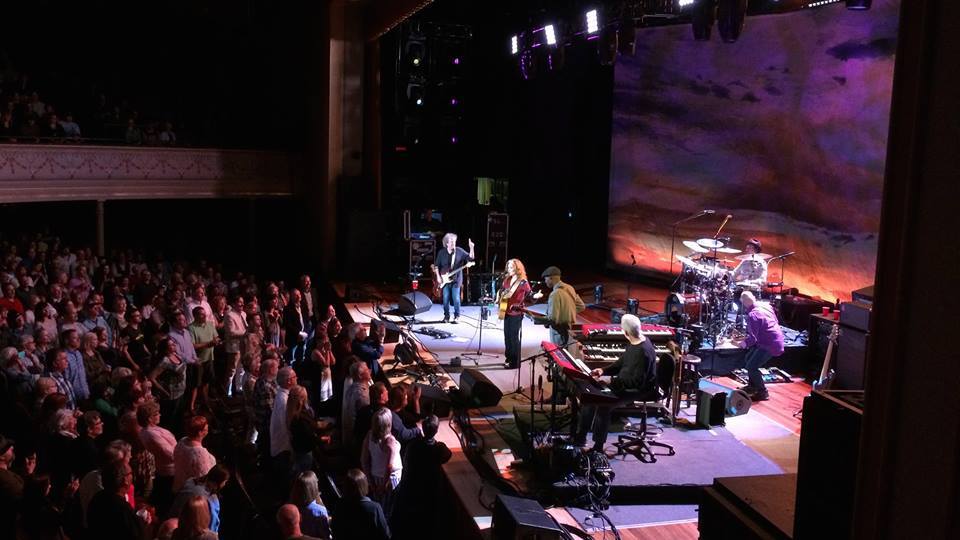
By the time Raitt takes the stage, the church pews are as full as possible. Ryman employees run down each aisle with signs reminding attendees that they cannot, under any circumstances, take out their cell phones or yell anything at the stage during the performance. This doesn’t stop someone in the pew behind me from yelling “I LOVE YOU, BONNIE!!” as Raitt settles in and checks with her band before leaning into the mic and saying “Well, we greased the pan real good last night, and now I get y’all for dessert.”
After all is said and done in Raitt’s career, the thing most worth remembering will be how the slide was an extension of her body. The slide guitar, for Raitt, is the voice beyond her own — one that, like her own voice, she is capable of fitting into any box she wishes it to rattle around in. Her primary guitar has been beaten and worn down to a harsh pale auburn color, close to the tone of Raitt’s own skin. When she breaks into an extended slide solo on a cover of Gerry Rafferty’s “Right Down the Line,” it’s hard to tell where her hands end and the guitar begins. All of it blends into a wave of notes, folding into each other and rushing off the stage to drown the eager audience. Her performance becomes sharper as the show goes on, an alarming feat when considering that this show was the second of a back-to-back engagement. It is a set that honors ghosts — the dead who influenced her sound, and the dead who once occupied this space. There are covers of J.B. Lenoir and Sippie Wallace, and a flawless cover of B.B. King’s “Don’t Answer the Door,” accompanied by a memory of seeing King at the Ryman in 2009. “He tore this goddamn place apart,” she says, before looking skyward and saying, “Whoops. Sorry. Forgot I’m in a church.”
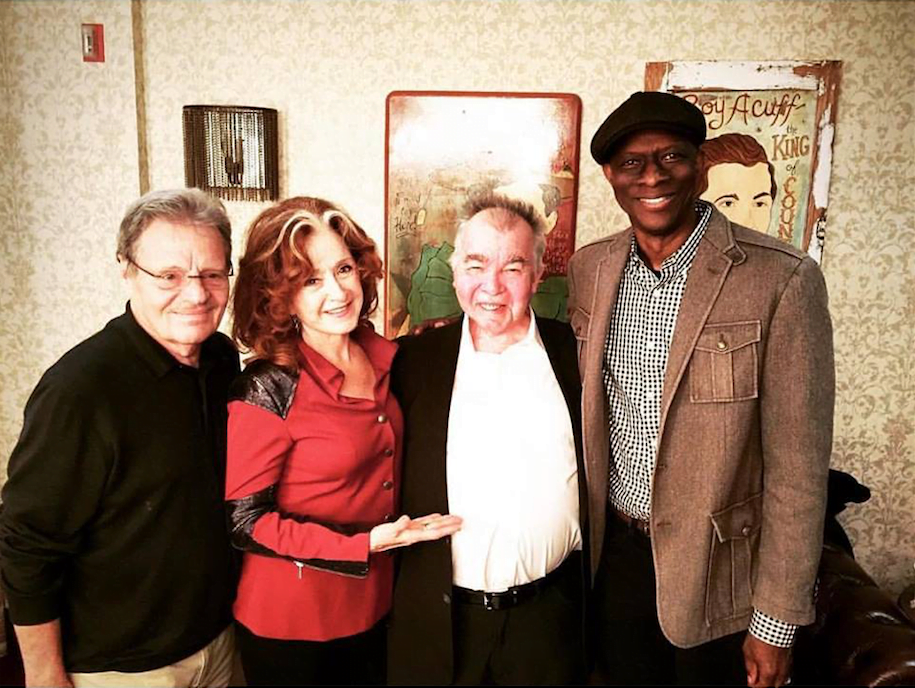
Delbert McClinton, Bonnie, John Prine and Keb’ Mo’ – Backstage at the Ryman Auditorium Nashville – May 4, 2016
If most of us tell our friends, “I’m coming into town for the night, you should come out,” we’ll get a nice room full of people we love. Most of us are not Bonnie Raitt, and the town that we are coming into is not Nashville, music capital, city of overwhelming talent. Martina McBride is in the audience tonight, along with Bonnie Bishop, Pat MacLaughlin, and a host of other writers and musicians who have played on albums throughout Raitt’s career. On the stage, the parade of guests is equally stunning. Raitt first trots out John Prine for a version of “Angel From Montgomery” that is, admittedly, too clearly unrehearsed and a bit clumsy on timing, but in an endearing way. Next is Delbert McClinton, joining Raitt on their 1991 hit “Good Man, Good Woman,” which sounds just as clean as it always did. Here’s Keb’ Mo’, who Raitt says was “just down the street,” popping in for a cover of Aretha Franklin’s “Baby I Love You.” It is a magic that can only happen in a handful of other cities — a room full of guest players who can cause even the most revered audience members to gasp, to sit up and take notice. Something to impress even the ghosts, their fading photos hanging in the halls.
{{svg_quality_icon}}
{{quality-options}}
1
What an honor! Bonnie Raitt invited us to sing our version of Love Sneakin’ Up On You during her encore at the Ryman Auditorium Nashville – The California Honeydrops.
There’s no bigger fan of these guys than Bonnie! Check out The California Honeydrops singing their version of “Love Sneakin’ Up On You” during the encore at the Ryman Auditorium.
The highlight of the night comes during the encore, when Raitt comes back to the stage without a guitar. She sits at a stool with a microphone and gives thanks to the spirit of Prince, gives thanks to Adele and Kacey Musgraves, Sheryl Crow and Norah Jones, all while talking about what it means to be the artist she is — a woman who has lived 66 years, trying to make songs that push the door open a little wider for other women. After this, she sings a quiet, chilling rendition of “I Can’t Make You Love Me,” a song that began with her, and that has since lived with many other women. It occurs to me that this is the enduring quality of Bonnie Raitt. Throughout her career, she’s had this ability to honor various pasts with an eye still toward the future. In a building soaked with history — with the ghosts of Thomas Ryman, Samuel Porter Jones, and an entire congregation of musicians above her head — Bonnie Raitt spent a night throwing a rope down from the top of the mountain and asking a whole room to climb to the top with her.
Bonnie Raitt has dodged the crush of fame that did in the Eagles; she has beaten the devils that snared Warren Zevon, found the third act that eluded Linda Ronstadt and Jackson Browne, tended to her vocal cords better than Joni Mitchell, escaped the undertow of the sixties that holds Crosby, Stills & Nash, and kept clear of the Rushmore-y eminence now granted Neil Young. At sixty-six, she’s the real survivor of the California rock scene of the seventies, and to see her perform, as I did, at the Beacon Theatre, the other night, is to see—to strange and powerful effect—an artist from the album-rock era fully intact. But I wasn’t at the Beacon on a nostalgia tour. I was there to hear Raitt play electric slide guitar—to hear her run a narrow glass tube up and down the neck of a Fender Stratocaster tuned to an open chord. If you ask me, Raitt is the greatest living slide player, and I didn’t want to miss a chance to hear a sound that has only a few masters.
She took the stage, and there it was: a blue-glass slide, flashing on the second finger of her left hand. The opening number was one I needed two verses to recognize as “Need You Tonight,” originally by INXS—a song I heard five hundred times in college bars in the eighties and not ten times since. It ought to have been cringe-inducing. But it wasn’t; it was now a Bonnie Raitt song, a sharp woman’s swagger over big guitar chords and a strong kick drum. And then she stepped out and put slide to strings, and the last traces of eighties synthesized glam were banished by the low snake moan of the electric slide guitar.
For Raitt, slide is a second voice, much like her first: tough, physical, subtle, and frankly emotional. It’s a voice cultivated somewhere off to the side of the place where male and female, solo and accompaniment, roots music and new sounds, are distinguished from each other. Raitt’s main guitar, a Stratocaster from the sixties, stripped of its factory finish, is now worn to approximately the same color and texture as her hair, and this contributes to the second-voice effect. Her slide solos are clusters of notes pulled out after the second verse, echoing and underscoring her vocals. At the Beacon, she played slide that way on a tremolo-drenched song from her new record; on a cover of “Shakin’ Shakin’ Shakes,” a Los Lobos party song about earthquakes; and on a reggaeish version of Gerry Rafferty’s 1978 radio hit “Right Down the Line.” And then a stool was brought out and she swapped the Stratocaster for a six-string acoustic guitar.
The fact that B. B. King once called Raitt the “best damn slide player working today” isn’t, in itself, reason to think of her as the greatest living slide guitarist. Ry Cooder is more versatile and innovative—the Yo-Yo Ma of slide, a world traveller with a bottleneck. David Lindley (he of the overdriven lap-steel solo on Jackson Browne’s “Running on Empty”) has opened quarries of old-time music and brought new life to the Weissenborn, a hollow-necked six-string acoustic instrument designed for Hawaiian music. Ben Harper has linked the lap steel to heavy rock. Derek Trucks has stirred the ghost of Duane Allman during a thousand shows with the Allman Brothers and his Tedeschi Trucks Band, making the Beacon Theatre a temple of slide.
Bandana Blues is and will always be a labor of love. Please help Spinner deal with the costs of hosting & bandwidth. Visit www.bandanablues.com and hit the tipjar. Any amount is much appreciated, no matter how small. Thank you.
Bonnie Raitt is nothing if not loyal. And when she caught wind of the fact that Mike Reid and I were writing and recording together, she was quick to volunteer to sing on our song “The Bridge.” It’s one of my favorite songs Mike and I have written. And I can no longer imagine it without her heroic spirit present. ~ Joe Henry
Released on: 2025-09-05 Producer: Joe Henry Music Publisher: Rivers and Roads Music (ASCAP - admin by Endurance Music Group) Music Publisher: Mule Rider (ASCAP) Music Publisher: Blue Raincoat Music (ASCAP) ℗ 2025 Work Song Inc. marketed and distributed by Thirty Tigers
{{svg_quality_icon}}
{{quality-options}}
1
http://i3.ytimg.com/vi/VWNoTHkp6_k/hqdefault.jpg
Prison Bound Blues · Bonnie Raitt
Bonnie has contributed a new recording of "Prison Bound Blues" written by Leroy Carr to a project called Better Than Jail, an extraordinary new album benefiting Free Hearts and Equal Justice USA. Better Than Jail is available everywhere today and features covers of iconic prison songs from Steve Earle, Taj Mahal,Margo Price, The War and Treaty and many more. The album seeks to raise awareness and support for the urgent need to reduce the harm of the criminal justice system. https://found.ee/BetterThanJail.
I'm so proud to have joined in with so many illustrious artists in creating this very special album in support of rural prison reform. Overlooked for far too long, this issue cuts across all cultural and political divides and deserves all our focused attention to finally bring about some swift and meaningful action. Better Than Jail is one of the most inspired and heartfelt albums I've been blessed to be a part of and I hope it sets a fire in hearts far and wide to join in our efforts." ~ Bonnie Raitt
Released on: 2024-10-04 Executive Producer: Brian Hunt Producer: Kenny Greenberg Producer: Wally Wilson Producer: Bonnie Raitt Recording Engineer: Jason Lehning at Sound Emporium Mastering Engineer: Alex McCollough at True East Mastering Production Assistant: Shannon Finnegan Mixer: Justin Niebank at Hounds Ear Music Publisher: Universal Music Corp. Composer, Lyricist: Leroy Carr ℗ Believe Entertainment Group and Wyatt Road Records
{{svg_quality_icon}}
{{quality-options}}
1
http://i3.ytimg.com/vi/xC2BJuQbO8w/hqdefault.jpg
The Fabulous Thunderbirds - Nothing in Rambling Ft. Bonnie Raitt, Taj Mahal, Keb' Mo' & Mick Fleetwood
In celebration of the band’s 50th Anniversary, The Fabulous Thunderbirds have just released Struck Down, their first studio album in eight years on Stony Plain Records. The ten-track album includes a wonderful cover of Memphis Minnie’s “Nothing in Rambling,” featuring longtime friends, T-Birds founding member Kim Wilson, along with Bonnie, Keb’ Mo’, Taj Mahal and Mick Fleetwood. — BRHQ
{{svg_quality_icon}}
{{quality-options}}
1
http://i3.ytimg.com/vi/YmW-bgcbvQI/hqdefault.jpg
Little Feat - Long Distance Call
“I’ve always loved Little Feat and this new incarnation of the band is bringing some serious heat, cred and new blood to their enduring legacy. Every Feat fan loves us some Sam. I’m so glad he’s now gotten a chance to step out front and center and put his spin on these wonderful blues songs. I loved singing "Long Distance Call" with him, always one of my favorites, and Scott slayed on slide. Know you’ll enjoy hanging out with us at Sam’s Place!" -- Bonnie Raitt
“Long Distance Call” was written by blues legend, Muddy Waters. It has Sam Clayton and Bonnie Raitt on vocals, Scott Sharrard on Dobro, Fred Tackett on acoustic guitar, Tony Leone on drums, and Michael “The Bull” LoBue on harmonica. The album also features Bill Payne on piano and Kenny Gradney on bass.
Little Feat have composed an album that’s their love letter to the blues entitled, ‘Sam’s Place.’ “Long Distance Call” plus many other blues classics are on this album. You can stream and order ‘Sam’s Place’ here: https://orcd.co/samsplace
Broken Hearts & Dirty Windows: Songs of John Prine, Vol. 2, the anticipated new John Prine tribute record from Oh Boy Records, is out today. Stream/purchase HERE.
Created as a celebration of Prine’s life and career, the album features new renditions of some of Prine’s most beloved songs performed by Brandi Carlile (“I Remember Everything”), Tyler Childers (“Yes I Guess They Oughta Name A Drink After You”), Iris DeMent (“One Red Rose”), Emmylou Harris (“Hello In There”), Jason Isbell (“Souvenirs”), Valerie June (“Summer’s End”), Margo Price (“Sweet Revenge”), Bonnie Raitt (“Angel From Montgomery”), Nathaniel Rateliff & The Night Sweats (“Pretty Good”), Amanda Shires (“Saddle in the Rain”), Sturgill Simpson(“Paradise”) and John Paul White (“Sam Stone”). Proceeds from the album will benefit twelve different non-profit organizations, one selected by each of the featured artists.
{{svg_quality_icon}}
{{quality-options}}
1
http://i3.ytimg.com/vi/Z71L4JdrVBY/hqdefault.jpg
Bonnie Raitt - Write Me a Few of Your Lines/Kokomo Blues
60 years anniversary celebration of Arhoolie
December 10, 2020
{{svg_quality_icon}}
{{quality-options}}
1
Arhoolie Foundation celebrates it's 60th anniversary (1960-2020) with an online broadcast.
Bonnie Raitt - Shadow of Doubt
Hardly Strictly Bluegrass Festival
October 3, 2020
Hardly Strictly Bluegrass celebrates it's 20th anniversary with an online broadcast titled “Let The Music Play On”.
{{svg_quality_icon}}
{{quality-options}}
1
http://i3.ytimg.com/vi/hCJa0505jZk/hqdefault.jpg
Bonnie Raitt & Boz Scaggs - You Don't Know Like I Know
Farm Aid 2020 On the Road
Sam & Dave classic written by Isaac Hayes and David Porter.
{{svg_quality_icon}}
{{quality-options}}
1
http://i3.ytimg.com/vi/jXG6ULcK-qs/hqdefault.jpg
Sheryl Crow & Bonnie Raitt - Everything Is Broken
[Eric Clapton’s Crossroads 2019]
Eric Clapton, one of the world’s pre-eminent blues/rock guitarists, once again summoned an all-star team of six-string heroes for his fifth Crossroads Guitar Festival in 2019. Held at the American Airlines Center in Dallas, Texas, the two-day concert event raised funds for the Crossroads Centre in Antigua, the chemical dependency treatment and education facility that Clapton founded in 1998.
{{svg_quality_icon}}
{{quality-options}}
1
http://i3.ytimg.com/vi/yHeBLEo4TOM/hqdefault.jpg
'A Tribute To Mose Allison'
Celebrates The Music Of An Exciting Jazz Master
Raitt contributed to a new album, If You're Going To The City: A Tribute To Mose Allison, which celebrates the late singer and pianist, who famously blended the rough-edged blues of the Mississippi Delta with the 1950s jazz of New York City.
NPR's Lulu Garcia-Navarro talks to Bonnie Raitt about her friendship with the Mose Allison. They're also joined by Amy Allison — his daughter, who executive produced the album — about selecting an unexpected list of artists to contribute songs to the album.
Recorded on tour June 3, 2017 - Centennial Hall, London - Ontario Canada




 Users Today : 139