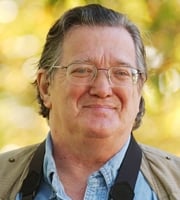
james taylor

All posts tagged james taylor

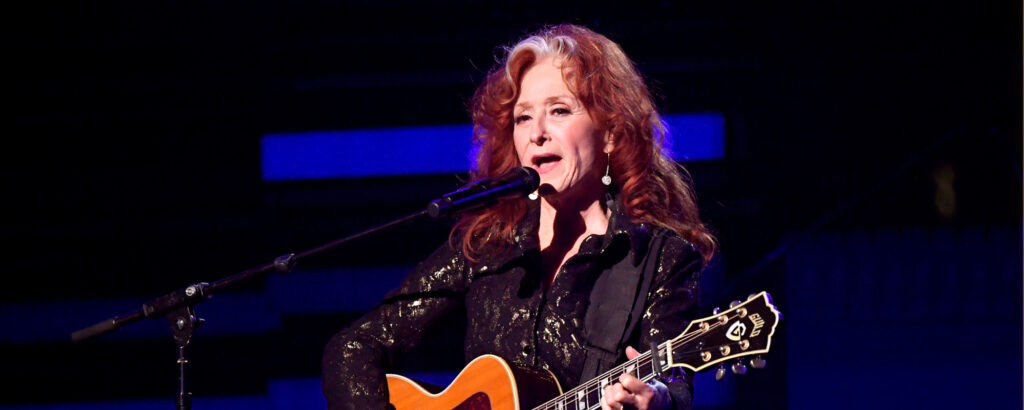
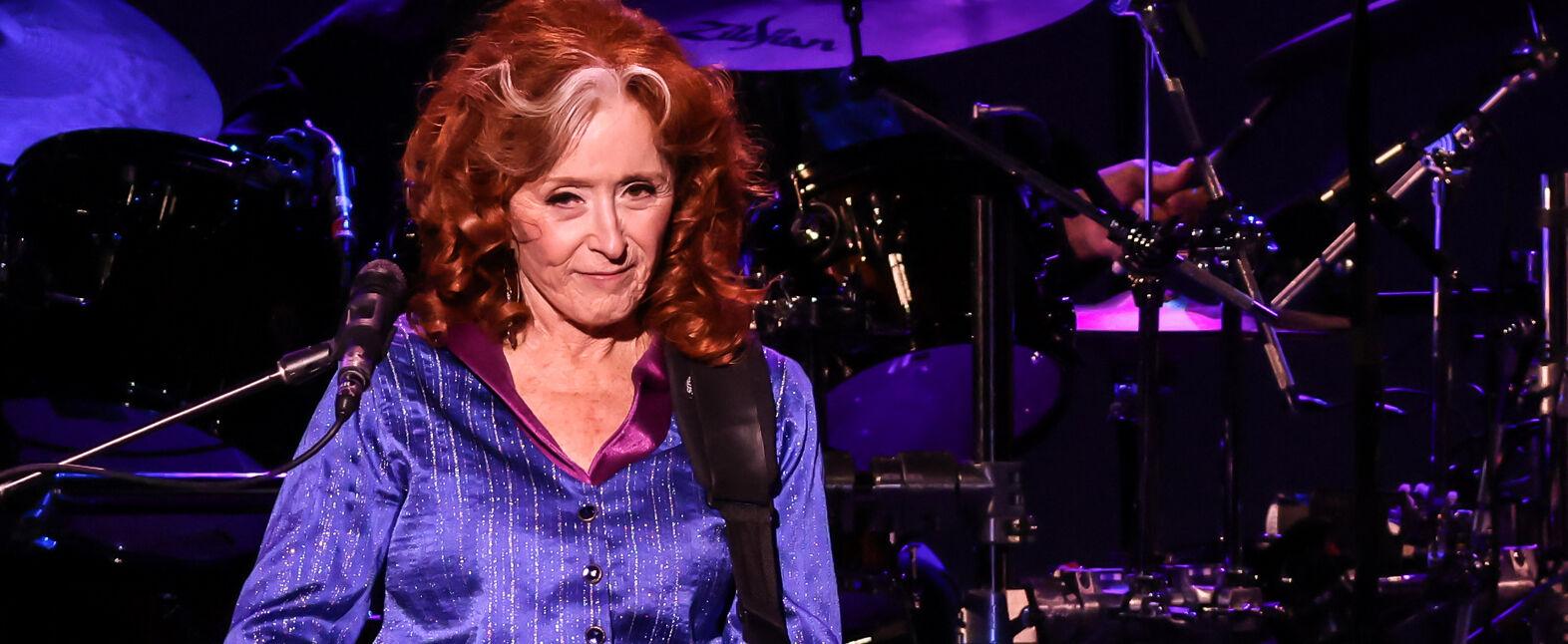
Bonnie Raitt Returns
THE LEGENDARY ARTIST PERFORMS AT TANGLEWOOD

on June 4, 2025 No comments

THE LEGENDARY ARTIST PERFORMS AT TANGLEWOOD 

Ken Friedman

There is nobody quite like Bonnie Raitt. The songs that she has performed have touched the lives of so many people—tracks like “Something to Talk About,” “I Can’t Make You Love Me,” “Angel from Montgomery,” “Made Up Mind,” “Nick of Time,” “Just Like That,” and many more.
She has been described as a voice of an angel and plays the blues like nobody’s business.

The singer, songwriter, and guitarist whose unique style blends blues with R&B, rock, and pop has earned her 13 Grammys®, but despite the high honors, Raitt is incredibly humble and gracious.

In 2023, she walked on stage in disbelief at the Grammy Awards ceremony to receive Best American Roots Song, then Best Americana Performance, and Song of the Year for “Just Like That.” “I don’t write a lot of songs, but I’m so proud that you appreciate this one,” she said.

Last December, Raitt was honored at Kennedy Center for 50 years of musical excellence, with Brandi Carlile, Sheryl Crow, Emmylou Harris, Dave Matthews, Keb’ Mo’, Susan Tedeschi, James Taylor, and Jackson Browne performing songs that she is known for. (See this post for a talk with James Taylor.)

When we recently spoke, she was in the middle of what she loves most—a string of live performances. She will be making her way back to the Berkshires on Sunday, August 31, to play at Tanglewood.

Anastasia: Bonnie, I was doing a bit of research about your time in the Berkshires. You started playing at Tanglewood in ’76, and the last time you were here was a few years ago, in 2022. You also played at the Music Inn earlier than that.

Bonnie: Many, many years ago, the Music Inn was our main gig in Western Massachusetts.

Anastasia: I see that the first time you played was back in 1973 with John Prine. Then in ’74 with Mose Allison and with Steve Goodman back in ’75, John Lee Hooker in ’77, and solo in ’78. What a history in the Berkshires! What do you think about when you think about this region?

Bonnie: The fans have always been so incredibly enthusiastic for the kind of music I do and the other artists who were in the Music Inn shows. A high point of our summer touring was to come and play in the Berkshires.

Anastasia: Looking at your setlists from back in ’76 at Tanglewood, the songs included “Women Be Wise,” “You’ve Been in Love Too Long,” “Love Me Like a Man,” “Give It Up or Let Me Go,” “I’m Blowin’ Away,” and “Runaway.” Do you still perform those songs?

Bonnie: Oh, yeah. We do a smattering of songs always from the big albums, Nick of Time and Luck of the Draw, and with 21 albums to draw from, I don’t want to forget the fact that those fans came to see me in the early ’70s. I always go back and rotate some of songs that are special to them and to me, like “Love Me Like a Man,”or “Women Be Wise.” “Angel from Montgomery” is one I’ve played every gig since I met John Prine in ’71, so I would never leave that out. But there are way too many albums of songs that people always wished we played, and we just can’t get around to all them. We play about 17 songs when we have a strong co-bill, like we’re doing with Jimmie Vaughan this time at Tanglewood. He’ll come out and do a couple at the end of our show, which I’m really excited about.

Anastasia: Are you a completely different person now than you were 50 years ago?

Bonnie: I like to look at chapters of my life as everything was part and parcel of how I ended up here at 75. I wouldn’t change any of it. So, the core of who I am, in terms of social activism and the music I love, has really stayed the same. And I like to think I’m a wiser and more mature and certainly living a healthier lifestyle than I did in my 20s.

Anastasia: What would you tell your younger self?

Bonnie Raitt at Tanglewood, Lenox, MA 8-26-1991 Walter Scott

Bonnie: Some of the lessons you just have to live, whether they’re romantic relationships that you look back and go, “Oh, man, I didn’t see that coming.” All the relationships I’ve been in have been wonderful for that time period. And you just outgrow each other, or you move from the East Coast to the West Coast, and you have to break up, like people do when they go away to college. I really wouldn’t change too much, including having as much fun as I could after the shows, and traveling with a big band of musicians, and the whole lure of—I don’t want to say drugs, sex, and rock and roll—but partying after the show was really fun, just like it is for people who finish the workday and come home at 7 o’clock at night and have dinner with their family and then relax. For us, relaxing is 11 o’clock at night. In my mid-30s, there were lifestyle changes that I needed to make. The things that you got away with or had fun doing in your 20s just don’t sit with you as well in your 30s. So, I wouldn’t have changed anything sooner as my younger self, but I was glad that I got sober when I was 37. Whatever excuse I had of trying to be a blues mama and keep up that late-night lifestyle and smoke and drink and all that, that sort of went out the window. I was really grateful that I was one of the ones who made it through without killing myself or anybody else.

Anastasia: What can we expect when you return to Tanglewood on August 31 with Jimmie Vaughan & The Tilt-A-Whirl Band?

Bonnie: Jimmie and I have known each other and played together when he was in The Fabulous Thunderbirds, and I was friends with his brother, Stevie Ray. We all were part of the Austin blues scene when I’d come through town, and we did a lot of touring together in the ’70s especially. So it’ll be a great reunion. The last time I played at Tanglewood was literally the biggest audience I’d played to in many, many years. It was almost 17,000 people. My recollection not only was it a great show for the audience and us, but it was freezing. It was 55 degrees. So, I’m hoping it’ll be warmer. It’ll be a great celebration. What you can expect is me going back to some deep cuts from albums that not everybody has. I’m at the point where I’m pretty good at picking songs that work live and jettisoning the ones that don’t feel right for this era. We’ll play the ones they expect.

Anastasia: Do you ever get tired of performing “I Can’t Make You Love Me,” or any of those other popular hits?

Bonnie: I don’t. It’s different every night. I grew up with my dad, John Raitt, basically rotating summer stock, every summer. He played in the show Carousel, where he was the original leading man, and Oklahoma!, and also he was the originator of Sid Sorokin in Pajama Game. He later went on to do Music Man and On a Clear Day and Shenandoah and Zorba and a lot of different other shows, but he made every night opening night. And I mean that sincerely. I watched him imbue those songs and the production as if he’d never played them before. Every night now, I get really deep inside, especially the ballads, because if I ever start phoning it in, I’ll hang up my spurs. Every night is a different opening night. Some of those people are seeing me for the first time, and some of them have seen you many times, and you want to show that you still have the emotional connection with them for those songs that mean as much to me as they do to them.

Raitt at Americana Honors & Awards in 2016. Erika Goldring

Anastasia: What was it like growing up in a household of music?

Bonnie: I grew up in a combination of Westchester, New York, where my dad was on Broadway and in Pajama Game, and then when he was in the movie with Doris Day, we moved back out to California in ’57, and I stayed there from seven until 15 years old. It was fun being in LA because there was a lot of other kids at my school who were the children of people in show business. My folks were Quakers … and not flashy. They were deep. They were politically involved with the ban the bomb movement and the civil rights movement and then save the redwoods, and taught us a real ethic of fairness and social justice early on. My mom was my dad’s music director and pianist, and he would rehearse for his concerts and for his shows downstairs. It was just fantastic. I knew all the words to the shows. It was a thrill being part of that behind-the-scenes Broadway road life. He took the shows out to the people, and that’s what I’m doing. I couldn’t care less if I had a hit record, and he couldn’t care less if he had a hit Broadway show. He just wanted to take the music out to people.

Anastasia: You must have been exposed to a lot of music storytelling when you grew up.

Bonnie in the studio, recording Slipstream 2011
Matt Mindlin

Bonnie: Yes, those Rodgers and Hammerstein story songs that are in Carousel and Oklahoma!, in particular. Hearing the stories about what it was like to go through the Depression and go through the Second World War, and then the early days on Broadway for my folks who were raised in a religious background, to suddenly be part of this Broadway scene. They were riding across the country on trains, and there were swear words in Oklahoma!, and all that. It was pretty fun to hear their eye-opening stories about hanging out with Ella Fitzgerald and Tony Bennett and Frank Sinatra, and to hear the stories about the early days of the peace movement. Those social activism stories were just as interesting to me as the show business ones. My greatest education came from hanging out with the blues artists I opened for when I left college. I ended up striking it lucky and was offered a record deal on my own terms when I was 21 years old. To travel with Muddy Waters and Sippie Wallace and Mississippi Fred McDowell and “Big Boy” Arthur Crudup, and to hear the stories about what it was like with racism and growing up on plantations, or, in Sippie’s case, the vaudeville circuit and the classic blues circuit. That was an invaluable background, just like listening to my folks talk about the early days of their careers. It was fantastic.

Anastasia: What is it about the blues that moves you so much?

Bonnie: It’s the music for me. When I was eight or nine years old, I really could tell the difference between Chuck Berry and Fats Domino. Little Richard was killing me and The Isley Brothers. The Beatles and The Stones fell in love with American R&B and covered a lot of those songs and turned America onto our own blues tradition. I would have never heard about Slim Harpo and Howlin’ Wolf and Muddy Waters if it wasn’t for both the folk music revival of those blues artists at Newport and the recordings of them, and also the British invasion. They turned us on to tons of R&B records that we didn’t get to hear on our pop charts. So, it was kind of a cross-pollination. I fell in love with it and couldn’t get it out of my system.

Anastasia: There’s no way a person can describe you in one genre of music. I recently talked with Sonny Rollins, and he quoted Duke Ellington as saying, “There’s only two kinds of music, good or bad.” Do you agree?

Bonnie: I love that quote. I wasn’t expecting a career in music. I was just a fan. Aretha Frankin and Ray Charles and Tony Bennett and my dad, they were singing all kinds of different songs from different writers, and it was Dylan and then later James Taylor and Jackson Browne and Joni Mitchell who broke into the singer-songwriter realm, where people actually performed mostly their own songs. That was something that I admired so much. But I found for myself that the tradition I come out of is mixing it up. What’s a great song? It’s so subjective. What’s the right song for me to do? It could be “Dimming of the Day” by Richard Thompson or “Angel from Montgomery” from John Prine, right next to some great Big Mama Thornton cover or some R&B covers that I’ve done, or rock and roll songs. It’s the mixture of songs that I really love. That’s what keeps me interested.

Anastasia: I was watching a clip of you when you were in your 20s, and I thought how incredibly poised you were, and how totally comfortable in your skin you were.

Bonnie: Oh, thank you! I had the blessing of having been raised in show business and watching people not have control over where they worked or what they got paid, or the quality of the things that they signed up for when they just needed a job. I always said, if I was going to do this for a living, I would not have anybody tell me what to record or with whom, or how often, or what to wear, or “We want you to have a commercial hit or we’re not backing you.” I just would have stopped and gone back to being a college student and an activist. I was pretty savvy. In my personal life, I was a lot more vulnerable and not as confident as I was when I stepped into the professional part of me. Which always cracks me up, because I think of the Wizard of Oz, when he goes, “Pay no attention to the man behind the curtain.” I’m just a regular person with vulnerabilities and foibles and mistakes and addictions and all that, but when I step into the professional realm or as an activist, I think I can hold on to the power line a lot more easily.

Anastasia: What do you do to protect yourself as far as your voice and your physical and mental well-being?

Bonnie: What an incredible gift the internet is to be able to turn younger people onto the roots of the blues. Maybe they find some local metal band that they like, and then they read in an article or on their website that they loved Led Zeppelin. Then you look at who Led Zeppelin loved. Within a half hour, you can go back and discover everybody’s albums. That’s an incredible gift. So, aside from that gift, the internet, email, and texting have saved my voice, because I used to spend a lot of time phoning friends or making arrangements for a guest list or after-show get-togethers the next day or a day off. I don’t use my voice as much. That’s one way I take care of my voice. The other way is I warm up for a half hour. And I didn’t used to do that. I used to just sing an easy song first in the set. I’ve been sober 38 years. I eat organic, and I try to get outside and get some fresh air and get my heart rate up. I do a pretty serious yoga and weight practice three or four times a week. That all helps me to be more limber and flexible and strong at 75 than had I been on the path I was on in my 20s and 30s.

Anastasia: I’m fortunate to talk with you, as well as with Joan Baez, Rosanne Cash, and Ani DiFranco recently. There’s something about these feminist icons, like you, who are committed not only to their music, but to social activism. Joan told me that there’s no separating the two.

Bonnie: I agree, and she was one of my main inspirations. Pete Seeger and Joan, and groups like The Weavers and Woody Guthrie, practiced the whole tradition of using your voice to raise attention and sometimes funds. We all know that some grassroots group trying to stop a toxic incinerator near a Black community in the middle of Ohio isn’t going to get any press attention. But some artist comes in and speaks at the rally or sings at the rally, then the news stations cover it. The town criers that artists have been for years, we’re just reflecting the conscience of the culture. I think it’s important to be responsible and informed if you’re going to speak out. I also don’t preach from the stage. When people are there to see my concerts, I don’t subject them to my political views. I might make a barbed comment here or there, if I can’t help it. We always have grassroots groups tabling, local groups that are working on issues that we think are important, primarily food insecurity, safe and clean energy, and all of that. I don’t proselytize, but certainly I like to speak out and raise my voice and use the funds from the tour to contribute to groups that don’t have access to corporate money like the big guys do.

Anastasia: Where are you the happiest, on stage or recording?

Bonnie: Definitely on stage. It’s a total transformative exaltation. There’s nothing like what happens between the audience and us on stage. It’s why you put up with the other 22 hours. We don’t have a real heavy schedule. We work five months out of the year, four days a week. It’s really a wonderful thing to be on the road. I make records so I have new songs to play, not the other way around.

Bonnie Raitt joined James at his performances at Tanglewood, Lenox, MA just days before they kicked off their summer tour together when Bonnie and her band opened 18 shows for James Taylor & His All-Star Band – July 3 & 4, 2017 Hilary Scott

Anastasia: When did you pick up the guitar?

Bonnie: I went to summer camp while my dad was doing summer stock. He primarily toured in the summertime, eight shows a week, and switched over to theater in the round. There were a lot of tents. Broadway stars would take their shows all around the country. And so my brothers and I went to a Quaker camp up in the Adirondacks, which was run by dear friends of my folks. And there was all kinds of international counselors and kids from all kinds of backgrounds from the East Coast and around the world. Folk music was taking off in the late ’50s at colleges. The folk music revival that started with the Newport festivals caught fire. My counselors were all singing folk music around the campfire, songs by Joan Baez and Odetta and Pete Seeger. And I learned how to play the guitar. I tried it out, and I asked my folks if I could get one for Christmas. When I was just a month shy of nine years old, at Christmastime, I got my first guitar. I played folk music like my counselors did. I asked for a Joan Baez record, and then I played Odetta records. Then I played Bob Dylan songs. I heard country blues on the Newport ’63 album. That’s the first time I heard slide guitar in a blues context. My grandfather played Hawaiian lap steel guitar when he played hymns sometimes, and that was really fun to hear. Once I found out that you could just move this bar back and forth, you could easily play all kinds of songs without learning the chords. That ease has never stopped being fun for me. So, about 15 or 16, I started playing slide guitar.

Anastasia: I was just listening again to your latest album, Just Like That, and I’ve read the story about how the title song came about. Do people reach out to you about the songs that you have sung?

Bonnie: Yeah, especially after “Just Like That” won the Song of the Year, which was a huge surprise to everyone on Earth, including me. Within a few days, at the website for the lyric video for “Just Like That,” there were 4,500 messages from nurses and doctors, people who wanted to donate their beloved’s organs, but the bureaucracy stopped them from being able to get to the person that needed them. I found out how disorganized and backed up the bureaucracy was, and that only something like 3 or 8 percent of the organs actually find people that desperately need them, and that those people lose their lives because of it. I’ve gotten letters from people who got to hear the heart of their beloved’s in someone else’s chest, the way that I was inspired to write the song. Their children are living because of the donation and the kindness of another family that donated the organs. That song has gotten more response than I ever would have expected. I was doubly overwhelmed, just in tears for days, reading the beautiful letters. People can still go on that site and read them. Within a few months, President Biden announced that they were going to overhaul the organ donation system and make it easier. Who knows whether Jill Biden giving me that award that night at the Grammys®, maybe she went back and was able to focus with her husband on that issue. The ripple effect of that song has been incredibly beautiful for me, and something that I never would have expected.

Anastasia: My sister was a transplant patient, and we learned that one of the donors was an 18-year-old young man who died in a motorcycle accident. Your song reminded me of the life that was passed on from one person to another.

Bonnie: I’ve gotten so many letters, and I keep them all. I also get a lot of letters about “Nick of Time” when that song came out. There’s a lot of people who say that they played it in the delivery room when they didn’t think they’d ever get pregnant. They wanted to honor that song and what it meant to them. That made me really happy.

Anastasia: How do you pick the songs that you sing from other artists? 

Bonnie: I do a lot of research and a lot of listening. When I did an INXS cover of “Need You Tonight,” I knew I was going to cut that. It was just a question of which album. I knew that I wanted to sing “Dimming of the Day,” but I wanted to wait about two or three decades between my version and Linda Thompson, who did such an exquisite version. I wanted to let hers live on its own. After a while, I went, “You know what? Life is short. I got to be able to sing this every night.” I always pay tribute to Richard Thompson when I sing it. So, a lot of it is just the fun part of listening to oldies stations or going through my old record collections and digging deep under cuts of artists I already love, and I may find some jewel that I didn’t know about, and then I cover that. But, usually, it starts with just me being a fan. 

Bonnie Raitt with special guest Jimmie Vaughan & The Tilt-A-Whirl Band will perform at Tanglewood on Sunday, August 31, at 7 p.m. bso.org/tanglewood

About The Author


Source: © Copyright Berkshire Magazine

Parallel Lives | James Taylor on Bonnie Raitt

By Anastasia Stanmeyer

Although they didn’t meet until they were billed for the same performance in the early ’70s at Sanders Theatre in Cambridge, Massachusetts, James Taylor and Bonnie Raitt later found out that their lives held many similarities.

Hilary Scott

“Bonnie slightly preceded me in coming on the scene, but we had very parallel paths,” says Taylor. “She was connected with the music scene in Cambridge and Boston.” 

They later found out that their parents had enrolled them in the same youth program. Taylor says he and Raitt both attended Friends World Service, a cultural exchange program. They missed each other by a year but had similar experiences of traveling through Europe by way of VW buses and adult chaperones. 

“We have very similar upbringings,” says Taylor. “Her dad, of course, was a famous Broadway performer, a fabulous singer. I had listened to his voice on recordings growing up because my folks had those records. My dad and mom were very academic. We didn’t know each other growing up, but we were in the same sort of social context.”

Raitt wasn’t the only one deeply influenced and informed by her exposure to musical theater. “I was, too,” says Taylor. “That was a big part of my musical background. My folks were fans of the musicals of the ’30s, ’40s, ’50s, and I listened to all of it repeatedly. I think that, and what was available socially and culturally back then, was what I grew up with. We both came out of this folk music, what my friend Waddy Wachtel calls ‘the great folk scare of the mid-60s.’” 

They both came out of the East Coast folk music scene of the ’60s and early ’70s. You can track that population of baby boomers through the popular culture of the time, Taylor says. 

“When they became 18 to 25, it was an explosion of creativity,” he says. “We’re still reverberating from that period of time. Bonnie is a prime product of that cultural event. It happened at the same time as the civil rights movement, as the anti-war movement. We grew up with the threat of nuclear proliferation, the Cold War, the assassination of the two Kennedys and Martin Luther King and Malcolm X. It was just an extremely intense time, and the music that came out of it was something we hadn’t seen.” 

They both were Warner Elektra artists, Taylor says. Their music paths crossed many other times. For instance, Taylor’s manager, Peter Asher, produced Raitt’s 1979 album, The Glow. The first song they sang together was probably “Barefootin’” by Robert Parker. And another early track was the Howard Tate song “Look at Granny Run Run,” which was written by Jerry Ragovoy and Mort Shuman. 

Taylor stays in close touch with Raitt. They have played together many times, including at Tanglewood in 2017 and touring together after that—which was a high point for him. The last time he saw Raitt was at the Kennedy Center Honors in December, when he performed for her. He points to Raitt’s dedication to blues and her exceptional guitar skills. Not to mention how excited his band gets when they play with Raitt.

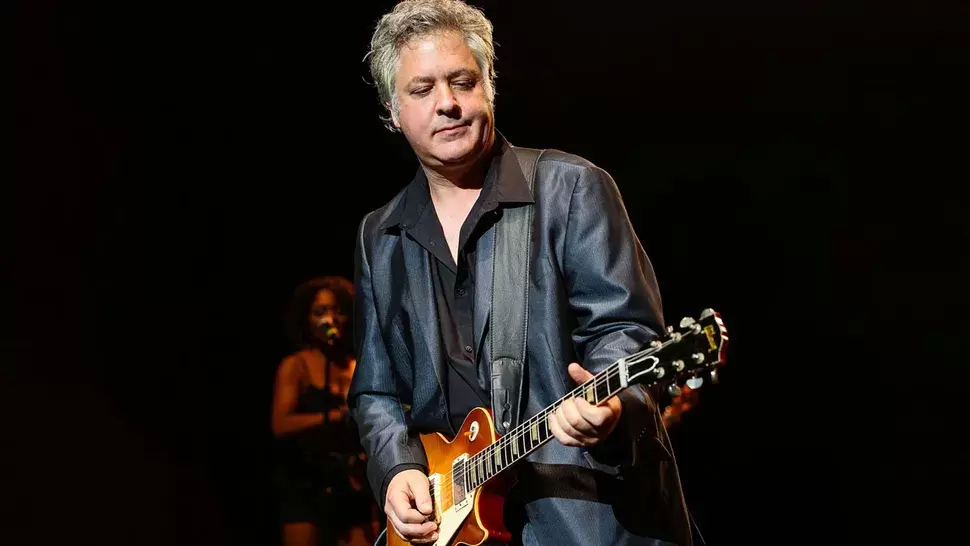
“Usually when I play at Tanglewood, if I’m lucky enough to have a guest, then they play with my band,” says Taylor. “When it’s Bonnie, they get really fired up. Everybody in the band loves her, loves her music, and loves to play with her—Steve Gadd, Jimmy Johnson, Michael Landau, Larry Goldings. Arnold McCuller was featured in Bonnie’s Nick of Time and has toured with her. When she joined us for that job in Tanglewood, that’s when we started talking about touring together.” 

There are so many things that are so great about Raitt, Taylor adds. He points out that she was a founding member of the Rhythm & Blues Foundation. “She’s worked tirelessly to get the people who make that music, to get them recognition and remuneration for what they created and what was so often stolen from them.” 

He says that Raitt radiates positive energy when you’re around her. 

“It’s a surprise to hear this blues coming out of this person,” says Taylor. “Her mastery of that form on the guitar—not only that she’s competent and gotten it down, but she adds to it with her own sense, and she incorporates it in her music. In my mind, she’s a true master of the guitar. She’s known for that slide, that sort of scorching, really gutsy style of slide guitar. But her acoustic blues playing and her piano, too, she’s a powerhouse, a real wellspring of talent. The thing about her, too, is that she’s profane. She’s lowdown. She just puts it right there all the time. She just surprises you with her enthusiasm, her intelligence, her raw talent, and how low-down and funky she is.” 

He has many favorite songs by her. One of the many things she does so well is cover other people’s tunes, and that’s not easy.

“You’re probably playing something because you love it, and you probably love it because the original version of it was so fabulous,” says Taylor. “So, it’s challenging to take a song and and redo it and make it worth redoing, given how great the original is. But Bonnie is a person who can do that. She can take any tune and make it her own. And you’re always glad she did.” 

James Taylor will perform at Tanglewood on July 3 and 4, and Bonnie Raitt will be at Tanglewood on August 31 with special guest Jimmie Vaughan & The Tilt-A-Whirl Band. 

bso.org/tanglewood

About The Author


Source: © Copyright Berkshire Magazine

But wait, there's more!

James Taylor, a master, lets Bonnie Raitt ‘steal the show every night’
Even the headliner at Rupp Arena knew who really ruled the evening.

on February 28, 2019 No comments
BY WALTER TUNIS
This was the first time Bonnie Raitt has ever played Rupp Arena, Lexington 2-27-2019 © Alex Slitz / aslitz@herald-leader.com

As he got down to business on Wednesday with a near-two hour, hits-laden show full of sublime and unavoidably sentimental tunes spanning over five decades, James Taylor remarked to the audience of 7,200 that one of the greatest pleasures of his nearly concluded tour was watching his co-billed pal Bonnie Raitt “steal the show every night.”

Count Rupp as one of those nights. Oh, nothing against Sweet Baby James. At age 70, he still exuded a good-natured folk-pop exuberance that serviced tunes as varied as the show opening reverie “Carolina in My Mind” and the tropically jovial “Mexico.”

His vocal work – with a few rare, reedy exceptions – has aged remarkably well, too, as did his way with an orchestrally inclined 11-member band that included, get this, a pair of champion Frank Zappa alums (drummer Chad Wackerman and trumpeter Walt Fowler.)

But the divine Ms. Raitt – who, amazingly, was making her Rupp debut –took this night home in her hip pocket.

Bonnie Raitt routinely steals the show, said James Taylor. And her hour-long set at Rupp Arena, featuring the showstopper “Angel from Montgomery,” demonstrated why. 2-27-2019
Gallery (7)

© Alex Slitz / aslitz@herald-leader.com

At 69, her vocals revealed a regal glow, assimilating, as they have throughout her career, a balance of blues, soul and rock ‘n’ smarts. Similarly, her guitar work – a gorgeous, slide-savvy tone that ignited the set-opening “Unintended Consequence of Love” – would serve as rocket fuel throughout the concert.

The sheer scope of what Raitt packed into her hour-long performance was, frankly, astounding. It ran from a slow, swampy revamping of the INXS hit “Need You Tonight” and a solo acoustic blues reading of Skip James’ “Devil Got My Woman” to a cool but decidedly torchy take on her own 1991 hit “I Can’t Make You Love Me.”

But the showstopper was clearly “Angel from Montgomery,” the John Prine classic Raitt is largely responsible for introducing to the world (she recorded it in 1974, three years after Prine, but before many audiences were familiar with the song.) She gave it a solemn but emotive delivery draped with a kind of tasteful world-weariness that yielded a sense of scholarly humanity.

There was also an obvious level of camaraderie between Raitt and Taylor at the show. Taylor began the evening with an extended and heartfelt introduction of Raitt that nicely set the pace for the program’s overall charm that carried over into segments when the two artists sat in on each other’s sets at their conclusions – Taylor during Raitt’s career re-defining take on John Hiatt’s “Thing Called Love” and Raitt as a co-pilot for Taylor’s encore segment that blasted off with a jovial reading of “Johnny B. Goode.”

Again, don’t get the idea that Raitt’s triumph demeaned Taylor’s showing. His set offered a few nice setlist surprises early on – namely, 1970’s “Sunny Skies,” the autumnal title tune to 1974’s overlooked “Walking Man” album and the fatherly snapshot “First of May” (one of the only tunes in the set to venture beyond the ‘70s.)

But it was with two very familiar 1970 works, played back-to-back late in the show, that the emotive extremes of Taylor’s writing came into view.

The first, “Sweet Baby James,” remained a quiet anthem of child-like expression, a cowboy lullaby that unfolded with still-vital innocence. After that came “Fire and Rain,” Taylor’s career-making single – a curiosity, given how the song is a eulogy full of blunt sadness that the singer communicated at Rupp with conversational reserve. In the end, that just made the musical impact all the more devastating.

About The Author


Source: © Copyright Lexington Herald Leader But wait, there's more!

James Taylor, Bonnie Raitt provide comfort and joy at TaxSlayer show

on February 23, 2019 No comments
JONATHAN TURNER

MOLINE — If there are two more beautiful, humble, generous, and enduring souls in the pop music business than James Taylor and Bonnie Raitt, I can’t think of any offhand.

The two staggeringly talented veterans — he’s 70 and she 69 — proved that Saturday night to a packed TaxSlayer Center, in their first joint concert ever in the Quad-Cities.

In these often dark, chaotic, depressing times, it was just so nice to luxuriate in the genuine goodness, comfort and joy of these legendary artists and their amazingly tight, virtuosic bands.

Both Raitt and Taylor, who have been friends and have performed together for years, seemed sincerely touched by the adulation bestowed on them by the Moline crowd. Nearly all available seats Saturday were filled, and it appeared odd that the upper deck’s back center section was curtained off; surely those could have been sold as well.

In her first appearance at the almost 26-year-old arena, Raitt offered an all-too brief set of just over an hour, blending her signature husky, alluring vocals with fine finger-picking on guitar. Her slow, slinky challenge, “Love Me Like a Man,” was followed by the fun, rocking release of “Something to Talk About.”

Like Taylor did later, Raitt gave grateful credit to songwriters of some hits, including the great Bonnie Hayes’ “Love Letter,” and the incomparable ballad “I Can’t Make You Love Me,” co-written by former Bengals football player Mike Reid (talk about a gentle giant!). She delivered a soaring, impassioned and sorrowful performance.

Raitt also took advantage of Taylor and a big member of his crew on a couple standouts. Longtime backup vocalist Arnold McCuller joined her on “Nick of Time,” the title track of her 1989 Grammy winner, which he recorded in 2011. Can it be 30 years old already? That song certainly gains significance with the passing of time, and Raitt paid tribute to all the loved ones who have passed on, making it all the more precious.

She did a glorious mashup of Chaka Khan’s “You Got the Love” and her own “Love Sneakin’ Up on You.” James joined Bonnie just before intermission on a jubilant “Thing Called Love.”

While both sets were a nostalgia-drenched trip down memory lane, over a similar five-decade period of time, Taylor’s was even more so, with the help of massive multimedia. He brought a much bigger high-tech video presentation than I’ve ever seen before.

He last performed at the Moline arena in November 2014, and he performed with his son, Ben Taylor, at Davenport’s Adler Theatre in March 2011. He also played at what was then The Mark of the Quad Cities in July 1998.

Saturday’s show began with a mini-bio (like the fans don’t know?), a flurry of old videos and photos, including Taylor’s North Carolina childhood, and excerpts from interviews and songs.

It flowed seamlessly into his live opener, “Carolina in My Mind,” with his gorgeous quartet of backup singers. A feast of perfectly matched photos and video provided fitting backdrop for every song, and each time Taylor introduced a band member, the screen showed a few photos of them as a child or youth.

A lesser-known early song, “Sunny Skies” (from 1970) was accompanied by video of Taylor and his adorable pug dog. “There’s really nothing we won’t stoop to,” he joked afterward, one of many characteristically droll asides. Taylor related an unprintable joke about the first day of May that his Dad used to tell, as prelude to his irresistible samba-themed “First of May,” from one of my favorite albums of his, “Never Die Young” (1988).

This was also among several numbers that featured crack solos and layers from percussion, horns and flute. Some of the night’s best solos were in a favorite Taylor seemed to reluctantly haul out, “Steamroller” – which he noted doesn’t mean anything to him, unlike most of his songs, and that it takes longer to play it than it did to write it. The trumpet, Hammond B3 and electric guitar licks were awesome, and the number had its usual drawn-out, ecstatic finish.

The Carole King-Gerry Goffin hit “Up on the Roof” was delivered before dazzling black-and-white images and video of New York City’s skyline and landmarks.

Like Taylor must have done countless times, he relayed his breakthrough story of how he was discovered by the Beatles in 1968 and was the first artist signed to their Apple label, but he again conveyed it with the wide-eyed wonder and monumental importance it must have had when he lived it at age 20.

That tender ode, “Something in the Way She Moves,” he neglected to point out (as he sometimes does) gave George Harrison the “inspiration” to use that title as the first line for his Beatles hit, “Something.”

Taylor briefly told the story about the 1970 cowboy lullaby “Sweet Baby James,” written for his nephew. The sweet, perfect song remains magical, though the brother he wrote it for is tragically not around to relive it. Alex Taylor died of a heart attack in 1993 at 46.

James offered needed balm for another loss closer in time and place, as he dedicated the tremendously powerful “Shed a Little Light” to the victims of the recent shooting in Aurora, Ill. Inspired by Martin Luther King, Jr., Taylor implores us remember the “ties between us – all men and women living on the Earth. Ties of hope and love, sister and brotherhood. That we are bound together.”

That moving meditation seems all the more relevant and necessary today than it did when he wrote it in 1991. Through his classic, yearning ballads like “Fire and Rain” and “You’ve Got a Friend,” and exuberant party anthems like “Your Smiling Face” and “Mexico,” Taylor knows how to bring us together and unite us for a common, higher purpose.

He’s the ideal cultural ambassador, and over 50 years later, he still knows how to freshly, honestly deliver the goods, and the goodness. That light surely shined bright Saturday.

About The Author


Source: © Copyright Moline Dispatch & Rock Island Argus But wait, there's more!